LCMS
More information
WebinarsAbout usContact usTerms of use
LabRulez s.r.o. All rights reserved. Content available under a CC BY-SA 4.0 Attribution-ShareAlike
Author
Massachusetts Institute of Technology
The Massachusetts Institute of Technology (MIT) is a private research university located in Cambridge, Massachusetts. MIT is devoted to the advancement of knowledge and education of students in areas that contribute to or prosper in an environment of science and technology.
Tags
Article
Scientific article
Water
Video
LinkedIn Logo

A new sensor detects harmful “forever chemicals” in drinking water
We, 5.6.2024
| Original article from: MIT News/Anne Trafton
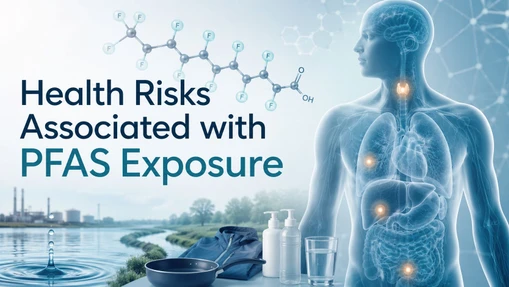
MIT chemists have designed a sensor that detects tiny quantities of perfluoroalkyl and polyfluoroalkyl substances (PFAS) — chemicals found in food packaging, nonstick cookware, and many other consumer products.
Video placeholder
  • Photo: Massachusetts Institute of Technology/MIT News; iStock: An MIT sensor can detect “forever chemicals” known as PFAS (perfluoroalkyl and polyfluoroalkyl substances) in drinking water. PFAS are found in many consumer products and are linked to cancer and other health problems.
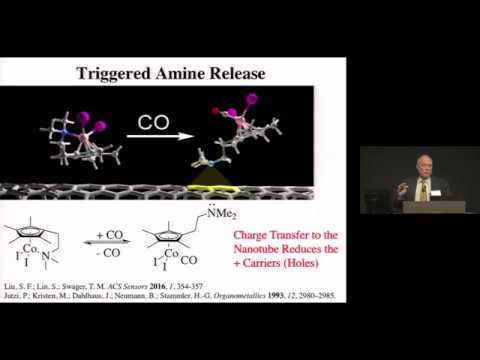
  • Video: Camille and Henry Dreyfus Foundation: Timothy Swager, MIT: Molecular Designs for Specificity in Chemical Sensors (2018)

The technology could offer a cheap, fast way to test for PFAS, which have been linked to cancer and other health problems.

MIT chemists have designed a sensor that detects tiny quantities of perfluoroalkyl and polyfluoroalkyl substances (PFAS) — chemicals found in food packaging, nonstick cookware, and many other consumer products.

These compounds, also known as “forever chemicals” because they do not break down naturally, have been linked to a variety of harmful health effects, including cancer, reproductive problems, and disruption of the immune and endocrine systems.

Using the new sensor technology, the researchers showed that they could detect PFAS levels as low as 200 parts per trillion in a water sample. The device they designed could offer a way for consumers to test their drinking water, and it could also be useful in industries that rely heavily on PFAS chemicals, including the manufacture of semiconductors and firefighting equipment.

Massachusetts Institute of Technology/MIT News; iStock: An MIT sensor can detect “forever chemicals” known as PFAS (perfluoroalkyl and polyfluoroalkyl substances) in drinking water. PFAS are found in many consumer products and are linked to cancer and other health problems.Massachusetts Institute of Technology/MIT News; iStock: An MIT sensor can detect “forever chemicals” known as PFAS (perfluoroalkyl and polyfluoroalkyl substances) in drinking water. PFAS are found in many consumer products and are linked to cancer and other health problems.

“There’s a real need for these sensing technologies. We’re stuck with these chemicals for a long time, so we need to be able to detect them and get rid of them,” says Timothy Swager, the John D. MacArthur Professor of Chemistry at MIT and the senior author of the study, which appears this week in the Proceedings of the National Academy of Sciences.

Other authors of the paper are former MIT postdoc and lead author Sohyun Park and MIT graduate student Collette Gordon.

Detecting PFAS

Coatings containing PFAS chemicals are used in thousands of consumer products. In addition to nonstick coatings for cookware, they are also commonly used in water-repellent clothing, stain-resistant fabrics, grease-resistant pizza boxes, cosmetics, and firefighting foams.

These fluorinated chemicals, which have been in widespread use since the 1950s, can be released into water, air, and soil, from factories, sewage treatment plants, and landfills. They have been found in drinking water sources in all 50 states.

In 2023, the Environmental Protection Agency created an “advisory health limit” for two of the most hazardous PFAS chemicals, known as perfluorooctanoic acid (PFOA) and perfluorooctyl sulfonate (PFOS). These advisories call for a limit of 0.004 parts per trillion for PFOA and 0.02 parts per trillion for PFOS in drinking water.

Currently, the only way that a consumer could determine if their drinking water contains PFAS is to send a water sample to a laboratory that performs mass spectrometry testing. However, this process takes several weeks and costs hundreds of dollars.

To create a cheaper and faster way to test for PFAS, the MIT team designed a sensor based on lateral flow technology — the same approach used for rapid Covid-19 tests and pregnancy tests. Instead of a test strip coated with antibodies, the new sensor is embedded with a special polymer known as polyaniline, which can switch between semiconducting and conducting states when protons are added to the material.

The researchers deposited these polymers onto a strip of nitrocellulose paper and coated them with a surfactant that can pull fluorocarbons such as PFAS out of a drop of water placed on the strip. When this happens, protons from the PFAS are drawn into the polyaniline and turn it into a conductor, reducing the electrical resistance of the material. This change in resistance, which can be measured precisely using electrodes and sent to an external device such as a smartphone, gives a quantitative measurement of how much PFAS is present.

This approach works only with PFAS that are acidic, which includes two of the most harmful PFAS — PFOA and perfluorobutanoic acid (PFBA).

A user-friendly system

The current version of the sensor can detect concentrations as low as 200 parts per trillion for PFBA, and 400 parts per trillion for PFOA. This is not quite low enough to meet the current EPA guidelines, but the sensor uses only a fraction of a milliliter of water. The researchers are now working on a larger-scale device that would be able to filter about a liter of water through a membrane made of polyaniline, and they believe this approach should increase the sensitivity by more than a hundredfold, with the goal of meeting the very low EPA advisory levels.

“We do envision a user-friendly, household system,” Swager says. “You can imagine putting in a liter of water, letting it go through the membrane, and you have a device that measures the change in resistance of the membrane.”

Such a device could offer a less expensive, rapid alternative to current PFAS detection methods. If PFAS are detected in drinking water, there are commercially available filters that can be used on household drinking water to reduce those levels. The new testing approach could also be useful for factories that manufacture products with PFAS chemicals, so they could test whether the water used in their manufacturing process is safe to release into the environment.

The research was funded by an MIT School of Science Fellowship to Gordon, a Bose Research Grant, and a Fulbright Fellowship to Park.

Massachusetts Institute of Technology
LinkedIn Logo
 

Related content

Overcoming Strong Solvent Effects in the Analysis of Vepdegestrant

Applications
| 2026 | Agilent Technologies
Instrumentation
HPLC
Manufacturer
Agilent Technologies
Industries
Pharma & Biopharma

Identification of Double Bond Positions and Relative Acyl Chain Positions in Egg Yolk Phosphatidylcholines Using OAD-TOF System

Applications
| 2026 | Shimadzu
Instrumentation
LC/MS, LC/MS/MS, LC/TOF, LC/HRMS
Manufacturer
Shimadzu
Industries
Food & Agriculture

High Molecular-Weight Polysaccharide Characterization by SEC-MALS Using GTxResolve™ 1000 and 2000 Å SEC Columns

Applications
| 2026 | Waters
Instrumentation
GPC/SEC, Consumables, LC columns
Manufacturer
Waters
Industries
Pharma & Biopharma, Food & Agriculture

Development and Optimization for a Comprehensive LC/MS/MS Method for the Detection of 74 PFAS Compounds

Applications
| 2026 | Agilent Technologies
Instrumentation
LC/MS, LC/MS/MS, LC/QQQ
Manufacturer
Agilent Technologies
Industries
Food & Agriculture

PFAS in Biota: Risk Context & Robust Analytical Solutions

Others
| 2026 | ALS Europe
Instrumentation
Laboratory analysis, LC/MS, LC/MS/MS
Manufacturer
Industries
Environmental
 

Related articles

JUNIOR STAR Grants at UCT Prague: Two talented women from abroad driving innovation in science
Article | Scientists

JUNIOR STAR Grants at UCT Prague: Two talented women from abroad driving innovation in science

Two outstanding early-career researchers at UCT Prague, Filipa Oliveira and Stella Gonsales, received prestigious GAČR JUNIOR STAR grants for innovative research in materials science and sustainable chemistry.
UCT Prague
tag
share
more
Research from IOCB Prague reveals a previously unknown mechanism of genetic transcription
Article | Science and research

Research from IOCB Prague reveals a previously unknown mechanism of genetic transcription

Scientists at IOCB Prague reveal a previously unknown mechanism that initiates gene transcription. Using cryo-EM, they uncover how alarmone molecules enable RNA synthesis under stress.
Institute of Organic Chemistry and Biochemistry of the Czech Academy of Sciences
tag
share
more
Food Adulteration and How It Is Revealed by Analytical Chemistry
Article | Food

Food Adulteration and How It Is Revealed by Analytical Chemistry

Food adulteration threatens quality and consumer trust. Discover how HPLC and modern chromatographic systems from Watrex Praha help identify oil, honey, and wine adulteration with high confidence.
Watrex Praha
tag
share
more
Affinity, Gel Filtration, Size Exclusion Chromatography: Repurposing Kinase Inhibitors for Malaria
Interview | Video

Affinity, Gel Filtration, Size Exclusion Chromatography: Repurposing Kinase Inhibitors for Malaria

This podcast explores how chromatography (FPLC/SEC) and mass spectrometry support malaria drug discovery, from protein purification and QC to interaction studies and complex sample preparation.
Organomation
tag
share
more
 

Related content

Overcoming Strong Solvent Effects in the Analysis of Vepdegestrant

Applications
| 2026 | Agilent Technologies
Instrumentation
HPLC
Manufacturer
Agilent Technologies
Industries
Pharma & Biopharma

Identification of Double Bond Positions and Relative Acyl Chain Positions in Egg Yolk Phosphatidylcholines Using OAD-TOF System

Applications
| 2026 | Shimadzu
Instrumentation
LC/MS, LC/MS/MS, LC/TOF, LC/HRMS
Manufacturer
Shimadzu
Industries
Food & Agriculture

High Molecular-Weight Polysaccharide Characterization by SEC-MALS Using GTxResolve™ 1000 and 2000 Å SEC Columns

Applications
| 2026 | Waters
Instrumentation
GPC/SEC, Consumables, LC columns
Manufacturer
Waters
Industries
Pharma & Biopharma, Food & Agriculture

Development and Optimization for a Comprehensive LC/MS/MS Method for the Detection of 74 PFAS Compounds

Applications
| 2026 | Agilent Technologies
Instrumentation
LC/MS, LC/MS/MS, LC/QQQ
Manufacturer
Agilent Technologies
Industries
Food & Agriculture

PFAS in Biota: Risk Context & Robust Analytical Solutions

Others
| 2026 | ALS Europe
Instrumentation
Laboratory analysis, LC/MS, LC/MS/MS
Manufacturer
Industries
Environmental
 

Related articles

JUNIOR STAR Grants at UCT Prague: Two talented women from abroad driving innovation in science
Article | Scientists

JUNIOR STAR Grants at UCT Prague: Two talented women from abroad driving innovation in science

Two outstanding early-career researchers at UCT Prague, Filipa Oliveira and Stella Gonsales, received prestigious GAČR JUNIOR STAR grants for innovative research in materials science and sustainable chemistry.
UCT Prague
tag
share
more
Research from IOCB Prague reveals a previously unknown mechanism of genetic transcription
Article | Science and research

Research from IOCB Prague reveals a previously unknown mechanism of genetic transcription

Scientists at IOCB Prague reveal a previously unknown mechanism that initiates gene transcription. Using cryo-EM, they uncover how alarmone molecules enable RNA synthesis under stress.
Institute of Organic Chemistry and Biochemistry of the Czech Academy of Sciences
tag
share
more
Food Adulteration and How It Is Revealed by Analytical Chemistry
Article | Food

Food Adulteration and How It Is Revealed by Analytical Chemistry

Food adulteration threatens quality and consumer trust. Discover how HPLC and modern chromatographic systems from Watrex Praha help identify oil, honey, and wine adulteration with high confidence.
Watrex Praha
tag
share
more
Affinity, Gel Filtration, Size Exclusion Chromatography: Repurposing Kinase Inhibitors for Malaria
Interview | Video

Affinity, Gel Filtration, Size Exclusion Chromatography: Repurposing Kinase Inhibitors for Malaria

This podcast explores how chromatography (FPLC/SEC) and mass spectrometry support malaria drug discovery, from protein purification and QC to interaction studies and complex sample preparation.
Organomation
tag
share
more
 

Related content

Overcoming Strong Solvent Effects in the Analysis of Vepdegestrant

Applications
| 2026 | Agilent Technologies
Instrumentation
HPLC
Manufacturer
Agilent Technologies
Industries
Pharma & Biopharma

Identification of Double Bond Positions and Relative Acyl Chain Positions in Egg Yolk Phosphatidylcholines Using OAD-TOF System

Applications
| 2026 | Shimadzu
Instrumentation
LC/MS, LC/MS/MS, LC/TOF, LC/HRMS
Manufacturer
Shimadzu
Industries
Food & Agriculture

High Molecular-Weight Polysaccharide Characterization by SEC-MALS Using GTxResolve™ 1000 and 2000 Å SEC Columns

Applications
| 2026 | Waters
Instrumentation
GPC/SEC, Consumables, LC columns
Manufacturer
Waters
Industries
Pharma & Biopharma, Food & Agriculture

Development and Optimization for a Comprehensive LC/MS/MS Method for the Detection of 74 PFAS Compounds

Applications
| 2026 | Agilent Technologies
Instrumentation
LC/MS, LC/MS/MS, LC/QQQ
Manufacturer
Agilent Technologies
Industries
Food & Agriculture

PFAS in Biota: Risk Context & Robust Analytical Solutions

Others
| 2026 | ALS Europe
Instrumentation
Laboratory analysis, LC/MS, LC/MS/MS
Manufacturer
Industries
Environmental
 

Related articles

JUNIOR STAR Grants at UCT Prague: Two talented women from abroad driving innovation in science
Article | Scientists

JUNIOR STAR Grants at UCT Prague: Two talented women from abroad driving innovation in science

Two outstanding early-career researchers at UCT Prague, Filipa Oliveira and Stella Gonsales, received prestigious GAČR JUNIOR STAR grants for innovative research in materials science and sustainable chemistry.
UCT Prague
tag
share
more
Research from IOCB Prague reveals a previously unknown mechanism of genetic transcription
Article | Science and research

Research from IOCB Prague reveals a previously unknown mechanism of genetic transcription

Scientists at IOCB Prague reveal a previously unknown mechanism that initiates gene transcription. Using cryo-EM, they uncover how alarmone molecules enable RNA synthesis under stress.
Institute of Organic Chemistry and Biochemistry of the Czech Academy of Sciences
tag
share
more
Food Adulteration and How It Is Revealed by Analytical Chemistry
Article | Food

Food Adulteration and How It Is Revealed by Analytical Chemistry

Food adulteration threatens quality and consumer trust. Discover how HPLC and modern chromatographic systems from Watrex Praha help identify oil, honey, and wine adulteration with high confidence.
Watrex Praha
tag
share
more
Affinity, Gel Filtration, Size Exclusion Chromatography: Repurposing Kinase Inhibitors for Malaria
Interview | Video

Affinity, Gel Filtration, Size Exclusion Chromatography: Repurposing Kinase Inhibitors for Malaria

This podcast explores how chromatography (FPLC/SEC) and mass spectrometry support malaria drug discovery, from protein purification and QC to interaction studies and complex sample preparation.
Organomation
tag
share
more
 

Related content

Overcoming Strong Solvent Effects in the Analysis of Vepdegestrant

Applications
| 2026 | Agilent Technologies
Instrumentation
HPLC
Manufacturer
Agilent Technologies
Industries
Pharma & Biopharma

Identification of Double Bond Positions and Relative Acyl Chain Positions in Egg Yolk Phosphatidylcholines Using OAD-TOF System

Applications
| 2026 | Shimadzu
Instrumentation
LC/MS, LC/MS/MS, LC/TOF, LC/HRMS
Manufacturer
Shimadzu
Industries
Food & Agriculture

High Molecular-Weight Polysaccharide Characterization by SEC-MALS Using GTxResolve™ 1000 and 2000 Å SEC Columns

Applications
| 2026 | Waters
Instrumentation
GPC/SEC, Consumables, LC columns
Manufacturer
Waters
Industries
Pharma & Biopharma, Food & Agriculture

Development and Optimization for a Comprehensive LC/MS/MS Method for the Detection of 74 PFAS Compounds

Applications
| 2026 | Agilent Technologies
Instrumentation
LC/MS, LC/MS/MS, LC/QQQ
Manufacturer
Agilent Technologies
Industries
Food & Agriculture

PFAS in Biota: Risk Context & Robust Analytical Solutions

Others
| 2026 | ALS Europe
Instrumentation
Laboratory analysis, LC/MS, LC/MS/MS
Manufacturer
Industries
Environmental
 

Related articles

JUNIOR STAR Grants at UCT Prague: Two talented women from abroad driving innovation in science
Article | Scientists

JUNIOR STAR Grants at UCT Prague: Two talented women from abroad driving innovation in science

Two outstanding early-career researchers at UCT Prague, Filipa Oliveira and Stella Gonsales, received prestigious GAČR JUNIOR STAR grants for innovative research in materials science and sustainable chemistry.
UCT Prague
tag
share
more
Research from IOCB Prague reveals a previously unknown mechanism of genetic transcription
Article | Science and research

Research from IOCB Prague reveals a previously unknown mechanism of genetic transcription

Scientists at IOCB Prague reveal a previously unknown mechanism that initiates gene transcription. Using cryo-EM, they uncover how alarmone molecules enable RNA synthesis under stress.
Institute of Organic Chemistry and Biochemistry of the Czech Academy of Sciences
tag
share
more
Food Adulteration and How It Is Revealed by Analytical Chemistry
Article | Food

Food Adulteration and How It Is Revealed by Analytical Chemistry

Food adulteration threatens quality and consumer trust. Discover how HPLC and modern chromatographic systems from Watrex Praha help identify oil, honey, and wine adulteration with high confidence.
Watrex Praha
tag
share
more
Affinity, Gel Filtration, Size Exclusion Chromatography: Repurposing Kinase Inhibitors for Malaria
Interview | Video

Affinity, Gel Filtration, Size Exclusion Chromatography: Repurposing Kinase Inhibitors for Malaria

This podcast explores how chromatography (FPLC/SEC) and mass spectrometry support malaria drug discovery, from protein purification and QC to interaction studies and complex sample preparation.
Organomation
tag
share
more
Other projects
GCMS
ICPMS
Follow us
More information
WebinarsAbout usContact usTerms of use
LabRulez s.r.o. All rights reserved. Content available under a CC BY-SA 4.0 Attribution-ShareAlike