LCMS
More information
WebinarsAbout usContact usTerms of use
LabRulez s.r.o. All rights reserved. Content available under a CC BY-SA 4.0 Attribution-ShareAlike
Author
University of Amsterdam
The University of Amsterdam is one of the largest comprehensive universities in Europe. With some 40,000 students, 6,000 staff, 3,000 PhD candidates, and an annual budget of more than 850 million euros, it is also one of Amsterdam’s biggest employers. There is an inseparable link between the university and its host city. The freedom and creativity with which Amsterdam has long been associated have worked their way into the fabric of the university. This is a place where individuality, authenticity and diversity are celebrated as sources of stimulation, inspiration and innovation. Professional and personal development, challenges and collaboration are undertaken in a versatile and multidimensional (inter)national ecosystem with leading stakeholders. Staff at the UvA make a meaningful contribution to uncovering solutions to some of the world’s most significant problems and to developing the next generation of talent.
Tags
Article
Video
Scientific article
LinkedIn Logo

There is much to improve in identifying all the chemicals around us
Th, 10.10.2024
| Original article from: University of Amsterdam / HIMS
Research estimates that a mere 2% of all chemical exposure has been identified.
Video placeholder
  • Photo: University of Amsterdam / HIMS / EST: Distribution of all chemicals found in the reviewed articles (orange), overlaid on top.
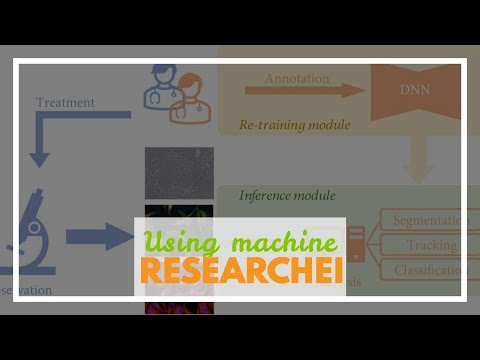
  • Video: Today's Sciencology: Using machine learning to improve the toxicity assessment of chemicals

What chemicals are we exposed to on a daily basis? That is the central question of ‘non-targeted analysis’ or NTA, an emerging field of analytical science that aims to identify all chemicals around us. A daunting task, because how can you be sure to detect everything if you don’t know exactly what you’re looking for? In a paper in Environmental Science and Technology, researchers at the Universities of Amsterdam (UvA, the Netherlands) and Queensland (UQ, Australia) assess this problem. In a meta-analysis of NTA results published over the past six years, they estimate that less than 2% of all chemicals have been identified.

According to Viktoriia Turkina who performed the research as a PhD student with Dr Saer Samanipour  at the UvA’s Van ‘t Hoff Institute for Molecular Sciences, this limitation underscores the urgent need for a more proactive approach to chemical monitoring and management. “We need to incorporate more data-driven strategies into our studies to be able to effectively protect the human and environmental health”, she says.

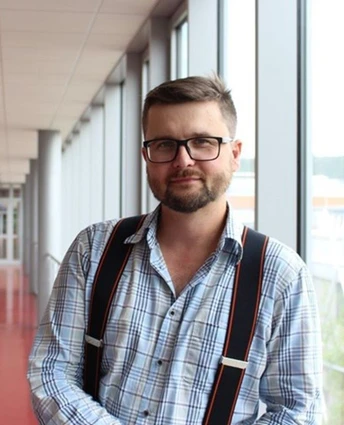
University of Amsterdam / HIMS: Viktoriia Turkina.University of Amsterdam / HIMS: Viktoriia Turkina.

Samanipour explains that current monitoring of chemicals is rather limited since it’s expensive, time consuming, and requires specialized experts. “As an example, in the Netherlands we have one of the most sophisticated monitoring programs for chemicals known to be of concern to human health. Yet we target less than 1000 chemicals. There are far more chemicals out there that we don't know about.”

A vast chemical space

To deal with those chemicals, some 15 to 20 years ago the concept of non-targeted analysis was introduced to look at possible exposure in an unbiased manner. The idea is to take a sample from the environment (air, water, soil, sewer sludge) or the human body (hair, blood, etc ) and analyse it using well-established analytical techniques such as chromatography coupled with high resolution mass spectroscopy. The challenge then is to trace the obtained signal back to the structures of chemicals that may be present in the sample. This will include already known  chemicals, but also chemicals of which the potential presence in the environment is yet unknown.

In theory, this ‘chemical space’ includes as many as 1060 compounds, an incomprehensible number that exceeds the number of stars in the universe by far. On the other hand, the number of organic and inorganic substances published in the scientific literature and public databases is estimated at around 180 million. To make their research even more manageable, Turkina, Samanipour and co-workers focused on a subset of 60.000 well-described compounds from the NORMAN database. Turkina: “This served as the reference to establish what is covered in NTA studies, and more importantly, to develop an idea about what is being overlooked.”

The vast ‘exposome’ of chemicals that humans are exposed to on a daily basis is a sign of our times, according to Samanipour. “These days we are soaking in a giant ocean of chemicals. The chemical industry is part of that, but also nature is running all a whole bunch of reactions that result in exposure. And we expose ourselves to chemicals by the stuff we use - think for instance of the problem of microplastics. To solve all this we have to be able to go beyond pointing fingers. With our research, we hope to contribute to finding a solution together. Because we all are in the same boat.”

Much room for improvement

The meta analysis, which included 57 NTA papers, revealed that only around 2% of the estimated chemical space was covered. This can indicate that the actual exposure to chemicals is indeed quite low, however, it can also point to shortcomings in the applied analyses. According to Turkina and Samanipour, the latter is indeed the case. They focused on NTA studies applying liquid chromatography coupled with high resolution mass spectrometry (LC-HRMS) -one of the most comprehensive methods for the analysis of complex environmental and biological samples.

University of Amsterdam / HIMS: Saer Samanipour.University of Amsterdam / HIMS: Saer Samanipour.

It turned out that there was much room for improvement. For instance in sample preparation, they observed a bias towards specific compounds rather than capturing a more diverse set of chemicals. They also observed poor selection and inconsistent reporting of LC-HRMS parameters and data acquisition methods. “In general”, Samanipour says, “the chemical analysis community is to a great extent driven by the available technology that vendors have developed for specific analysis purposes. Thus the instrumental set-up and data processing methods are rather limited when it comes to non-targeted analysis.”

To Samanipour, the NTA approach is definitely worth pursuing. “But we need to develop it further and push it forward. Together with vendors we can develop new powerful and more versatile analytical technologies, as well as effective data analysis protocols.” He also advocates a data-driven approach were the theoretical chemical space is ‘back calculated’  towards a subset of chemicals that are highly likely to be present in our environment. “Basically we have to better understand what is the true chemical space of exposure. And once those boundaries are defined, then it becomes a lot easier to assess that number of 2% we have determined.”

University of Amsterdam / HIMS / EST: Distribution of all chemicals found in the reviewed articles (orange), overlaid on top.University of Amsterdam / HIMS / EST: Distribution of all chemicals found in the reviewed articles (orange), overlaid on top.

Resources
  • Tobias Hulleman, Viktoriia Turkina, Jake W. O’Brien, Aleksandra Chojnacka, Kevin V. Thomas, and Saer Samanipour: Critical Assessment of the Chemical Space Covered by LC–HRMS Non-Targeted Analysis. Environ. Sci. Technol. 2023 Publication Date: September 13, 2023, DOI: 10.1021/acs.est.3c0360
University of Amsterdam
LinkedIn Logo
 

Related content

Overcoming Strong Solvent Effects in the Analysis of Vepdegestrant

Applications
| 2026 | Agilent Technologies
Instrumentation
HPLC
Manufacturer
Agilent Technologies
Industries
Pharma & Biopharma

Identification of Double Bond Positions and Relative Acyl Chain Positions in Egg Yolk Phosphatidylcholines Using OAD-TOF System

Applications
| 2026 | Shimadzu
Instrumentation
LC/MS, LC/MS/MS, LC/TOF, LC/HRMS
Manufacturer
Shimadzu
Industries
Food & Agriculture

High Molecular-Weight Polysaccharide Characterization by SEC-MALS Using GTxResolve™ 1000 and 2000 Å SEC Columns

Applications
| 2026 | Waters
Instrumentation
GPC/SEC, Consumables, LC columns
Manufacturer
Waters
Industries
Pharma & Biopharma, Food & Agriculture

Development and Optimization for a Comprehensive LC/MS/MS Method for the Detection of 74 PFAS Compounds

Applications
| 2026 | Agilent Technologies
Instrumentation
LC/MS, LC/MS/MS, LC/QQQ
Manufacturer
Agilent Technologies
Industries
Food & Agriculture

PFAS in Biota: Risk Context & Robust Analytical Solutions

Others
| 2026 | ALS Europe
Instrumentation
Laboratory analysis, LC/MS, LC/MS/MS
Manufacturer
Industries
Environmental
 

Related articles

JUNIOR STAR Grants at UCT Prague: Two talented women from abroad driving innovation in science
Article | Scientists

JUNIOR STAR Grants at UCT Prague: Two talented women from abroad driving innovation in science

Two outstanding early-career researchers at UCT Prague, Filipa Oliveira and Stella Gonsales, received prestigious GAČR JUNIOR STAR grants for innovative research in materials science and sustainable chemistry.
UCT Prague
tag
share
more
Research from IOCB Prague reveals a previously unknown mechanism of genetic transcription
Article | Science and research

Research from IOCB Prague reveals a previously unknown mechanism of genetic transcription

Scientists at IOCB Prague reveal a previously unknown mechanism that initiates gene transcription. Using cryo-EM, they uncover how alarmone molecules enable RNA synthesis under stress.
Institute of Organic Chemistry and Biochemistry of the Czech Academy of Sciences
tag
share
more
Food Adulteration and How It Is Revealed by Analytical Chemistry
Article | Food

Food Adulteration and How It Is Revealed by Analytical Chemistry

Food adulteration threatens quality and consumer trust. Discover how HPLC and modern chromatographic systems from Watrex Praha help identify oil, honey, and wine adulteration with high confidence.
Watrex Praha
tag
share
more
Affinity, Gel Filtration, Size Exclusion Chromatography: Repurposing Kinase Inhibitors for Malaria
Interview | Video

Affinity, Gel Filtration, Size Exclusion Chromatography: Repurposing Kinase Inhibitors for Malaria

This podcast explores how chromatography (FPLC/SEC) and mass spectrometry support malaria drug discovery, from protein purification and QC to interaction studies and complex sample preparation.
Organomation
tag
share
more
 

Related content

Overcoming Strong Solvent Effects in the Analysis of Vepdegestrant

Applications
| 2026 | Agilent Technologies
Instrumentation
HPLC
Manufacturer
Agilent Technologies
Industries
Pharma & Biopharma

Identification of Double Bond Positions and Relative Acyl Chain Positions in Egg Yolk Phosphatidylcholines Using OAD-TOF System

Applications
| 2026 | Shimadzu
Instrumentation
LC/MS, LC/MS/MS, LC/TOF, LC/HRMS
Manufacturer
Shimadzu
Industries
Food & Agriculture

High Molecular-Weight Polysaccharide Characterization by SEC-MALS Using GTxResolve™ 1000 and 2000 Å SEC Columns

Applications
| 2026 | Waters
Instrumentation
GPC/SEC, Consumables, LC columns
Manufacturer
Waters
Industries
Pharma & Biopharma, Food & Agriculture

Development and Optimization for a Comprehensive LC/MS/MS Method for the Detection of 74 PFAS Compounds

Applications
| 2026 | Agilent Technologies
Instrumentation
LC/MS, LC/MS/MS, LC/QQQ
Manufacturer
Agilent Technologies
Industries
Food & Agriculture

PFAS in Biota: Risk Context & Robust Analytical Solutions

Others
| 2026 | ALS Europe
Instrumentation
Laboratory analysis, LC/MS, LC/MS/MS
Manufacturer
Industries
Environmental
 

Related articles

JUNIOR STAR Grants at UCT Prague: Two talented women from abroad driving innovation in science
Article | Scientists

JUNIOR STAR Grants at UCT Prague: Two talented women from abroad driving innovation in science

Two outstanding early-career researchers at UCT Prague, Filipa Oliveira and Stella Gonsales, received prestigious GAČR JUNIOR STAR grants for innovative research in materials science and sustainable chemistry.
UCT Prague
tag
share
more
Research from IOCB Prague reveals a previously unknown mechanism of genetic transcription
Article | Science and research

Research from IOCB Prague reveals a previously unknown mechanism of genetic transcription

Scientists at IOCB Prague reveal a previously unknown mechanism that initiates gene transcription. Using cryo-EM, they uncover how alarmone molecules enable RNA synthesis under stress.
Institute of Organic Chemistry and Biochemistry of the Czech Academy of Sciences
tag
share
more
Food Adulteration and How It Is Revealed by Analytical Chemistry
Article | Food

Food Adulteration and How It Is Revealed by Analytical Chemistry

Food adulteration threatens quality and consumer trust. Discover how HPLC and modern chromatographic systems from Watrex Praha help identify oil, honey, and wine adulteration with high confidence.
Watrex Praha
tag
share
more
Affinity, Gel Filtration, Size Exclusion Chromatography: Repurposing Kinase Inhibitors for Malaria
Interview | Video

Affinity, Gel Filtration, Size Exclusion Chromatography: Repurposing Kinase Inhibitors for Malaria

This podcast explores how chromatography (FPLC/SEC) and mass spectrometry support malaria drug discovery, from protein purification and QC to interaction studies and complex sample preparation.
Organomation
tag
share
more
 

Related content

Overcoming Strong Solvent Effects in the Analysis of Vepdegestrant

Applications
| 2026 | Agilent Technologies
Instrumentation
HPLC
Manufacturer
Agilent Technologies
Industries
Pharma & Biopharma

Identification of Double Bond Positions and Relative Acyl Chain Positions in Egg Yolk Phosphatidylcholines Using OAD-TOF System

Applications
| 2026 | Shimadzu
Instrumentation
LC/MS, LC/MS/MS, LC/TOF, LC/HRMS
Manufacturer
Shimadzu
Industries
Food & Agriculture

High Molecular-Weight Polysaccharide Characterization by SEC-MALS Using GTxResolve™ 1000 and 2000 Å SEC Columns

Applications
| 2026 | Waters
Instrumentation
GPC/SEC, Consumables, LC columns
Manufacturer
Waters
Industries
Pharma & Biopharma, Food & Agriculture

Development and Optimization for a Comprehensive LC/MS/MS Method for the Detection of 74 PFAS Compounds

Applications
| 2026 | Agilent Technologies
Instrumentation
LC/MS, LC/MS/MS, LC/QQQ
Manufacturer
Agilent Technologies
Industries
Food & Agriculture

PFAS in Biota: Risk Context & Robust Analytical Solutions

Others
| 2026 | ALS Europe
Instrumentation
Laboratory analysis, LC/MS, LC/MS/MS
Manufacturer
Industries
Environmental
 

Related articles

JUNIOR STAR Grants at UCT Prague: Two talented women from abroad driving innovation in science
Article | Scientists

JUNIOR STAR Grants at UCT Prague: Two talented women from abroad driving innovation in science

Two outstanding early-career researchers at UCT Prague, Filipa Oliveira and Stella Gonsales, received prestigious GAČR JUNIOR STAR grants for innovative research in materials science and sustainable chemistry.
UCT Prague
tag
share
more
Research from IOCB Prague reveals a previously unknown mechanism of genetic transcription
Article | Science and research

Research from IOCB Prague reveals a previously unknown mechanism of genetic transcription

Scientists at IOCB Prague reveal a previously unknown mechanism that initiates gene transcription. Using cryo-EM, they uncover how alarmone molecules enable RNA synthesis under stress.
Institute of Organic Chemistry and Biochemistry of the Czech Academy of Sciences
tag
share
more
Food Adulteration and How It Is Revealed by Analytical Chemistry
Article | Food

Food Adulteration and How It Is Revealed by Analytical Chemistry

Food adulteration threatens quality and consumer trust. Discover how HPLC and modern chromatographic systems from Watrex Praha help identify oil, honey, and wine adulteration with high confidence.
Watrex Praha
tag
share
more
Affinity, Gel Filtration, Size Exclusion Chromatography: Repurposing Kinase Inhibitors for Malaria
Interview | Video

Affinity, Gel Filtration, Size Exclusion Chromatography: Repurposing Kinase Inhibitors for Malaria

This podcast explores how chromatography (FPLC/SEC) and mass spectrometry support malaria drug discovery, from protein purification and QC to interaction studies and complex sample preparation.
Organomation
tag
share
more
 

Related content

Overcoming Strong Solvent Effects in the Analysis of Vepdegestrant

Applications
| 2026 | Agilent Technologies
Instrumentation
HPLC
Manufacturer
Agilent Technologies
Industries
Pharma & Biopharma

Identification of Double Bond Positions and Relative Acyl Chain Positions in Egg Yolk Phosphatidylcholines Using OAD-TOF System

Applications
| 2026 | Shimadzu
Instrumentation
LC/MS, LC/MS/MS, LC/TOF, LC/HRMS
Manufacturer
Shimadzu
Industries
Food & Agriculture

High Molecular-Weight Polysaccharide Characterization by SEC-MALS Using GTxResolve™ 1000 and 2000 Å SEC Columns

Applications
| 2026 | Waters
Instrumentation
GPC/SEC, Consumables, LC columns
Manufacturer
Waters
Industries
Pharma & Biopharma, Food & Agriculture

Development and Optimization for a Comprehensive LC/MS/MS Method for the Detection of 74 PFAS Compounds

Applications
| 2026 | Agilent Technologies
Instrumentation
LC/MS, LC/MS/MS, LC/QQQ
Manufacturer
Agilent Technologies
Industries
Food & Agriculture

PFAS in Biota: Risk Context & Robust Analytical Solutions

Others
| 2026 | ALS Europe
Instrumentation
Laboratory analysis, LC/MS, LC/MS/MS
Manufacturer
Industries
Environmental
 

Related articles

JUNIOR STAR Grants at UCT Prague: Two talented women from abroad driving innovation in science
Article | Scientists

JUNIOR STAR Grants at UCT Prague: Two talented women from abroad driving innovation in science

Two outstanding early-career researchers at UCT Prague, Filipa Oliveira and Stella Gonsales, received prestigious GAČR JUNIOR STAR grants for innovative research in materials science and sustainable chemistry.
UCT Prague
tag
share
more
Research from IOCB Prague reveals a previously unknown mechanism of genetic transcription
Article | Science and research

Research from IOCB Prague reveals a previously unknown mechanism of genetic transcription

Scientists at IOCB Prague reveal a previously unknown mechanism that initiates gene transcription. Using cryo-EM, they uncover how alarmone molecules enable RNA synthesis under stress.
Institute of Organic Chemistry and Biochemistry of the Czech Academy of Sciences
tag
share
more
Food Adulteration and How It Is Revealed by Analytical Chemistry
Article | Food

Food Adulteration and How It Is Revealed by Analytical Chemistry

Food adulteration threatens quality and consumer trust. Discover how HPLC and modern chromatographic systems from Watrex Praha help identify oil, honey, and wine adulteration with high confidence.
Watrex Praha
tag
share
more
Affinity, Gel Filtration, Size Exclusion Chromatography: Repurposing Kinase Inhibitors for Malaria
Interview | Video

Affinity, Gel Filtration, Size Exclusion Chromatography: Repurposing Kinase Inhibitors for Malaria

This podcast explores how chromatography (FPLC/SEC) and mass spectrometry support malaria drug discovery, from protein purification and QC to interaction studies and complex sample preparation.
Organomation
tag
share
more
Other projects
GCMS
ICPMS
Follow us
More information
WebinarsAbout usContact usTerms of use
LabRulez s.r.o. All rights reserved. Content available under a CC BY-SA 4.0 Attribution-ShareAlike