Author
University of Illinois Urbana-Champaign
The University of Illinois Urbana-Champaign is dedicated to building upon its tradition of excellence in education, research, public engagement and economic development. More than 3,000 faculty members discover and create new knowledge. Their work is an economic engine for the state and is recognized with many of the world’s top academic and creative awards. The campus’ outstanding academic programs, extraordinary resources and bountiful opportunities attract top-caliber students. They join research teams, spend semesters abroad, create art in old and new ways and lead and participate in hundreds of student organizations. The Urbana campus has more than 425,000 alumni who are global leaders across the spectrum of human endeavor.
Tags
Article
Scientific article
Health
Environment
Video
LinkedIn Logo

PFAS found in nearly all fish tested from four northern Illinois rivers

Th, 28.11.2024
| Original article from: University of Illinois Urbana-Champaign / Diana Yates
Scientists tested nine fish species from four northern Illinois rivers for contamination with per- or polyfluoroalkyl substances, synthetic chemicals known to be harmful to human health.
Video placeholder
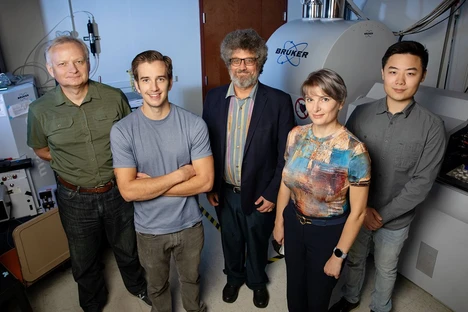
  • Photo: University of Illinois Urbana-Champaign / Fred Zwicky: Joseph Irudayaraj in the lab U. of I. bioengineering professor Joseph Irudayaraj and his colleagues found PFAS-contaminated fish in every one of the 15 sites they tested along four northern Illinois rivers.
  • Video: CBS Evening News: Fish contaminated with "forever chemicals" found in nearly every state

CHAMPAIGN, Ill. — Scientists tested nine fish species from four northern Illinois rivers for contamination with per- or polyfluoroalkyl substances, synthetic chemicals found in numerous industrial and commercial products and known to be harmful to human health. They found fish contaminated with PFAS in every one of their 15 test sites. Elevated levels of PFOS, one type of PFAS compound, were found in nearly all fish tested.

University of Illinois Urbana-Champaign / Fred Zwicky: Joseph Irudayaraj in the lab  U. of I. bioengineering professor Joseph Irudayaraj and his colleagues found PFAS-contaminated fish in every one of the 15 sites they tested along four northern Illinois rivers.University of Illinois Urbana-Champaign / Fred Zwicky: Joseph Irudayaraj in the lab U. of I. bioengineering professor Joseph Irudayaraj and his colleagues found PFAS-contaminated fish in every one of the 15 sites they tested along four northern Illinois rivers.

The findings are reported in the journal Science of the Total Environment.

The qualities that make PFAS desirable for industrial uses — their durability and stability under stresses such as high heat or exposure to water, for example — also make these chemicals particularly problematic in the environment and hazardous to human and animal health, said Joseph Irudayaraj, a professor of bioengineering at the University of Illinois Urbana-Champaign who led the new study.  

PFAS contain multiple carbon-fluorine bonds, one of the strongest bonds in organic chemistry,” Irudayaraj said. “Because of this, they are also very hard to break down. They persist for a long time because they are very, very stable.” 

There are nearly 15,000 PFAS chemicals, according to the U.S. Environmental Protection Agency. These are classified either as short-chain PFAS, which have less than six carbon-fluorine bonds, and long-chain PFAS, with six or more of these bonds, Irudayaraj said.

Long-chain PFAS were widely used before awareness grew about the hazards of these chemicals. More recently, many industries switched to using short-chain PFAS.

It was thought that the short-chain PFAS were less toxic, and that they could more easily degrade,” he said. “But surprisingly, that was not the case.” 

Now, both types of PFAS are found in groundwater, soil and human tissues.

About 99% of people living in the U.S. have PFAS in their system,” Irudayaraj said. 

Despite a voluntary phasing out of some PFAS in industry in the U.S. and efforts to reduce PFAS pollution, these chemicals are still found in drinking water, household products, food packaging and agricultural products, he said. 

The researchers focused on fish in northern Illinois rivers because they are close to urban and industrial areas. Industrial emissions and urban rainwater runoff may further contaminate local waterways with PFAS. Sport fishing is also popular across the state, including in areas inside and near Chicago. More than 666,000 fishing licenses were issued across the state of Illinois in 2020.

The researchers focused on fish in the Pecatonica River, Rock River, Sugar River and Yellow Creek from 2021-22. The team collected dozens of samples from nine species of fish, including bluegill, channel catfish, common carp, northern pike, smallmouth bass and walleye. The fish represented different levels of the food chain, from those that feed only on plants, like bluegill, to those eating other fish, such as channel catfish and northern pike. 

Back in the lab, the scientists analyzed fish tissues for 17 PFAS chemicals. They found PFAS-contaminated fish in every river they tested and in every one of their 15 sampling sites. Fish from the Rock River had the highest concentrations of PFAS in their tissues. Contamination levels were highest in channel catfish, at the top of the food chain, and lowest in the plant eaters. 

University of Illinois Urbana-Champaign / Eric Engbretson / USFWS: Channel catfish had the highest accumulation of PFAS in their tissues, the researchers found.University of Illinois Urbana-Champaign / Eric Engbretson / USFWS: Channel catfish had the highest accumulation of PFAS in their tissues, the researchers found.

Four chemicals known as perfluorooctanesulfonic acids or PFOS were detected in fish from every site tested. 

These are long-chain PFAS that have been in use over the past few decades,” Irudayaraj said. “They were found in all the sites, along with a few short-chain PFAS.” 

Because fish are mobile, it is problematic to tie their contamination levels to the locale where they were sampled, he said. But the finding is worrisome for people who are exposed to the water or eating the fish from these sites. 

Further studies are warranted to comprehensively evaluate the occurrence and sources of PFAS throughout the state of Illinois,” the researchers wrote. “Such information is crucial to better understand the distribution and potential risks of these compounds to the environment.

Bioengineering is a department in the The Grainger College of Engineering at Illinois. Irudayaraj also is a professor in the Beckman Institute for Advanced Science and Technology and an affiliate of the Carl R. Woese Institute for Genomic Biology and the Carle Illinois College of Medicine at the U. of I.

Resources
University of Illinois Urbana-Champaign
LinkedIn Logo
 

Related content

Oligonucleotide Analysis Using the Agilent InfinityLab Pro iQ and Altura Oligo HPH-C18 Column

Applications
| 2026 | Agilent Technologies
Instrumentation
LC/MS, LC/SQ, Consumables, LC columns
Manufacturer
Agilent Technologies
Industries
Pharma & Biopharma

Simultaneous Quantitation and Discovery analysis: Combining targeted and untargeted metabolomics on Orbitrap mass spectrometers

Applications
| 2026 | Thermo Fisher Scientific
Instrumentation
LC/MS, LC/MS/MS, LC/Orbitrap, LC/HRMS
Manufacturer
Thermo Fisher Scientific
Industries
Metabolomics

Analysis of Per- and Polyfluoroalkyl Substances (PFAS) in Wastewater

Applications
| 2026 | Agilent Technologies
Instrumentation
LC/MS, LC/MS/MS, LC/QQQ
Manufacturer
Agilent Technologies
Industries
Environmental

Non-Targeted Screening of Biosolids with the Xevo™ MRT Mass Spectrometer Reveals New Isoforms of PFAS

Applications
| 2026 | Waters
Instrumentation
LC/MS, LC/MS/MS, LC/TOF, LC/HRMS
Manufacturer
Waters
Industries
Environmental

High Resolution Characterization of Lipid Nanoparticles Using the Xevo™ Charge Detection Mass Spectrometry (CDMS) Instrument - Single Particle Mass Analysis of Intact LNP-mRNA Formulations

Applications
| 2026 | Waters
Instrumentation
LC/MS, LC/MS/MS, LC/HRMS, Particle characterization, LC/IT
Manufacturer
Waters
Industries
Lipidomics
 

Related articles

New analytical technique helps researchers spot subtle differences in subcellular chemistry
Article | Science and research

New analytical technique helps researchers spot subtle differences in subcellular chemistry

Researchers at the University of Illinois Urbana-Champaign can now rapidly isolate and chemically characterize individual organelles within cells.
University of Illinois Urbana-Champaign
tag
share
more
The Forever Problem: Part 1
Article | Video

The Forever Problem: Part 1

The University of Notre Dame is tackling “forever chemicals,” identifying environmental impacts, developing new ways to measure and manage contaminated water supplies, and exploring new methods of treatment.
University of Notre Dame
tag
share
more
The Forever Problem: Part 2 - How We Got Here
Article | Video

The Forever Problem: Part 2 - How We Got Here

Today, the Centers for Disease Control and Prevention reports PFAS is likely in the blood of more than 97 percent of Americans.
University of Notre Dame
tag
share
more
The Forever Problem: Part 4 - We Have A Responsibility
Article | Video

The Forever Problem: Part 4 - We Have A Responsibility

Professor Daniele Miranda tracks the flow of per- and polyfluoroalkyl substances (PFAS), also known as forever chemicals, through waterways to study the effects they have on local communities.
University of Notre Dame
tag
share
more
 

Related content

Oligonucleotide Analysis Using the Agilent InfinityLab Pro iQ and Altura Oligo HPH-C18 Column

Applications
| 2026 | Agilent Technologies
Instrumentation
LC/MS, LC/SQ, Consumables, LC columns
Manufacturer
Agilent Technologies
Industries
Pharma & Biopharma

Simultaneous Quantitation and Discovery analysis: Combining targeted and untargeted metabolomics on Orbitrap mass spectrometers

Applications
| 2026 | Thermo Fisher Scientific
Instrumentation
LC/MS, LC/MS/MS, LC/Orbitrap, LC/HRMS
Manufacturer
Thermo Fisher Scientific
Industries
Metabolomics

Analysis of Per- and Polyfluoroalkyl Substances (PFAS) in Wastewater

Applications
| 2026 | Agilent Technologies
Instrumentation
LC/MS, LC/MS/MS, LC/QQQ
Manufacturer
Agilent Technologies
Industries
Environmental

Non-Targeted Screening of Biosolids with the Xevo™ MRT Mass Spectrometer Reveals New Isoforms of PFAS

Applications
| 2026 | Waters
Instrumentation
LC/MS, LC/MS/MS, LC/TOF, LC/HRMS
Manufacturer
Waters
Industries
Environmental

High Resolution Characterization of Lipid Nanoparticles Using the Xevo™ Charge Detection Mass Spectrometry (CDMS) Instrument - Single Particle Mass Analysis of Intact LNP-mRNA Formulations

Applications
| 2026 | Waters
Instrumentation
LC/MS, LC/MS/MS, LC/HRMS, Particle characterization, LC/IT
Manufacturer
Waters
Industries
Lipidomics
 

Related articles

New analytical technique helps researchers spot subtle differences in subcellular chemistry
Article | Science and research

New analytical technique helps researchers spot subtle differences in subcellular chemistry

Researchers at the University of Illinois Urbana-Champaign can now rapidly isolate and chemically characterize individual organelles within cells.
University of Illinois Urbana-Champaign
tag
share
more
The Forever Problem: Part 1
Article | Video

The Forever Problem: Part 1

The University of Notre Dame is tackling “forever chemicals,” identifying environmental impacts, developing new ways to measure and manage contaminated water supplies, and exploring new methods of treatment.
University of Notre Dame
tag
share
more
The Forever Problem: Part 2 - How We Got Here
Article | Video

The Forever Problem: Part 2 - How We Got Here

Today, the Centers for Disease Control and Prevention reports PFAS is likely in the blood of more than 97 percent of Americans.
University of Notre Dame
tag
share
more
The Forever Problem: Part 4 - We Have A Responsibility
Article | Video

The Forever Problem: Part 4 - We Have A Responsibility

Professor Daniele Miranda tracks the flow of per- and polyfluoroalkyl substances (PFAS), also known as forever chemicals, through waterways to study the effects they have on local communities.
University of Notre Dame
tag
share
more
 

Related content

Oligonucleotide Analysis Using the Agilent InfinityLab Pro iQ and Altura Oligo HPH-C18 Column

Applications
| 2026 | Agilent Technologies
Instrumentation
LC/MS, LC/SQ, Consumables, LC columns
Manufacturer
Agilent Technologies
Industries
Pharma & Biopharma

Simultaneous Quantitation and Discovery analysis: Combining targeted and untargeted metabolomics on Orbitrap mass spectrometers

Applications
| 2026 | Thermo Fisher Scientific
Instrumentation
LC/MS, LC/MS/MS, LC/Orbitrap, LC/HRMS
Manufacturer
Thermo Fisher Scientific
Industries
Metabolomics

Analysis of Per- and Polyfluoroalkyl Substances (PFAS) in Wastewater

Applications
| 2026 | Agilent Technologies
Instrumentation
LC/MS, LC/MS/MS, LC/QQQ
Manufacturer
Agilent Technologies
Industries
Environmental

Non-Targeted Screening of Biosolids with the Xevo™ MRT Mass Spectrometer Reveals New Isoforms of PFAS

Applications
| 2026 | Waters
Instrumentation
LC/MS, LC/MS/MS, LC/TOF, LC/HRMS
Manufacturer
Waters
Industries
Environmental

High Resolution Characterization of Lipid Nanoparticles Using the Xevo™ Charge Detection Mass Spectrometry (CDMS) Instrument - Single Particle Mass Analysis of Intact LNP-mRNA Formulations

Applications
| 2026 | Waters
Instrumentation
LC/MS, LC/MS/MS, LC/HRMS, Particle characterization, LC/IT
Manufacturer
Waters
Industries
Lipidomics
 

Related articles

New analytical technique helps researchers spot subtle differences in subcellular chemistry
Article | Science and research

New analytical technique helps researchers spot subtle differences in subcellular chemistry

Researchers at the University of Illinois Urbana-Champaign can now rapidly isolate and chemically characterize individual organelles within cells.
University of Illinois Urbana-Champaign
tag
share
more
The Forever Problem: Part 1
Article | Video

The Forever Problem: Part 1

The University of Notre Dame is tackling “forever chemicals,” identifying environmental impacts, developing new ways to measure and manage contaminated water supplies, and exploring new methods of treatment.
University of Notre Dame
tag
share
more
The Forever Problem: Part 2 - How We Got Here
Article | Video

The Forever Problem: Part 2 - How We Got Here

Today, the Centers for Disease Control and Prevention reports PFAS is likely in the blood of more than 97 percent of Americans.
University of Notre Dame
tag
share
more
The Forever Problem: Part 4 - We Have A Responsibility
Article | Video

The Forever Problem: Part 4 - We Have A Responsibility

Professor Daniele Miranda tracks the flow of per- and polyfluoroalkyl substances (PFAS), also known as forever chemicals, through waterways to study the effects they have on local communities.
University of Notre Dame
tag
share
more
 

Related content

Oligonucleotide Analysis Using the Agilent InfinityLab Pro iQ and Altura Oligo HPH-C18 Column

Applications
| 2026 | Agilent Technologies
Instrumentation
LC/MS, LC/SQ, Consumables, LC columns
Manufacturer
Agilent Technologies
Industries
Pharma & Biopharma

Simultaneous Quantitation and Discovery analysis: Combining targeted and untargeted metabolomics on Orbitrap mass spectrometers

Applications
| 2026 | Thermo Fisher Scientific
Instrumentation
LC/MS, LC/MS/MS, LC/Orbitrap, LC/HRMS
Manufacturer
Thermo Fisher Scientific
Industries
Metabolomics

Analysis of Per- and Polyfluoroalkyl Substances (PFAS) in Wastewater

Applications
| 2026 | Agilent Technologies
Instrumentation
LC/MS, LC/MS/MS, LC/QQQ
Manufacturer
Agilent Technologies
Industries
Environmental

Non-Targeted Screening of Biosolids with the Xevo™ MRT Mass Spectrometer Reveals New Isoforms of PFAS

Applications
| 2026 | Waters
Instrumentation
LC/MS, LC/MS/MS, LC/TOF, LC/HRMS
Manufacturer
Waters
Industries
Environmental

High Resolution Characterization of Lipid Nanoparticles Using the Xevo™ Charge Detection Mass Spectrometry (CDMS) Instrument - Single Particle Mass Analysis of Intact LNP-mRNA Formulations

Applications
| 2026 | Waters
Instrumentation
LC/MS, LC/MS/MS, LC/HRMS, Particle characterization, LC/IT
Manufacturer
Waters
Industries
Lipidomics
 

Related articles

New analytical technique helps researchers spot subtle differences in subcellular chemistry
Article | Science and research

New analytical technique helps researchers spot subtle differences in subcellular chemistry

Researchers at the University of Illinois Urbana-Champaign can now rapidly isolate and chemically characterize individual organelles within cells.
University of Illinois Urbana-Champaign
tag
share
more
The Forever Problem: Part 1
Article | Video

The Forever Problem: Part 1

The University of Notre Dame is tackling “forever chemicals,” identifying environmental impacts, developing new ways to measure and manage contaminated water supplies, and exploring new methods of treatment.
University of Notre Dame
tag
share
more
The Forever Problem: Part 2 - How We Got Here
Article | Video

The Forever Problem: Part 2 - How We Got Here

Today, the Centers for Disease Control and Prevention reports PFAS is likely in the blood of more than 97 percent of Americans.
University of Notre Dame
tag
share
more
The Forever Problem: Part 4 - We Have A Responsibility
Article | Video

The Forever Problem: Part 4 - We Have A Responsibility

Professor Daniele Miranda tracks the flow of per- and polyfluoroalkyl substances (PFAS), also known as forever chemicals, through waterways to study the effects they have on local communities.
University of Notre Dame
tag
share
more
Other projects
GCMS
ICPMS
Follow us
FacebookX (Twitter)LinkedInYouTube
More information
WebinarsAbout usContact usTerms of use
LabRulez s.r.o. All rights reserved. Content available under a CC BY-SA 4.0 Attribution-ShareAlike