LCMS
More information
WebinarsAbout usContact usTerms of use
LabRulez s.r.o. All rights reserved. Content available under a CC BY-SA 4.0 Attribution-ShareAlike
Author
UCT Prague
UCT Prague
The University of Chemistry and Technology, Prague is a natural centre of first-rate study and research in the area of chemistry in Czechia and is one of the country's largest educational and research institutions focused on technical chemistry, chemical and biochemical technologies, material and chemical engineering, food chemistry, and environmental studies.
Tags
Article
Science and research
Scientists
LinkedIn Logo

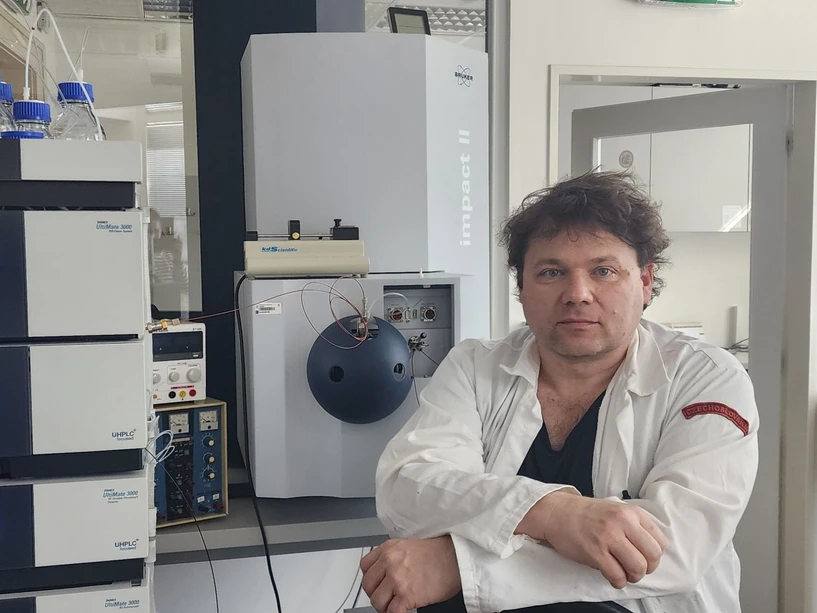
How to control ions? Dr. Michael Volný’s Czech Science Foundation project investigates new possibilities in mass spectrometry
Tu, 8.4.2025
| Original article from: VŠCHT Praha / Jakub Drahonský
A new project supported by the Czech Science Foundation (GACR) focuses on a detailed study of ions produced in electrospray and their potential use beyond analytical chemistry.
<p><strong>University of Chemistry and Technology, Prague: </strong>How to control ions? Dr. Michael Volný’s Czech Science Foundation project investigates new possibilities in mass spectrometry</p>

University of Chemistry and Technology, Prague: How to control ions? Dr. Michael Volný’s Czech Science Foundation project investigates new possibilities in mass spectrometry

Ions produced in electrospray are the key to modern mass spectrometry, but their behaviour still contains many unknowns. A new project supported by the Czech Science Foundation (GACR) focuses on a detailed study of these ions and their potential use beyond analytical chemistry (for example, for innovative surface modifications). What new technologies might this research lead to and how will the research team deal with unexpected challenges?

How would you describe your project to a layperson in a few sentences? Why it is important?

Our project studies the formation and behaviour of ions in the gas phase that are created by so-called electrospray, a device invented more than a hundred years ago in Minnesota by physicist John Zeleny, who had Czech parents. Electrospray has found many applications and was even awarded the Nobel Prize for its use as an ion source for mass spectrometry. We in the molecular mass spectrometry group are trying to study the behaviour and properties of ions created in this way and are developing techniques that will enable their use for original surface modifications. This is why our project is called IonSurf (Ions and Surfaces).

What inspired you to choose this topic? Was it a specific challenge you wanted to address, or a kind of natural continuation of your previous work?

For me, it is very much a return to the beginning of my career twenty years ago and to the problems I had already solved as a doctoral student at the University of Washington in Seattle. I spent a large part of my life abroad in corporate research. Now, after returning to academia, I was interested in what unsolved problems I could discover in my original field after so many years. I was surprised on all sides, by what various smart people have done in my field during these two decades, and conversely, by the things that no one has investigated yet or been able to solve.

What is the main goal of your research?

To improve our ability to work with ions in the gas phase and find applications for them outside mass spectrometry as well. We want to try to improve the efficiency of working with electrospray, which should lead to better detection limits in mass spectrometry. We are also trying to develop methods for modifying surfaces with desolvation-mediated protein ions. That is, to be able to give surfaces protein properties that cannot be achieved by immobilization using classical chemistry in solution. But we are analytical chemists, so we always have in mind how we could use this for various new forms of detection.

What do you think captured the selection committee’s attention the most?

The international reviewers appreciated the difficulty and novelty of the proposed research. On the other hand, it is fair to say that, given that GACR has been underfunded for a long time, receiving a grant is a bit of a lottery. None of us who have recently been successful with grants should feel as if we are better scientists than others who unfortunately did not get funded. The chance factor is simply too big with GACR. I think I was just lucky to some extent.

Will the project lead to any specific applications or technologies?

We have several applications in the project that are perhaps more “fiction” than “science”. One of them is, for example, the immobilization of a relatively newly described enzyme, hydrogenase Huc, which is able to obtain electrons from hydrogen gas, onto suitably selected nanomaterials and the creation of a molecular fuel cell.

What makes your project unique?

I wouldn’t dare to say that it is more unique than other projects, but its combination of analytical and materials chemistry makes it quite interesting.

With whom are you collaborating on the project?

The project is primarily focused on collaboration with a Taiwanese colleague who is the head of the Department of Physics at National Dong Hwa University in Taiwan and is working on similar topics. We plan to obtain some nanomaterials from the Weizmann Institute in Rehovot and have great support from colleagues at Biocev in Vestek, especially in terms of protein production and expertise in protein chemistry. The Military Heath Institute in Prague is interested in one aspect of the technology, namely the detection array for particularly dangerous toxins.

What obstacles or challenges do you anticipate during the project? Do you already have strategies for overcoming them?

It is likely that the experiments will not work out as I originally expected. So, everything will be a challenge. But you have to ask yourself questions that you don’t know the answer to in advance; otherwise, it’s not research. You can’t avoid hard problems. I once worked at a Californian start-up where an institutional investor forced us to come to market with a device that was not finished. Even though we were rewarded well with financial bonuses for meeting the deadline, I still feel bad about it. It is the same with basic research. It makes no sense to do easy things and then send the results to some predatory journal and pretend that’s it. The best strategy for overcoming obstacles is a small, effective team comprised of intelligent collaborators. I have a very smart and capable colleague—we supervise Master and Bachelor students in our lab together—and I hope to add a few doctoral students soon.

What brings you the most joy in working on this project?

The opportunity to “play with boxes”, as someone once jokingly but truthfully defined work in the field of chemical instrumentation. Simply the freedom to do chemistry.

What theoretically should happen with your research after the project is completed?

I hope that thanks to this grant, three talented students will be able to complete their doctoral studies in our laboratory. Passing on the maximum possible part of the experience is both a big challenge for me and a goal in itself. All my colleagues are significantly younger than me, and I think they would like it if we managed to put something into practical application, perhaps in the form of a spin-off. This would be a suitable goal and continuation of our research. Unfortunately, this is still not easy in the Czech Republic, even when things are already working in the laboratory. We are still very far from that reality. So I will let myself be surprised and am ready for anything. As Bill Murray says in the movie Aloha:The future isn’t just something that happens. It’s a brutal force, with a great sense of humour, that’ll steamroll you if you’re not watching.”

UCT Prague
LinkedIn Logo
 

Related content

Overcoming Strong Solvent Effects in the Analysis of Vepdegestrant

Applications
| 2026 | Agilent Technologies
Instrumentation
HPLC
Manufacturer
Agilent Technologies
Industries
Pharma & Biopharma

Identification of Double Bond Positions and Relative Acyl Chain Positions in Egg Yolk Phosphatidylcholines Using OAD-TOF System

Applications
| 2026 | Shimadzu
Instrumentation
LC/MS, LC/MS/MS, LC/TOF, LC/HRMS
Manufacturer
Shimadzu
Industries
Food & Agriculture

High Molecular-Weight Polysaccharide Characterization by SEC-MALS Using GTxResolve™ 1000 and 2000 Å SEC Columns

Applications
| 2026 | Waters
Instrumentation
GPC/SEC, Consumables, LC columns
Manufacturer
Waters
Industries
Pharma & Biopharma, Food & Agriculture

Development and Optimization for a Comprehensive LC/MS/MS Method for the Detection of 74 PFAS Compounds

Applications
| 2026 | Agilent Technologies
Instrumentation
LC/MS, LC/MS/MS, LC/QQQ
Manufacturer
Agilent Technologies
Industries
Food & Agriculture

PFAS in Biota: Risk Context & Robust Analytical Solutions

Others
| 2026 | ALS Europe
Instrumentation
Laboratory analysis, LC/MS, LC/MS/MS
Manufacturer
Industries
Environmental
 

Related articles

JUNIOR STAR Grants at UCT Prague: Two talented women from abroad driving innovation in science
Article | Scientists

JUNIOR STAR Grants at UCT Prague: Two talented women from abroad driving innovation in science

Two outstanding early-career researchers at UCT Prague, Filipa Oliveira and Stella Gonsales, received prestigious GAČR JUNIOR STAR grants for innovative research in materials science and sustainable chemistry.
UCT Prague
tag
share
more
Research from IOCB Prague reveals a previously unknown mechanism of genetic transcription
Article | Science and research

Research from IOCB Prague reveals a previously unknown mechanism of genetic transcription

Scientists at IOCB Prague reveal a previously unknown mechanism that initiates gene transcription. Using cryo-EM, they uncover how alarmone molecules enable RNA synthesis under stress.
Institute of Organic Chemistry and Biochemistry of the Czech Academy of Sciences
tag
share
more
Food Adulteration and How It Is Revealed by Analytical Chemistry
Article | Food

Food Adulteration and How It Is Revealed by Analytical Chemistry

Food adulteration threatens quality and consumer trust. Discover how HPLC and modern chromatographic systems from Watrex Praha help identify oil, honey, and wine adulteration with high confidence.
Watrex Praha
tag
share
more
Affinity, Gel Filtration, Size Exclusion Chromatography: Repurposing Kinase Inhibitors for Malaria
Interview | Video

Affinity, Gel Filtration, Size Exclusion Chromatography: Repurposing Kinase Inhibitors for Malaria

This podcast explores how chromatography (FPLC/SEC) and mass spectrometry support malaria drug discovery, from protein purification and QC to interaction studies and complex sample preparation.
Organomation
tag
share
more
 

Related content

Overcoming Strong Solvent Effects in the Analysis of Vepdegestrant

Applications
| 2026 | Agilent Technologies
Instrumentation
HPLC
Manufacturer
Agilent Technologies
Industries
Pharma & Biopharma

Identification of Double Bond Positions and Relative Acyl Chain Positions in Egg Yolk Phosphatidylcholines Using OAD-TOF System

Applications
| 2026 | Shimadzu
Instrumentation
LC/MS, LC/MS/MS, LC/TOF, LC/HRMS
Manufacturer
Shimadzu
Industries
Food & Agriculture

High Molecular-Weight Polysaccharide Characterization by SEC-MALS Using GTxResolve™ 1000 and 2000 Å SEC Columns

Applications
| 2026 | Waters
Instrumentation
GPC/SEC, Consumables, LC columns
Manufacturer
Waters
Industries
Pharma & Biopharma, Food & Agriculture

Development and Optimization for a Comprehensive LC/MS/MS Method for the Detection of 74 PFAS Compounds

Applications
| 2026 | Agilent Technologies
Instrumentation
LC/MS, LC/MS/MS, LC/QQQ
Manufacturer
Agilent Technologies
Industries
Food & Agriculture

PFAS in Biota: Risk Context & Robust Analytical Solutions

Others
| 2026 | ALS Europe
Instrumentation
Laboratory analysis, LC/MS, LC/MS/MS
Manufacturer
Industries
Environmental
 

Related articles

JUNIOR STAR Grants at UCT Prague: Two talented women from abroad driving innovation in science
Article | Scientists

JUNIOR STAR Grants at UCT Prague: Two talented women from abroad driving innovation in science

Two outstanding early-career researchers at UCT Prague, Filipa Oliveira and Stella Gonsales, received prestigious GAČR JUNIOR STAR grants for innovative research in materials science and sustainable chemistry.
UCT Prague
tag
share
more
Research from IOCB Prague reveals a previously unknown mechanism of genetic transcription
Article | Science and research

Research from IOCB Prague reveals a previously unknown mechanism of genetic transcription

Scientists at IOCB Prague reveal a previously unknown mechanism that initiates gene transcription. Using cryo-EM, they uncover how alarmone molecules enable RNA synthesis under stress.
Institute of Organic Chemistry and Biochemistry of the Czech Academy of Sciences
tag
share
more
Food Adulteration and How It Is Revealed by Analytical Chemistry
Article | Food

Food Adulteration and How It Is Revealed by Analytical Chemistry

Food adulteration threatens quality and consumer trust. Discover how HPLC and modern chromatographic systems from Watrex Praha help identify oil, honey, and wine adulteration with high confidence.
Watrex Praha
tag
share
more
Affinity, Gel Filtration, Size Exclusion Chromatography: Repurposing Kinase Inhibitors for Malaria
Interview | Video

Affinity, Gel Filtration, Size Exclusion Chromatography: Repurposing Kinase Inhibitors for Malaria

This podcast explores how chromatography (FPLC/SEC) and mass spectrometry support malaria drug discovery, from protein purification and QC to interaction studies and complex sample preparation.
Organomation
tag
share
more
 

Related content

Overcoming Strong Solvent Effects in the Analysis of Vepdegestrant

Applications
| 2026 | Agilent Technologies
Instrumentation
HPLC
Manufacturer
Agilent Technologies
Industries
Pharma & Biopharma

Identification of Double Bond Positions and Relative Acyl Chain Positions in Egg Yolk Phosphatidylcholines Using OAD-TOF System

Applications
| 2026 | Shimadzu
Instrumentation
LC/MS, LC/MS/MS, LC/TOF, LC/HRMS
Manufacturer
Shimadzu
Industries
Food & Agriculture

High Molecular-Weight Polysaccharide Characterization by SEC-MALS Using GTxResolve™ 1000 and 2000 Å SEC Columns

Applications
| 2026 | Waters
Instrumentation
GPC/SEC, Consumables, LC columns
Manufacturer
Waters
Industries
Pharma & Biopharma, Food & Agriculture

Development and Optimization for a Comprehensive LC/MS/MS Method for the Detection of 74 PFAS Compounds

Applications
| 2026 | Agilent Technologies
Instrumentation
LC/MS, LC/MS/MS, LC/QQQ
Manufacturer
Agilent Technologies
Industries
Food & Agriculture

PFAS in Biota: Risk Context & Robust Analytical Solutions

Others
| 2026 | ALS Europe
Instrumentation
Laboratory analysis, LC/MS, LC/MS/MS
Manufacturer
Industries
Environmental
 

Related articles

JUNIOR STAR Grants at UCT Prague: Two talented women from abroad driving innovation in science
Article | Scientists

JUNIOR STAR Grants at UCT Prague: Two talented women from abroad driving innovation in science

Two outstanding early-career researchers at UCT Prague, Filipa Oliveira and Stella Gonsales, received prestigious GAČR JUNIOR STAR grants for innovative research in materials science and sustainable chemistry.
UCT Prague
tag
share
more
Research from IOCB Prague reveals a previously unknown mechanism of genetic transcription
Article | Science and research

Research from IOCB Prague reveals a previously unknown mechanism of genetic transcription

Scientists at IOCB Prague reveal a previously unknown mechanism that initiates gene transcription. Using cryo-EM, they uncover how alarmone molecules enable RNA synthesis under stress.
Institute of Organic Chemistry and Biochemistry of the Czech Academy of Sciences
tag
share
more
Food Adulteration and How It Is Revealed by Analytical Chemistry
Article | Food

Food Adulteration and How It Is Revealed by Analytical Chemistry

Food adulteration threatens quality and consumer trust. Discover how HPLC and modern chromatographic systems from Watrex Praha help identify oil, honey, and wine adulteration with high confidence.
Watrex Praha
tag
share
more
Affinity, Gel Filtration, Size Exclusion Chromatography: Repurposing Kinase Inhibitors for Malaria
Interview | Video

Affinity, Gel Filtration, Size Exclusion Chromatography: Repurposing Kinase Inhibitors for Malaria

This podcast explores how chromatography (FPLC/SEC) and mass spectrometry support malaria drug discovery, from protein purification and QC to interaction studies and complex sample preparation.
Organomation
tag
share
more
 

Related content

Overcoming Strong Solvent Effects in the Analysis of Vepdegestrant

Applications
| 2026 | Agilent Technologies
Instrumentation
HPLC
Manufacturer
Agilent Technologies
Industries
Pharma & Biopharma

Identification of Double Bond Positions and Relative Acyl Chain Positions in Egg Yolk Phosphatidylcholines Using OAD-TOF System

Applications
| 2026 | Shimadzu
Instrumentation
LC/MS, LC/MS/MS, LC/TOF, LC/HRMS
Manufacturer
Shimadzu
Industries
Food & Agriculture

High Molecular-Weight Polysaccharide Characterization by SEC-MALS Using GTxResolve™ 1000 and 2000 Å SEC Columns

Applications
| 2026 | Waters
Instrumentation
GPC/SEC, Consumables, LC columns
Manufacturer
Waters
Industries
Pharma & Biopharma, Food & Agriculture

Development and Optimization for a Comprehensive LC/MS/MS Method for the Detection of 74 PFAS Compounds

Applications
| 2026 | Agilent Technologies
Instrumentation
LC/MS, LC/MS/MS, LC/QQQ
Manufacturer
Agilent Technologies
Industries
Food & Agriculture

PFAS in Biota: Risk Context & Robust Analytical Solutions

Others
| 2026 | ALS Europe
Instrumentation
Laboratory analysis, LC/MS, LC/MS/MS
Manufacturer
Industries
Environmental
 

Related articles

JUNIOR STAR Grants at UCT Prague: Two talented women from abroad driving innovation in science
Article | Scientists

JUNIOR STAR Grants at UCT Prague: Two talented women from abroad driving innovation in science

Two outstanding early-career researchers at UCT Prague, Filipa Oliveira and Stella Gonsales, received prestigious GAČR JUNIOR STAR grants for innovative research in materials science and sustainable chemistry.
UCT Prague
tag
share
more
Research from IOCB Prague reveals a previously unknown mechanism of genetic transcription
Article | Science and research

Research from IOCB Prague reveals a previously unknown mechanism of genetic transcription

Scientists at IOCB Prague reveal a previously unknown mechanism that initiates gene transcription. Using cryo-EM, they uncover how alarmone molecules enable RNA synthesis under stress.
Institute of Organic Chemistry and Biochemistry of the Czech Academy of Sciences
tag
share
more
Food Adulteration and How It Is Revealed by Analytical Chemistry
Article | Food

Food Adulteration and How It Is Revealed by Analytical Chemistry

Food adulteration threatens quality and consumer trust. Discover how HPLC and modern chromatographic systems from Watrex Praha help identify oil, honey, and wine adulteration with high confidence.
Watrex Praha
tag
share
more
Affinity, Gel Filtration, Size Exclusion Chromatography: Repurposing Kinase Inhibitors for Malaria
Interview | Video

Affinity, Gel Filtration, Size Exclusion Chromatography: Repurposing Kinase Inhibitors for Malaria

This podcast explores how chromatography (FPLC/SEC) and mass spectrometry support malaria drug discovery, from protein purification and QC to interaction studies and complex sample preparation.
Organomation
tag
share
more
Other projects
GCMS
ICPMS
Follow us
More information
WebinarsAbout usContact usTerms of use
LabRulez s.r.o. All rights reserved. Content available under a CC BY-SA 4.0 Attribution-ShareAlike