Author
Institute of Organic Chemistry and Biochemistry of the Czech Academy of Sciences
The Institute of Organic Chemistry and Biochemistry of the Czech Academy of Sciences (IOCB Prague) is a leading scientific institution in the Czech Republic, recognized internationally. Its primary mission is basic research in the fields of chemical biology and medicinal chemistry, organic and material oriented chemistry, chemistry of natural compounds, biochemistry and molecular biology, physical chemistry, theoretical chemistry, and analytical chemistry.
Tags
Article
Science and research
Health
LinkedIn Logo

Researchers tame a deadly fungus that threatens immunocompromised patients

Fr, 11.7.2025
| Original article from: IOCB Prague
A team led by Prof. Jan Konvalinka has developed a compound that destroys the yeast Cryptococcus neoformans – a fungus which is life-threatening for people with weakened immune systems – in laboratory settings.
<p><strong>IOCB Prague/Tomáš Belloň:</strong> Robin Kryštůfek, PhD student in Jan Konvalinka Group 'Proteases of Human Pathogens' at IOCB Prague</p>

IOCB Prague/Tomáš Belloň: Robin Kryštůfek, PhD student in Jan Konvalinka Group 'Proteases of Human Pathogens' at IOCB Prague

A team led by Prof. Jan Konvalinka has developed a compound that destroys the yeast Cryptococcus neoformans – a fungus which is life-threatening for people with weakened immune systems – in laboratory settings. Researchers at IOCB have created a new method for synthesizing macrocyclic compounds – small, ring-shaped molecules. Using this approach, they discovered a highly promising compound that kills the fungus in lab cultures, does not harm human cells, and is effectively entering the bloodstream when administered orally, as demonstrated in mice. The study was published in the Journal of Medicinal Chemistry.

IOCB Prague: Researchers tame a deadly fungus that threatens immunocompromised patients: Simplified chemical scheme of the synthesis of macrocyclic inhibitors, which give rise to orally available antifungal compounds. The new method enables the assembly of small cyclic molecules directly on a solid support, allowing for the creation of an entire library of candidate compounds much faster than before. X-ray structural analysis shows how compound 25 fits into the pocket of the active site of the target enzyme Major Aspartyl Peptidase 1, thereby blocking its activity and limiting the growth of yeast.IOCB Prague: Researchers tame a deadly fungus that threatens immunocompromised patients: Simplified chemical scheme of the synthesis of macrocyclic inhibitors, which give rise to orally available antifungal compounds. The new method enables the assembly of small cyclic molecules directly on a solid support, allowing for the creation of an entire library of candidate compounds much faster than before. X-ray structural analysis shows how compound 25 fits into the pocket of the active site of the target enzyme Major Aspartyl Peptidase 1, thereby blocking its activity and limiting the growth of yeast.

The head of the research group behind the discovery and the director of IOCB Prague, Jan Konvalinka, emphasizes that this was an exceptional collaboration.

“The authorship team is particularly interesting. The first author of the study, Robin Kryštůfek, joined my lab already during his high school studies, and the second author, Václav Verner, only recently graduated from secondary school. Working with such students is truly a pleasure,” says Professor Konvalinka.

Cryptococcus causes a disease known as cryptococcosis. The yeast enters the body through the respiratory tract and can reach the brain, leading to meningitis in transplant patients or people with AIDS – a frequently fatal complication for those with compromised immune systems. The fungus is commonly found in pigeon droppings and spreads through the air.

The IOCB team focused on a particularly problematic variant of this fungus: C. neoformans. This strain is more insidious and aggressive due to an enzyme called May1 aspartic protease. The enzyme subtly alters the fungal cell wall, helping the pathogen evade the host's immune response and survive in hostile environments.

“We’re essentially trying to muzzle the protease so it can’t help the cryptococcal cells ‘change their coats’ and hide from the immune system,” explains Robin Kryštůfek, PhD student and first author of the study. “Once the enzyme is blocked, the immune system can detect and eliminate the fungus on its own.”

To this end, the team developed a new series of macrocyclic compounds designed specifically to inhibit the May1 enzyme. Their entirely novel approach allowed them to generate a full library of molecules. Previously, macrocyclic inhibitors had to be synthesized one by one in a complicated process – something now made obsolete by this breakthrough.

“Our key contribution is that we managed to synthesize a large number of inhibitors simultaneously,” Kryštůfek adds. “This enabled us to discover two compounds that enter the systemic circulation in mice after simple oral administration.”

The most promising of these (Compound 25) functions by fitting into the active site of the target enzyme like a perfect puzzle piece. Its unique shape enhances both the strength and specificity of binding. As a result, the compound is less likely to interfere with other proteins in the body and less likely to be toxic.

IOCB Prague: Researchers tame a deadly fungus that threatens immunocompromised patients: Growth charts of yeast cultures of Cryptococcus neoformans under various conditions. Growth analysis revealed that certain concentrations of the newly discovered compounds 9 and 25 slow down yeast growth comparably to clinically used drugs.IOCB Prague: Researchers tame a deadly fungus that threatens immunocompromised patients: Growth charts of yeast cultures of Cryptococcus neoformans under various conditions. Growth analysis revealed that certain concentrations of the newly discovered compounds 9 and 25 slow down yeast growth comparably to clinically used drugs.

Resources

Original article

  • Kryštůfek, R.; Verner, V.; Šácha, P.; Hadzima, M.; Trajhan, F.; Starková, J.; Tloušt’ová, E.; Dvořáková, A.; Pecina, A.; Brynda, J.; Chalupský, K.; Hájek, M.; Boucher, M. J.; Majer, P.; Řezáč, J.; Madhani, H. D.; Craik, C. S.; Konvalinka, J. On-Resin Assembly of Macrocyclic Inhibitors of Cryptococcus neoformans May1: A Pathway to Potent Antifungal Agents. J. Med. Chem. 2025. https://doi.org/10.1021/acs.jmedchem.5c00396 
Institute of Organic Chemistry and Biochemistry of the Czech Academy of Sciences
LinkedIn Logo
 

Related content

Simultaneous Quantitation and Discovery analysis: Combining targeted and untargeted metabolomics on Orbitrap mass spectrometers

Applications
| 2026 | Thermo Fisher Scientific
Instrumentation
LC/MS, LC/MS/MS, LC/Orbitrap, LC/HRMS
Manufacturer
Thermo Fisher Scientific
Industries
Metabolomics

Analysis of Per- and Polyfluoroalkyl Substances (PFAS) in Wastewater

Applications
| 2026 | Agilent Technologies
Instrumentation
LC/MS, LC/MS/MS, LC/QQQ
Manufacturer
Agilent Technologies
Industries
Environmental

Non-Targeted Screening of Biosolids with the Xevo™ MRT Mass Spectrometer Reveals New Isoforms of PFAS

Applications
| 2026 | Waters
Instrumentation
LC/MS, LC/MS/MS, LC/TOF, LC/HRMS
Manufacturer
Waters
Industries
Environmental

High Resolution Characterization of Lipid Nanoparticles Using the Xevo™ Charge Detection Mass Spectrometry (CDMS) Instrument - Single Particle Mass Analysis of Intact LNP-mRNA Formulations

Applications
| 2026 | Waters
Instrumentation
LC/MS, LC/MS/MS, LC/HRMS, Particle characterization, LC/IT
Manufacturer
Waters
Industries
Lipidomics

Out-of-the-box workflow for PFAS quantitation using a fullscan high-resolution approach with the Orbitrap Exploris EFOX Mass Detector

Applications
| 2025 | Thermo Fisher Scientific
Instrumentation
LC/MS, LC/MS/MS, LC/Orbitrap, LC/HRMS
Manufacturer
Thermo Fisher Scientific
Industries
Environmental
 

Related articles

Scientists from IOCB Prague are on track of finding a treatment for alopecia
Article | Science and research

Scientists from IOCB Prague are on track of finding a treatment for alopecia

The scientific team of Dr. Pavel Majer from the IOCB of the CAS has developed a new substance with the potential to treat the autoimmune disease alopecia areata, which is manifested by hair loss.
Institute of Organic Chemistry and Biochemistry of the Czech Academy of Sciences
tag
share
more
Alcohol causes cancer. A study from IOCB Prague confirms damage to DNA and shows how cells defend against it
Article | Science and research

Alcohol causes cancer. A study from IOCB Prague confirms damage to DNA and shows how cells defend against it

Alcohol consumption produces acetaldehyde, a toxic compound that damages DNA. Scientists from IOCB Prague reveal how cells repair this damage, shedding light on the link between alcohol and cancer.
Institute of Organic Chemistry and Biochemistry of the Czech Academy of Sciences
tag
share
more
Affinity, Gel Filtration, Size Exclusion Chromatography: Repurposing Kinase Inhibitors for Malaria
Interview | Video

Affinity, Gel Filtration, Size Exclusion Chromatography: Repurposing Kinase Inhibitors for Malaria

This podcast explores how chromatography (FPLC/SEC) and mass spectrometry support malaria drug discovery, from protein purification and QC to interaction studies and complex sample preparation.
Organomation
tag
share
more
Development of potent inhibitors to boost the immune system's ability to fight cancer
Article | Science and research

Development of potent inhibitors to boost the immune system's ability to fight cancer

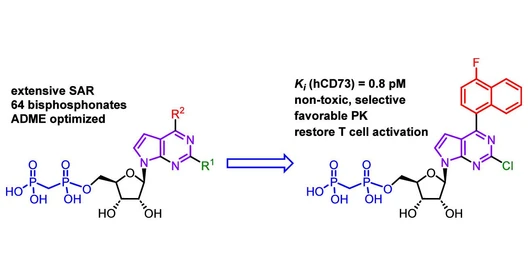
IOCB Prague researchers developed potent CD73 inhibitors that restore T cell activity and reduce adenosine, opening new paths for cancer immunotherapy.
Institute of Organic Chemistry and Biochemistry of the Czech Academy of Sciences
tag
share
more
 

Related content

Simultaneous Quantitation and Discovery analysis: Combining targeted and untargeted metabolomics on Orbitrap mass spectrometers

Applications
| 2026 | Thermo Fisher Scientific
Instrumentation
LC/MS, LC/MS/MS, LC/Orbitrap, LC/HRMS
Manufacturer
Thermo Fisher Scientific
Industries
Metabolomics

Analysis of Per- and Polyfluoroalkyl Substances (PFAS) in Wastewater

Applications
| 2026 | Agilent Technologies
Instrumentation
LC/MS, LC/MS/MS, LC/QQQ
Manufacturer
Agilent Technologies
Industries
Environmental

Non-Targeted Screening of Biosolids with the Xevo™ MRT Mass Spectrometer Reveals New Isoforms of PFAS

Applications
| 2026 | Waters
Instrumentation
LC/MS, LC/MS/MS, LC/TOF, LC/HRMS
Manufacturer
Waters
Industries
Environmental

High Resolution Characterization of Lipid Nanoparticles Using the Xevo™ Charge Detection Mass Spectrometry (CDMS) Instrument - Single Particle Mass Analysis of Intact LNP-mRNA Formulations

Applications
| 2026 | Waters
Instrumentation
LC/MS, LC/MS/MS, LC/HRMS, Particle characterization, LC/IT
Manufacturer
Waters
Industries
Lipidomics

Out-of-the-box workflow for PFAS quantitation using a fullscan high-resolution approach with the Orbitrap Exploris EFOX Mass Detector

Applications
| 2025 | Thermo Fisher Scientific
Instrumentation
LC/MS, LC/MS/MS, LC/Orbitrap, LC/HRMS
Manufacturer
Thermo Fisher Scientific
Industries
Environmental
 

Related articles

Scientists from IOCB Prague are on track of finding a treatment for alopecia
Article | Science and research

Scientists from IOCB Prague are on track of finding a treatment for alopecia

The scientific team of Dr. Pavel Majer from the IOCB of the CAS has developed a new substance with the potential to treat the autoimmune disease alopecia areata, which is manifested by hair loss.
Institute of Organic Chemistry and Biochemistry of the Czech Academy of Sciences
tag
share
more
Alcohol causes cancer. A study from IOCB Prague confirms damage to DNA and shows how cells defend against it
Article | Science and research

Alcohol causes cancer. A study from IOCB Prague confirms damage to DNA and shows how cells defend against it

Alcohol consumption produces acetaldehyde, a toxic compound that damages DNA. Scientists from IOCB Prague reveal how cells repair this damage, shedding light on the link between alcohol and cancer.
Institute of Organic Chemistry and Biochemistry of the Czech Academy of Sciences
tag
share
more
Affinity, Gel Filtration, Size Exclusion Chromatography: Repurposing Kinase Inhibitors for Malaria
Interview | Video

Affinity, Gel Filtration, Size Exclusion Chromatography: Repurposing Kinase Inhibitors for Malaria

This podcast explores how chromatography (FPLC/SEC) and mass spectrometry support malaria drug discovery, from protein purification and QC to interaction studies and complex sample preparation.
Organomation
tag
share
more
Development of potent inhibitors to boost the immune system's ability to fight cancer
Article | Science and research

Development of potent inhibitors to boost the immune system's ability to fight cancer

IOCB Prague researchers developed potent CD73 inhibitors that restore T cell activity and reduce adenosine, opening new paths for cancer immunotherapy.
Institute of Organic Chemistry and Biochemistry of the Czech Academy of Sciences
tag
share
more
 

Related content

Simultaneous Quantitation and Discovery analysis: Combining targeted and untargeted metabolomics on Orbitrap mass spectrometers

Applications
| 2026 | Thermo Fisher Scientific
Instrumentation
LC/MS, LC/MS/MS, LC/Orbitrap, LC/HRMS
Manufacturer
Thermo Fisher Scientific
Industries
Metabolomics

Analysis of Per- and Polyfluoroalkyl Substances (PFAS) in Wastewater

Applications
| 2026 | Agilent Technologies
Instrumentation
LC/MS, LC/MS/MS, LC/QQQ
Manufacturer
Agilent Technologies
Industries
Environmental

Non-Targeted Screening of Biosolids with the Xevo™ MRT Mass Spectrometer Reveals New Isoforms of PFAS

Applications
| 2026 | Waters
Instrumentation
LC/MS, LC/MS/MS, LC/TOF, LC/HRMS
Manufacturer
Waters
Industries
Environmental

High Resolution Characterization of Lipid Nanoparticles Using the Xevo™ Charge Detection Mass Spectrometry (CDMS) Instrument - Single Particle Mass Analysis of Intact LNP-mRNA Formulations

Applications
| 2026 | Waters
Instrumentation
LC/MS, LC/MS/MS, LC/HRMS, Particle characterization, LC/IT
Manufacturer
Waters
Industries
Lipidomics

Out-of-the-box workflow for PFAS quantitation using a fullscan high-resolution approach with the Orbitrap Exploris EFOX Mass Detector

Applications
| 2025 | Thermo Fisher Scientific
Instrumentation
LC/MS, LC/MS/MS, LC/Orbitrap, LC/HRMS
Manufacturer
Thermo Fisher Scientific
Industries
Environmental
 

Related articles

Scientists from IOCB Prague are on track of finding a treatment for alopecia
Article | Science and research

Scientists from IOCB Prague are on track of finding a treatment for alopecia

The scientific team of Dr. Pavel Majer from the IOCB of the CAS has developed a new substance with the potential to treat the autoimmune disease alopecia areata, which is manifested by hair loss.
Institute of Organic Chemistry and Biochemistry of the Czech Academy of Sciences
tag
share
more
Alcohol causes cancer. A study from IOCB Prague confirms damage to DNA and shows how cells defend against it
Article | Science and research

Alcohol causes cancer. A study from IOCB Prague confirms damage to DNA and shows how cells defend against it

Alcohol consumption produces acetaldehyde, a toxic compound that damages DNA. Scientists from IOCB Prague reveal how cells repair this damage, shedding light on the link between alcohol and cancer.
Institute of Organic Chemistry and Biochemistry of the Czech Academy of Sciences
tag
share
more
Affinity, Gel Filtration, Size Exclusion Chromatography: Repurposing Kinase Inhibitors for Malaria
Interview | Video

Affinity, Gel Filtration, Size Exclusion Chromatography: Repurposing Kinase Inhibitors for Malaria

This podcast explores how chromatography (FPLC/SEC) and mass spectrometry support malaria drug discovery, from protein purification and QC to interaction studies and complex sample preparation.
Organomation
tag
share
more
Development of potent inhibitors to boost the immune system's ability to fight cancer
Article | Science and research

Development of potent inhibitors to boost the immune system's ability to fight cancer

IOCB Prague researchers developed potent CD73 inhibitors that restore T cell activity and reduce adenosine, opening new paths for cancer immunotherapy.
Institute of Organic Chemistry and Biochemistry of the Czech Academy of Sciences
tag
share
more
 

Related content

Simultaneous Quantitation and Discovery analysis: Combining targeted and untargeted metabolomics on Orbitrap mass spectrometers

Applications
| 2026 | Thermo Fisher Scientific
Instrumentation
LC/MS, LC/MS/MS, LC/Orbitrap, LC/HRMS
Manufacturer
Thermo Fisher Scientific
Industries
Metabolomics

Analysis of Per- and Polyfluoroalkyl Substances (PFAS) in Wastewater

Applications
| 2026 | Agilent Technologies
Instrumentation
LC/MS, LC/MS/MS, LC/QQQ
Manufacturer
Agilent Technologies
Industries
Environmental

Non-Targeted Screening of Biosolids with the Xevo™ MRT Mass Spectrometer Reveals New Isoforms of PFAS

Applications
| 2026 | Waters
Instrumentation
LC/MS, LC/MS/MS, LC/TOF, LC/HRMS
Manufacturer
Waters
Industries
Environmental

High Resolution Characterization of Lipid Nanoparticles Using the Xevo™ Charge Detection Mass Spectrometry (CDMS) Instrument - Single Particle Mass Analysis of Intact LNP-mRNA Formulations

Applications
| 2026 | Waters
Instrumentation
LC/MS, LC/MS/MS, LC/HRMS, Particle characterization, LC/IT
Manufacturer
Waters
Industries
Lipidomics

Out-of-the-box workflow for PFAS quantitation using a fullscan high-resolution approach with the Orbitrap Exploris EFOX Mass Detector

Applications
| 2025 | Thermo Fisher Scientific
Instrumentation
LC/MS, LC/MS/MS, LC/Orbitrap, LC/HRMS
Manufacturer
Thermo Fisher Scientific
Industries
Environmental
 

Related articles

Scientists from IOCB Prague are on track of finding a treatment for alopecia
Article | Science and research

Scientists from IOCB Prague are on track of finding a treatment for alopecia

The scientific team of Dr. Pavel Majer from the IOCB of the CAS has developed a new substance with the potential to treat the autoimmune disease alopecia areata, which is manifested by hair loss.
Institute of Organic Chemistry and Biochemistry of the Czech Academy of Sciences
tag
share
more
Alcohol causes cancer. A study from IOCB Prague confirms damage to DNA and shows how cells defend against it
Article | Science and research

Alcohol causes cancer. A study from IOCB Prague confirms damage to DNA and shows how cells defend against it

Alcohol consumption produces acetaldehyde, a toxic compound that damages DNA. Scientists from IOCB Prague reveal how cells repair this damage, shedding light on the link between alcohol and cancer.
Institute of Organic Chemistry and Biochemistry of the Czech Academy of Sciences
tag
share
more
Affinity, Gel Filtration, Size Exclusion Chromatography: Repurposing Kinase Inhibitors for Malaria
Interview | Video

Affinity, Gel Filtration, Size Exclusion Chromatography: Repurposing Kinase Inhibitors for Malaria

This podcast explores how chromatography (FPLC/SEC) and mass spectrometry support malaria drug discovery, from protein purification and QC to interaction studies and complex sample preparation.
Organomation
tag
share
more
Development of potent inhibitors to boost the immune system's ability to fight cancer
Article | Science and research

Development of potent inhibitors to boost the immune system's ability to fight cancer

IOCB Prague researchers developed potent CD73 inhibitors that restore T cell activity and reduce adenosine, opening new paths for cancer immunotherapy.
Institute of Organic Chemistry and Biochemistry of the Czech Academy of Sciences
tag
share
more
Other projects
GCMS
ICPMS
Follow us
FacebookX (Twitter)LinkedInYouTube
More information
WebinarsAbout usContact usTerms of use
LabRulez s.r.o. All rights reserved. Content available under a CC BY-SA 4.0 Attribution-ShareAlike