

Green Chromatography: How to Make HPLC More Eco- Friendly

Watrex Praha: Green Chromatography: How to Make HPLC More Eco-Friendly
High-Performance Liquid Chromatography (HPLC) is one of the most essential tools in modern analytical chemistry. Although it plays a vital role in pharmaceutical research, food testing, and environmental analysis, its ecological footprint is far from negligible. The consumption of organic solvents, waste generation, and energy demands are key concerns for today’s laboratories.
Watrex Prague: Introductory illustrative image
This has led to the rise of “green chromatography” – the effort to make HPLC processes more sustainable without compromising analytical performance or data quality.
1. Smaller Volumes, Greater Efficiency
The foundation of eco-friendly chromatography lies in reducing solvent consumption. Modern HPLC systems support column miniaturization and operation with lower mobile-phase flow rates. By adopting UHPLC technology, laboratories can achieve the same separation efficiency in shorter analysis times while using less solvent. The result is not only a smaller environmental footprint but also significant cost savings.
2. Solvent Recycling – The Key to Sustainability
One of the most effective ways to reduce HPLC’s environmental impact is solvent recycling. Most of the mobile phase that exits the column remains clean and reusable, even after the separation process. This is where intelligent recycling systems come into play:
- UFO Solvent Recycler – an advanced system that detects when a chromatographic peak ends and automatically redirects the flow so that pure solvent is recovered back into the mobile-phase reservoir. This approach can lead to up to 80% solvent savings while maintaining full analytical integrity.
- SPR-200 Solvent Recycler – a robust solution designed for long-term, routine analyses. It enables continuous solvent recovery and minimizes hazardous waste generation. Its reliability and easy integration make it a popular choice for pharmaceutical and academic laboratories alike.
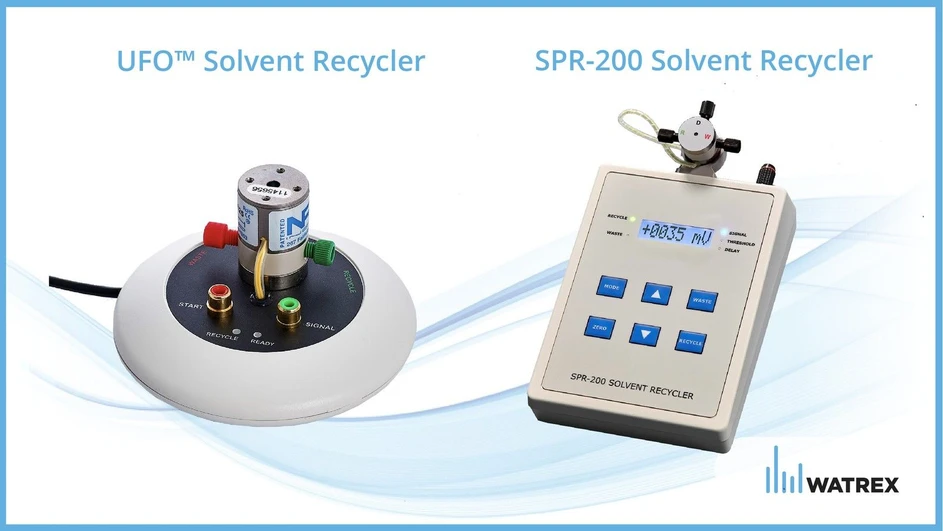 Watrex Fig. 2: UFO Solvent Saver with SPR-200 - an effective solution for solvent recycling.
Using these systems brings a double benefit – ecological and economic. Less waste means lower disposal costs, reduced solvent purchases, and improved laboratory safety.
3. Monitoring Liquid Leaks and Preventing Waste
Another essential aspect of green chromatography is liquid management and leak prevention. Every leak, overflow, or contamination event not only wastes solvent but also poses safety risks. The LSS-205 Liquid Sensing System offers a smart solution by detecting the presence of liquids at critical points of the HPLC setup. It identifies leaks, overflows, or empty bottles and immediately alerts the operator.
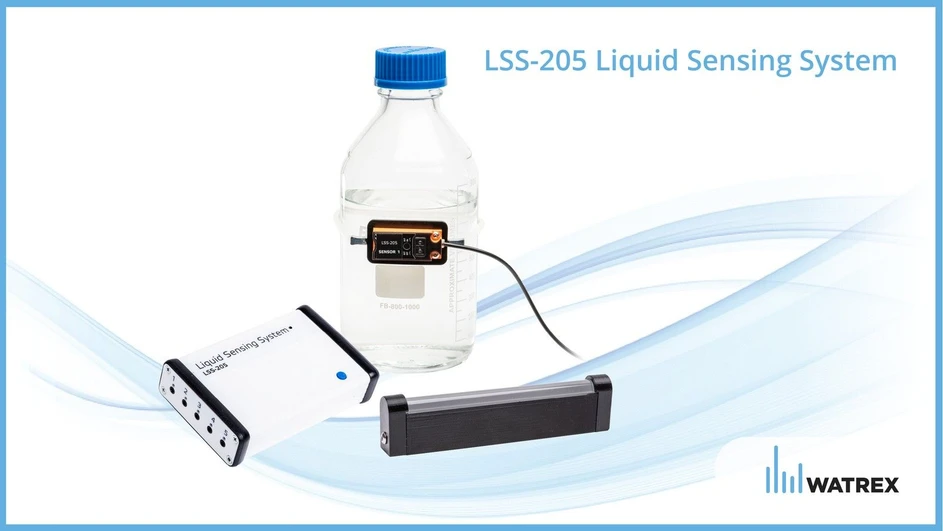 Watrex Fig. 3: LSS-205 Liquid Sensing System is a smart solution that monitors the presence of liquids at critical points of the HPLC system.
This not only protects the instrument and samples but also prevents unnecessary solvent waste and contamination — a small step with a significant environmental impact
4. Method Optimization and “Green” Solvents
Beyond hardware, method optimization plays a vital role in sustainability. Switching to less toxic solvents (e.g., ethanol instead of acetonitrile), shortening analysis times, and optimizing gradient programs can substantially reduce environmental impact without sacrificing analytical performance.
5. Summary: Sustainability as a Standard, Not an Exception
“Green chromatography” is not just a trend — it’s a necessary evolution toward more responsible laboratory practices. By integrating intelligent systems such as the UFO Solvent Recycler, SPR-200, and LSS-205 Liquid Sensing System, laboratories can significantly reduce solvent consumption, waste production, and overall energy use.
The result?
- Lower operating costs
- Increased safety
- Smaller ecological footprint
Conclusion
Eco-friendly chromatography is not about choosing between performance and sustainability - it’s about combining both through intelligent design. With solutions like the LSS-205, UFO Solvent Recycler, and SPR-200, laboratories can analyze efficiently while thinking and acting green.
Are you more interested in the LSS-205, UFO or SPR-200 devices? Visit our website www.watrex.com or contact us at [email protected].


