LCMS
More information
WebinarsAbout usContact usTerms of use
LabRulez s.r.o. All rights reserved. Content available under a CC BY-SA 4.0 Attribution-ShareAlike
Author
Phenomenex
Phenomenex
Phenomenex is a global technology leader committed to developing novel analytical chemistry solutions that solve the separation and purification challenges of researchers in industrial, government and academic laboratories.
Tags
Article
Academy
Product
LinkedIn Logo

Why Remove Phospholipids From a Sample?
We, 7.1.2026
| Original article from: Phenomenex
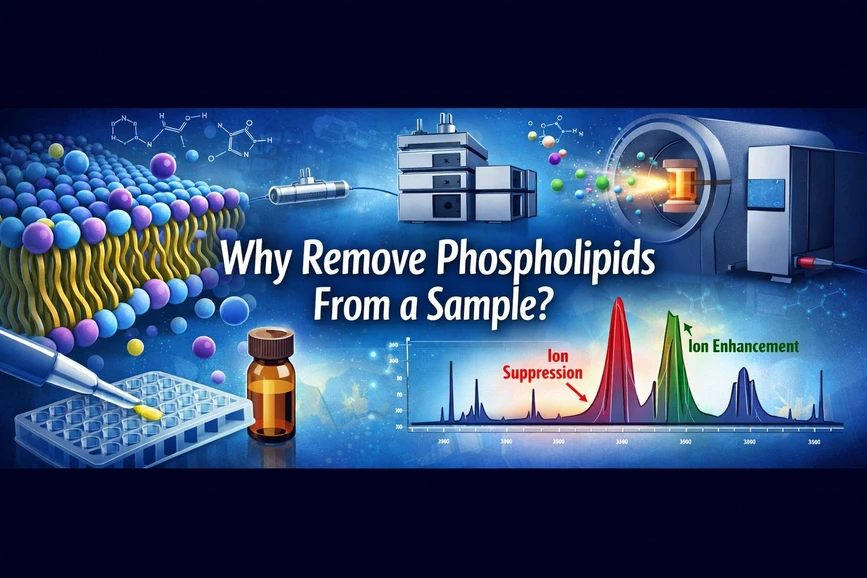
Phospholipids in serum and plasma can cause ion suppression, reduced MS sensitivity, and shorter column lifetime. Learn why phospholipid removal is critical for reliable LC-MS analysis.
<p><strong>Phenomenex: </strong>Why Remove Phospholipids From a Sample?</p>

Phenomenex: Why Remove Phospholipids From a Sample?

When analysis of substances from serum or plasma takes place, it is likely that the samples will contain phospholipids, a major component of mammalian cell membranes. These phospholipids have a variety of structures and polarities, the more hydrophobic of those would gradually coat a reversed-phase HPLC column (such as a C18) over multiple injections. This process will result in a gradual increase in back pressure which is typically accompanied by a drop in separation efficiency. Selectivity changes may also occur.

If UV detection is being utilized, this may be as far as the problem goes. If samples have simply been prepared by protein precipitation, which is quick and cheap to perform, shorter column lifetime may simply be accepted as an inevitable result of performing low-grade sample pretreatment. If MS detection is being used, ion suppression or ion enhancement may be seen. This is generally accepted to be caused by the co-elution of phospholipids with the compounds of interest. The presence of the phospholipids in the MS source may impact the ionization efficiency of the source at that point.
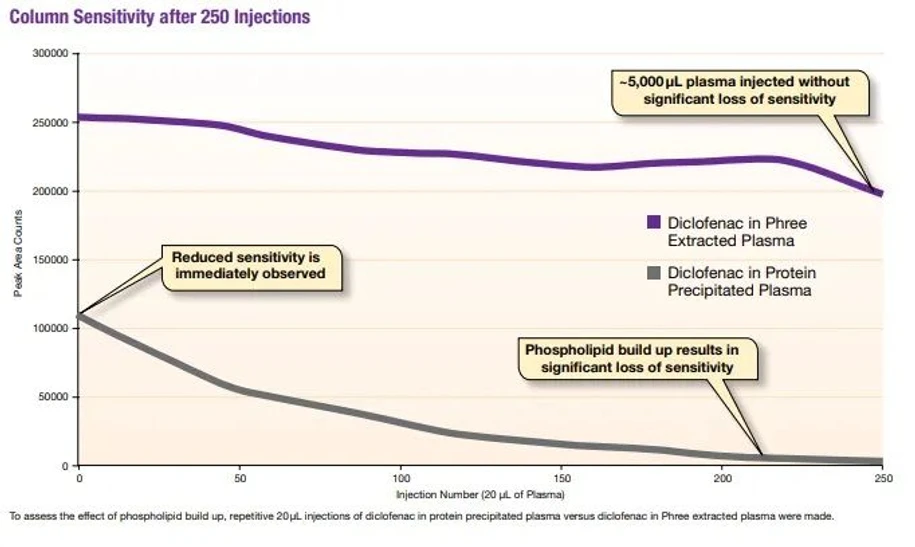
Phenomenex: Why Remove Phospholipids From a Sample? Figure 1: Assessment of column sensitivity following repeated injections of diclofenac in protein precipitated plasma vs using a sample preparation productPhenomenex: Why Remove Phospholipids From a Sample? Figure 1: Assessment of column sensitivity following repeated injections of diclofenac in protein precipitated plasma vs using a sample preparation product

As a result, the reliability of data produced may be affected by the presence of phospholipids because the amount of analyte could be underestimated (due to ion suppression) or overestimated (following ion enhancement). It is possible to check if this an issue in your separation by conducting the following experiment:

  • Use a syringe pump to directly infuse a solution of your analyte of interest.
  • At the same time, prepare a blank serum/plasma sample using your usual sample preparation procedure. Inject this blank sample and run your usual HPLC method.
  • Monitor the ion current for your MS-MS transitions for the analyte of interest.
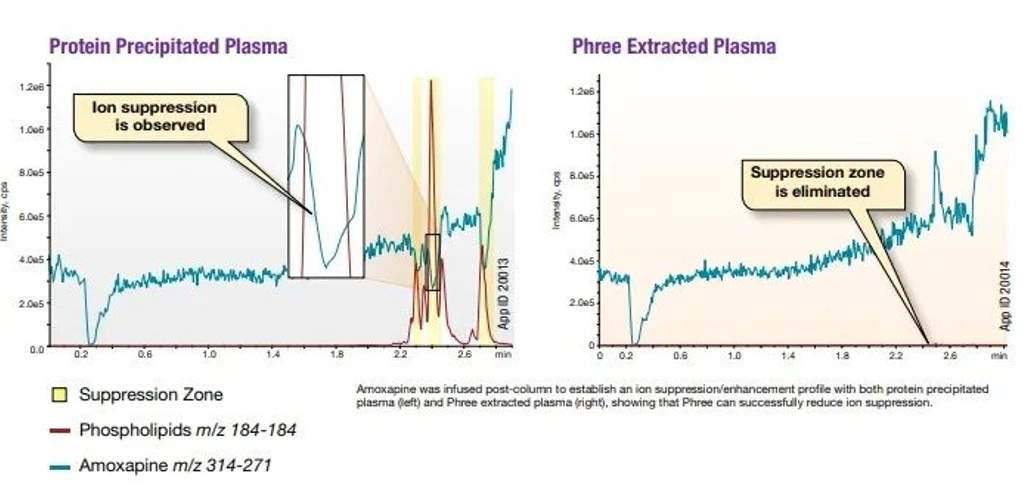
Phenomenex: Why Remove Phospholipids From a Sample? Figure 2: Areas of ion suppression using protein precipitated plasm vs plasma extracted using a sample preparation productPhenomenex: Why Remove Phospholipids From a Sample? Figure 2: Areas of ion suppression using protein precipitated plasm vs plasma extracted using a sample preparation product

Across the resulting chromatogram, areas of ion suppression or ion enhancement could be seen. If your analyte of interest elutes in one of these zones there is a possibility you may have problems with data integrity.

The simplest solution to this issue is to use a sample preparation product which allows for the simultaneous precipitation of plasma proteins whilst removing phospholipids from the resulting supernatant. Such products consist of tubes or 96-well plates that have membranes to remove precipitated proteins, and a sorbent to retain phospholipids. Samples are mixed with a precipitating solution, such as methanol or acetonitrile, before being pulled down through the filter plate and sorbent bed. The resulting samples are then free of both protein and phospholipids enabling reliable quantitation and improved column lifetime.
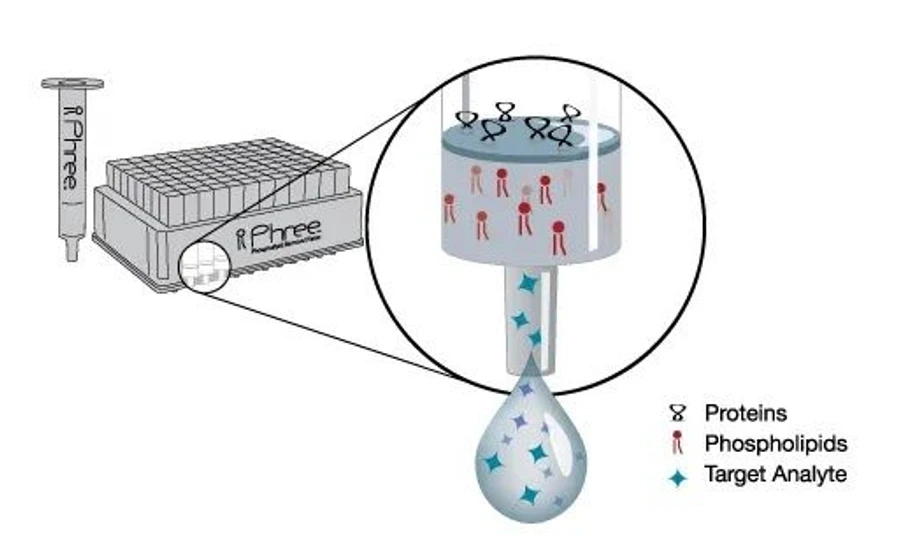
Phenomenex: Why Remove Phospholipids From a Sample? Figure 3: Phospholipid removal using PhreePhenomenex: Why Remove Phospholipids From a Sample? Figure 3: Phospholipid removal using Phree

Phenomenex
LinkedIn Logo
 

Related content

Determination of Authenticity of Manuka Honey Using the MALDI-8030 Benchtop Linear MALDI-TOF Mass Spectrometer

Applications
| 2026 | Shimadzu
Instrumentation
MALDI, LC/MS, LC/TOF
Manufacturer
Shimadzu
Industries
Food & Agriculture

Analysis of Inorganic Anions in Drinking Water According to EPA Method 300.1 Using Nexera IC -Part A

Applications
| 2026 | Shimadzu
Instrumentation
Ion chromatography
Manufacturer
Shimadzu
Industries
Food & Agriculture

Quality Evaluation of mRNA by Electrophoresis

Applications
| 2026 | Shimadzu
Instrumentation
Capillary electrophoresis
Manufacturer
Shimadzu
Industries
Pharma & Biopharma

LC/MS dMRM Method Refinement Expands Targeted Lipidomics Studies from Plasma to Cells and Tissues

Applications
| 2026 | Agilent Technologies
Instrumentation
LC/MS, LC/MS/MS, LC/QQQ
Manufacturer
Agilent Technologies
Industries
Lipidomics, Clinical Research

Sensitive Detection of Aflatoxins by the Agilent 1290 Infinity III Fluorescence Detector

Applications
| 2026 | Agilent Technologies
Instrumentation
HPLC
Manufacturer
Agilent Technologies
Industries
Food & Agriculture
 

Related articles

Alternatives to Traditional Fume Hoods: A Comprehensive Guide to Laboratory Containment Solutions
Article | Laboratories

Alternatives to Traditional Fume Hoods: A Comprehensive Guide to Laboratory Containment Solutions

Explore alternatives to traditional ducted fume hoods, including glove boxes, snorkel systems, ductless hoods, and specialized containment solutions for safer, energy-efficient laboratories.
Organomation
tag
share
more
Oligos Made Easy - Part 4: HILIC
Article | Academy

Oligos Made Easy - Part 4: HILIC

Discover how HILIC-MS is transforming oligonucleotide analysis. Learn retention principles, method development steps, and practical tips for achieving high-resolution, ion-pair-free separations.
KNAUER
tag
share
more
Advanced equipment for self-driving analytical AI laboratory
Article | Science and research

Advanced equipment for self-driving analytical AI laboratory

University of Amsterdam and Agilent partner to advance polymer analysis using 2D-LC-MS and AI-driven method development in a self-driving analytical laboratory.
University of Amsterdam
tag
share
more
Unraveling Neuroendocrine Cancer Research with Mass Spectrometry
Interview | Science and research

Unraveling Neuroendocrine Cancer Research with Mass Spectrometry

Dr. Rachael Guenter traces her path into neuroendocrine tumor research and explains how clinician partnerships and mass spectrometry accelerate translational discoveries—plus why “think zebras” matters.
Organomation
tag
share
more
 

Related content

Determination of Authenticity of Manuka Honey Using the MALDI-8030 Benchtop Linear MALDI-TOF Mass Spectrometer

Applications
| 2026 | Shimadzu
Instrumentation
MALDI, LC/MS, LC/TOF
Manufacturer
Shimadzu
Industries
Food & Agriculture

Analysis of Inorganic Anions in Drinking Water According to EPA Method 300.1 Using Nexera IC -Part A

Applications
| 2026 | Shimadzu
Instrumentation
Ion chromatography
Manufacturer
Shimadzu
Industries
Food & Agriculture

Quality Evaluation of mRNA by Electrophoresis

Applications
| 2026 | Shimadzu
Instrumentation
Capillary electrophoresis
Manufacturer
Shimadzu
Industries
Pharma & Biopharma

LC/MS dMRM Method Refinement Expands Targeted Lipidomics Studies from Plasma to Cells and Tissues

Applications
| 2026 | Agilent Technologies
Instrumentation
LC/MS, LC/MS/MS, LC/QQQ
Manufacturer
Agilent Technologies
Industries
Lipidomics, Clinical Research

Sensitive Detection of Aflatoxins by the Agilent 1290 Infinity III Fluorescence Detector

Applications
| 2026 | Agilent Technologies
Instrumentation
HPLC
Manufacturer
Agilent Technologies
Industries
Food & Agriculture
 

Related articles

Alternatives to Traditional Fume Hoods: A Comprehensive Guide to Laboratory Containment Solutions
Article | Laboratories

Alternatives to Traditional Fume Hoods: A Comprehensive Guide to Laboratory Containment Solutions

Explore alternatives to traditional ducted fume hoods, including glove boxes, snorkel systems, ductless hoods, and specialized containment solutions for safer, energy-efficient laboratories.
Organomation
tag
share
more
Oligos Made Easy - Part 4: HILIC
Article | Academy

Oligos Made Easy - Part 4: HILIC

Discover how HILIC-MS is transforming oligonucleotide analysis. Learn retention principles, method development steps, and practical tips for achieving high-resolution, ion-pair-free separations.
KNAUER
tag
share
more
Advanced equipment for self-driving analytical AI laboratory
Article | Science and research

Advanced equipment for self-driving analytical AI laboratory

University of Amsterdam and Agilent partner to advance polymer analysis using 2D-LC-MS and AI-driven method development in a self-driving analytical laboratory.
University of Amsterdam
tag
share
more
Unraveling Neuroendocrine Cancer Research with Mass Spectrometry
Interview | Science and research

Unraveling Neuroendocrine Cancer Research with Mass Spectrometry

Dr. Rachael Guenter traces her path into neuroendocrine tumor research and explains how clinician partnerships and mass spectrometry accelerate translational discoveries—plus why “think zebras” matters.
Organomation
tag
share
more
 

Related content

Determination of Authenticity of Manuka Honey Using the MALDI-8030 Benchtop Linear MALDI-TOF Mass Spectrometer

Applications
| 2026 | Shimadzu
Instrumentation
MALDI, LC/MS, LC/TOF
Manufacturer
Shimadzu
Industries
Food & Agriculture

Analysis of Inorganic Anions in Drinking Water According to EPA Method 300.1 Using Nexera IC -Part A

Applications
| 2026 | Shimadzu
Instrumentation
Ion chromatography
Manufacturer
Shimadzu
Industries
Food & Agriculture

Quality Evaluation of mRNA by Electrophoresis

Applications
| 2026 | Shimadzu
Instrumentation
Capillary electrophoresis
Manufacturer
Shimadzu
Industries
Pharma & Biopharma

LC/MS dMRM Method Refinement Expands Targeted Lipidomics Studies from Plasma to Cells and Tissues

Applications
| 2026 | Agilent Technologies
Instrumentation
LC/MS, LC/MS/MS, LC/QQQ
Manufacturer
Agilent Technologies
Industries
Lipidomics, Clinical Research

Sensitive Detection of Aflatoxins by the Agilent 1290 Infinity III Fluorescence Detector

Applications
| 2026 | Agilent Technologies
Instrumentation
HPLC
Manufacturer
Agilent Technologies
Industries
Food & Agriculture
 

Related articles

Alternatives to Traditional Fume Hoods: A Comprehensive Guide to Laboratory Containment Solutions
Article | Laboratories

Alternatives to Traditional Fume Hoods: A Comprehensive Guide to Laboratory Containment Solutions

Explore alternatives to traditional ducted fume hoods, including glove boxes, snorkel systems, ductless hoods, and specialized containment solutions for safer, energy-efficient laboratories.
Organomation
tag
share
more
Oligos Made Easy - Part 4: HILIC
Article | Academy

Oligos Made Easy - Part 4: HILIC

Discover how HILIC-MS is transforming oligonucleotide analysis. Learn retention principles, method development steps, and practical tips for achieving high-resolution, ion-pair-free separations.
KNAUER
tag
share
more
Advanced equipment for self-driving analytical AI laboratory
Article | Science and research

Advanced equipment for self-driving analytical AI laboratory

University of Amsterdam and Agilent partner to advance polymer analysis using 2D-LC-MS and AI-driven method development in a self-driving analytical laboratory.
University of Amsterdam
tag
share
more
Unraveling Neuroendocrine Cancer Research with Mass Spectrometry
Interview | Science and research

Unraveling Neuroendocrine Cancer Research with Mass Spectrometry

Dr. Rachael Guenter traces her path into neuroendocrine tumor research and explains how clinician partnerships and mass spectrometry accelerate translational discoveries—plus why “think zebras” matters.
Organomation
tag
share
more
 

Related content

Determination of Authenticity of Manuka Honey Using the MALDI-8030 Benchtop Linear MALDI-TOF Mass Spectrometer

Applications
| 2026 | Shimadzu
Instrumentation
MALDI, LC/MS, LC/TOF
Manufacturer
Shimadzu
Industries
Food & Agriculture

Analysis of Inorganic Anions in Drinking Water According to EPA Method 300.1 Using Nexera IC -Part A

Applications
| 2026 | Shimadzu
Instrumentation
Ion chromatography
Manufacturer
Shimadzu
Industries
Food & Agriculture

Quality Evaluation of mRNA by Electrophoresis

Applications
| 2026 | Shimadzu
Instrumentation
Capillary electrophoresis
Manufacturer
Shimadzu
Industries
Pharma & Biopharma

LC/MS dMRM Method Refinement Expands Targeted Lipidomics Studies from Plasma to Cells and Tissues

Applications
| 2026 | Agilent Technologies
Instrumentation
LC/MS, LC/MS/MS, LC/QQQ
Manufacturer
Agilent Technologies
Industries
Lipidomics, Clinical Research

Sensitive Detection of Aflatoxins by the Agilent 1290 Infinity III Fluorescence Detector

Applications
| 2026 | Agilent Technologies
Instrumentation
HPLC
Manufacturer
Agilent Technologies
Industries
Food & Agriculture
 

Related articles

Alternatives to Traditional Fume Hoods: A Comprehensive Guide to Laboratory Containment Solutions
Article | Laboratories

Alternatives to Traditional Fume Hoods: A Comprehensive Guide to Laboratory Containment Solutions

Explore alternatives to traditional ducted fume hoods, including glove boxes, snorkel systems, ductless hoods, and specialized containment solutions for safer, energy-efficient laboratories.
Organomation
tag
share
more
Oligos Made Easy - Part 4: HILIC
Article | Academy

Oligos Made Easy - Part 4: HILIC

Discover how HILIC-MS is transforming oligonucleotide analysis. Learn retention principles, method development steps, and practical tips for achieving high-resolution, ion-pair-free separations.
KNAUER
tag
share
more
Advanced equipment for self-driving analytical AI laboratory
Article | Science and research

Advanced equipment for self-driving analytical AI laboratory

University of Amsterdam and Agilent partner to advance polymer analysis using 2D-LC-MS and AI-driven method development in a self-driving analytical laboratory.
University of Amsterdam
tag
share
more
Unraveling Neuroendocrine Cancer Research with Mass Spectrometry
Interview | Science and research

Unraveling Neuroendocrine Cancer Research with Mass Spectrometry

Dr. Rachael Guenter traces her path into neuroendocrine tumor research and explains how clinician partnerships and mass spectrometry accelerate translational discoveries—plus why “think zebras” matters.
Organomation
tag
share
more
Other projects
GCMS
ICPMS
Follow us
FacebookX (Twitter)LinkedInYouTube
More information
WebinarsAbout usContact usTerms of use
LabRulez s.r.o. All rights reserved. Content available under a CC BY-SA 4.0 Attribution-ShareAlike