LCMS
More information
WebinarsAbout usContact usTerms of use
LabRulez s.r.o. All rights reserved. Content available under a CC BY-SA 4.0 Attribution-ShareAlike
Author
UCT Prague
UCT Prague
The University of Chemistry and Technology, Prague is a natural centre of first-rate study and research in the area of chemistry in Czechia and is one of the country's largest educational and research institutions focused on technical chemistry, chemical and biochemical technologies, material and chemical engineering, food chemistry, and environmental studies.
Tags
Article
Scientists
Science and research
LinkedIn Logo

JUNIOR STAR Grants at UCT Prague: Two talented women from abroad driving innovation in science

Th, 5.2.2026
| Original article from: VŠCHT Prague / Jakub Drahonský
Two outstanding early-career researchers at UCT Prague, Filipa Oliveira and Stella Gonsales, received prestigious GAČR JUNIOR STAR grants for innovative research in materials science and sustainable chemistry.
<p><strong>VŠCHT Prague: </strong>JUNIOR STAR Grants at UCT Prague: Two talented women from abroad driving innovation in science</p>

VŠCHT Prague: JUNIOR STAR Grants at UCT Prague: Two talented women from abroad driving innovation in science

In 2025, two outstanding young female researchers, Drs. Filipa Oliveira and Stella Gonsales, both originally from outside the Czech Republic, received prestigious JUNIOR STAR grants from the Czech Science Foundation (GAČR). JUNIOR STAR enables early career researchers to establish their own independent research groups and significantly advance their scientific careers. Their projects reflect cutting-edge research in materials science and sustainable chemistry, highlighting the international reach and welcoming research environment at UCT Prague.

Dr. Stella Gonsales is also a laureate of the Dagmar Procházková Fund, which supports promising scientific projects in sustainable and advanced organic chemistry. Another recipient of this grant is Dr. Anna Valunchene, whose research complements UCT Prague’s sustainability goals. This dual funding underlines Stella’s remarkable achievements and the wide scope of innovative research at UCT Prague.

Both Filipa and Stella are actively looking for motivated students and researchers to join their teams, offering a unique opportunity to work at the forefront of science in a vibrant and supportive environment.

Interview with Filipa Oliveira: Pioneering tubular MXenes for supercapacitor energy storage

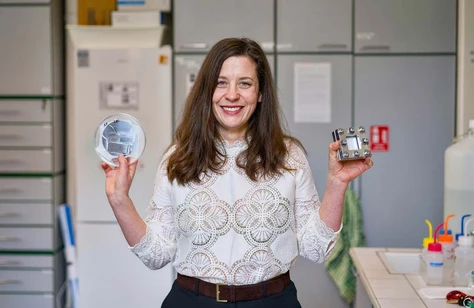
VŠCHT Prague: JUNIOR STAR Grants at UCT Prague: Two talented women from abroad driving innovation in science: Filipa OliveiraVŠCHT Prague: JUNIOR STAR Grants at UCT Prague: Two talented women from abroad driving innovation in science: Filipa Oliveira

Congratulations on receiving the JUNIOR STAR grant. What does this achievement mean for you and how will it influence your next steps?

Thank you. It’s a huge achievement to receive this prestigious grant. It gives me the opportunity to establish my own research group here at UCT Prague. The JUNIOR STAR program supports talented young scientists in building their teams and accessing resources. This means I now have the support to focus fully on my research about tubular MXenes and their application in supercapacitors.

Why are tubular MXenes so innovative for energy storage?

MXenes are a family of 2D materials with a layered, accordion-like structure and known for their excellent electrical conductivity. Our innovation is to produce them with a tubular morphology, combining the high conductivity and redox activity in superior ion-transport tubular architectures. Their open, hollow structure increases surface area, ion diffusion and charge transport. This could translate to faster, more efficient supercapacitors, critical for sustainable energy technologies.

How did your scientific interest lead you to this field?

Global challenges around green energy made me focus on materials that can improve energy storage. MXenes stood out because changes in the composition and structure can significantly change their properties. I was curious about how tuning different metallic elements in a tubular morphology can impact how MXenes perform and how to optimize them for practical applications.

What challenges have you encountered?

One major challenge is their stability: MXenes oxidize quickly which deteriorates performance. Another challenge is understanding how synthesis conditions of both MXenes and their precursors (MAX phases) must be adapted to create and preserve tubular morphologies since their synthesis mechanisms differ from conventional MXenes. Additionally, effectively communicating the project in the funding proposal to show to reviewers why I should obtain this funding was also a challenge, but thanks to mentorship and collaboration, I overcame these hurdles.

What motivates you most about working at UCT Prague?

The support from colleagues and the excellent technical infrastructure make it a great place to work. Also, being a former member of Professor Sofer’s leading group in 2D materials is inspiring and led me to this achievement.

How do you see your professional development going in the future?

The grant will help me build my own team, acquire equipment, and develop collaborations. My long-term vision is to contribute significantly to sustainable energy solutions and scientific progress both locally and internationally.

You are looking for new team members. What kind of students or scientists do you need?

We are currently welcoming enthusiastic master's students, PhD candidates, and postdocs who are passionate about materials science and eager to explore new frontiers in MXenes and energy storage. If you love curiosity-driven research and want to be part of a growing international team, we encourage you to join us.

Interview with Stella Gonsales: Catalysis as a key to polymer recycling

VŠCHT Prague: JUNIOR STAR Grants at UCT Prague: Two talented women from abroad driving innovation in science: Stella GonsalesVŠCHT Prague: JUNIOR STAR Grants at UCT Prague: Two talented women from abroad driving innovation in science: Stella Gonsales

Congratulations on your JUNIOR STAR grant and also being awarded the Dagmar Procházková Fund. What does receiving both mean to you and how will they shape your work?

Thank you. Both grants are hugely important. The JUNIOR STAR grant allows me to expand my group and resources for research into catalytic recycling of polymers, while the Dagmar Procházková Fund supports complementary projects such as synthesizing new biodegradable polymers. Together, they help tackle the plastic waste problem from multiple scientific angles.

Could you explain your research in layperson’s terms?

Most plastics have strong carbon-carbon bonds. We insert more cleavable double bonds into polymers that can be broken down by catalytic reactions called olefin metathesis, making recycling on a molecular level more feasible.

What makes the JUNIOR STAR grant particularly important for your research and career development?

The JUNIOR STAR grant is a prestigious and highly competitive funding opportunity aimed at excellent early-career scientists within eight years of completing a Ph.D. It provides up to 25 million CZK over five years, allowing recipients to establish independent research groups and pursue innovative scientific topics. This grant is crucial for building a solid foundation, acquiring necessary equipment, and recruiting talented team members, enabling the pursuit of ambitious projects that can significantly contribute to both the Czech scientific community and global challenges.

What collaborations support your research?

The collaboration between UCT Prague and the Institute of Organic Chemistry and Biochemistry (IOCB) of the Czech Academy of Sciences primarily provides financial and technical support. The cooperation helps with funding, access to advanced equipment, and operational resources needed for running research projects.

What advice would you give young scientists aiming to succeed?

I encourage thinking outside the box and combining diverse knowledge you acquire during your career to address complex problems that are exciting and relevant to you.

Your laboratory bears the name of Otto Wichterle and was ceremonially opened in the presence of Professor Kamil Wichterle. How does Wichterle’s legacy inspire you personally?

Wichterle’s innovative spirit motivates me to push creative boundaries and pursue novel solutions in sustainable chemistry.

What are your visions for the future?

I aim to build a research group that advances sustainable polymer recycling, contributing to environmental responsibility and the circular economy.

You are recruiting people for your team. What skills do they need to have?

We are looking for talented Ph.D. students and postdocs experienced in air-sensitive catalysis techniques. If you want to contribute to transformative research in sustainable chemistry and join a dynamic team, this is a great opportunity.

UCT Prague
LinkedIn Logo
 

Related content

Determination of Authenticity of Manuka Honey Using the MALDI-8030 Benchtop Linear MALDI-TOF Mass Spectrometer

Applications
| 2026 | Shimadzu
Instrumentation
MALDI, LC/MS, LC/TOF
Manufacturer
Shimadzu
Industries
Food & Agriculture

Analysis of Inorganic Anions in Drinking Water According to EPA Method 300.1 Using Nexera IC -Part A

Applications
| 2026 | Shimadzu
Instrumentation
Ion chromatography
Manufacturer
Shimadzu
Industries
Food & Agriculture

Quality Evaluation of mRNA by Electrophoresis

Applications
| 2026 | Shimadzu
Instrumentation
Capillary electrophoresis
Manufacturer
Shimadzu
Industries
Pharma & Biopharma

LC/MS dMRM Method Refinement Expands Targeted Lipidomics Studies from Plasma to Cells and Tissues

Applications
| 2026 | Agilent Technologies
Instrumentation
LC/MS, LC/MS/MS, LC/QQQ
Manufacturer
Agilent Technologies
Industries
Lipidomics, Clinical Research

Sensitive Detection of Aflatoxins by the Agilent 1290 Infinity III Fluorescence Detector

Applications
| 2026 | Agilent Technologies
Instrumentation
HPLC
Manufacturer
Agilent Technologies
Industries
Food & Agriculture
 

Related articles

Alternatives to Traditional Fume Hoods: A Comprehensive Guide to Laboratory Containment Solutions
Article | Laboratories

Alternatives to Traditional Fume Hoods: A Comprehensive Guide to Laboratory Containment Solutions

Explore alternatives to traditional ducted fume hoods, including glove boxes, snorkel systems, ductless hoods, and specialized containment solutions for safer, energy-efficient laboratories.
Organomation
tag
share
more
Oligos Made Easy - Part 4: HILIC
Article | Academy

Oligos Made Easy - Part 4: HILIC

Discover how HILIC-MS is transforming oligonucleotide analysis. Learn retention principles, method development steps, and practical tips for achieving high-resolution, ion-pair-free separations.
KNAUER
tag
share
more
Advanced equipment for self-driving analytical AI laboratory
Article | Science and research

Advanced equipment for self-driving analytical AI laboratory

University of Amsterdam and Agilent partner to advance polymer analysis using 2D-LC-MS and AI-driven method development in a self-driving analytical laboratory.
University of Amsterdam
tag
share
more
Unraveling Neuroendocrine Cancer Research with Mass Spectrometry
Interview | Science and research

Unraveling Neuroendocrine Cancer Research with Mass Spectrometry

Dr. Rachael Guenter traces her path into neuroendocrine tumor research and explains how clinician partnerships and mass spectrometry accelerate translational discoveries—plus why “think zebras” matters.
Organomation
tag
share
more
 

Related content

Determination of Authenticity of Manuka Honey Using the MALDI-8030 Benchtop Linear MALDI-TOF Mass Spectrometer

Applications
| 2026 | Shimadzu
Instrumentation
MALDI, LC/MS, LC/TOF
Manufacturer
Shimadzu
Industries
Food & Agriculture

Analysis of Inorganic Anions in Drinking Water According to EPA Method 300.1 Using Nexera IC -Part A

Applications
| 2026 | Shimadzu
Instrumentation
Ion chromatography
Manufacturer
Shimadzu
Industries
Food & Agriculture

Quality Evaluation of mRNA by Electrophoresis

Applications
| 2026 | Shimadzu
Instrumentation
Capillary electrophoresis
Manufacturer
Shimadzu
Industries
Pharma & Biopharma

LC/MS dMRM Method Refinement Expands Targeted Lipidomics Studies from Plasma to Cells and Tissues

Applications
| 2026 | Agilent Technologies
Instrumentation
LC/MS, LC/MS/MS, LC/QQQ
Manufacturer
Agilent Technologies
Industries
Lipidomics, Clinical Research

Sensitive Detection of Aflatoxins by the Agilent 1290 Infinity III Fluorescence Detector

Applications
| 2026 | Agilent Technologies
Instrumentation
HPLC
Manufacturer
Agilent Technologies
Industries
Food & Agriculture
 

Related articles

Alternatives to Traditional Fume Hoods: A Comprehensive Guide to Laboratory Containment Solutions
Article | Laboratories

Alternatives to Traditional Fume Hoods: A Comprehensive Guide to Laboratory Containment Solutions

Explore alternatives to traditional ducted fume hoods, including glove boxes, snorkel systems, ductless hoods, and specialized containment solutions for safer, energy-efficient laboratories.
Organomation
tag
share
more
Oligos Made Easy - Part 4: HILIC
Article | Academy

Oligos Made Easy - Part 4: HILIC

Discover how HILIC-MS is transforming oligonucleotide analysis. Learn retention principles, method development steps, and practical tips for achieving high-resolution, ion-pair-free separations.
KNAUER
tag
share
more
Advanced equipment for self-driving analytical AI laboratory
Article | Science and research

Advanced equipment for self-driving analytical AI laboratory

University of Amsterdam and Agilent partner to advance polymer analysis using 2D-LC-MS and AI-driven method development in a self-driving analytical laboratory.
University of Amsterdam
tag
share
more
Unraveling Neuroendocrine Cancer Research with Mass Spectrometry
Interview | Science and research

Unraveling Neuroendocrine Cancer Research with Mass Spectrometry

Dr. Rachael Guenter traces her path into neuroendocrine tumor research and explains how clinician partnerships and mass spectrometry accelerate translational discoveries—plus why “think zebras” matters.
Organomation
tag
share
more
 

Related content

Determination of Authenticity of Manuka Honey Using the MALDI-8030 Benchtop Linear MALDI-TOF Mass Spectrometer

Applications
| 2026 | Shimadzu
Instrumentation
MALDI, LC/MS, LC/TOF
Manufacturer
Shimadzu
Industries
Food & Agriculture

Analysis of Inorganic Anions in Drinking Water According to EPA Method 300.1 Using Nexera IC -Part A

Applications
| 2026 | Shimadzu
Instrumentation
Ion chromatography
Manufacturer
Shimadzu
Industries
Food & Agriculture

Quality Evaluation of mRNA by Electrophoresis

Applications
| 2026 | Shimadzu
Instrumentation
Capillary electrophoresis
Manufacturer
Shimadzu
Industries
Pharma & Biopharma

LC/MS dMRM Method Refinement Expands Targeted Lipidomics Studies from Plasma to Cells and Tissues

Applications
| 2026 | Agilent Technologies
Instrumentation
LC/MS, LC/MS/MS, LC/QQQ
Manufacturer
Agilent Technologies
Industries
Lipidomics, Clinical Research

Sensitive Detection of Aflatoxins by the Agilent 1290 Infinity III Fluorescence Detector

Applications
| 2026 | Agilent Technologies
Instrumentation
HPLC
Manufacturer
Agilent Technologies
Industries
Food & Agriculture
 

Related articles

Alternatives to Traditional Fume Hoods: A Comprehensive Guide to Laboratory Containment Solutions
Article | Laboratories

Alternatives to Traditional Fume Hoods: A Comprehensive Guide to Laboratory Containment Solutions

Explore alternatives to traditional ducted fume hoods, including glove boxes, snorkel systems, ductless hoods, and specialized containment solutions for safer, energy-efficient laboratories.
Organomation
tag
share
more
Oligos Made Easy - Part 4: HILIC
Article | Academy

Oligos Made Easy - Part 4: HILIC

Discover how HILIC-MS is transforming oligonucleotide analysis. Learn retention principles, method development steps, and practical tips for achieving high-resolution, ion-pair-free separations.
KNAUER
tag
share
more
Advanced equipment for self-driving analytical AI laboratory
Article | Science and research

Advanced equipment for self-driving analytical AI laboratory

University of Amsterdam and Agilent partner to advance polymer analysis using 2D-LC-MS and AI-driven method development in a self-driving analytical laboratory.
University of Amsterdam
tag
share
more
Unraveling Neuroendocrine Cancer Research with Mass Spectrometry
Interview | Science and research

Unraveling Neuroendocrine Cancer Research with Mass Spectrometry

Dr. Rachael Guenter traces her path into neuroendocrine tumor research and explains how clinician partnerships and mass spectrometry accelerate translational discoveries—plus why “think zebras” matters.
Organomation
tag
share
more
 

Related content

Determination of Authenticity of Manuka Honey Using the MALDI-8030 Benchtop Linear MALDI-TOF Mass Spectrometer

Applications
| 2026 | Shimadzu
Instrumentation
MALDI, LC/MS, LC/TOF
Manufacturer
Shimadzu
Industries
Food & Agriculture

Analysis of Inorganic Anions in Drinking Water According to EPA Method 300.1 Using Nexera IC -Part A

Applications
| 2026 | Shimadzu
Instrumentation
Ion chromatography
Manufacturer
Shimadzu
Industries
Food & Agriculture

Quality Evaluation of mRNA by Electrophoresis

Applications
| 2026 | Shimadzu
Instrumentation
Capillary electrophoresis
Manufacturer
Shimadzu
Industries
Pharma & Biopharma

LC/MS dMRM Method Refinement Expands Targeted Lipidomics Studies from Plasma to Cells and Tissues

Applications
| 2026 | Agilent Technologies
Instrumentation
LC/MS, LC/MS/MS, LC/QQQ
Manufacturer
Agilent Technologies
Industries
Lipidomics, Clinical Research

Sensitive Detection of Aflatoxins by the Agilent 1290 Infinity III Fluorescence Detector

Applications
| 2026 | Agilent Technologies
Instrumentation
HPLC
Manufacturer
Agilent Technologies
Industries
Food & Agriculture
 

Related articles

Alternatives to Traditional Fume Hoods: A Comprehensive Guide to Laboratory Containment Solutions
Article | Laboratories

Alternatives to Traditional Fume Hoods: A Comprehensive Guide to Laboratory Containment Solutions

Explore alternatives to traditional ducted fume hoods, including glove boxes, snorkel systems, ductless hoods, and specialized containment solutions for safer, energy-efficient laboratories.
Organomation
tag
share
more
Oligos Made Easy - Part 4: HILIC
Article | Academy

Oligos Made Easy - Part 4: HILIC

Discover how HILIC-MS is transforming oligonucleotide analysis. Learn retention principles, method development steps, and practical tips for achieving high-resolution, ion-pair-free separations.
KNAUER
tag
share
more
Advanced equipment for self-driving analytical AI laboratory
Article | Science and research

Advanced equipment for self-driving analytical AI laboratory

University of Amsterdam and Agilent partner to advance polymer analysis using 2D-LC-MS and AI-driven method development in a self-driving analytical laboratory.
University of Amsterdam
tag
share
more
Unraveling Neuroendocrine Cancer Research with Mass Spectrometry
Interview | Science and research

Unraveling Neuroendocrine Cancer Research with Mass Spectrometry

Dr. Rachael Guenter traces her path into neuroendocrine tumor research and explains how clinician partnerships and mass spectrometry accelerate translational discoveries—plus why “think zebras” matters.
Organomation
tag
share
more
Other projects
GCMS
ICPMS
Follow us
FacebookX (Twitter)LinkedInYouTube
More information
WebinarsAbout usContact usTerms of use
LabRulez s.r.o. All rights reserved. Content available under a CC BY-SA 4.0 Attribution-ShareAlike