LCMS
More information
WebinarsAbout usContact usTerms of use
LabRulez s.r.o. All rights reserved. Content available under a CC BY-SA 4.0 Attribution-ShareAlike
Author
ALS Czech Republic
ALS Czech Republic
For more than 40 years, ALS has provided testing and technical solutions to clients all over the world in a wide range of industries. We have built our global reputation by embracing the latest technologies and innovative methodologies to deliver high quality testing services to clients. ALS is able to leverage a multifaceted international team while remaining agile enough to provide local expertise and personalized solutions to every one of our clients.
Tags
Article
Environment
LinkedIn Logo

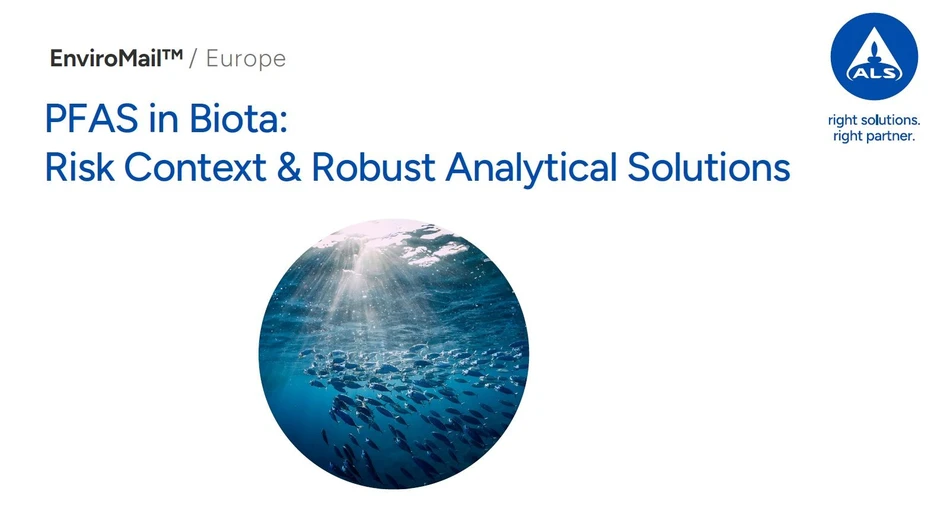
EnviroMail™30/Europe: PFAS in Biota: Risk Context & Robust Analytical Solutions
We, 28.1.2026
| Original article from: ALS Czech Republic
PFAS biomonitoring in fish and shellfish reveals how these “forever chemicals” accumulate in ecosystems. The article covers EU regulation, bioaccumulation pathways, and LC–MS/MS analysis.
<p><strong>ALS Czech Republic:</strong> EnviroMail™30/Europe: PFAS in Biota: Risk Context &amp; Robust Analytical Solutions</p>

ALS Czech Republic: EnviroMail™30/Europe: PFAS in Biota: Risk Context & Robust Analytical Solutions

The analysis of biota (all living organisms) as an indicator of environmental pollution is a fundamental practice known as biomonitoring or bioindication. This approach assesses environmental quality (air, water, soil) by studying the responses of living organisms (bioindicators) to environmental pollution. Because of a persistence and bioaccumulative potential of PFAS, fish and shellfish are crucial subjects in this practice, serving as bioaccumulators whose tissue concentrations reflect the level of PFAS contamination in the environment.

Current and Future EU Legislation

The EU’s regulatory approach to PFAS in biota is generally tightening. Under Directive 2013/39/EU only PFOS is listed as a priority substance in the aquatic environment, with a biota (fish) Environmental Quality Standard (EQS) of 9.1 µg/kg wet weight. However, food safety standards have tightened significantly. Since 2023, Regulation (EU) 2023/915 has set maximum levels for the sum of four PFAS (PFOA, PFOS, PFNA, and PFHxS) in various foodstuffs. While the default maximum level for fish meat is generally set at 2.0 µg/kg wet weight, the regulation accounts for the significant inter-species variability in bioaccumulation and environmental exposure. Contamination limits are tiered by species to reflect varying levels of bioaccumulation. For instance, while Atlantic salmon is set at 5.0 µg/kg, thresholds for other species like whitefish or burbot can reach up to 45 µg/kg. These variations account for different habitats and positions in the food chain. 

Looking ahead, the EU is moving toward a group-based approach to environmental protection. A proposed amendment to the Water Framework Directive would expand monitoring to PFAS as a group. This shift reflects EFSA’s latest scientific findings on the bioaccumulation and combined toxicity of these “forever chemicals.” It marks a transition from regulating individual substances to managing the entire chemical class, to ensure a high level of protection for both human health and aquatic ecosystems.

How PFAS Contaminate Biota

Water and Soil Contamination: 

PFAS are released into the environment from various sources, including industrial facilities, landfills, and firefighting foams. Short chain PFAS are highly mobile and persist in surface water and groundwater, whereas many long chain PFAS sorb to organic matter and accumulate in sediments. 

Bioaccumulation in the Aquatic Food Chain: 

Aquatic organisms such as fish and shellfish absorb PFAS from the water and contaminated food sources, accumulating them in their tissues. This accumulation is often magnified along the food chain (biomagnification), particularly for long chain PFAS (e.g., PFOS) in predatory fish. 

Contamination of Terrestrial Animals: 

In affected areas, animals are exposed through drinking water, feed, and soil or dust. PFAS bind to proteins and accumulate primarily in the blood and liver. Transfer to animal derived products (e.g., milk and eggs) may occur. 

Crop Contamination: 

Plants grown in contaminated soil or irrigated with contaminated water can absorb PFAS. Uptake rates vary; shorter chain PFAS are generally taken up more readily by roots, facilitating their entry into the terrestrial food chain.

Additional Pathways and Considerations: 

PFAS precursors can transform into persistent perfluoroalkyl acids (PFAAs), such as PFOS and PFOA, increasing body burdens in biota over time. Sediments and benthic organisms represent key exposure pathways in aquatic systems. Atmospheric transport and deposition contribute to soil and water contamination; additionally, land application of biosolids and the use of contaminated irrigation water can introduce PFAS into agricultural systems.

Advanced PFAS Analytical Services from ALS Czech Republic

We offer state-of-the-art analytical services for the detection and quantification of PFAS in:

  • Drinking/ground/surface/waste water
  • Soil, sediment, sludge and biosolids
  • AFFF-contaminated sites and products

Using LC-MS/MS, our laboratories provide:

Contact Us

Let us help you navigate the complex landscape of PFAS regulation and ensure your operations meet the highest standards of safety and compliance.

Impact on Biota

Accumulation Over Time: 

Because of their chemical stability and slow elimination, many long chain PFAS persist in organisms, and their concentrations can increase over time. They bind to proteins and tend to accumulate in the blood and liver, as well as in eggs. Biomagnification can occur at higher trophic levels. 

Potential Health Effects: 

PFAS exposure in wildlife is associated with immune suppression; endocrine and thyroid disruption; altered lipid metabolism and liver toxicity; and developmental and reproductive effects (e.g., reduced hatching success). With respect to cancer, the International Agency for Research on Cancer (IARC) classifies PFOA as carcinogenic to humans (Group 1) and PFOS as possibly carcinogenic to humans (Group 2B). 

Maternal Transfer and Life Stage Sensitivity: 

PFAS can be transferred from adults to offspring through eggs and lactation, making early life stages particularly vulnerable.

Monitoring and Biomagnification Patterns

Wild fish and invertebrates across the EU have measurable PFAS body burdens (PFOS and PFCAs) in the tens to low hundreds of µg/kg (wet weight). Marine top predators often exhibit elevated PFOS levels relative to biota EQS values. Biomagnification patterns vary among compounds, but several long chain PFAS bioaccumulate.

Analytical Methods

ALS Laboratories uses ISO/IEC 17025 accredited LC–MS/MS method to determine PFAS in biota, which serve as critical indicators of environmental contamination. This method have been rigorously validated across a wide range of matrices, including fish and other seafood (bivalves, crustaceans, cephalopods), meat, eggs, milk, and various plant tissues.

Sample Logistics and Handling:

To preserve analyte integrity and prevent biological degradation, strict transport protocols are followed. Samples should be shipped via overnight courier. If shipped frozen, they must be transported in a way that ensures they remain frozen throughout transit. 

Sample Weight:

Although the laboratory can process as little as 10 g, we recommend submitting 50 g of sample to ensure representativeness. To obtain a stable, uniform test portion, samples are freeze-dried (lyophilized) and then thoroughly homogenized. This process stabilizes the matrix and preconcentrates analytes, enabling trace-level detection. 

Extraction and Analysis:

The analytical workflow uses a modified QuEChERS extraction to ensure efficient analyte recovery, followed by a solid phase extraction (SPE) cleanup to remove matrix interferences. Final separation and detection are performed on state of the art UHPLC–MS/MS instrumentation. 

Quantitation:

The concentration of each PFAS is determined by internal standard calibration. Response ratios are related to the concentration ratios of the native analytes and their corresponding isotopically labeled internal standards, providing robust correction for potential matrix effects and ensuring high accuracy and precision.

List of Target PFAS 

LOQ: Limit of Quantification (µg/kg)

Perfluoroalkyl Carboxylic Acids (PFCA)

  • Perfluorobutanoic acid (PFBA): 1 µg/kg
  • Perfluoropentanoic acid (PFPeA): 0.1 µg/kg
  • Perfluorohexanoic acid (PFHxA): 0.1 µg/kg
  • Perfluoroheptanoic acid (PFHpA): 0.1 µg/kg
  • Perfluorooctanoic acid (PFOA): 0.1 µg/kg
  • Perfluorononanoic acid (PFNA): 0.1 µg/kg
  • Perfluorodecanoic acid (PFDA): 0.1 µg/kg
  • Perfluoroundecanoic acid (PFUnDA): 0.1 µg/kg
  • Perfluorododecanoic acid (PFDoDA): 0.1 µg/kg
  • Perfluorotridecanoic acid (PFTrDA): 0.1 µg/kg
  • Perfluorotetradecanoic acid (PFTeDA): 0.1 µg/kg
  • Perfluorohexadecanoic acid (PFHxDA): 0.1 µg/kg

Perfluoroalkane Sulfonic Acids (PFSA)

  • Perfluorobutane sulfonic acid (PFBS): 0.1 µg/kg
  • Perfluoropentane sulfonic acid (PFPeS): 0.1 µg/kg
  • Perfluorohexane sulfonic acid (PFHxS): 0.1 µg/kg
  • Perfluoroheptane sulfonic acid (PFHpS): 0.1 µg/kg
  • Perfluorooctane sulfonic acid (PFOS): 0.1 µg/kg
  • Perfluorononane sulfonic acid (PFNS): 0.1 µg/kg
  • Perfluorodecane sulfonic acid (PFDS): 0.1 µg/kg
  • Perfluoroundecane sulfonic acid (PFUnDS): 0.1 µg/kg
  • Perfluorododecane sulfonic acid (PFDoDS): 0.1 µg/kg
  • Perfluorotridecane sulfonic acid (PFTrDS): 0.1 µg/kg

Perfluoroalkyl Sulfonamides

  • Perfluorooctane sulfonamide (PFOSA): 0.1 µg/kg

Fluorotelomer Sulfonic Acids

  • 4:2 Fluorotelomer sulfonic acid (4:2 FTS): 0.1 µg/kg
  • 6:2 Fluorotelomer sulfonic acid (6:2 FTS): 0.1 µg/kg
  • 8:2 Fluorotelomer sulfonic acid (8:2 FTS): 0.1 µg/kg

Other PFAS

  • 2,3,3,3-Tetrafluoro-2-(heptafluoropropoxy) propanoic acid (HFPO-DA, GenX): 0.1 µg/kg
  • 7H-Perfluoroheptanoic acid (HPFHpA): 0.1 µg/kg
  • Perfluoro-3,7-dimethyloctanoic acid (P37DMOA): 0.1 µg/kg
Resources
  1. Teunen et al.: PFAS accumulation in indigenous and translocated aquatic organisms from Belgium, with translation to human and ecological health risk. Environ Sci Eur (2021) 33:39
  2. Byns et al.: Bioaccumulation and trophic transfer of perfluorinated alkyl substances (PFAS) in marine biota from the Belgian North Sea: Distribution and human health risk implications.
    Environmental Pollution 311 (2022) 119907
  3. Gkika et al.: Strong bioaccumulation of a wide variety of PFAS in a contaminated terrestrial and aquatic ecosystem. Environment International 202 (2025) 109629 
     
ALS Czech Republic
LinkedIn Logo
 

Related content

Overcoming Strong Solvent Effects in the Analysis of Vepdegestrant

Applications
| 2026 | Agilent Technologies
Instrumentation
HPLC
Manufacturer
Agilent Technologies
Industries
Pharma & Biopharma

Identification of Double Bond Positions and Relative Acyl Chain Positions in Egg Yolk Phosphatidylcholines Using OAD-TOF System

Applications
| 2026 | Shimadzu
Instrumentation
LC/MS, LC/MS/MS, LC/TOF, LC/HRMS
Manufacturer
Shimadzu
Industries
Food & Agriculture

High Molecular-Weight Polysaccharide Characterization by SEC-MALS Using GTxResolve™ 1000 and 2000 Å SEC Columns

Applications
| 2026 | Waters
Instrumentation
GPC/SEC, Consumables, LC columns
Manufacturer
Waters
Industries
Pharma & Biopharma, Food & Agriculture

Development and Optimization for a Comprehensive LC/MS/MS Method for the Detection of 74 PFAS Compounds

Applications
| 2026 | Agilent Technologies
Instrumentation
LC/MS, LC/MS/MS, LC/QQQ
Manufacturer
Agilent Technologies
Industries
Food & Agriculture

PFAS in Biota: Risk Context & Robust Analytical Solutions

Others
| 2026 | ALS Europe
Instrumentation
Laboratory analysis, LC/MS, LC/MS/MS
Manufacturer
Industries
Environmental
 

Related articles

Unlocking Hemoglobin Variant Detection: LC-HR-MS Breakthrough with Ainslie Chen
Interview | Science and research

Unlocking Hemoglobin Variant Detection: LC-HR-MS Breakthrough with Ainslie Chen

Interview with Ainslie Chen on using LC-HRMS and C4 reversed-phase chromatography for precise hemoglobin variant detection and future clinical proteomics applications.
Organomation
tag
share
more
Webinars LabRulezLCMS Week 08/2026
Article | Webinars

Webinars LabRulezLCMS Week 08/2026

11 webinars: AAV genome analysis, amino acid panel, capillary LC, data integrity, InfinityLab Assist, LC-MS proteomics, Orbitrap Astral, PFAS testing, peptide mapping, USP <621>
LabRulez
tag
share
more
Imaging of Protein Assemblies up to 231 kDa in Tissues with Nano-DESI Mass Spectrometry
Scientific article | Science and research

Imaging of Protein Assemblies up to 231 kDa in Tissues with Nano-DESI Mass Spectrometry

This study extends nano-DESI mass spectrometry imaging to intact protein assemblies up to 231 kDa, enabling direct identification of large complexes in tissue.
LabRulez
tag
share
more
Unlocking Phytoplankton Metallomes with Comparative Analysis of Metal Quotas, Quantitative Proteomics, and Inferred Metalloproteomes
Scientific article | Science and research

Unlocking Phytoplankton Metallomes with Comparative Analysis of Metal Quotas, Quantitative Proteomics, and Inferred Metalloproteomes

This study integrates metal quotas, quantitative proteomics, and inferred metalloproteomes to reveal trace metal requirements and adaptation strategies in phytoplankton.
LabRulez
tag
share
more
 

Related content

Overcoming Strong Solvent Effects in the Analysis of Vepdegestrant

Applications
| 2026 | Agilent Technologies
Instrumentation
HPLC
Manufacturer
Agilent Technologies
Industries
Pharma & Biopharma

Identification of Double Bond Positions and Relative Acyl Chain Positions in Egg Yolk Phosphatidylcholines Using OAD-TOF System

Applications
| 2026 | Shimadzu
Instrumentation
LC/MS, LC/MS/MS, LC/TOF, LC/HRMS
Manufacturer
Shimadzu
Industries
Food & Agriculture

High Molecular-Weight Polysaccharide Characterization by SEC-MALS Using GTxResolve™ 1000 and 2000 Å SEC Columns

Applications
| 2026 | Waters
Instrumentation
GPC/SEC, Consumables, LC columns
Manufacturer
Waters
Industries
Pharma & Biopharma, Food & Agriculture

Development and Optimization for a Comprehensive LC/MS/MS Method for the Detection of 74 PFAS Compounds

Applications
| 2026 | Agilent Technologies
Instrumentation
LC/MS, LC/MS/MS, LC/QQQ
Manufacturer
Agilent Technologies
Industries
Food & Agriculture

PFAS in Biota: Risk Context & Robust Analytical Solutions

Others
| 2026 | ALS Europe
Instrumentation
Laboratory analysis, LC/MS, LC/MS/MS
Manufacturer
Industries
Environmental
 

Related articles

Unlocking Hemoglobin Variant Detection: LC-HR-MS Breakthrough with Ainslie Chen
Interview | Science and research

Unlocking Hemoglobin Variant Detection: LC-HR-MS Breakthrough with Ainslie Chen

Interview with Ainslie Chen on using LC-HRMS and C4 reversed-phase chromatography for precise hemoglobin variant detection and future clinical proteomics applications.
Organomation
tag
share
more
Webinars LabRulezLCMS Week 08/2026
Article | Webinars

Webinars LabRulezLCMS Week 08/2026

11 webinars: AAV genome analysis, amino acid panel, capillary LC, data integrity, InfinityLab Assist, LC-MS proteomics, Orbitrap Astral, PFAS testing, peptide mapping, USP <621>
LabRulez
tag
share
more
Imaging of Protein Assemblies up to 231 kDa in Tissues with Nano-DESI Mass Spectrometry
Scientific article | Science and research

Imaging of Protein Assemblies up to 231 kDa in Tissues with Nano-DESI Mass Spectrometry

This study extends nano-DESI mass spectrometry imaging to intact protein assemblies up to 231 kDa, enabling direct identification of large complexes in tissue.
LabRulez
tag
share
more
Unlocking Phytoplankton Metallomes with Comparative Analysis of Metal Quotas, Quantitative Proteomics, and Inferred Metalloproteomes
Scientific article | Science and research

Unlocking Phytoplankton Metallomes with Comparative Analysis of Metal Quotas, Quantitative Proteomics, and Inferred Metalloproteomes

This study integrates metal quotas, quantitative proteomics, and inferred metalloproteomes to reveal trace metal requirements and adaptation strategies in phytoplankton.
LabRulez
tag
share
more
 

Related content

Overcoming Strong Solvent Effects in the Analysis of Vepdegestrant

Applications
| 2026 | Agilent Technologies
Instrumentation
HPLC
Manufacturer
Agilent Technologies
Industries
Pharma & Biopharma

Identification of Double Bond Positions and Relative Acyl Chain Positions in Egg Yolk Phosphatidylcholines Using OAD-TOF System

Applications
| 2026 | Shimadzu
Instrumentation
LC/MS, LC/MS/MS, LC/TOF, LC/HRMS
Manufacturer
Shimadzu
Industries
Food & Agriculture

High Molecular-Weight Polysaccharide Characterization by SEC-MALS Using GTxResolve™ 1000 and 2000 Å SEC Columns

Applications
| 2026 | Waters
Instrumentation
GPC/SEC, Consumables, LC columns
Manufacturer
Waters
Industries
Pharma & Biopharma, Food & Agriculture

Development and Optimization for a Comprehensive LC/MS/MS Method for the Detection of 74 PFAS Compounds

Applications
| 2026 | Agilent Technologies
Instrumentation
LC/MS, LC/MS/MS, LC/QQQ
Manufacturer
Agilent Technologies
Industries
Food & Agriculture

PFAS in Biota: Risk Context & Robust Analytical Solutions

Others
| 2026 | ALS Europe
Instrumentation
Laboratory analysis, LC/MS, LC/MS/MS
Manufacturer
Industries
Environmental
 

Related articles

Unlocking Hemoglobin Variant Detection: LC-HR-MS Breakthrough with Ainslie Chen
Interview | Science and research

Unlocking Hemoglobin Variant Detection: LC-HR-MS Breakthrough with Ainslie Chen

Interview with Ainslie Chen on using LC-HRMS and C4 reversed-phase chromatography for precise hemoglobin variant detection and future clinical proteomics applications.
Organomation
tag
share
more
Webinars LabRulezLCMS Week 08/2026
Article | Webinars

Webinars LabRulezLCMS Week 08/2026

11 webinars: AAV genome analysis, amino acid panel, capillary LC, data integrity, InfinityLab Assist, LC-MS proteomics, Orbitrap Astral, PFAS testing, peptide mapping, USP <621>
LabRulez
tag
share
more
Imaging of Protein Assemblies up to 231 kDa in Tissues with Nano-DESI Mass Spectrometry
Scientific article | Science and research

Imaging of Protein Assemblies up to 231 kDa in Tissues with Nano-DESI Mass Spectrometry

This study extends nano-DESI mass spectrometry imaging to intact protein assemblies up to 231 kDa, enabling direct identification of large complexes in tissue.
LabRulez
tag
share
more
Unlocking Phytoplankton Metallomes with Comparative Analysis of Metal Quotas, Quantitative Proteomics, and Inferred Metalloproteomes
Scientific article | Science and research

Unlocking Phytoplankton Metallomes with Comparative Analysis of Metal Quotas, Quantitative Proteomics, and Inferred Metalloproteomes

This study integrates metal quotas, quantitative proteomics, and inferred metalloproteomes to reveal trace metal requirements and adaptation strategies in phytoplankton.
LabRulez
tag
share
more
 

Related content

Overcoming Strong Solvent Effects in the Analysis of Vepdegestrant

Applications
| 2026 | Agilent Technologies
Instrumentation
HPLC
Manufacturer
Agilent Technologies
Industries
Pharma & Biopharma

Identification of Double Bond Positions and Relative Acyl Chain Positions in Egg Yolk Phosphatidylcholines Using OAD-TOF System

Applications
| 2026 | Shimadzu
Instrumentation
LC/MS, LC/MS/MS, LC/TOF, LC/HRMS
Manufacturer
Shimadzu
Industries
Food & Agriculture

High Molecular-Weight Polysaccharide Characterization by SEC-MALS Using GTxResolve™ 1000 and 2000 Å SEC Columns

Applications
| 2026 | Waters
Instrumentation
GPC/SEC, Consumables, LC columns
Manufacturer
Waters
Industries
Pharma & Biopharma, Food & Agriculture

Development and Optimization for a Comprehensive LC/MS/MS Method for the Detection of 74 PFAS Compounds

Applications
| 2026 | Agilent Technologies
Instrumentation
LC/MS, LC/MS/MS, LC/QQQ
Manufacturer
Agilent Technologies
Industries
Food & Agriculture

PFAS in Biota: Risk Context & Robust Analytical Solutions

Others
| 2026 | ALS Europe
Instrumentation
Laboratory analysis, LC/MS, LC/MS/MS
Manufacturer
Industries
Environmental
 

Related articles

Unlocking Hemoglobin Variant Detection: LC-HR-MS Breakthrough with Ainslie Chen
Interview | Science and research

Unlocking Hemoglobin Variant Detection: LC-HR-MS Breakthrough with Ainslie Chen

Interview with Ainslie Chen on using LC-HRMS and C4 reversed-phase chromatography for precise hemoglobin variant detection and future clinical proteomics applications.
Organomation
tag
share
more
Webinars LabRulezLCMS Week 08/2026
Article | Webinars

Webinars LabRulezLCMS Week 08/2026

11 webinars: AAV genome analysis, amino acid panel, capillary LC, data integrity, InfinityLab Assist, LC-MS proteomics, Orbitrap Astral, PFAS testing, peptide mapping, USP <621>
LabRulez
tag
share
more
Imaging of Protein Assemblies up to 231 kDa in Tissues with Nano-DESI Mass Spectrometry
Scientific article | Science and research

Imaging of Protein Assemblies up to 231 kDa in Tissues with Nano-DESI Mass Spectrometry

This study extends nano-DESI mass spectrometry imaging to intact protein assemblies up to 231 kDa, enabling direct identification of large complexes in tissue.
LabRulez
tag
share
more
Unlocking Phytoplankton Metallomes with Comparative Analysis of Metal Quotas, Quantitative Proteomics, and Inferred Metalloproteomes
Scientific article | Science and research

Unlocking Phytoplankton Metallomes with Comparative Analysis of Metal Quotas, Quantitative Proteomics, and Inferred Metalloproteomes

This study integrates metal quotas, quantitative proteomics, and inferred metalloproteomes to reveal trace metal requirements and adaptation strategies in phytoplankton.
LabRulez
tag
share
more
Other projects
GCMS
ICPMS
Follow us
More information
WebinarsAbout usContact usTerms of use
LabRulez s.r.o. All rights reserved. Content available under a CC BY-SA 4.0 Attribution-ShareAlike