Author
CEITEC
CEITEC
Since its establishment in 2011, CEITEC has quickly developed into a cutting-edge infrastructure for research which performs highly alongside the best institutes in Europe. Among the main priorities of CEITEC are the promotion of a motivating and dynamic international scientific environment, the provision of state-of-the-art research infrastructure, and the policy of open communication and equal opportunities.
Tags
Article
Science and research
LinkedIn Logo

A Rare Genetic Disorder in the Amish Community Helped Confirm a Key Cellular Mechanism
Mo, 11.5.2026
| Original article from: CEITEC / Mgr. Halina Jílková
A rare genetic disorder in the Amish community helped researchers from CEITEC Masaryk University uncover a key RNA splicing checkpoint essential for proper genetic information processing.
<p><strong>CEITEC: </strong>A Rare Genetic Disorder in the Amish Community Helped Confirm a Key Cellular Mechanism</p>

CEITEC: A Rare Genetic Disorder in the Amish Community Helped Confirm a Key Cellular Mechanism

In closed communities such as the Amish in North America, rare genetic disorders occur more frequently. In children from this community, a condition has been described that affects the development of the nervous system and manifests, for example, as muscle weakness or epileptic seizures. The disorder is linked to a small change in a single protein, but for a long time it was unclear which cellular process this change disrupts. This question has now been answered by researchers from CEITEC Masaryk University, who show that the disease is caused by a disruption of a key mechanism required for the proper processing of genetic information in the cell.

Every cell must first transcribe genetic information and then modify it before it can be used. From the original “working transcript,” unnecessary parts are removed and the remaining pieces are precisely joined together. This process, known as RNA splicing, consists of many consecutive steps and is tightly regulated. If the process does not proceed correctly or stops at any point, the cell cannot properly convert the copied genetic information into a usable form and therefore cannot function as it should.

Researchers from CEITEC Masaryk University have now described one of the key steps in this process – a specific signal inside the cell. This signal acts as a checkpoint: only once it is fulfilled, the entire mechanism is activated and the process can continue.

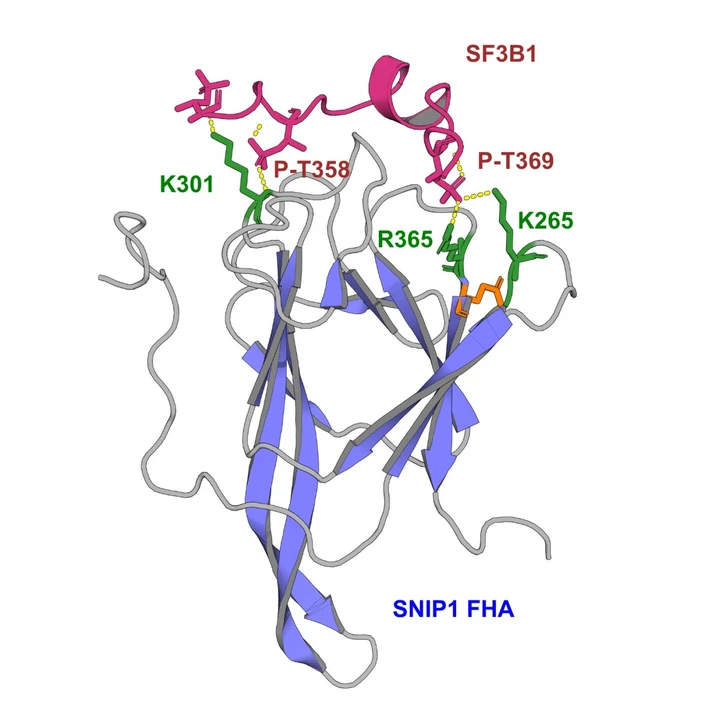
“We showed that during RNA splicing, a chemical modification of the protein SF3B1 is required at a precisely timed step. This modification allows another protein, SNIP1, to bind. If this signal is not transmitted correctly, the cell cannot proceed with the splicing process,” explains first author Pavla Gajdušková.
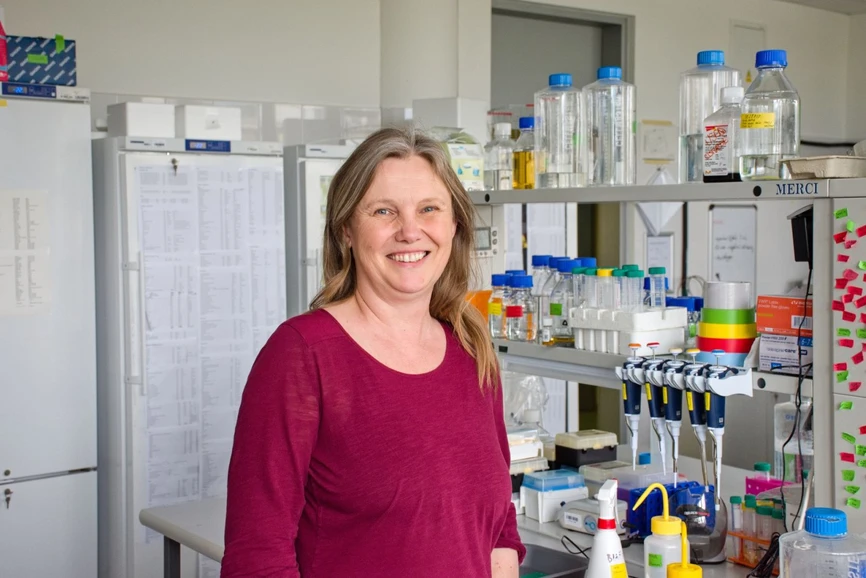
CEITEC: A Rare Genetic Disorder in the Amish Community Helped Confirm a Key Cellular Mechanism: Pavla GajduškováCEITEC: A Rare Genetic Disorder in the Amish Community Helped Confirm a Key Cellular Mechanism: Pavla Gajdušková

This is where the research connects to patients in the Amish community. In affected children, a small genetic change in the SNIP1 protein disrupts its ability to respond properly to the signal mediated by the modified SF3B1 protein, making RNA splicing less efficient than in healthy individuals. As a result, errors occur during RNA splicing that the cell cannot correct, impairing its function – especially in the nervous system.

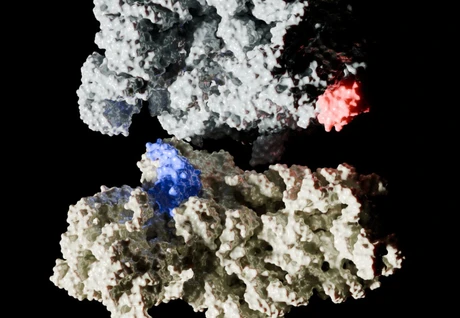
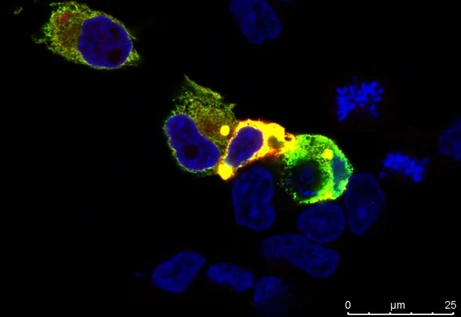
CEITEC/Blažek Lab: A Rare Genetic Disorder in the Amish Community Helped Confirm a Key Cellular Mechanism: Interaction between SF3B1 and SNIP1 proteins.CEITEC/Blažek Lab: A Rare Genetic Disorder in the Amish Community Helped Confirm a Key Cellular Mechanism: Interaction between SF3B1 and SNIP1 proteins.CEITEC/Blažek Lab: A Rare Genetic Disorder in the Amish Community Helped Confirm a Key Cellular Mechanism: The effect of mutations in SNIP1 on cell proliferation.CEITEC/Blažek Lab: A Rare Genetic Disorder in the Amish Community Helped Confirm a Key Cellular Mechanism: The effect of mutations in SNIP1 on cell proliferation.
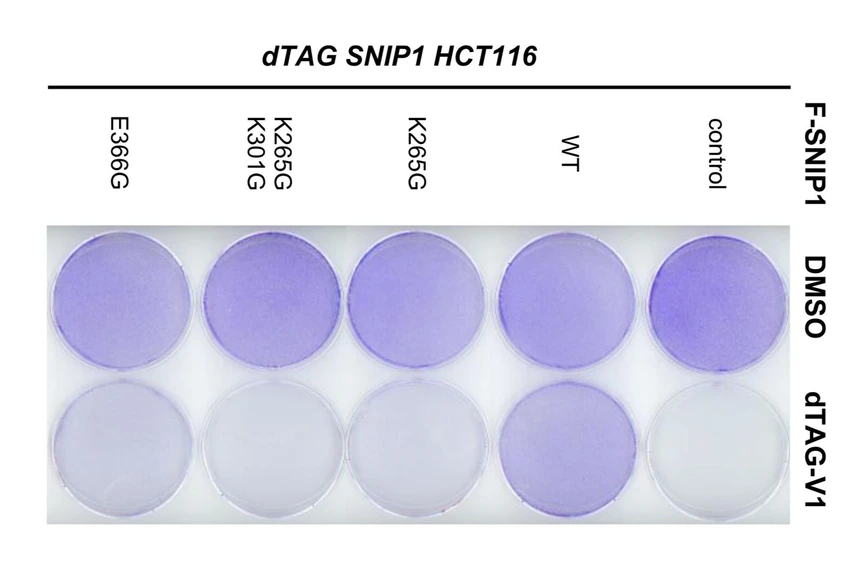
The researchers were thus able to clarify the cause of this rare neurodevelopmental disorder. “Additionally, the cause of this disease also confirms the correctness of the checkpoint we described. It shows that even a small change in one of the proteins involved can disrupt the RNA splicing mechanism on which the cell depends,” adds group leader Dalibor Blažek.

CEITEC/Martin Indruch: A Rare Genetic Disorder in the Amish Community Helped Confirm a Key Cellular Mechanism: Dalibor Blažek.CEITEC/Martin Indruch: A Rare Genetic Disorder in the Amish Community Helped Confirm a Key Cellular Mechanism: Dalibor Blažek.

Although the study focuses on basic research, its implications are broader. It suggests that the same mechanism may also play a role in regulating cell division – a process that is often disrupted in cancer.

The research was carried out by scientists from CEITEC Masaryk University in collaboration with researchers from Spain and Germany. The study was published in the journal Nature Communications.

CEITEC
LinkedIn Logo
 

Related content

Comprehensive and Robust Analysis of Ultrashort- to Long-Chain PFAS, PAE, OPE, and PAH

Applications
| 2026 | Agilent Technologies
Instrumentation
LC/MS, LC/MS/MS, LC/TOF, LC/HRMS
Manufacturer
Agilent Technologies, Plasmion
Industries
Environmental

UPLC™ Separation of Fifteen Bisphenols Using a Waters Acquity™ Biphenyl RP Column with MaxPeak™ Premier Technology and UV Detection

Applications
| 2026 | Waters
Instrumentation
Consumables, LC columns, HPLC
Manufacturer
Waters
Industries
Pharma & Biopharma

Achieving Low‑ppb Bisphenol Quantitation with the Agilent InfinityLab Pro iQ Mass Detector

Applications
| 2026 | Agilent Technologies
Instrumentation
LC/MS, LC/SQ
Manufacturer
Agilent Technologies
Industries
Materials Testing

ECL detection of fentanyl

Applications
| 2026 | Metrohm
Instrumentation
Electrochemistry
Manufacturer
Metrohm
Industries
Forensics

Early-stage drug metabolite quantitation without radiolabels

Applications
| 2026 | Thermo Fisher Scientific
Instrumentation
HPLC, LC/MS, LC/SQ
Manufacturer
Thermo Fisher Scientific
Industries
Pharma & Biopharma, Metabolomics
 

Related articles

Metabolomic and Proteomic Analysis of ApoE4-Carrying H4 Neuroglioma Cells in Alzheimer’s Disease Using OrbiSIMS and LC-MS/MS
Article | Scientific article

Metabolomic and Proteomic Analysis of ApoE4-Carrying H4 Neuroglioma Cells in Alzheimer’s Disease Using OrbiSIMS and LC-MS/MS

In the article published in the ACS Analytical Chemistry, the researchers utilized OrbiSIMS to examine molecular alterations in Apolipoprotein E4-carried neuroglioma cells compared to wild-type H4 cells.
LabRulez
tag
share
more
Plants cope with histone chaperone deficiency by adapting histone chemistry
Article | Science and research

Plants cope with histone chaperone deficiency by adapting histone chemistry

Researchers from CEITEC Masaryk University in Brno have made significant strides in understanding how plants adapt to genotoxic stress and subsequent mutations, specifically through changes in DNA folding.
CEITEC
tag
share
more
Alcohol causes cancer. A study from IOCB Prague confirms damage to DNA and shows how cells defend against it
Article | Science and research

Alcohol causes cancer. A study from IOCB Prague confirms damage to DNA and shows how cells defend against it

Alcohol consumption produces acetaldehyde, a toxic compound that damages DNA. Scientists from IOCB Prague reveal how cells repair this damage, shedding light on the link between alcohol and cancer.
Institute of Organic Chemistry and Biochemistry of the Czech Academy of Sciences
tag
share
more
Bacteria’s Achilles’ Heel – Without a Key Protein, They Multiply Slowly
Article | Science and research

Bacteria’s Achilles’ Heel – Without a Key Protein, They Multiply Slowly

Scientists from CEITEC Masaryk University reveal a bacterial weakness: without RimM, recovery after stress is slow, opening new paths for targeted infection treatment.
CEITEC
tag
share
more
 

Related content

Comprehensive and Robust Analysis of Ultrashort- to Long-Chain PFAS, PAE, OPE, and PAH

Applications
| 2026 | Agilent Technologies
Instrumentation
LC/MS, LC/MS/MS, LC/TOF, LC/HRMS
Manufacturer
Agilent Technologies, Plasmion
Industries
Environmental

UPLC™ Separation of Fifteen Bisphenols Using a Waters Acquity™ Biphenyl RP Column with MaxPeak™ Premier Technology and UV Detection

Applications
| 2026 | Waters
Instrumentation
Consumables, LC columns, HPLC
Manufacturer
Waters
Industries
Pharma & Biopharma

Achieving Low‑ppb Bisphenol Quantitation with the Agilent InfinityLab Pro iQ Mass Detector

Applications
| 2026 | Agilent Technologies
Instrumentation
LC/MS, LC/SQ
Manufacturer
Agilent Technologies
Industries
Materials Testing

ECL detection of fentanyl

Applications
| 2026 | Metrohm
Instrumentation
Electrochemistry
Manufacturer
Metrohm
Industries
Forensics

Early-stage drug metabolite quantitation without radiolabels

Applications
| 2026 | Thermo Fisher Scientific
Instrumentation
HPLC, LC/MS, LC/SQ
Manufacturer
Thermo Fisher Scientific
Industries
Pharma & Biopharma, Metabolomics
 

Related articles

Metabolomic and Proteomic Analysis of ApoE4-Carrying H4 Neuroglioma Cells in Alzheimer’s Disease Using OrbiSIMS and LC-MS/MS
Article | Scientific article

Metabolomic and Proteomic Analysis of ApoE4-Carrying H4 Neuroglioma Cells in Alzheimer’s Disease Using OrbiSIMS and LC-MS/MS

In the article published in the ACS Analytical Chemistry, the researchers utilized OrbiSIMS to examine molecular alterations in Apolipoprotein E4-carried neuroglioma cells compared to wild-type H4 cells.
LabRulez
tag
share
more
Plants cope with histone chaperone deficiency by adapting histone chemistry
Article | Science and research

Plants cope with histone chaperone deficiency by adapting histone chemistry

Researchers from CEITEC Masaryk University in Brno have made significant strides in understanding how plants adapt to genotoxic stress and subsequent mutations, specifically through changes in DNA folding.
CEITEC
tag
share
more
Alcohol causes cancer. A study from IOCB Prague confirms damage to DNA and shows how cells defend against it
Article | Science and research

Alcohol causes cancer. A study from IOCB Prague confirms damage to DNA and shows how cells defend against it

Alcohol consumption produces acetaldehyde, a toxic compound that damages DNA. Scientists from IOCB Prague reveal how cells repair this damage, shedding light on the link between alcohol and cancer.
Institute of Organic Chemistry and Biochemistry of the Czech Academy of Sciences
tag
share
more
Bacteria’s Achilles’ Heel – Without a Key Protein, They Multiply Slowly
Article | Science and research

Bacteria’s Achilles’ Heel – Without a Key Protein, They Multiply Slowly

Scientists from CEITEC Masaryk University reveal a bacterial weakness: without RimM, recovery after stress is slow, opening new paths for targeted infection treatment.
CEITEC
tag
share
more
 

Related content

Comprehensive and Robust Analysis of Ultrashort- to Long-Chain PFAS, PAE, OPE, and PAH

Applications
| 2026 | Agilent Technologies
Instrumentation
LC/MS, LC/MS/MS, LC/TOF, LC/HRMS
Manufacturer
Agilent Technologies, Plasmion
Industries
Environmental

UPLC™ Separation of Fifteen Bisphenols Using a Waters Acquity™ Biphenyl RP Column with MaxPeak™ Premier Technology and UV Detection

Applications
| 2026 | Waters
Instrumentation
Consumables, LC columns, HPLC
Manufacturer
Waters
Industries
Pharma & Biopharma

Achieving Low‑ppb Bisphenol Quantitation with the Agilent InfinityLab Pro iQ Mass Detector

Applications
| 2026 | Agilent Technologies
Instrumentation
LC/MS, LC/SQ
Manufacturer
Agilent Technologies
Industries
Materials Testing

ECL detection of fentanyl

Applications
| 2026 | Metrohm
Instrumentation
Electrochemistry
Manufacturer
Metrohm
Industries
Forensics

Early-stage drug metabolite quantitation without radiolabels

Applications
| 2026 | Thermo Fisher Scientific
Instrumentation
HPLC, LC/MS, LC/SQ
Manufacturer
Thermo Fisher Scientific
Industries
Pharma & Biopharma, Metabolomics
 

Related articles

Metabolomic and Proteomic Analysis of ApoE4-Carrying H4 Neuroglioma Cells in Alzheimer’s Disease Using OrbiSIMS and LC-MS/MS
Article | Scientific article

Metabolomic and Proteomic Analysis of ApoE4-Carrying H4 Neuroglioma Cells in Alzheimer’s Disease Using OrbiSIMS and LC-MS/MS

In the article published in the ACS Analytical Chemistry, the researchers utilized OrbiSIMS to examine molecular alterations in Apolipoprotein E4-carried neuroglioma cells compared to wild-type H4 cells.
LabRulez
tag
share
more
Plants cope with histone chaperone deficiency by adapting histone chemistry
Article | Science and research

Plants cope with histone chaperone deficiency by adapting histone chemistry

Researchers from CEITEC Masaryk University in Brno have made significant strides in understanding how plants adapt to genotoxic stress and subsequent mutations, specifically through changes in DNA folding.
CEITEC
tag
share
more
Alcohol causes cancer. A study from IOCB Prague confirms damage to DNA and shows how cells defend against it
Article | Science and research

Alcohol causes cancer. A study from IOCB Prague confirms damage to DNA and shows how cells defend against it

Alcohol consumption produces acetaldehyde, a toxic compound that damages DNA. Scientists from IOCB Prague reveal how cells repair this damage, shedding light on the link between alcohol and cancer.
Institute of Organic Chemistry and Biochemistry of the Czech Academy of Sciences
tag
share
more
Bacteria’s Achilles’ Heel – Without a Key Protein, They Multiply Slowly
Article | Science and research

Bacteria’s Achilles’ Heel – Without a Key Protein, They Multiply Slowly

Scientists from CEITEC Masaryk University reveal a bacterial weakness: without RimM, recovery after stress is slow, opening new paths for targeted infection treatment.
CEITEC
tag
share
more
 

Related content

Comprehensive and Robust Analysis of Ultrashort- to Long-Chain PFAS, PAE, OPE, and PAH

Applications
| 2026 | Agilent Technologies
Instrumentation
LC/MS, LC/MS/MS, LC/TOF, LC/HRMS
Manufacturer
Agilent Technologies, Plasmion
Industries
Environmental

UPLC™ Separation of Fifteen Bisphenols Using a Waters Acquity™ Biphenyl RP Column with MaxPeak™ Premier Technology and UV Detection

Applications
| 2026 | Waters
Instrumentation
Consumables, LC columns, HPLC
Manufacturer
Waters
Industries
Pharma & Biopharma

Achieving Low‑ppb Bisphenol Quantitation with the Agilent InfinityLab Pro iQ Mass Detector

Applications
| 2026 | Agilent Technologies
Instrumentation
LC/MS, LC/SQ
Manufacturer
Agilent Technologies
Industries
Materials Testing

ECL detection of fentanyl

Applications
| 2026 | Metrohm
Instrumentation
Electrochemistry
Manufacturer
Metrohm
Industries
Forensics

Early-stage drug metabolite quantitation without radiolabels

Applications
| 2026 | Thermo Fisher Scientific
Instrumentation
HPLC, LC/MS, LC/SQ
Manufacturer
Thermo Fisher Scientific
Industries
Pharma & Biopharma, Metabolomics
 

Related articles

Metabolomic and Proteomic Analysis of ApoE4-Carrying H4 Neuroglioma Cells in Alzheimer’s Disease Using OrbiSIMS and LC-MS/MS
Article | Scientific article

Metabolomic and Proteomic Analysis of ApoE4-Carrying H4 Neuroglioma Cells in Alzheimer’s Disease Using OrbiSIMS and LC-MS/MS

In the article published in the ACS Analytical Chemistry, the researchers utilized OrbiSIMS to examine molecular alterations in Apolipoprotein E4-carried neuroglioma cells compared to wild-type H4 cells.
LabRulez
tag
share
more
Plants cope with histone chaperone deficiency by adapting histone chemistry
Article | Science and research

Plants cope with histone chaperone deficiency by adapting histone chemistry

Researchers from CEITEC Masaryk University in Brno have made significant strides in understanding how plants adapt to genotoxic stress and subsequent mutations, specifically through changes in DNA folding.
CEITEC
tag
share
more
Alcohol causes cancer. A study from IOCB Prague confirms damage to DNA and shows how cells defend against it
Article | Science and research

Alcohol causes cancer. A study from IOCB Prague confirms damage to DNA and shows how cells defend against it

Alcohol consumption produces acetaldehyde, a toxic compound that damages DNA. Scientists from IOCB Prague reveal how cells repair this damage, shedding light on the link between alcohol and cancer.
Institute of Organic Chemistry and Biochemistry of the Czech Academy of Sciences
tag
share
more
Bacteria’s Achilles’ Heel – Without a Key Protein, They Multiply Slowly
Article | Science and research

Bacteria’s Achilles’ Heel – Without a Key Protein, They Multiply Slowly

Scientists from CEITEC Masaryk University reveal a bacterial weakness: without RimM, recovery after stress is slow, opening new paths for targeted infection treatment.
CEITEC
tag
share
more
Other projects
GCMS
ICPMS
Follow us
FacebookX (Twitter)LinkedInYouTube
More information
WebinarsAbout usContact usTerms of use
LabRulez s.r.o. All rights reserved. Content available under a CC BY-SA 4.0 Attribution-ShareAlike