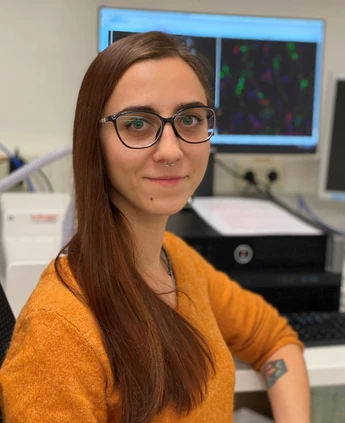
Researchers Tereza Nešporová and Jaroslava Večerková: In science, we must learn to work with failure
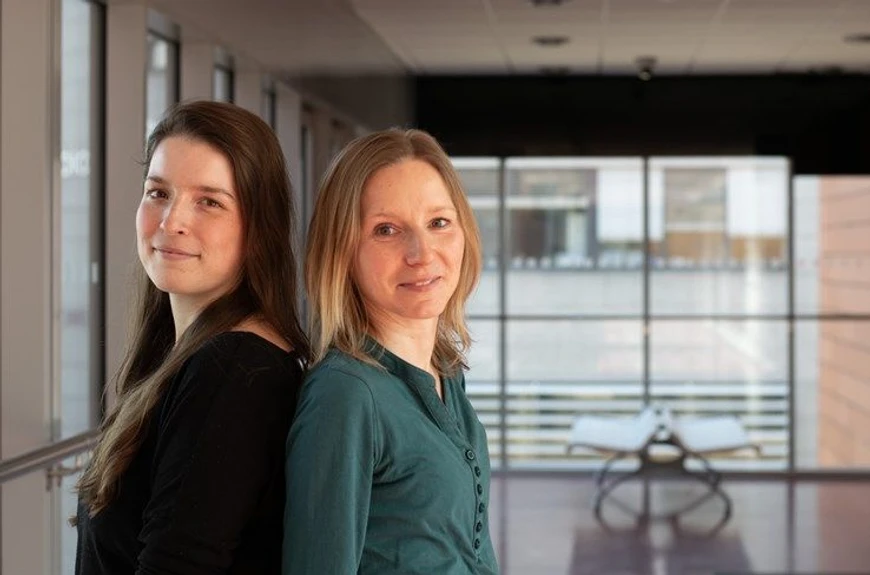
RECETOX: Researchers Tereza Nešporová and Jaroslava Večerková: In science, we must learn to work with failure
Researchers Tereza Nešporová and Jaroslava Večerková from Brno's RECETOX explain why failures are also a valuable part of gaining knowledge, how they study the effects of chemical substances on the hormonal system, and why they apply their professional insights to their everyday lives.
How did you get involved in research at RECETOX?
Jaroslava: I actually joined RECETOX by chance during my follow-up Master's studies in Environmental Chemistry, back when Professor Holoubek was still leading the institute. I wrote my thesis under Klára Hilscherová and simply stayed here ever since, except for a break during maternity leave. I have been part of her team the whole time, focusing on endocrine disruptors. What has changed over the years is the focus of our research. We used to study surface waters, particularly the presence of substances with endocrine-disrupting potential and their effects on organisms. Today, the research has shifted more toward humans and the interactions between chemical substances and the endocrine system.
Tereza: I came from a completely different field. I studied molecular biology and worked on chronic lymphocytic leukemia for my Master's thesis at CEITEC. I used genetic engineering methods such as CRISPR/Cas9 for gene editing—activating, suppressing, or completely removing genes. At the time, Klára Hilscherová’s group needed to create cellular models with increased production of deiodinase enzymes, which I still work on today. I had heard only positive things about the team, and when I finished my Master's degree, I wanted to move beyond my original field. The connection between hormones and neurodevelopment attracted me, and RECETOX became the obvious choice.
So you are in the same research team. How do you collaborate?
Tereza: We sit in the same office. And that’s probably the main thing (laughs).
Jaroslava: We discuss things a lot. Some mechanisms repeat across experiments, so we talk about how each of us evaluates data and why. We inspire each other, even though we do not directly collaborate on the same laboratory work.
How does your work differ?
Tereza: Our team is highly interconnected. We all work on developing assays for detecting endocrine-disrupting substances, specifically those affecting thyroid hormones. However, each of us focuses on a different part of the system. I focus on deiodinase enzymes, which regulate the activation and deactivation of hormones. Recently, I have been spending more time analyzing data and designing experiments than working directly in the laboratory.
Jaroslava: Within the team, I mainly participate in testing different types of samples—from individual chemicals and mixtures to real environmental samples such as household dust—using the assays mentioned above. It is important to note that chemicals can affect the hormonal system at different levels. They can bind to or block nuclear receptors, affect hormone transport in the bloodstream, or interfere with hormone metabolism. In the past, only one part of this process was monitored. Today, we aim to cover the full spectrum of these interactions.
Tereza: And that is crucial. A substance may appear negative in one test, yet affect another part of the system, producing a significant impact on the organism. That is why current research focuses on the entire range of possible mechanisms.
Why did you choose endocrine disruptors as your research topic?
Jaroslava: For me, it was more or less a coincidence while choosing my thesis topic. But it turned out to be a fascinating area, so I stayed with it.
Tereza: I had been interested in it for a long time. I also like that our work has a concrete outcome—we develop tests that can realistically be used in decision-making regarding the safety of chemical substances. Compared to my previous research, I feel this work has a much more direct application.
What about your PhD studies?
Jaroslava: My PhD studies are currently on hold. After maternity leave, I returned as a laboratory technician, and my project work gradually shifted away from my original doctoral topic.
Tereza: I am currently in the fourth year of my PhD studies. I also completed a research stay in Germany, where I learned to work with neuronal cells. As part of my studies, I focus mainly on deiodinases—the enzymes that act as the “on and off switches” of thyroid hormones. We are developing a test that can measure the effects of chemical substances on their activity. In addition, we are now studying how these substances affect neurons and their development, because proper thyroid hormone levels are crucial for nervous system development.
What is the most challenging aspect of laboratory work?
Tereza: Probably unpredictability. Cells do not always grow as expected, instruments have their bad days, and human error also plays a role. The important thing is to document all mistakes and complications and learn from them.
Jaroslava: I agree with Tereza. The biggest challenge is unpredictability. Cells are living systems and do not always behave the same way.
Can a career in science be combined with parenthood?
Jaroslava: At RECETOX, definitely. There is a great deal of flexibility, and managers are very supportive. When necessary, it is possible to work from home. We help each other a lot within the team.
Tereza: It also depends on the type of work and whether it can be planned according to your needs. Our team collaborates closely and tries to help one another whenever necessary. That is key. And when needed, data analysis and manuscript writing can also be done from home.
Is your work more routine or highly varied?
Jaroslava: Very varied. Laboratory work alternates with computer-based work. We are constantly learning new things. It is definitely not repetitive or boring, and that is what I enjoy about it.
Tereza: The only routine in my work is taking care of cell cultures. Otherwise, the work is constantly changing. That is also what I enjoy most about it.
What are the biggest challenges in your work?
Jaroslava: Data evaluation. Measuring something is one thing; evaluating and interpreting it correctly is another.
Tereza: Implementing new methods. And also those moments when you do everything correctly according to a published protocol, yet the results still do not match expectations. In science, you have to learn to accept that not everything works the first time. The important thing is not to give up, to continue optimizing, and to keep hoping for success.
What role should open science play?
Tereza: A huge one. If we had access to detailed protocols and original datasets, it would save enormous amounts of time and money during the implementation and optimization of new methods. Scientific papers often omit details that are actually critical for experimental success.
Jaroslava: It is also important to share failures. A negative result is still a result, and it can provide valuable information.
You are both mothers. Does your work influence your personal lives?
Jaroslava: Absolutely. For example, we pay close attention to washing fruit because of chemical treatments. I encourage my children to think about what they consume, what it contains, and where it comes from. We try to avoid plastics and consistently separate waste.
Tereza: Definitely. Even before having a child, I paid close attention to the composition of cosmetics, food, and other products. After becoming a parent, my caution multiplied. I was especially careful during pregnancy because a developing organism is most sensitive to harmful substances. Sometimes relatives raise their eyebrows at this, but when we have information firsthand, we cannot simply ignore it.
Jaroslava: We also pay attention to toys, clothing, and materials used in the home. It is a kind of professional deformation (laughs).
How can your research contribute from a broader perspective? How can others build upon it?
Jaroslava: We are gradually optimizing methods that may eventually be used routinely. That is probably our greatest contribution.
Tereza: Yes, our methods could help identify undesirable effects of substances before they reach the market, potentially leading to regulation of their production.
Would you like to continue working on this topic in the future?
Jaroslava Večerková: The topic of endocrine disruption is extremely interesting and very broad. The direction of research may change depending on current projects, but I would like to remain part of the team.
Tereza Nešporová: I am very interested in uncovering how substances affect human health, and I believe I will want to continue working in this area. I like how dynamic the research is and that it has direct practical applications. I do not mind change, but I am happy within this team and would like to stay. We work together as a well-coordinated group.