

ASMS: Waters Breakfast Seminars
Waters ASMS Breakfast Seminars
June 2, 2025
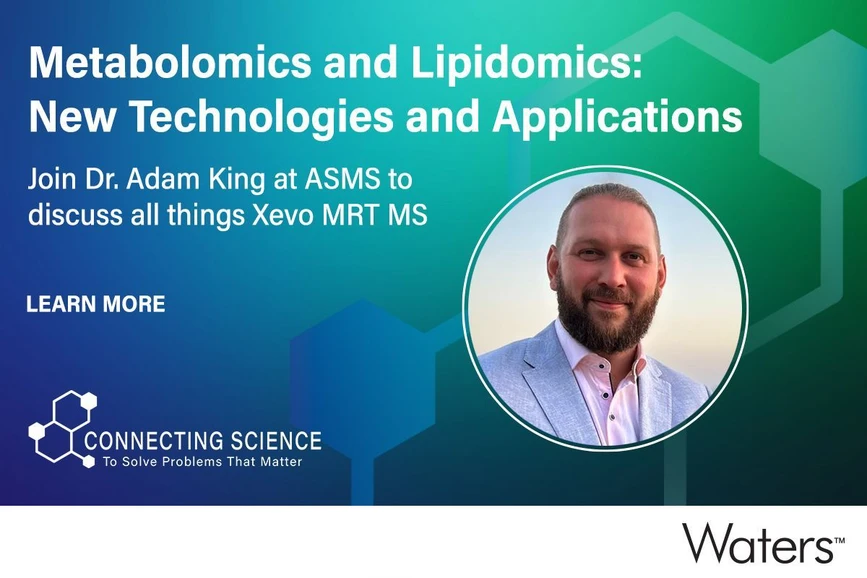
New Frontiers in MS Based Metabolomics
- Time: 7:00 AM-8:00 AMET
- Place: Hilton Baltimore Inner Harbor - Holiday 1-3
Part 1: Cutting-edge MRT Technology
- Adam King (Senior Scientist, Waters Corporation)
Discover the latest breakthroughs in MRT technology for qualitative and quantitative analysis of small molecules.
 Waters: Waters ASMS Breakfast Seminars (Adam King)
Part 2: AI and ML in LC-MS Metabolomics
- Prof. Jacques Corbeil (Professor Laval University and MILA)
Explore how artificial intelligence and machine learning are revolutionizing LC-MS metabolomics analysis.
Following the presentations, there will be a dynamic panel discussion and an interactive Q&A session. Don't miss this opportunity to join us and to delve into the future of metabolomics!
Mass Spectrometry in Biotherapeutics: Advancing Gene and Protein Analysis
- Time: 7:00 AM-8:00 AMET
- Place: Baltimore Convention Center - Room 328
Part 1: Comparison of MS-based sequencing methods for CRISPR single guide RNA
- Dr. Christopher Gawlig (QC Scientist Research & Development , Biospring)
Oligonucleotide drugs have become an integral part of the pharmaceutical repertoire, bringing with them a growing need for comprehensive quality control methods, including those that confirm the sequence. Mass spectrometry has proven a versatile tool for sequence confirmation of oligonucleotides and determination of incorporated modifications.
The first part of our breakfast seminar focuses on BioSpring’s sgRNA sequence confirmation efforts using new enzymes and LC-MS methodologies for full understanding of their molecules, evaluating the latest bioinformatic workflows for ease of QC implementation.
Part 2: The Impact of Routine LC-MS for Biopharmaceutical Analysis
- Dr. Oscar Hernandez Alba (Research Scientist, BioOrganic Mass Spectrometry Laboratory (LSMBO), Strasbourg University)
Next, delve into developments for the routine LC-MS analysis of protein biologics, reflecting on accessible methods, which are essential for both quality control and characterization. The session describes how routine LC-MS has helped them to date to solve current biotherapeutic analysis challenges, and the implications and impact of ongoing developments for future research.
Join us to gain insights into the latest advancements in LC-MS technologies and their applications in RNA research and biologics analysis.
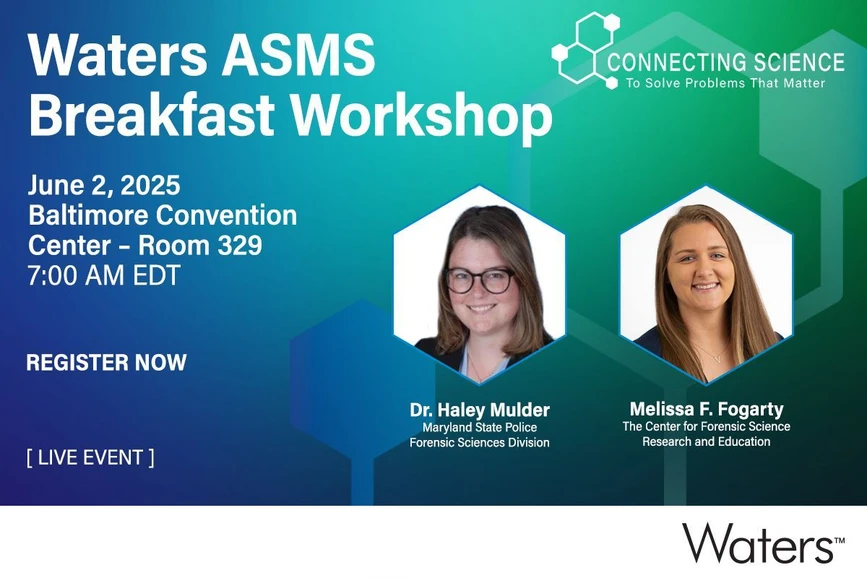
Chemistry and Forensics: Bridging Science and Justice
- Time: 7:00 AM-8:00 AMET
- Place: Baltimore Convention Center - Room 329
Part 1: Charm City Science - How Maryland State Police Pursues Impaired Driving Cases
- Dr. Haley Mulder (Chief Toxicologist, Maryland State Police, Forensic Sciences Division)
The Maryland State Police, Forensic Sciences Division is the only laboratory in the state of Maryland that is approved to perform blood drug testing in the course of driving under the influence of drugs investigations (DUID). The Toxicology Section services all 23 counties of Maryland and the city of Baltimore in these DUID investigations. As such, it is imperative that the Toxicology Section has reliable and robust methods to provide valid results in a timely manner. This presentation will review the standard work protocol conducted for DUID investigations, including the use of the Waters Acquity I-Class LC coupled with a Xevo-TQ-S for the analysis of benzodiazepines, cannabinoids, and opioids in whole blood samples.
Additionally, new methods to help streamline analyte testing will be discussed, including the use of a Waters Xevo G3 Quadrupole Time of Flight to implement High Resolution Mass Spectrometry for screening protocols. Finally, the use of these protocols to better service the entire State of Maryland in satellite laboratories will be explored.
Part 2: Breaking Down the Isomers: Advanced LC-MS/MS Strategies for NPS Detection
- Melissa F. Fogarty, MSFS, D-AB (Director of Laboratory Operations, The Center for Forensic Science Research & Education)
The Center for Forensic Science Research and Education (CFSRE) is a non-profit forensic laboratory located in Horsham, Pennsylvania. The organization is dedicated to advancing the field of forensic science, with a particular focus on the identification, characterization, and reporting of novel psychoactive substances (NPS). As the NPS landscape continues to evolve rapidly, it presents significant challenges for forensic laboratories, especially with the frequent emergence of structurally similar and isomeric compounds that can be difficult to distinguish using conventional analytical techniques.
One class of substances especially prone to such structural modifications is the synthetic cathinones. The formation of isomeric compounds within this class can complicate both identification and interpretation, necessitating the use of highly sensitive and specific instrumentation.
This presentation will highlight our use of the Waters Acquity I-Class Liquid Chromatography (LC) system coupled with the Xevo TQS Micro tandem mass spectrometer to detect and differentiate challenging synthetic cathinone isomers. In particular, we will highlight the analytical hurdles and solutions associated with dimethylpentylone and n-propyl butylone, two compounds that exemplify the complexity of isomeric NPS.
 Waters: Waters ASMS Breakfast seminars - June 2, 2025
June 3, 2025
Panel Discussion: Unlocking New Frontiers - The Impact of Charge Detection Mass Spectrometry (CDMS)
- Time: 7:00 AM-8:00 AMET
- Place: Hilton Baltimore Inner Harbor - Holiday 1-3
Join us for an enlightening panel discussion unveiling the transformative impact of Charge Detection Mass Spectrometry (CDMS) in the realm of megamass biomolecule analysis. We will explore the core principles and unparalleled advantages of CDMS, emphasizing its pivotal applications in biopharmaceutical research and development.
Our thought-leader panelists will share their wealth of experience and insights into the latest technical advancements and future directions of CDMS, redefining the boundaries of conventional mass spectrometry. The discussion will also address regulatory considerations and highlight how CDMS pioneers are driving collaborative innovation towards a broad adoption in the pharmaceutical industry and academic research.
Panelists:
- Prof. Martin Jarrold and Dr. Benjamin Draper (Co-founders, Megadalton)
- Dr. Timothy Fenn (Vice President Analytical Development and Quality, Lexeo Therapeutics)
- Dr. Ben Clarke (Principal Scientist, US Pharmacopeia)
- Prof. Susumu Uchiyama (Professor, Osaka University, Japan)
- Dr. Rebecca d’Esposito and Dr. Anisha Haris (Senior Scientists, Waters Corporation)
MS Imaging Approaches for Characterizing Spatial Metabolic Networks
- Time: 7:00 AM-8:00 AMET
- Place: Baltimore Convention Center - Room 328
- Presenter: Irwin J. Kurland MD Ph.D. (Director of the Stable Isotope & Metabolomics Core Facility of the Diabetes Research Center, Albert Einstein College of Medicine)
Elucidation of spatial metabolic networks is key to the understanding the metabolic relationships between different cells in a region, as well as the metabolic heterogeneity of each class of cells.
When stable isotopes are given in vivo, stable isotope MS imaging of organs allows the detection of energetic heterogeneity of cells in a region, and can also be used to follow cell specific metabolism of the labelled substrate through metabolic pathways.
For example, hepatocytes are organized across a spatial axis between the portal triad and the central vein to form functional repetitive units termed a lobule to perform distinct metabolic functions depending on location within the lobule.
Spatial metabolomics coupled with 13C and 18O stable isotope tracer flux imaging were used as a part of a multi-omic approach to characterize the metabolic network and energetics of cells in around the portal triad and central vein in the fasted and fed states, and to examine the metabolic characteristics of an unique subset of periportal Dual-Modal hepatocytes, whose energy requirements would need to simultaneously support gluconeogenic and lipogenic processes.
Enhancing Metabolomics and Lipidomics Workflows: Advances in Sample Preparation and UPLC Column Technologies
- Time: 7:00 AM-8:00 AMET
- Place: Baltimore Convention Center - Room 329
- Presenter: Chris Collins Ph.D. (Principal Product Marketing Manager, Waters Corporation)
This presentation will explore the current state of metabolomics and lipidomics workflows, including the importance of sample preparation to enhance data quality. We will discuss UPLC column selection and method optimization for reversed-phase, mixed-mode, and HILIC chromatography.
Additionally, the benefits of MaxPeak Premier columns will be discussed, emphasizing the role of inert column hardware in improving sensitivity, reproducibility, and MS performance.
June 4, 2025
Advancing Affinity Chromatography with New Protein A Column Technology
- Time: 7:00 AM-8:00 AMET
- Place: Baltimore Convention Center - Room 328
- Presenter: Michael Zagieboylo (Senior Product Manager, Waters Corporation)
Biotherapeutics represents an exponentially growing industry with an equally burgeoning need for improved analytical methods.
A key technique in this field is affinity chromatography. Used from process development to downstream bioprocessing, it can analyze protein titer concentration in mAb-based drugs to give insights on critical process parameters.
Waters has developed an advanced Protein A affinity column to provide enhanced lower limits of detection and can be combined with other liquid chromatography methods for multi-attribute assays.
Exploring Next Gen Cutting-Edge LC-MS Technology for Targeted Quantitative Proteomics
- Time: 7:00 AM-8:00 AMET
- Place: Hilton Baltimore Inner Harbor - Holiday 1-3
Part 1: Requirements for next Generation Targeted LC-MS Based Proteomics
- Nicolai Bache (VP Proteomics Research, Vertical Markets at Evosep)
Recent advancements in sample preparation and LC-MS technologies have unlocked the potential for deep plasma proteome profiling. These innovations are accelerating the discovery of novel biomarkers and therapeutic targets. While shotgun proteome profiling remains a powerful approach for biomarker discovery, targeted workflows are essential for translating these discoveries into clinically relevant applications. Combined with robust and sensitive low flow LC-MS, targeted MS applications provides complementary and additional biological insight to affinity-based technologies.
Scalable sample preparation is essential and should be seamless integrated with LC-MS to enable high-throughput quantitative measurement This is made possible by robust, standardized, and high-throughput sample separation from Evosep. Scalable and targeted workflows are enabled due to the unique features of the platform such as the Evotip Pure allowing robust and reproducible processing of thousands of samples. High retention time stability supports tight method scheduling, while defined and symmetric peak shapes ensure high sensitivity and minimal matrix interference effects. Here, we describe a fully automated plasma workflow, coupled to a scheduled Multiple Reaction Monitoring (MRM) targeted assay using Evosep and discuss the performance requirements for the next generation targeted LC-MS based proteomics.
Part 2: Combining Sensitivity, Selectivity, Speed and Resolution for Quantification of Peptide Biomarkers
- Lee Gethings (Consulting Scientist, Waters Corporation)
In this short presentation we will discuss challenges in peptides quantification by LC-MS/MS, presenting new data and results from the TOF MRM mode of operation on the Xevo MRT.
After these short presentations, engage in an in-depth Q&A session and discussion with our expert presenters. This is an excellent opportunity to deepen your understanding and connect with leading professionals in the field.


