International Symposium on Preparative and Process Chromatography (PREP) 2025
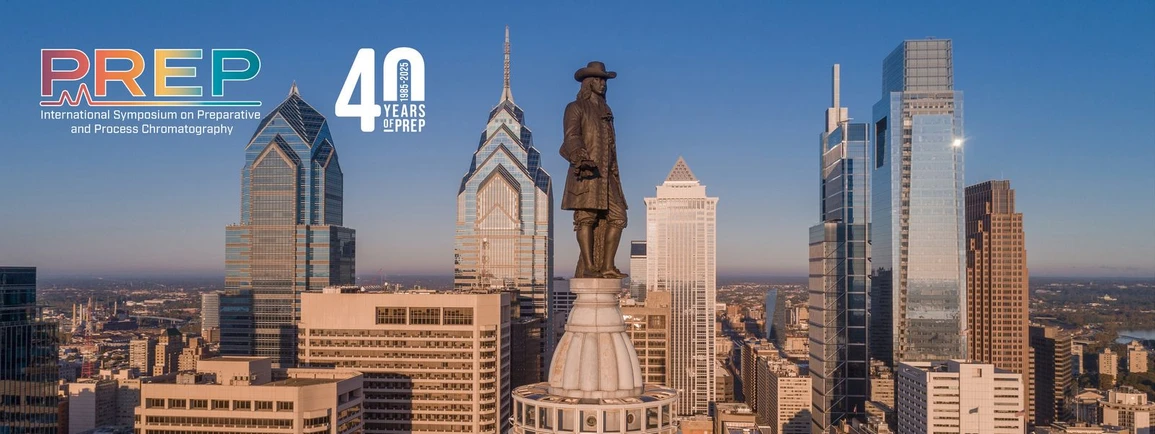
We are glad to announce that the International Symposium on Preparative and Process Chromatography (PREP 2025) will take place at the Pennsylvania Convention Center in Philadelphia, PA, from September 29 to October 2, 2025.
The 2025 symposium marks a milestone as we celebrate 40 years of PREP. Since 1985, PREP has been one of the most recognized international conferences in the world for the presentation and discussion of the latest developments driving the field of Preparative & Process Chromatography. Continuing to build on our 40-year history, the symposium will provide enormous benefits to the preparative and process chromatography community including training workshops, tutorials, scientific talks, poster presentations, a vibrant exhibit, and vendor workshops that will help our knowledge grow, our science progress, and our technology advance.
Looking forward to meeting you in Philadelphia.
Olivier Dapremont (SK Pharmteco)
PREP 2025 Chair
Stefano Menegatti (NC State University & LigaTrap Technologies)
Co-chair
Nick Vecchiarello (University of Virginia)
Co-chair
Topics
- Molecular, Mechanistic, and Data-Driven (AI/ML) Modeling
- New Frontiers in Stationary Phases, Ligand Functionalization, and Continuous Operations
- Challenges and Innovation in Chromatography: Continuous and Sustainable Separations
- Small Molecules – High Throughput Screening and scale-up
- Oligo and peptides challenges
- Natural Products and alternate separation techniques (liq-liq, membranes…)
- Bioseparations: Engineered Proteins, Vaccines, and Gene and Cell Therapies
- Other & Emerging topics
Registration
Register HERE
Registration fees
Early Bird until August 4, 2025
- Academic: $950
- Exhibitor Delegate (only with booth booking): free registration
- Industry affilliated: $1,150
- Student: $375
Standard until September 15, 2025
- Academic: $1,250
- Exhibitor Delegate (only with booth booking): free registration
- Industry affilliated: $1,450
- Student: $500
Late
- Academic: $1,620
- Exhibitor Delegate (only with booth booking): free registration
- Industry affilliated: $1,820
- Student: $630
Abstract Submission
- Deadline for abstract submission for Oral Communications: August 4, 2025
- Deadline for abstract submission for Posters: August 18, 2025
Abstract Submission Guidelines
Abstracts must be submitted via the Abstract Submission tool available under the Registration menu on this website. Please note that your registration is required to submit abstracts, but payment is not mandatory at this stage. However, accepted summaries will only be published in the book of abstracts of the symposium after full payment of the registration fee.
In order to submit your abstract, select “Abstract submission” under the “Registration” menu. Log in using your registration number (received upon registration) as well as your e-mail address. Select “Abstract Submission” and “Add”.
- Paste the title of your abstract in upper cases in the field “Subject”.
- Select whether you agree to be selected for an oral communication (if applicable) [Save].
- Select one Main category for your abstract (mandatory) as well as one or more Secondary categories (optional).
- Under “Authors”, add the number of authors and click on [Add authors]. Fill in each author’s firstname and lastname and tick the box for the main author. If no author is ticked, the submitter will automatically be selected as main author.
- Add the author’s full address(es) under “Author’s affiliations and addresses”. If several addresses are used, please add reference numbers between brackets at the end of each author’s name to refer to the corresponding author’s affiliation.
- Paste your abstract text in the field “Abstract content” (text only).
- To insert a picture, place your cursor into the text where a picture should appear and click on [Insert Image tag]. You can use several images.
- Under “Pictures”, add the number of images to be inserted and click on [Add files]. Browse your computer to attach the right images. (Please note that if the image is too large, it will be reduced to the A4 page size. If the image is smaller, it will keep its size. Please make sure the image quality is 300 dpi).
- Under “References”, add the number of references and click on [Add references]. Fill in the number of the references and the reference texts.
- A temporary number (TempXX) is assigned to your abstract for communication purposes. Please be aware that the definitive Poster or OC number will be communicated in your last information e-mail 1 week before the event.
- Click on [submit/edit].
- Click on “PDF preview” to check the result. Please note that the abstract should be one page maximum. Therefore, only the first page on the preview will be taken into account. If the preview shows more than one page, please adapt your page accordingly so that it fits into one page.
- You can update your abstract if necessary and submit/edit or preview as many times as needed. It will not re-create a new abstract but just update it.
The pdf will be inserted in the book of abstract as shown on the preview. Please be aware that it is your responsibility to fill in all data correctly and completely. Any errors in spelling, grammar or scientific fact will be reproduced as typed by the author.
You can have access to your poster via the website and make changes to it, until submission deadline, by using your registration number and email address as indicated at registration.
Program
Plenary Speakers
Improving the Characterization of In Vitro Transcription mRNAs for High-Yield Production, Regulatory Compliance, and Cost-Effective Scalability
- Dr Fabrice GRITTI (WATERS CORPORATION, MILFORD, United States)
- Fabrice G. Gritti received a Ph.D. in Chemistry and Physics of Condensed Matter from the University of Bordeaux I (France) in 2001. He then worked as a research scientist at the University of Tennessee (Knoxville, TN) from 2002 to 2014 in the research group of the late Prof. Georges Guiochon. He joined Waters Corporation in 2015 where he is currently a consulting scientist. Dr. Gritti’s main research interests involve liquid/solid adsorption thermodynamics and mass transfer in heterogeneous media used in the field of separation science. During the last 25 years, he has provided fundamental insights in preparative liquid chromatography and on the retention mechanisms in liquid chromatography (LC), refined the detailed theory of band broadening in modern LC columns, and contributed to improve column and instrument technologies in both LC and supercritical fluid chromatography for various relevant applications. Dr. Gritti has been invited to give about thirty seminars on diverse topics of chromatographic sciences worldwide. He has delivered over hundred invited keynote lectures and published over three hundred peer-reviewed articles. Dr. Gritti was the recipient of the 2013 Chromatographic Society Jubilee Medal, the 2019 JFK Huber Lecture Award, the 2022 Eastern Analytical Symposium Award for Outstanding Achievements in Separation Science, the 2023 Csaba Horvath Memorial Award for propagation of separation sciences throughout the world and co-operation in the development of chromatography in Hungary, and the 2024 A.J.P. Martin Medal from the UK-based Chromatographic Society.
Convection versus diffusion in chromatography, where are the benefits?
- Prof. Alois JUNGBAUER (UNIVERSITY OF NATURAL RESOURCES AND LIFE SCIENCES, Vienna, Austria)
- Alois Jungbauer holds a doctorate in food technology and biotechnology from BOKU. He is retired Professor Emeritus of Downstream Processing at the Institute of Bioprocess Science and Technology at BOKU University, Adjunct Professor at University of Adelaide and an active scientist at the Austrian Centre of Industrial Biotechnology. He is currently working in the field of bioprocess engineering of proteins, viruses and gene therapy vectors. He has published more than 400 papers on recombinant protein production, bioseparation and advanced materials for bioprocess engineering, 17 patents and 12 book chapters and a monograph titled “Protein Chromatography, Process Development and Scale Up”. He has developed several processes for the manufacture of advanced biopharmaceuticals and serves on the advisory board of several companies. He coordinated the Marie Currie Innovative Training Program (ITN) Continuous Downstream processing (CODOBIO) and coordinates the ITN Characterization and Recovery of Viral Gene therapy Vectors and Vaccines (CAARE).
Vendor Seminars
Start Smart, Connect Better: Join the Vendor Seminars
Don’t miss the free vendor seminars taking place in the morning and at lunchtime on September 30 and October 1. These sessions are your exclusive opportunity to enjoy breakfast and lunch while discovering the latest innovations from our industry partners — and to network with peers in a relaxed setting.
Please note that breakfast and lunch will only be provided to seminar participants. Attendance is free, but places are limited, so make sure to register for your selected seminar(s) through your online registration.
Breakfast Vendor Seminars - Tuesday, September 30
DAISO Inc
The CHROMATOGRAPHY COMPASS ver. 2.0 and Other Great Tools to Help You Desing and Run Large-Scale Peptide Purification Processes
- Presenter: Dr Imre Sallay
All the brave people who sacrifice sleep to join us for the breakfast vendor seminar should be rewarded.
We intend to do so by:
- sharing our view on the changing landscape of the peptide API market
- sketching a snapshot of the difficulties of working with fibrillating peptides on large scale
- introducing new stationary phases suitable for better peptide separation
- explaining the CHROMATOGRAPHY COMPASS ver. 2.0 and the advantages of using it
Let’s see whether we can fit all what we wish to share with you into a short, merely an-hour-long seminar…
emp BIOTECH
A Novel affinity Resin for Removal of Double Stranded Oligonucleotide Contaminants
- Presenter: Dr Alistair Hurst
We have developed a novel affinity solid phase that binds dsDNA in flow-through mode.
The solid phase was designed to offer a single-use, low-cost affinity solid phase that would be used to rapidly and efficiently bind dsDNA in therapeutic products as part of the downstream purification process. It does not bind to proteins or antibodies and intercalates into the backbone of the dsDNA.
The ligand is a proprietary synthetic low molecular weight molecule that can be easily synthesized and produced in large quantities. Furthermore, leached (unbound) ligand can be easily removed using a desalting solid phase or TFF.
This is the first of a family of products developed by emp BIOTECH and commercialized under the brand name dsSolve™
JNC Corporation
Innovative Large-Pore Cellulose Beads for Efficient Purification of Large Biomolecules
- Presenters: Junya Toba, Chigusa Mori, Miharu Kamezawa
Explore Purification Strategies with Cellufine!
JNC offers a range of cellulose-based resins under the Cellufine brand for preparative chromatography. We supply a broad selection of products for various chromatographic techniques, including affinity, ion-exchange, and hydrophobic interaction chromatography.
We are excited to present our innovative Cellufine MLP (Monolith-Like Particle) technology. Cellufine MLP consists of cellulose beads with pore diameters exceeding 1 µm, enabling more effective processes for large biomolecules.
This seminar will cover several topics:
- Anion exchange resin for adeno-associated virus (AAV) full/empty separation
- Affinity purification of several viruses for vaccine
- Multimodal chromatography for the removal of HCPs from mAbs
We look forward to welcoming you to the seminar to discuss purification workflows and explore new chromatography solutions together.
Tosoh Bioscience
More information available soon...
Zaiput Flow Technologies
Scalable Continuous Partition Chromatography with No Moving Parts
- Presenter: Robert Viano
Continuous Liquid-Liquid Partition Chromatography (CLLPC) through the use of membrane-based phase separators is presented as an alternative to traditional chromatographic separation techniques using simulated moving bed chromatography (SMB) or centrifugal partition chromatography (CPC). This technique has the benefits of not requiring an expensive stationary phase, lacking moving parts, operating under low pressure, and having ease of scalability from the laboratory scale up to the tens of liters per minute scale. We begin by describing and providing background on the technique and then present continuous separation examples including that of biological compounds and chiral enantiomers.
Lunch Vendor Seminars - Tuesday, September 30
Bio-Rad Laboratories
Biotherapeutic Purification Strategies: Enhancing Process Efficiency with Mixed-Mode Chromatography
Join us to learn about advanced strategies in therapeutic molecule purification, focusing on the process efficiencies through mixed-mode chromatography. Mixed-mode chromatography combines multiple interaction mechanisms, such as ion exchange, hydrophobic interaction, and/or affinity binding, to achieve superior separation and purification of complex biomolecules. By optimizing these interactions, researchers can significantly improve the yield, purity, and overall efficiency of the purification process.
Bio-Work
More information available soon...
MilliporeSigma
High Capacity CEX Membrane for Downstream Purification of mAb and AAV
- Presenter: Dr Amit Dutta
The operational flow rates and productivities of chromatography resins are limited by a diffusive mass transfer mechanism. In contrast, chromatography membranes operate via a convective mass transfer mechanism, enabling operation at significantly higher flow rates and productivities. However, the practical application of ion exchange chromatography membranes has been limited by the relatively low binding capacity of existing commercially available products. In this study, we describe the performance of a high-binding-capacity cation exchange hydrogel chromatography membrane for the purification of monoclonal antibodies (mAb) and Adeno-associated virus (AAV). This new chromatography membrane improves productivity over 30 times relative to traditional cation exchange resins. The impurity removal performance was compared with two other commercially available membrane devices, demonstrating significantly higher binding capacities and loading capacity. Furthermore, we demonstrate that the shared flat sheet device design offers consistent chromatography performance for 1 mL, 9 mL, 124 mL, and 372 mL devices.
Pic Solution
Where are we with Supercritical Fluid Chromatography?
- Presenter: Dr Gerard Rosse
The benefits of Supercritical Fluid Chromatography to reduce operational costs and minimize our impact on the environment will be discussed. An overview of the latest developments in SFC instrumentation to tackle small molecules, lipids and peptides separation at the preparative and industrial scale will be given. PIC Solution’s unique CO2 recycling technology for standard bottles collection as well as open-bed collection and its impact on reducing costs will also be exemplified.
SK Pharmteco
Technologies to Address Sustainability in Chromatography
- Presenter: Olivier Dapremont
With the development and the success of new peptides and oligonucleotides drugs, the demand for chromatographic purification has significantly increased as these new compounds cannot be purified by traditional crystallization methods. Unfortunately, chromatography is a unit operation that requires large volumes of solvents resulting in a very high PMI for these new modalities. In this seminar we will review the various technologies available to recover and re-use the mobile phases to minimize the PMI of processes and reduce the associated carbon footprint.
Solventum
Evolution of Next-Generation Harvest and Clarification Technologies from wet laid media to fiber chromatography
- Presenters: Dr Alexei Voloshin, Dr Masa Nakamura
As the biopharmaceutical industry advances toward efficient bioprocessing, demand for innovative harvest and clarification solutions grows. We explore the shift from traditional wet-laid media to key innovations in fiber architecture, gradient density control, and binder chemistry, enabling superior turbidity reduction and increased throughput. We emphasize how process insights and customer collaboration improve our media for intensified cell culture processes. These new technologies offer enhanced performance, shorter processing times, and greater scalability for modern biopharmaceutical manufacturing. The session will present our next-generation harvest and clarification product line, highlighting gains in filtration efficiency, robustness across cell densities, and scalability from lab to manufacturing. Comparative data from monoclonal antibody and gene therapy processes will showcase these advancements' impacts.
Breakfast Vendor Seminars - Wednesday, October 1
Fuji Silysia – Chromatorex
From Lab to Plant: Scalable Silica Solutions for Insulin & Peptide Purification
- Presenter: Donnie Lummus
Join Fuji Silysia as we reveal our latest innovations in silica-based chromatography media engineered for the scalable purification of insulin and therapeutic peptides. Designed to meet the strict requirements of biopharmaceutical manufacturing, our high-performance spherical silica gels ensure a smooth transition from lab-scale development to commercial production, delivering exceptional purity, batch-to-batch consistency, and full regulatory compliance.
This presentation will explore:
- Key challenges in scaling up peptide and insulin purification
- Selection criteria for silica media in high-purity processes
- Case studies of successful industrial-scale projects using Fuji Silysia’s silica
- Optimization strategies to enhance yield and reduce impurities
- Compatibility with GMP manufacturing environments
Discover how our silica platforms are helping leading manufacturers optimize purification performance, reduce development timelines, and bring high-quality biologics to market faster.
DuPont
Reverse Phase and Anion Exchange Resin Purification Strategies for Oligonucleotides and Peptides
- Presenter: Hadi Fares
The DuPont Bioprocessing Applications Lab focuses on developing advanced purification solutions for oligonucleotides and peptides, leveraging real-world drug feeds to drive product innovation and application research. This seminar will provide an overview of DuPont's expanding portfolio and recent work, with an emphasis on practical strategies to improve purity and yield.
The presentation will feature case studies on the purification of glucagon-like peptide-1 receptor agonists (GLP-1) using DuPont™ AmberChrom™ XT reverse phase resins, examining how variations in process conditions—such as reinjecting pooled fractions under different pH environments—can enhance impurity removal and overall performance.
Additionally, the session will explore oligonucleotide purification using both reverse phase and anion exchange chromatography resins. It will highlight comparative studies on purification approaches for short and long oligonucleotides, demonstrating how resin selection and process design influence efficiency.
The seminar will conclude with a look at DuPont’s growing bioprocessing portfolio, including upcoming resin technologies designed to meet the evolving demands of biopharmaceutical manufacturing. As a global leader in adsorbents and ion exchange resins, DuPont continues to deliver science-driven solutions to address the latest drug purification challenges.
Ecolab
Improve Manufacturing Efficiencies with the Latest Advanced Chromatography Resins
- Presenter: Karen Green
There are many factors to consider when selecting a chromatography resin for use in a biopharmaceutical purification process. No longer does a singular affinity solution address the needs of increasing molecular complexities, cost and time pressures, as well as operating sustainably. Building on the success of the Purolite™ AP+ resin portfolio, Ecolab is excited to add the latest AP+ resin innovation, Purolite AP+50, to its toolbox where economic efficiencies, acceleration to market, and optimized performance are in focus. Purolite AP+50 offers high binding capacity, resolution, and stability to optimize your purification process.
Kromasil by Nouryon
Key Aspects in Purification of Peptides using Reversed Phase Preparative Chromatography
- Presenter: Fredrik Limé
This vendor seminar will present recent updates and developments using state-of-the-art spherical silica in preparative chromatography. Purification of peptides APIs are of great interest due to their therapeutic potential, and we will show some of the latest solutions for purification of biotherapeutic. This includes the benefits of how silica can increase the efficiency, and the importance of high loadability to reduce production cost. Scalability both in terms increasing columns volume and in particle size with the same selectivity. There will also be examples of column regeneration to increase the column lifetime.
In addition to these important features in preparative chromatography, we will also present the latest in the comprehensive screening of Kromasil phases for purification of GLP-1 agonists, including the diC4. The methodology to systematically remove the impurities from the crude in a 2-step purification. We will cover the Kromasil portfolio with stationary phases such as EternityXT for extended pH range and the fully wettable C18(w) phase for increased flexibility and show some of the latest solutions for purification of biotherapeutic.
Waters Corporation
Effectively Scaling Up UPLC/UHPLC Methods to Preparative Scales Using Sub-5 µm Particle-size Prep Columns
- Presenter: Andy Leightner, Darcy Shave
Waters, the leader in preparative chromatography, offers a wide range of purification solutions, including UV- and MS-directed LC and SFC purifications, from analytical to preparative scales.
Explore the new Waters Analytical Scale Purification System, designed for higher efficiency, easier scale-up, reduced operational costs, and more reliable results at smaller scales.
Key Features:
- Faster chromatography with improved resolution and sensitivity using sub-5 µm particle-size prep columns and high-pressure Arc HPLC Quaternary Solvent Managers
- Predictable scale-up with the CM-30S Column Manager, featuring advanced multicolumn heating and switching capabilities
- High-capacity sample processing and fraction collection with the 3767 Sample Manager, accessible manually or by robot
- Integrated industry-leading chemistry and software solutions.
Seminar Highlights:
- How to leverage the Waters Analytical Scale Purification system with sub-5-μm particle size preparative columns to boost purification efficiency and reduce lab operation costs
- How to scale up the UPLC™ method to the analytical scale purification method for both small and large molecules
- Showcasing the latest purification applications, including Isolation of a degradation product of ranitidine hydrochloride (HCl) and the analysis of GLP-1, oligonucleotides, and spinetoram
Lunch Vendor Seminars - Wednesday, October 1
Agilent Technologies
More information available soon...
Cytiva
Refining the Antibody Capture Process: Innovations for Enhanced Purity and Efficiency with Modern Affinity Resins
- Presenter: Anna Grönberg
The landscape of therapeutic antibodies is evolving. Established processing operations for traditional monoclonal antibodies (mAbs) are maturing alongside the need for new chromatography protocols for antibody variants—such as multispecifics and fragments. As a result, a one-size-fits-all approach to antibody capture chromatography is no longer viable. Selecting the right process depends on multiple factors: the target molecule, stage of development, scale-up plans, budgets, and timelines. Resin properties and the mode of operation substantially impact the efficiency of the capture step and the overall purity of the target molecule.
Antibody variants come with their own set of challenges. They are often less stable, more prone to aggregation, exhibit higher levels of product-related impurities, and tend to have lower titers than conventional mAbs. Addressing these issues is critical for ensuring a robust, safe, and economically viable production process, while still adhering to the stringent regulatory requirements and process efficiency standards of traditional mAb production.
In this presentation, we will evaluate and compare various strategies for optimizing the antibody capture step. We’ll discuss the impact of key factors—such as resin selection, mode of operation, and process conditions —
on your main priorities: purity, yield, and productivity. We'll also explore the opportunities presented by the latest protein A resins and illustrate how different options can be beneficial under various conditions.
MAC-MOD Analytical
Innovations in Chromatography with Monodisperse Fully Porous Particle Technology
- Presenter: Edward Faden
MAC-MOD is excited to present a brand new HPLC/UHPLC column technology based on the cutting edge Monodispersed Fully Porous Particle (MFPP) design. This new technology is also equipped with a range of unique chemistries to enhance selectivity and provide scientists with an unparalleled increase in performance over competitive technologies currently available.
This présentation will highlight the advantages provided by monodisperse particle HPLC/UHPLC columns as well as show applications for a varitety small molecules, peptides, and oligonucleotides.
Repligen
Reimaging Downstream Chromatography
- Presenter: Kathleen Mihlbachler
The single-use KRM™ Chromatography Systems platform, along with its KlariFi™ Software platform, expands Repligen’s portfolio of chromatography products and facilitates integrated process solutions for downstream chromatography. The state-of-the-art performance of the KRM™ systems is further enhanced by incorporating innovative Process Analytical Technologies (PAT) such as the Ctech™ FlowVPX® and Repligen’s novel resin technologies, alongside established technologies like OPUS® Pre-packed Columns.
Case studies demonstrate the advantages of these technologies, which are designed to prepare for future manufacturing processes and address challenges associated with implementing GCT downstream purification processes into GMP manufacturing. For example, PAT implementations enable monitoring of critical process parameters, such as product concentrations, determining inline product purities, and applying advanced control strategies to improve process yields by minimizing risks.
Sunresin New Materials
Recent Advancements in mRNA, nanobodies and High Value Protein Downstream Processing. Exploring Sequential Approaches to Optimize Purification Processes
- Presenter: Alessandra Basso
In this webinar we will present some scientific results obtained in the purification of mRNA using special affinity resins and how this can lead to highly pure product in a cost-effective way. Nanobodies can be purified using efficiently a sequential chromatography approach with the use of IEX, MM and Affinity resins. We will also present some interesting applications in the food sector as purification of lactoferrin obtained by milk and by fermentation using strong cation agarose and acrylic resins based. Also beer stabilization is another key application in the food sector, and it uses a special adsorbent resin based on PVP crosslinked to agarose for the stabilization of beer by polyphenol removal. All these applications have in common the stringent quality and regulatory requirements, scalability, well defined targets of purity and yield together with an affordable cost structure.
Thermo Fisher Scientific
Comparing Chromatography Rools for Complex mAb Aggregate and HCP Removal
- Presenter: Andrew Siemers
Innovations in antibody therapeutics, including multi-specific and intensified production of traditional monoclonal antibodies (mAbs), often lead to significant levels of product-related impurities, particularly aggregates. It is essential to reduce these high molecular weight species (HMWS) and process-related impurities like host cell proteins (HCP) from increasingly complex harvest material during downstream processing. While cation exchange chromatography (CEX) has been a well-established method, increasing impurity levels have driven the need for alternative methods such as hydrophobic interaction (HIC) and mixed-mode chromatography. These methods offer greater selectivity but sometimes require more extensive screening and optimization.
In this session, a series of examples will be presented demonstrating the individual capabilities of POROS CEX, HIC and mixed-mode resins to remove aggregates and HCPs.
Furthermore, data from a recent comparative study will be shared. An IgG1 post-Protein A pool was utilized to assess the aggregate removal capabilities of Thermo Scientific™ POROS XS, POROS Benzyl Ultra, and POROS Caprylate resins. The results demonstrated successful reduction of HMWS under typical operating conditions for each resin. HCP content was also assessed for these steps. These findings will highlight the diverse options available for aggregate and HCP removal and the considerations necessary for their implementation in downstream processing.
Workshops
As with all PREP Symposia, 6 workshops will be held on Monday September 29, offering an in-depth introduction to various topics in Preparative and Process Chromatography.
Registration for these workshops is optional for symposium participants but subject to a registration fee. These workshops are also available to those who do not register for the symposium.
More details, including the schedule, will be unveiled soon.
Small Molecule Batch and Continuous Chromatography
- Monday September 29 AM
- Chaired by Olivier Dapremont
This workshop will focus on development of methods for the preparative purification of small molecules for the pharmaceutical industry. After an introduction to the theory of mass-overloaded chromatography, the course will discuss its application to the optimization and best practices of preparative chromatography in both batch (HPLC/SFC) and continuous (Simulated Moving Bed) for small molecule separations. The instructors will present practical approaches to the development of preparative separation through a series of both chiral and achiral examples. Attendees will learn valuable techniques to apply in the laboratory and at manufacturing scale to increase and optimize throughput and performance.
Bioseparation - Protein
- Monday September 29 AM
- Chaired by Sharon Bola and Daniel Bracewell
Chromatography plays a critical role in purifying and producing biomolecules. Its use in bioprocessing operations allows for the purification of complex mixtures in bioproduction through the utilization of adsorbents (stationary phases) and a series of equipment and steps. This workshop will begin with an introductory level to chromatography, focusing on key factors for design and scale-up, and its application in downstream bioprocessing. The workshop will include a general introduction to chromatography principles, the chemistry and structure of chromatography adsorbents (resins) and columns, and equipment for small and large scales, along with operational modes. The second part of the workshop will feature case studies that cover downstream chromatography purification steps for various biomolecules. These case studies will address capture steps, intermediate and final polishing steps commonly used for purifying target biomolecules. Additionally, the workshop will cover process and product impurities and how chromatography is used to remove them to achieve the desired final biomolecule purity. The workshop is designed to provide attendees with a high level of familiarity with chromatography materials, equipment, and applications.
Oligo/Peptides Purification Basics
- Monday September 29 PM
- Chaired by Chiara De Luca
This workshop is organized in two units, focused on oligonucleotides and peptides, respectively. During this course, a brief introduction on the 'tides features will be given, together with their main applications as pharmaceuticals. Due to the variety of their bioactivity and increasing number of approvals, their market is growing at fast pace. As such, an increase in the installed manufacturing capacity for these biomolecules is expected in the near future. This brings about considerations and issues related to the scalability and sustainability of the current manufacturing strategies. After an analysis of the available processes for the production of ‘tides, these issues will be mainly tackled with reference to their downstream processing. In fact, the main synthetic routes to produce 'tides at industrial level lead to the formation of unwanted impurities, which must be removed to ensure product safety and quality. Different purification techniques will be reviewed during this workshop, especially based on chromatography. A special emphasis will be given to process intensification, achievable through continuous chromatography processes, such as Multicolumn Countercurrent Solvent Gradient Purification.
mRNA, Plasmid DNA and Viral Vector Purification
- Monday September 29 AM
- Chaired by Sebastijan Peljhan and Stefano Menegatti
Messenger RNA (mRNA) was discovered in the 1960s, but only the COVID pandemic brought the need for its large-scale production. Fulfilling those opportunities imposes significant challenges on process developers and column manufacturers to improve existing downstream processes. Focus of modern separations is the development and commercialization of a set of chromatographic columns and processes covering all areas from purification of raw plasmid DNA (pDNA), through monitoring the production up to final mRNA polishing. Among the new technologies presented in this workshop for mRNA purification are monolith chromatographic columns, especially suitable for separation of large biomolecules due to the convection-based mass transport of analytes to the active surface.
The second segment of this workshop will be a deep dive into the purification of plasmid DNA (pDNA), a crucial starting material for the production of mRNA and viral vectors. With the rising demand for vaccines and gene therapies, cost-effective downstream processes are becoming increasingly important. Current pDNA manufacturing challenges will be addressed, and strategies explored to overcome them. The focus will be on improving the chromatographic steps at several stages of the pDNA purification process to achieve a higher yield and purity, which involves, for example, selecting an appropriate chromatography matrix and optimizing loading and washing conditions.
The third and final segment will focus on the purification of viral vectors for gene and cell therapies, including AdenoAssociated Virus (AAV), LentiVirus (LVV), AdenoVirus (AdV), and Baculovirus (BeV). After a quick introduction on viral structure, mechanism of transduction, and therapeutic applications, we will dive into the Affinity adsorbents for viral capture and purification and Ion Exchange adsorbents for polishing and full-capsid enrichment. We will evaluate process operations in bind-and-elute as well as flow-through mode, current and upcoming platform process designs, and their integration with at-line analytical technologies. Finally, we will review quantitative metrics of success for the purification process and evaluate the goals that viral vector chromatography ought to meet to make gene therapies successful.
SFC
- Monday September 29 PM
- Chaired by Gerard Rosse
The basic principles and recent advances in Supercritical Fluid Chromatography (SFC) for the separation of small molecules, lipids, peptides and natural products will be presented. Carbon dioxide provides an eco-friendly mobile phase for chromatographic purification minimizing our impact on the environment and significantly reducing operational costs. Emphasis will be directed towards pharmaceuticals and nutraceuticals. Applications in these areas will illustrate the significant benefits of SFC in chiral and achiral separations. An overview of Supercritical Fluid Extraction (SFE) and its combination with SFC will also be discussed.
- Principles of SFC – CO2 what a Gas?
- Advantages, orthogonality and complementarity of SFC
- SFC instrumentation and CO2 Recycling
- Chiral Separation strategies
- High-throughput (compounds libraries) purification by SFC-MS
- Industrial scale separation of APIs, lipids (for nanoparticles formulation, Omega-3) and cannabinoids
- Natural products extraction by SFE, analysis and purification by SFC
This workshop is aimed at anyone currently using GC, HPLC or other chromatographic techniques and interested in improving purification efficiency and reducing costs.
HTS and Modeling
- Monday September 29 PM
- Chaired by Nick Vecchiarello, John Welsh and John Sperduto
The objective of this course will be to introduce participants to concepts related to mechanistic chromatography modeling and high-throughput (HT) chromatography screening techniques as a precursor to presentations in the PREP Symposium focused on these topics. In addition to covering the fundamentals of modeling and HT screens, we will discuss how physical phenomena including thermodynamics, transport, and kinetics dictate separation quality and performance.
For modeling, adsorption isotherm formalisms relevant to bioseparations will be explained and different methods for measuring and fitting isotherm parameters will be covered. Experimental methods for determining transport, kinetic, and column parameters will also be explained and discussed in the context of calibrating models. Further, an overview of commonly used mechanistic models and industry case studies will be provided with a discussion on how to balance model complexity and accuracy.
For topics in high-throughput chromatography screening, different formats will be introduced with benefits and trade-offs of each technique explained. These will include resin plates, micropipette tips, microfluidics, and RoboColumns. Examples of how these can effectively be used as part of separation development workflows will be shown.
Interactive case studies will be used to illustrate principles throughout the workshop and will include isotherm parameter fitting, transport parameter fitting, and linkage of high-throughput models to larger scales.
Venue
To celebrate its 40th anniversary, PREP returns to Philadelphia!
- Pennsylvania Convention Centre
- East Entrance
- 13th & Arch Street
Confirmed Vendors
Platinum Level Vendor
- Solventum
Gold Level Vendors
- Bio-Rad Laboratories
- Bio-Works
- Cytiva
- MilliporeSigma
- SK Pharmteco
- Sunresin
- Tosoh Bioscience
Silver Level Vendors
- Agilent Technologies
- Chromatorex
- Daiso Fine Chemicals
- Dupont
- Ecolab
- Emp Biotech
- JNC Corporation
- Nouryon
- PIC Solution
- Repligen
- Thermo Fisher Scientific
Bronze Level Vendors
- Daicel Chiral Technologies
- Hamilton
- Itochu Chemicals America
- Mitsubishi Chemical Corporation
- Nanologica
- NanoMicro Technology
- PDR Separations
- Phenomenex
- Separation Methods Technologies
- Shimadzu
- SP Genevac
- VDO Biotech
- YMC America
Vendors
- abcr
- Dr Maisch
- Heidolph
- Jiangsu Hanbon Science and Technology
- Mac-Mod Analytical
- Protein Biosolutions
- Sepax Bioscience
- Waters
- Zaiput
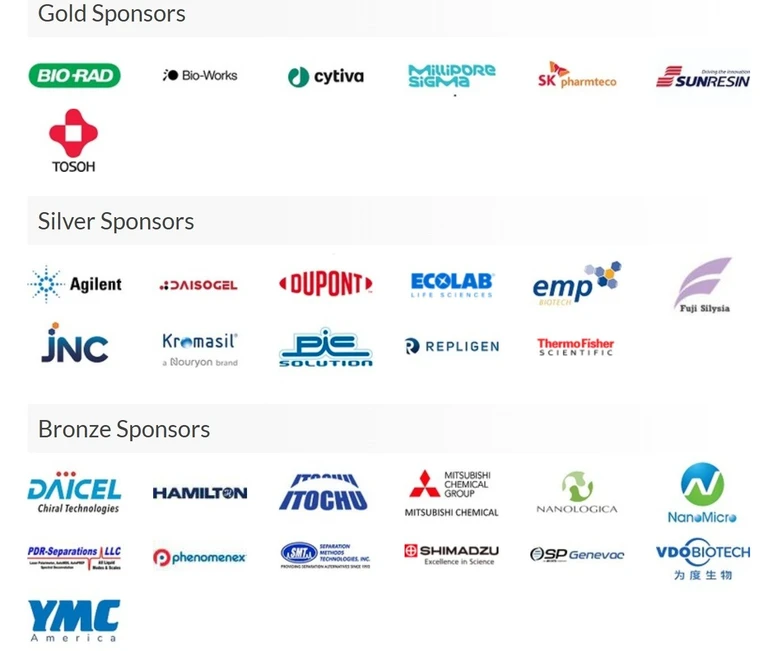 PREP 2025: Sponsors
 PREP 2025: Partners