PEGS Europe 2025
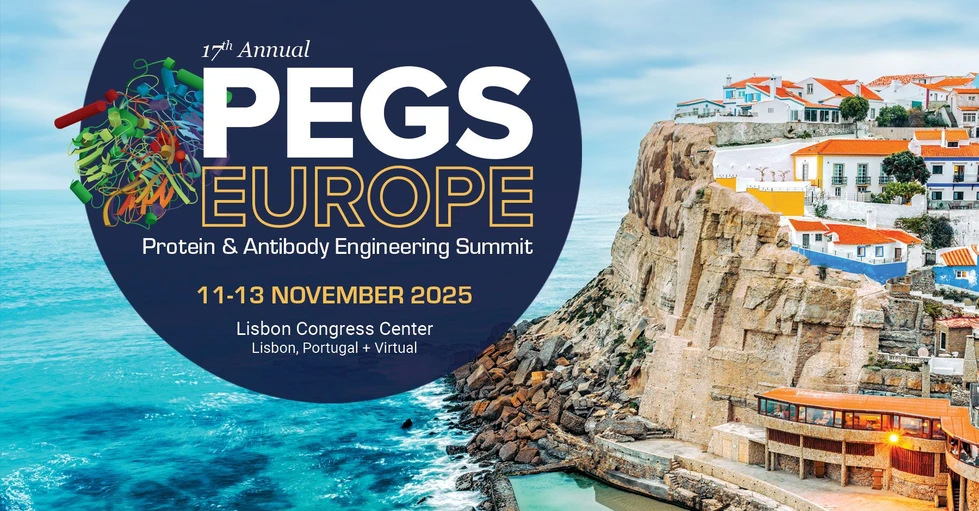
Network with 1,500+ colleagues at the largest protein & antibody engineering event in Europe, which has also been described as "the best biologics technology meeting in Europe." The 2025 event will feature expanded coverage in ML/AI applications in protein engineering, multispecific antibodies, ADCs, emerging targets, oncology, expression, and analytical characterisation.
Conference Programs
Engineering
- Display of Biologics
- Engineering Antibodies
- Machine Learning Part 2
Targets
- Antibody-Based Therapies
- Emerging Targets
- Membrane Protein Targets
Bispecifics
- Safety & Efficacy
- Advancing Multispecifics
- Engineering Bispecifics
Immunotherapy
- Immunoengineering
- Innovative CAR Therapy
- Next-Gen Immunotherapies
Analytical
- Optimisation & Developability
- Analytical Characterisation
- Protein Stability & Formulation
Expression
- Leveraging Data Science
- Optimising Expression
- Developing Workflows
Machine Learning
- Intro to Machine Learning
- Machine Learning Part 1
- Machine Learning Part 2
Oncology
- Antibody-Based Therapies
- Engineering ADCs
- Next-Gen Immunotherapies
Registration
Register HERE
Registration fees
Premium package
Includes access to ALL conferences/Training Seminars Tuesday-Thursday. Plus, Virtual and On-Demand access to all conferences for one year. Excludes short courses.
Early - Registration Rate Until September 12, 2025 / Standard Registration and On-Site
- Commercial: €2,799 / €3,199
- Academic, Government, Hospital Affiliated: €1,449 / €1,599
- Student: €599 / €599
Standard Package
Includes access to TWO conferences/Training Seminars. Plus, Virtual and On-Demand access for one year. Excludes short courses.
Early - Registration Rate Until September 12, 2025 / Standard Registration and On-Site
- Commercial: €2,499 / €2,899
- Academic, Government, Hospital Affiliated: €1,299 / €1,399
- Student: €399 / €399
Basic Package
Includes access to ONE conference/Training Seminar. Plus, Virtual and On-Demand access for one year. Excludes short courses
Early - Registration Rate Until September 12, 2025 / Standard Registration and On-Site
- Commercial: €1,899 / €2,299
- Academic, Government, Hospital Affiliated: €1,099 / €1,199
- Student: €299 / €299
Short Course Only In-Person Pricing
Includes IN-PERSON access to short courses only
1 Short Course
- Commercial: €629 / €999
- Academic, Government, Hospital Affiliated: €399 / €699
- Student: €129 / €199
Posters
Present a Poster and Save €50!
Cambridge Healthtech Institute encourages attendees to gain further exposure by presenting their work in the poster sessions. To secure an onsite poster board and/or ensure your poster is included in the conference materials, your full submission must be received, and your registration paid in full by 10 October 2025.
Register and indicate that you would like to present a poster. Once your registration has been fully processed, we will send an email with a unique link and instructions for submitting your materials. Please see below for more information.
Reasons you should present your research poster at this conference:
- Your research will be seen by our international delegation, representing leaders from top pharmaceutical, biotech, academic and government institutions
- Discuss your research and collaborate with other attendees
- Your poster will be published in our conference materials
- Receive €50 off your registration
Please submit the following poster presentation materials by the poster deadline:
- Poster title
- Short text-only description for publication (70 words; about 500 characters)
- Digital poster file for conference documentation (one-page, no-audio PDF poster)
Accepted In-Person Posters: Attendees will also bring a one-page, PRINTED poster to the event for onsite viewing.
- PRINTED posters should be portrait (vertical) orientation, ISO paper size A0: (841 mm wide x 1189 mm high) or (33.11 inches wide × 46.81 inches high).
- In-Person posters may hang for only a portion of the event. Please indicate your poster program selection during submission. If necessary, posters may be reassigned to another session based on attendance and capacity requirements.
** One-page, no-audio PDF poster for the virtual platform is required by all poster presenters
Poster space for this event is limited and in high demand. Posters for this event are limited to one per person. Poster quantities may also be limited by company. Early submission is recommended.
Program
2025 PLENARY DEEP DIVE
Panel Discussion: Future of Biologic Therapeutics – Will Half-Life Extended Peptides Replace Multispecific Antibodies?
Moderator: Daniel Chen, MD, PhD (Founder & CEO, Synthetic Design Lab)
Dr. Daniel Chen is a renowned expert in immuno-oncology with extensive experience leading translational science and early-stage drug development.
Panelists:
- Paul J. Carter, PhD (Genentech Fellow, Antibody Engineering, Genentech)
Dr. Carter is a leading figure in antibody engineering with a longstanding track record in therapeutic antibody discovery and development. - G. Jonah Rainey, PhD (Associate Vice President, Eli Lilly and Company)
Dr. Rainey leads strategic initiatives in immunology and therapeutic design at Eli Lilly, driving innovation in protein therapeutics. - Janine Schuurman, PhD (Biotech Consultant, Lust for Life Science B.V.)
Dr. Schuurman brings decades of experience in biotech R&D and strategic leadership in antibody engineering and immune modulation.
2025 TRACK KEYNOTES
Antibody and Albumin-Based Designs with Tailored Effector Functions and PK Properties
- Jan Terje Andersen, PhD (Professor, Department of Pharmacology, University of Oslo; Research Group Leader, Oslo University Hospital)
AI for Antibody Design – Going Beyond the Static
- Charlotte M. Deane, PhD (Professor, Structural Bioinformatics, University of Oxford; Executive Chair, EPSRC)
Development of a First-in-Class, ADCC-Enhanced Bispecific NK Engager
- Hemanta Baruah, PhD (Founder & CEO, Aakha Biologics)
Unlocking MYC: Clinical Insights and Synergistic Combinations
- Marie-Eve Beaulieu, PhD (Co-Founder & CSO, Peptomyc SL)
Proximity-Driven Site-Specific Cyclisation of Phage-Displayed Peptides
- Gonçalo Bernardes, PhD (Professor of Chemistry, University of Cambridge)
Safety of Bispecifics, ADCs, and Combination Therapies
- Rakesh Dixit, PhD, DABT (CEO & President, Bionavigen Oncology; CSO, TMAB Therapeutics, Regio Biosciences)
Innovating T Cell Engager Therapy
- Mark Cobbold, PhD (VP, Oncology Early Discovery, AstraZeneca Pharmaceuticals)
Recent Advances in Multispecific Antibodies in Oncology and Beyond
- Nathan D. Trinklein, PhD (Co-Founder and President, Rondo Therapeutics)
Multispecific Antibodies and Avidity Engineering
- Paul Parren, PhD (CSO, Gyes; Professor, Leiden University Medical Center)
Type 2 Immunity and Long-Term Cancer Remission
- Li Tang, PhD (Associate Professor, EPFL Lausanne)
HLA-Agnostic T Cell Receptor Recognition of Cancer
- Andrew Sewell, PhD (Distinguished Research Professor, Cardiff University)
iNKT Cells in CAR-Based Cancer Immunotherapy
- Anastasios Karadimitris, PhD, MRCP, FRCPath (Langmuir Chair in Haematology, Imperial College London)
Delivering the Breakthrough with CAR T in Solid Tumours
- Michael Hudecek, MD (Professor, Cellular Immunotherapy, University of Wuerzburg)
Reprogramming the Immune System by Multimodal Immunotherapy
- Paul Peter Tak, MD, PhD, FMedSci (President & CEO, Candel Therapeutics)
AI-Driven Optimisation of Antibody Properties
- Andreas Evers, PhD (Associate Scientific Director, Merck Healthcare KGaA)
Comprehensive Characterisation of Antibody-Drug Conjugates Using LC-MS/MS
- Dan Bach Kristensen, PhD (Scientific Director, Symphogen)
Mechanism of Protein Aggregation at Interfaces
- Wolfgang Friess, PhD (Professor & Chair, LMU Munich)
AIR Data to Predict Recombinant Protein Expression
- Lovisa Holmberg Schiavone, PhD (Director, Protein Sciences, AstraZeneca)
Baculovirus Expression Vector System: Old Dog, New Tricks
- Imre Berger, PhD (Professor and Director, University of Bristol)
Streamlined Baculovirus-Mediated Gene Expression in Mammalian Cells
- Kim Remans, PhD (Head, Protein Expression Facility, EMBL Heidelberg)
Exploring Log-Likelihood Scores for Antibody Sequence Design
- Talip Ucar (Senior Director, AI Research, AstraZeneca)
SOT109: A CDH17 Targeting ADC for CRC and GI Cancers
- Martin Steegmaier, PhD (CSO, SOTIO Biotech a.s.)
Short Courses
Our short courses are designed to be instructional, interactive, and provide in-depth information on a specific topic. They allow for one-on-one interaction between the participants and instructors to facilitate the explanation of the more technical aspects that would otherwise not be covered during our main presentations.
Short Courses Will Be Offered In Person Only
Monday, 10 November 2025 14:00 - 17:00
SC1: Best Practices and Advanced Applications for Label-Free Interaction Analysis in Therapeutic Antibody Discovery
Detailed Agenda
- This short course will provide simple guidelines for best practices of interaction analysis using commonly-used commercial label–free biosensors in the characterisation of therapeutic antibodies. We will focus mainly on the use of surface plasmon resonance (SPR) and biolayer interferometry (BLI). First, we will address best practices for generating high-quality binding kinetic and affinity data. Then we will do a deep dive into epitope binning. A basic knowledge of interaction analysis is assumed, but "all-comers" should find this course helpful. We will review several case studies together to reinforce these concepts.
- Yasmina Abdiche, PhD, Senior Vice President, Exploratory Research, OmniAb Inc.
SC2: Best Practices for Targeting GCPRs, Ion Channels, and Transporters with Monoclonal Antibodies
Detailed Agenda
- Complex membrane proteins are important therapeutic targets and together represent the majority of protein classes addressed by therapeutic drugs. Significant opportunities exist for targeting complex membrane proteins with antibodies, but it has been challenging to discover therapeutic antibodies against them. This course will examine emerging technologies and strategies for enabling the isolation of specific and functional antibodies against GPCRs, ion channels, and transporters, and highlight progress via case studies.
- Ross Chambers, PhD, Vice President, Antibody Discovery, Integral Molecular, Inc.
SC3: Developability of Bispecific Antibodies
Detailed Agenda
- Bispecific antibodies are a rapidly growing and clinically validated class of antibodies with marketed drugs and multiple candidates in clinical trials. Targeting multiple antigens in a synergistic manner can confer enhanced therapeutic benefit and potentially uncover novel biological mechanisms. However, multiple formats and a tedious candidate selection process to select functional and developable bispecific antibodies makes such programs cumbersome. This short course highlights the rapid growth in the field, therapeutic applications, and focuses on challenges with discovery and development of bispecific antibodies. We will use an approved bispecific antibody as a case study to understand the varied aspects of discovery and development of bispecific antibody programs.
- Nimish Gera, PhD, Vice President, Biologics, Mythic Therapeutics
SC4: In silico and Machine Learning Tools for Antibody Design and Developability Predictions
Detailed Agenda
- Given the exciting pace in the evolution of machine learning tools towards antibody design and developability predictions, we plan to present an overview in this field specificity geared towards antibody design and developability predictions. There will be a live demo as well of few ML tools.
- Rahmad Akbar, PhD, Senior Data Scientist, Antibody Design, Novo Nordisk
- Vinodh B. Kurella, PhD, Biotherapeutic Computational Modeler, Takeda Pharmaceuticals, Inc.
- Odysseas Vavourakis, Generative Antibody Design, University of Oxford
SC5: Novel Payloads and Conjugation Strategies – Building on Lessons Learned to Inform Next-Generation ADC Design
Detailed Agenda
- In this short course you will learn from real-life experience what are the main drivers of success or failures during the ADC development. How to improve your in vitro and in vivo screening strategies to avoid repeating the same mistakes made by others before you. And finally, what are the critical nonclinical datasets that you need to generate and how to interpret them to make your drug a success.
- Lenka Sadilkova, PhD, Head, Preclinical R&D, Mablink
Training Seminars
Training Seminars Will Be Offered In Person Only
To ensure a cohesive and focused learning environment, moving
between conference sessions and the training seminars is not allowed.
Monday, 10 November 2025 08:30 - 17:00
TS1: AI-Driven Design of Biologics: A Hands-on Guide to Using State-of-the-Art ML Protein Models
Detailed Agenda
- Since 2021, artificial intelligence models have revolutionized AI-driven biologics development, enabling breakthroughs in structure prediction, sequence design, and protein engineering. This course equips researchers and professionals with the expertise to leverage cutting-edge tools for structure prediction (AlphaFold, ImmuneBuilder), protein engineering with protein language models (ESM, AntiBERTy) and structure-based design (ProteinMPNN and RFDiffusion). Through a blend of lectures and hands-on exercises, participants will learn best practices for tool selection, method optimization, and design selection. By exploring real-world applications and emerging techniques, such as BindCraft and RFAntibody, attendees will gain a practical understanding of performance capabilities, limitations, and effective workflows.
- David P. Nannemann, PhD, Vice President, Rosetta Commons Foundation
TS2: Introduction to Multispecific Antibodies: History, Engineering, and Application
Detailed Agenda
- Introduction to Multispecific Antibodies is an informative and practical guide to getting up to speed on critical aspects of multispecific antibody therapeutics. Topics will include historical successes, failures, and lessons learned. Specific practical instruction will span mechanisms of action, engineering, developability, regulatory considerations, and translational guidelines. Perspectives on ideal implementation of multispecifics as targeted and immunomodulatory approaches will be discussed.
- G. Jonah Rainey, PhD, Associate Vice President, Eli Lilly and Company
Tuesday, 11 November 2025 08:30 - 18:35
TS7A: Introduction to Machine Learning for Biologics Design
Detailed Agenda
- This course offers an introduction to concepts, strategies, and machine learning methods used for biologics design. It includes presentations and demonstrations of the methods used in the field, covering techniques such as triaging sequences, modulating affinity, and designing antibody libraries, along with increasing manufacturability. The course is directed at scientists new to the field and protein engineers wanting an introduction to how machine learning can aid in guiding biologics design.
- Francis Gaudreault, PhD, Associate Research Officer, Human Health Therapeutics, National Research Council Canada
TS8A: Introduction to Analytical Characterisation and Quality Control for Biological Products
Detailed Agenda
- This training seminar provides a practical and comprehensive overview of analytical procedures, quality control, and characterisation methods for R&D scientists as well as CMC staffs. Attendees will learn the analytical procedures of product identity, strength, potency (ELISA, CBA, SPR), product-related impurity (HPLC, CE), process-related impurities (residual HCP, DNA, ProA), and contaminants. Case studies will be presented to demonstrate method development, robustness, validation, and specifications for QC batch analysis and stability. The instructor will elaborate extended characterisation and CMC comparability by HRMS, MAM, PTM, glycan profiling, higher order structure, aggregation (by SVP analysis), charge variant analysis, HCP (by MS), and discuss polysorbate degradation control strategy. Join this interactive training course to learn the best practices of analytical development, characterisation and QC.
- Kevin Zen, PhD, Principal Consultant, Biologics CMC Consulting
TS9A: Everything You Ever Wanted to Know about Immunogenicity
- Chloé Ackaert, PhD, Senior Scientist, Immunogenicity, IQVIA Laboratories
Timothy Hickling, PhD, Investigative & Immunosafety Chapter, Roche
Sofie Pattijn, Founder & CTO, IQVIA Laboratories
Venue
- Lisbon Congress Center
- Pracas Das Industrias
- Lisbon, 1300-307, Portugal
Sponsors
 PEGS Europe 2025: Premier sponsors
 PEGS Europe 2025: Corporate sponsors
 PEGS Europe 2025: Corporate sponsors
 PEGS Europe 2025: Corporate support sponsors