HPLC 2026 - 55th International Symposium on High Performance Liquid Phase Separations and Related Techniques
Join us, as this scientific symposium series proudly stands as the world's foremost conference on liquid phase separations and related innovations, featuring analytical instrumentation and chromatography innovations.
Delve into the multifaceted world of separation sciences in both liquid and supercritical fluid phases. Discover multidimensional chromatography, hyphenated techniques with pioneering HPLC detection technologies, primarily mass spectrometry, and explore the latest in separation materials, column technologies, and cutting-edge complex mixture analyses.
Our diverse program encompasses:
- Fundamentals: Dive deep into the theory of chromatographic separations and detection principles.
- Technological Advances: Stay updated on liquid chromatography developments and innovations.
- Applications & QA: Explore HPLC applications across diverse sectors and quality assurance.
This symposium promises engaging chromatography workshops, tutorials, and sessions from chromatography experts and luminaries in separation sciences. Moreover, our expansive exhibition and vendor seminars, featuring analytical instrument suppliers, present the newest breakthroughs from industry leaders.
Don't miss the Indianapolis conference that brings together the best in analytical chemistry at this international scientific symposium. Join us for an enriching experience in liquid chromatography and mass spectrometry innovations.
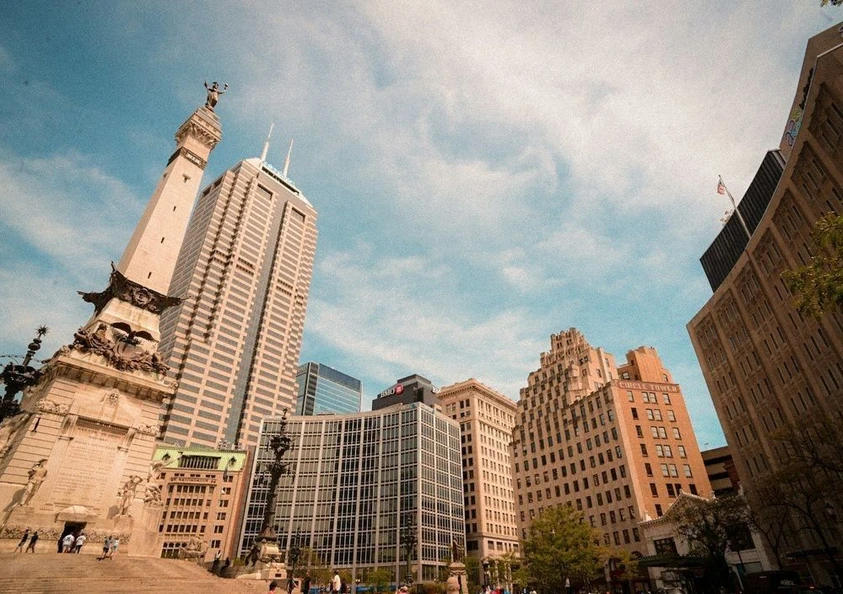 HPLC 2026: Indianapolis
Key dates
- Abstract submission portal opens: 01.11.2025
- Registrations: 01.12.2025
- Abstract Deadline for Oral Presentations: 12.01.2026
- Preliminary program published online: 16.03.2026
- Deadline for Poster Abstract Submissions: 30.03.2026
- Deadline for Early-bird Registration Fees: 13.04.2026
- Registration & Payment for all Presenting Authors: 27.04.2026
- Deadline for Reduced Registration Fees: 11.05.2026
- Scientific Program Published online: 11. 05. 2026
Registration
Registration Fees
By April 13, 2026
- Industrial Bundled: $1,450.00
- Industrial Full: $1,375.00
- Academic / Government Bundled: $995.00
- Academic / Government Full: $890.00
- Student / Post-Doc Bundled: $299.00
- Student / Post-Doc Full: $199.00
- Full-Day Short Course w. registration: $200.00
- Half-Day Short Course w. registration: $100.00
- Full-Day Short Course no registration: $400.00
- Half-Day Short Course no registration: $200.00
By May 11, 2026
- Industrial Bundled: $1,550.00
- Industrial Full: $1,475.00
- Academic / Government Bundled: $1,095.00
- Academic / Government Full: $990.00
- Student / Post-Doc Bundled: $299.00
- Student / Post-Doc Full: $199.00
- Full-Day Short Course w. registration: $200.00
- Half-Day Short Course w. registration: $100.00
- Full-Day Short Course no registration: $500.00
- Half-Day Short Course no registration: $250.00
After May 11, 2026 & Onsite
- Industrial Bundled: $1,650.00
- Industrial Full: $1,575.00
- Academic / Government Bundled: $1,250.00
- Academic / Government Full: $1,090.00
- Student / Post-Doc Bundled: $339.00
- Student / Post-Doc Full: $239.00
- Full-Day Short Course w. registration: $300.00
- Half-Day Short Course w. registration: $150.00
- Full-Day Short Course no registration: $600.00
- Half-Day Short Course no registration: $300.00
*All prices are in USD
*Bundled package includes 1 meeting registration, 1 gala dinner ticket, 1 half-day short course (If full-day short course is preferred, purchase an additional half-day short course has to follow).
*Full registrations include only 1 meeting registration. Short courses and Gala dinner tickets must be purchased separately.
Call for Abstracts
A call for abstracts invites researchers to submit their work to HPLC 2026 for presentation or publication, outlining topics, and deadlines
Authors giving a lecture or presenting a poster are required to register as a conference attendee (not booth staff) and attend the meeting. Abstracts will only be published in the scientific program, if the main author is registered and has paid the registration fee by April 27, 2026 at the latest.
Please assign your abstract to one of the following topics:
ADVANCES IN LC TECHNOLOGIES
- Fundamentals
- Column Technologies and Stationary Phases
- Separation Modes (HILIC, ERLIC, Ion-exchange, Affinity, Chiral, Mixed
Mode.) - Sample Preparation/Extraction Technology
- New Instrumentation and Mass Spectrometric Detection Methods
- Supercritical Fluid Chromatography
- Capillary Electrophoresis and Microfluidics
- Field Flow Fractionation
- Green Analytical Chemistry
- Preparative and Process Chromatography (continuous chromatography)
- Biotherapeutics (peptides, proteins, oligonucleotides, mRNA, DNA, pDNA,
vaccines, antibody-drug conjugates, viruses and viral like particles) - Materials and 3D-printing
- LC and 2D LC optimization methods
- Machine learning/AI approaches to LC and Separations
- High-throughput separations
- Nanoflow/Capillary LC
HYPHENATED TECHNOLOGIES
- LC-MS, SFC-MS and CE-MS
- Multidimensional Separations
- Untargeted and Targeted Analysis
- Omics Technologies
APPLICATIONS
- Food and Agricultural Analysis
- Environmental Analysis
- Pharmaceutical Analysis
- Biopharmaceuticals
- Drug discovery and Pharmacokinetics
- Canabis Analysis
- Forensics Analysis
- Polymer separations
- Bioanalysis
- Single cell analysis
- Biomolecular interaction analysis
- Cell separations
- Exosome analysis
- Process Analytical Technology (PAT)
Program
Short Courses
Saturday, June 6, 9:00 am - 4:00 pm
Two-Dimensional Liquid Chromatography: Principles, Practice, and Applications
- Stephan Buckenmaier & Dwight Stoll
Practical LC-MS/MS Method Development
- Perry Wang
Introduction to Artificial Intelligence for Liquid-phase Separations
- Tijmen Bos
Analysis of Oligonucleotide Therapeutics
- Claus Rentel
Sunday, June 7, 9:00 am - 12:00 pm
Supercritical Fluid Chromatography
- Larry Mille
(u)HPLC Method Development
- Michael Dong
Multi-Detector Size-Based Separations: SEC, HDC, and flow FFF
- André Striegel
Advanced chromatographic strategies for comprehensive characterization of protein biopharmaceuticals
- Davy Guillarme
Sunday, June 7, 1:00 - 4:00 pm
Sample Preparation and Extraction for LC Workflows
- Emanuela Gionfriddo
Chiral Chromatography
- Michael Lämmerhofer
Drug Development, Drug Quality, Regulatory, and Quality Control Processes
- Michael Dong
Basic Theories and Practice of Hydrophilic Interaction Liquid Chromatography
- Yong Guo
Advanced Topics in HPLC
- James Grinias
Plenary Speakers
Designing Application-Driven MS Metabolomics at Scale
- Gunda Köllensperger
Mass spectrometry (MS)–based metabolomics continues to contend with extreme chemical heterogeneity, broad dynamic concentration ranges, and strong matrix effects—conditions that make a single, universal workflow unlikely. This plenary will examine how modular, application-driven workflows can be assembled to balance coverage, quantitative performance, and robustness, and where the field might converge on best practices without sacrificing flexibility.
Continued Tinkering with Silica for Stationary Phases in Liquid Phase Separations
- Luis Colon (University at Buffalo)
Silica particles are the predominant packing material used to assemble the stationary phase for liquid phase separations. Our research group has focused on investigating new strategies to develop silica-based chromatographic media that has resulted in the synthesis of organo-silicas in various formats, as well as unconventional methods to modify silica particles.
Separation Science and Mass Spectrometry Using Unique Carbon Materials
- Susan Olesik (The Ohio State University, USA)
Carbon media are currently used for both selective and nonselective extraction as well as numerous chromatographic applications. Not surprisingly, carbon media have found applications in mass spectrometry as well.
High throughput proteomics with capillary-flow LC/MS/MS and StageTips
- Yasushi Ishihama (Kyoto University, Japan)
LC/MS/MS-based proteome sequencers have advanced rapidly but still do not fully meet the expectations of the research community. We focused on measurement speed and investigated various approaches to complete peptide sequencing by LC/MS/MS in approximately one minute. As a result, we developed a method to acquire 1,000 samples per day (1,000 SPD) in dataindependent acquisition mode by combining tandem MS with ion mobility separation, an online nano-LC column, and gradient elution in less than one minute at capillary-LC flow rates.
Characterization of Biological and Pharmacological Peptide Epimers and Their Post Transitional Modification: Combing LC, MS and Enzymatic Methods
- Daniel Armstrong (University of Texas at Arlington)
The occurrence and roles of pepetide/protein epimers may vary substantially with progression from microbiotic to evermore advanced macrobiotic systems. We now understand some of the biosynthetic and regulatory pathways. Given their rarity, identifying them in a complex biological matrix can be difficult. Further, they have the same exact mass as their all L-AA counterparts. The pharmacological importance of peptide epimers and research thereon is subsequently escalating. In the realm of post-translational modifications (PTMs) of peptide/proteins, epimerization is rarely considered.
Lunch Vendor Seminars
Monday, June 8
Assay to Aggregates: Chromatographic Workflows for Therapeutic Peptides and Their Unique Impurities
- Sean Orlowicz (Phenomenex)
Therapeutic peptides represent one of the fastest‑growing classes of pharmaceutical drugs, bringing with them a distinct set of analytical and chromatographic challenges. Analytical teams are increasingly tasked with separating and characterizing process‑related impurities that may differ by only a few amino acids, closely related degradation products, and higher‑order species formed in peptide drug products in solution.
Shimadzu New Products Showcase
In this seminar we will showcase the Nexera X4 UHPLC, CF3-C8030 Field Flow Fractionation System, and the DirectInject-LC™ (DILC), highlighting new capabilities in separation science, particle analysis, and process chemistry. The Nexera X4 delivers ultra-high sensitivity, ultra-fast separations, and improved efficiency to increase throughput and reduce solvent use.
Tuesday, June 9
Integrated LC Solutions for Polyaromatic Profiling, Lipid Nanoparticles, and GLP-1 Analogs
- Weiqiang Gu, Waters
- Matthew Lauber, Waters
- Duanduan Han, Waters
Modern pharmaceutical and environmental applications demand separation strategies that perform across diverse compound classes. This presentation highlights a biphenyl stationary phase offering differentiated selectivity for challenging polyaromatic separations where conventional reversed-phase chemistries fall short.
DAISOGEL - Bulk silica for large-scale peptide purification by HPLC
The DAISOGEL Team will present our newest products and our approaches to solving your peptide(s) purification needs. We will highlight the science behind the new stationary phases and highlight their usefulness for peptide purification. Our manufacturing capacity for RP-HPLC silica is unmatched globally, as is our service.
Wednesday, June 10
ASOs, ADCs, and Other Therapeutics: Advanced Characterization with Novel Reversed-Phase Columns and Integrated LC–MS Platform
- Sara Carillo, National Institute for Bioprocessing Research and Training (NIBRT), Dublin, Ireland
- Mauro De Pra (Thermo Fisher Scientific)
Biotherapeutics are becoming increasingly diverse, placing greater demands on analytical platforms that support efficient development and regulatory readiness. Reversed-phase chromatography remains a versatile technique for applications ranging from oligonucleotide analysis to protein characterization and post-translational modification assessment.
From Peak to Powder: Automated Solvent Evaporation after Chromatography at Any Volume Size
- Elly Montgomery (SP Industries Inc. an ATS Company)
- Nathaniel Kunzer (SP Industries Inc. an ATS Company)
High-performance liquid chromatography workflows depend heavily on efficient sample preparation, yet this stage is often the main source of delay. Solvent removal and sample concentration can slow throughput, especially when processing large batches or low concentration analytes.
Industrial Workshop: The Analytical Laboratory, Reimagined
- Session 1: Monday, June 8, 13:30-18:00
- Session 2: Tuesday, June 9, 08:30-12:30
- *This workshop is by invitation only.
What will define the analytical laboratory of the next decade—and who will lead it?
This two-part industrial workshop challenges conventional thinking and pushes beyond incremental improvement to examine how laboratories can evolve into agile, data-driven, and strategically indispensable enterprises.
In Session I: Designing the Next Decade, the conversation begins at the foundation—literally. From rethinking laboratory infrastructure and embracing modular, future-ready designs, to navigating the rapid evolution of analytical instrumentation, the session explores how physical and technological architectures must co-evolve. Participants will confront the persistent disconnect between data generation and data utility, evaluate where automation truly delivers value, and examine how sustainability and safety can move from compliance obligations to core design principles. At its heart, this session asks: are today’s laboratories being built for tomorrow’s science—or yesterday’s constraints?
Session II: From Capability to Competitive Advantage shifts the lens from design to leadership. Here, the laboratory is positioned not as a support function, but as a driver of innovation and differentiation. Discussions will probe how next-generation separation science platforms, integrated data strategies, and emerging automation paradigms are redefining performance expectations. Equally critical is the transformation of the analytical professional—where technical expertise alone is no longer sufficient, and success demands fluency in data, collaboration, and scientific storytelling.
Across both sessions, a unifying theme emerges: the analytical laboratory is undergoing a fundamental transition—from a place where data is produced to an engine where insight, efficiency, and competitive advantage are created.
This workshop is not about predicting the future. It is about designing it.
Congress Venue
JW Marriott Indianapolis
- 10 S West Street,
- Indianapolis, Indiana, USA, 46204
The JW Marriott Indianapolis is a premier meeting venue, offering world-class accommodations and state-of-the-art event spaces in the heart of downtown. Connected to the Indiana Convention Center via a skywalk, it provides seamless access to large-scale conferences like HPLC 2026. With over 103,000 square feet of flexible meeting space, including elegant ballrooms and high-tech boardrooms, the hotel caters to events of all sizes. Attendees can enjoy modern amenities, top-tier dining, and exceptional service in a sophisticated setting designed for productivity and collaboration.