
Organizer
SelectScience
SelectScience
SelectScience® is an innovative online publisher within the science industry, connecting scientists to information to help them make the best choices for their lab, through a combination of rich content, peer-to-peer information & trusted product reviews.
Tags
LC/MS
Academy/Principles
Tips & Tricks
LinkedIn Logo

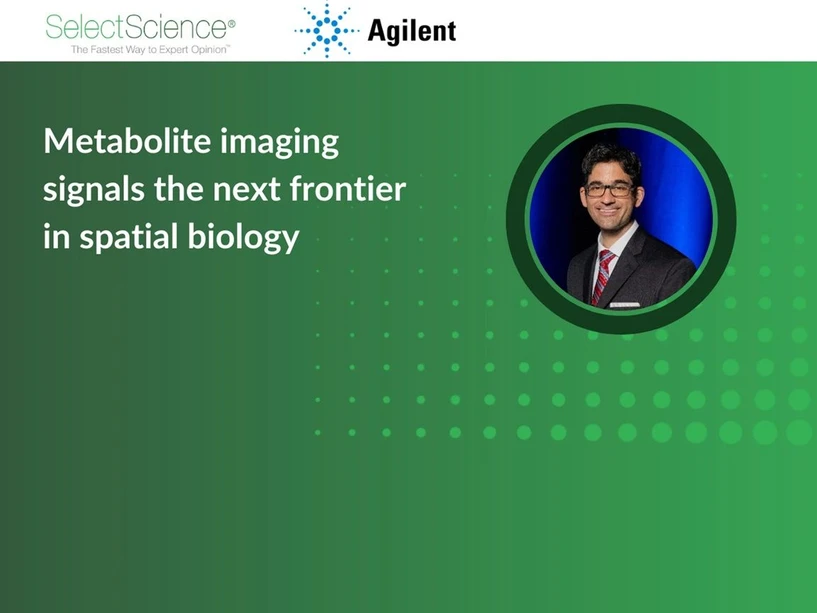
Metabolite imaging signals the next frontier in spatial biology
RECORD | Already taken place Tu, 12.11.2024
An overview of the various technologies available for MSI, covering different sources and mass spectrometers, from home-built solutions to commercial options.
Go to the webinar
SelectScience: Metabolite imaging signals the next frontier in spatial biology

Recent technological and computational advances in spatial transcriptomics have increased interest in complementary techniques for characterizing the multi-dimensional architecture of tissues, such as using mass spectrometry imaging (MSI) to map the distribution of metabolites and lipids.

Unlike liquid chromatography/mass spectrometry (LC/MS), where metabolites and lipids are usually measured from whole samples in bulk, MSI uses a scanning probe to collect spatially resolved data across a tissue section. Although its chemical coverage is typically inferior to LC/MS, MSI can still measure metabolites and lipids with high sensitivity and molecular specificity.

Dr. Gary Patti, Professor of Chemistry, Genetics and Medicine, Washington University, will provide an overview of the various technologies available for MSI, covering different sources and mass spectrometers, from home-built solutions to commercial options. The pros and cons of each approach will be briefly discussed, and their application to imaging metabolic fluxes will be explored.

Key learning objectives

  • Understand the advantages and disadvantages of MSI compared to LC/MS analyses
  • Explore the best way to establish metabolite identifications when performing MSI
  • Discover the benefits of using triple quadrupole instruments for MSI
  • Consider the benefits of coupling MSI with isotope labelling

Who should attend?

  • This event is intended for anyone with an interest in mass spectrometry imaging or spatial biology. Extensive expertise in mass spectrometry is not required.

Certificate of attendance
All webinar participants can request a certificate of attendance, including a learning outcomes summary, for continuing education purposes.

Presenter: Gary Patti, Ph.D. (Professor of Chemistry and of Genetics and Medicine, Washington University)

Moderator: Matilde Marques (Life Sciences Assistant Editor, SelectScience)

SelectScience
LinkedIn Logo
 

Related content

Impurity Monitoring of GLP-1 Therapeutic Peptide RetatrutideUsing a 2D-LC/TOF System

Posters
| 2026 | Agilent Technologies (ASMS)
Instrumentation
LC/MS, LC/MS/MS, LC/TOF, LC/HRMS, 2D-LC
Manufacturer
Agilent Technologies
Industries
Pharma & Biopharma

Increased sensitivity for low-input label-free proteomics using the Orbitrap Astral MS and μPAC Neo Plus Columns

Applications
| 2026 | Thermo Fisher Scientific
Instrumentation
LC/HRMS, LC/Orbitrap, LC/MS, LC/MS/MS
Manufacturer
Thermo Fisher Scientific
Industries
Proteomics

Mind the pressure in preparative up-scaling – effects of particle size and solvent composition on back pressure

Technical notes
| 2026 | KNAUER
Instrumentation
HPLC, Consumables, LC columns
Manufacturer
KNAUER
Industries
Other

Two-Step Matrix Deposition for Improved MS Imaging Resolution

Posters
| 2026 | Shimadzu (ASMS)
Instrumentation
LC/MS, LC/MS/MS, LC/TOF, LC/HRMS, MALDI, MS Imaging
Manufacturer
Shimadzu
Industries
Pharma & Biopharma

Smart Monitoring & Optimization Solutions for SMB Processes: In-Line and Off-Line Tools for SMB Systems

Technical notes
| 2026 | KNAUER
Instrumentation
HPLC
Manufacturer
KNAUER
Industries
Pharma & Biopharma
Other projects
GCMS
ICPMS
Follow us
FacebookX (Twitter)LinkedInYouTube
More information
WebinarsAbout usContact usTerms of use
LabRulez s.r.o. All rights reserved. Content available under a CC BY-SA 4.0 Attribution-ShareAlike