Toward early detection of congenital disease using Orbitrap Astral DIA MS/MS
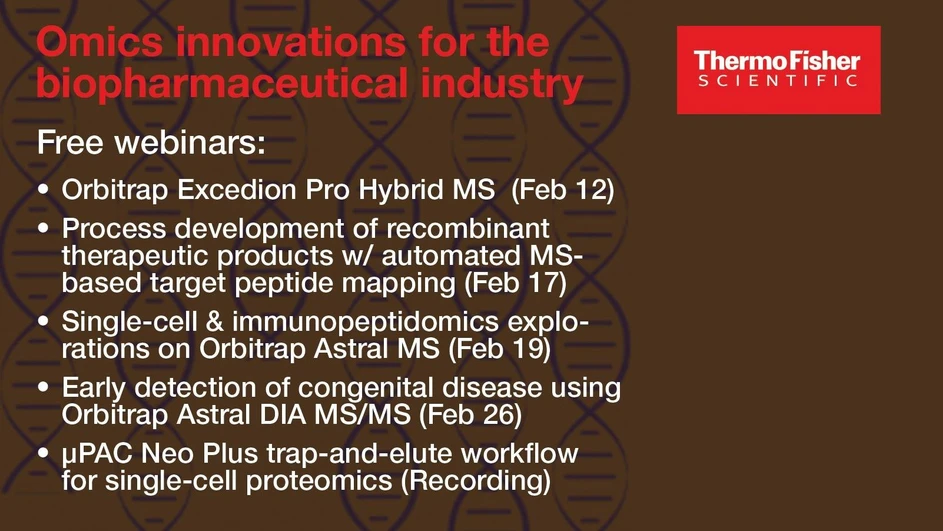
This presentation describes a proof-of-concept mass spectrometry strategy to improve early diagnosis of congenital toxoplasmosis by distinguishing maternal and newborn immune responses. The work focuses on detecting IgG polymorphisms specific to Toxoplasma gondii using advanced LC-MS approaches, with particular emphasis on the Thermo Scientific Orbitrap Astral MS operated in DIA mode. Current diagnostic methods struggle to confirm fetal infection due to low parasite burden and the presence of maternal IgG in newborns. To address this, the team developed workflows to purify IgG subclasses, target parasite-specific antibodies, and identify subtle sequence variants differing by only one or two amino acids. While middle-down approaches lacked sensitivity for parasite-specific IgG, bottom-up DIA on the Thermo Scientific Orbitrap Astral MS enabled detection of low-abundance, discriminating peptides. Manual validation and fragment correlation were critical to eliminate false positives caused by high sequence homology. Overall, the study demonstrates Astral’s sensitivity and DIA capability for tackling extremely challenging, clinically relevant immunoproteomics problems.
Learning points:
- Congenital toxoplasmosis diagnosis requires discrimination between maternal and newborn IgG
- Orbitrap Astral MS DIA enables detection of ultra-low-abundance, polymorphic IgG peptides
- Manual validation remains essential when analyzing highly homologous antibody sequences
Who should attend?
- Researchers in clinical proteomics and infectious disease diagnostics
- Scientists studying antibody polymorphisms, immunoproteomics, or neonatal immunity
- Mass spectrometry experts interested in DIA strategies for extreme sensitivity challenges
This webinar is a recording from the Omics innovations for the biopharmaceutical industry seminar on December 11, 2025 in Strasbourg.
Cannot attend on February 26? Please register anyway to automatically receive access to the recording.
Presenter: Joëlle Vinh (Head of SMBP CNRS Biological MS and Proteomics Lab, ESPCI Paris)