

Advancing and Characterizing Next-Gen Antibody Conjugates: Insights from BBB-Targeting Antibody Platforms
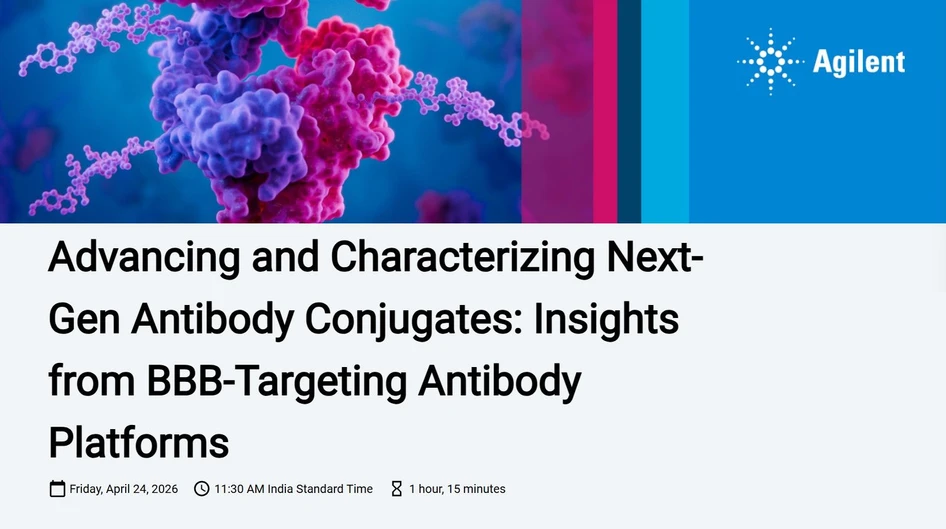
Antibody therapeutics are rapidly evolving from monoclonal antibodies to more sophisticated modalities such as antibody-drug conjugates and multifunctional biologics. As these therapies grow more complex, robust analytical characterization becomes essential to ensure quality, consistency, and regulatory readiness.
A key frontier in antibody research is overcoming biological barriers, particularly the blood–brain barrier, which has long limited antibody access to brain tissues. Prof. Yuji Ito’s group has developed proprietary antibody engineering platforms, including the AccumuBrain and AccumBody technologies, designed to enhance tissue localization and significantly improve antibody delivery to the brain and other target tissues.
In this webinar, Prof. Ito will share insights into these next-generation antibody platforms and their application in developing advanced conjugated therapeutics, including antibody-drug and antibody–oligonucleotide conjugates. The session will also examine the analytical challenges associated with these increasingly complex biopharmaceutical modalities and discuss how high-resolution LC-QTOF workflows support detailed characterization of emerging antibody conjugates.
Key Learning Outcomes:
- Understand how tissue-localizing antibody platforms (e.g., AccumuBrain/AccumBody) are enabling therapeutic delivery across challenging biological barriers such as the blood brain barrier (BBB)
- Gain insights into next-generation antibody conjugate modalities, including antibody-drug and antibody oligonucleotide therapeutics, and their expanding role in complex disease targeting
- Recognize key analytical challenges in characterizing complex antibody conjugates and how high-resolution LC-QTOF workflows support confident structural and quality analysis
Presenter: Prof. Yuji Ito (Department of Chemistry and Bioscience, Graduate School of Science and Engineering, Kagoshima University)
Prof. Yuji Ito is the President of the Japanese Society of Monoclonal Antibodies and an active member of several academic committees in the field of biopharmaceutical research. He received his PhD in Medicine from Kyushu University in 1993 and joined Kagoshima University in 1997, where he has led pioneering research in monoclonal antibody therapeutics for nearly four decades. Prof. Ito’s work focuses on advancing next-generation antibody platforms and conjugated biotherapeutics. In this session, he will present insights from his current research on antibody-drug conjugates designed to enhance therapeutic delivery beyond the blood–brain barrier.
Presenter: Terence Yap (Market Specialist, Agilent Technologies, Singapore)
Terence holds a Bachelor’s degree in Biological Sciences with ten years of experience across R&D and commercial functions. With technical and market insights, he drives development across the Pharma, Biopharma Industry and Academia segment in SEA by bringing One Agilent Total Workflow Solutions to the market through strategic partnerships and initiatives.
Presenter: Dr. Nilanjan Guha (APAC Academia and Research Market Development Manager, Agilent Technologies)
Dr. Nilanjan Guha is the APAC Academia and Research Market Development Manager at Agilent Technologies. With a career spanning 17 years at Agilent, he has held various technical and commercial leadership roles and has pioneered integrated biology workflows that have significantly advanced multi-omics research.
Prior to his tenure at Agilent, he held a Research Fellowship in the Department of Cell Biology at Harvard Medical School. Dr. Guha holds a PhD in Molecular and Cellular Biology from St. John’s University, New York.
He has been a featured speaker at MIT, Tufts University, and the Novartis Institute of Biomedical Research, and has played a pivotal role in advising the Government of India on research and innovation policy through his leadership at the CII National Forum. Dr. Guha has authored numerous white papers driving innovations in integrated biology, including publications in peer-reviewed journals.


