Characterizing Complex Biotherapeutics Based on New Modalities: Uncover new LC-MS Workflow Strategies
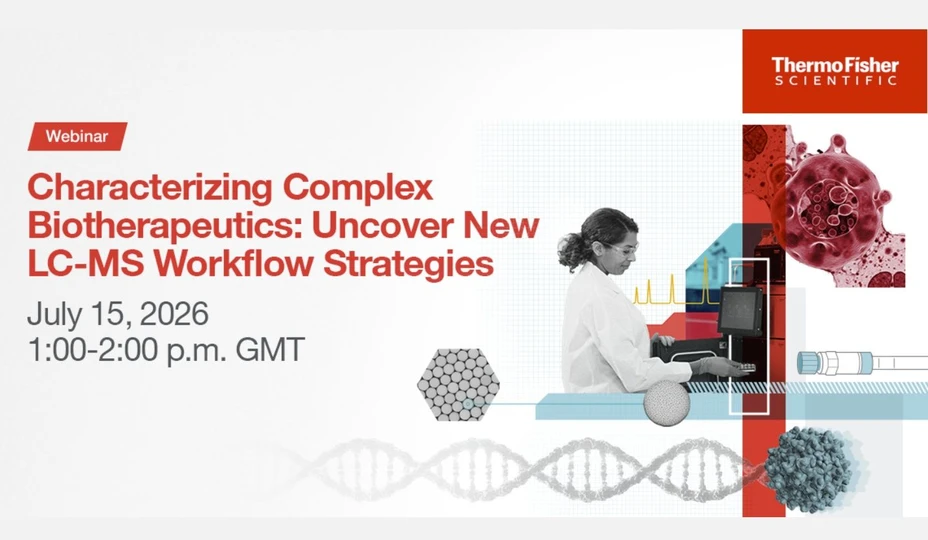
The rapid expansion of complex biotherapeutic modalities such as RNA-based therapies is pushing conventional LC–MS workflows beyond their limits. Even though there has been great progress in oligonucleotide drug development and approval there is still significant regulatory and analytical challenges in this field. Characterization guidelines are still under development and must account for unique challenges. Regarding impurity characterization, most impurities exist as mixture of closely related molecules and even worse, many impurities coelute with the active molecule. Many existing approaches struggle to deliver reliable separation and high-quality MS data to adequately resolve those impurities. Challenges such as good chromatographic resolution, metal adduct formation, and inconsistent MS data quality are increasingly impacting characterization workflows.
In this webinar, we introduce a next-generation LC–MS strategy designed to address these gaps. By combining advanced reversed-phase chromatography with an inert UHPLC flow path, this workflow improves separation of challenging species, minimizes metal adducts, and delivers more consistent, more interpretable MS data across diverse modalities.
Using the Thermo Scientific™ SurePac™ RP MDi™ column on the Thermo Scientific™ Vanquish™ Amplify UHPLC system coupled with Orbitrap™ MS, we will demonstrate how this approach enhances analytical performance in real-world applications, including impurity profiling for small single stranded oligonucleotide therapeutics, such as antisense oligonucleotides (ASOs), using a DoE-driven approach.
Learning Objectives:
- Understand how advanced LC-MS workflows support characterization across new modalities such as ASOs, including detection of critical quality attributes such as the confirmation of the primary structure together with the analysis of the 5′ and 3′ termini, and any site-specific modification and the detailed analysis of product-related impurities.
- Evaluate how inert column technologies and UHPLC systems improve reproducibility, reduce sample interaction, minimize metal adducts and enhance robustness for complex biotherapeutic workflows.
- Apply design of experiments (DoE) driven method optimization and LC–MS approaches for impurity profiling, and comprehensive characterization.
Join us to see how this workflow can unlock deeper characterization and more confident results across today’s most demanding biotherapeutic modalities.
Presenter: Mauro De Pra, PhD (Product Marketing Manager, Thermo Fisher Scientific)
Mauro De Pra, who has been with Thermo Fisher Scientific since 2010, has held roles spanning across product development, application development, technical support, and product marketing. His work focuses on HPLC and advanced separation technologies, supporting the development and commercialization of innovative LC solutions. Mauro has authored multiple peer-reviewed publications in the field of separation sciences and brings extensive experience translating analytical challenges into practical solutions for pharmaceutical and biopharmaceutical applications. Before joining Thermo Fisher Scientific, he worked as an Analytical Development Scientist in the Pharmaceutical industry. Mauro holds a Ph.D. in Chemistry from the University of Amsterdam.
Presenter: Silvia Millán-Martín, PhD (Senior Research Scientist, National Institute for Bioprocessing Research and Training (NIBRT))
Silvia is a Senior Research Scientist at the National Institute for Bioprocessing Research and Training (NIBRT) in Dublin, Ireland. She collaborates with Thermo Fisher Scientific to develop innovative applications for the characterization of biopharmaceuticals. Her work encompasses a broad range of chromatographic techniques, ensuring comprehensive analytical solutions for the scientific and biopharmaceutical industries. Thanks to her extensive background in analytical chemistry and her dedication to advancing biopharmaceutical characterization, Sylvia’s a leading expert in her field. During the last few years, her work has focused on the Multi-Attribute Method (MAM) approach and the application of advanced LC-MS platforms to support the development of new therapeutic modalities such as oligonucleotide-based therapies.