
LCMS
More information
WebinarsAbout usContact usTerms of use
LabRulez s.r.o. All rights reserved. Content available under a CC BY-SA 4.0 Attribution-ShareAlike
Author
Washington University in St. Louis
Washington University in St. Louis is a place where people matter and serious work is done. Our mission is to discover and disseminate knowledge, and to protect the freedom of inquiry through research, teaching and learning. We are a community where you can be an individual and achieve exceptional things. We are committed to learning and exploration, to discovery and impact.
Tags
Article
Scientific article
Video
LinkedIn Logo

Cancer cells rev up synthesis, compared with neighbors
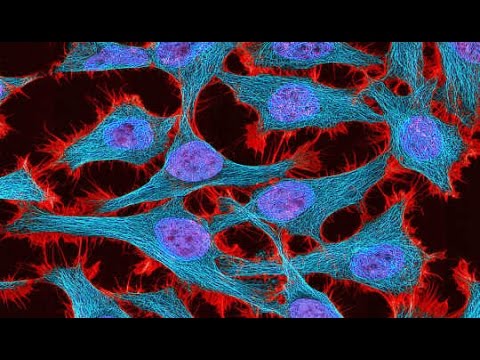
New spatial tools measure how fast nutrients are flowing through different pathways in a tumor.
Video placeholder
  • Photo: Washington University in St. Louis/Shutterstock: Cancer cells rev up synthesis, compared with neighbors
  • Video: WashU Arts & Sciences: Driving Discovery Faculty Spotlight: Gary Patti

Tumors are composed of rapidly multiplying cancer cells. Understanding which biochemical processes fuel their relentless growth can provide hints at therapeutic targets.

Researchers from Washington University in St. Louis have developed a technology to study tumor growth in another dimension — literally. The scientists established a new method to watch what nutrients are used at which rates spatially throughout a tissue.

By using this multidimensional imaging approach, they identified pathways whose activities are uniquely elevated in brain cancer, offering clues for potential treatment strategies. The study was published May 19 in Nature Communications.

“*We figured out how to infer the rate of biochemical reactions directly from discrete regions of tissue,*” said Gary Patti, the Michael and Tana Powell Professor of Chemistry in Arts & Sciences and a professor of medicine at the School of Medicine. Patti, who is also a research member of the Siteman Cancer Center at Barnes-Jewish Hospital and Washington University School of Medicine, is senior author of the new study.

Washington University in St. Louis: PattiWashington University in St. Louis: Patti

Human biology is intrinsically 3D in nature. The emerging field of spatial biology aims to capture this geometry by imaging the locations of genes, proteins and metabolites. The approach reported by Patti and colleagues extends spatial profiling to fluxes, the rates at which molecules are transformed inside of cells.

“Other technologies provide what is essentially a roadmap of biochemistry. Our goal was to add in a measurement of how fast traffic is flowing on the different roads.”

Gary J. Patti

By Patti’s analogy, the new method is akin to the feature in Google Maps that uses green and red colors to indicate the density of cars on a given street.

Using a mouse model of glioblastoma, a deadly form of brain cancer in humans, the researchers created a high-resolution map of the “tumor ecosystem.” This allowed them to tell which molecules were located in what parts of the brain and how quickly those molecules were turning into other things.

The results shed light on how cancer cells in a brain tumor get lipids, a basic component of fat.

Lipids are required to make the outermost covering of a cell, known as a membrane. As cancer cells multiply, they need lipids to encase the new cells. Previous work from Patti had shown that cancer cells prefer to scavenge lipids from their local environments. But that was when cancer cells were cultured in isolation with lipids present in the media.

The new study showed that cancer cells in the brain tend to make, rather than siphon off, the lipids that they need to multiply.

“*The brain is a unique environment. The availability of lipids is more limited than in other tissues where tumors reside,*” Patti explained.

The speed at which some lipids were synthesized was as much as 8-fold higher in brain tumors compared with surrounding healthy tissue. Although the exact magnitude of the increase varied, the pattern was surprisingly consistent in cancer cells throughout the tumor.

“*A single tumor can span multiple different environments. The center might be hypoxic, while the outside is in contact with healthy tissue,” Patti said. “You might have predicted differences between these different regions, but we didn’t observe any patterns like that.*”

This finding is important because knowing that cancer cells within brain tumors rely on the same biochemical pathway to fuel their growth means that scientists could target it to slow or stop disease progression.

“*When a pathway is more active, its flux goes up. That makes it a good candidate for therapeutic intervention,” Patti said. “We are excited about testing whether impairment of fatty acid elongation will be effective in treating mouse models of disease.*”

Washington University in St. Louis: Spatial metabolomics images of a brain with a tumor. Additional details available in Figure 8 from the technical article, “Using mass spectrometry imaging to map fluxes quantitatively in the tumor ecosystem.” (Image courtesy of Patti lab, Nature Communications)Washington University in St. Louis: Spatial metabolomics images of a brain with a tumor. Additional details available in Figure 8 from the technical article, “Using mass spectrometry imaging to map fluxes quantitatively in the tumor ecosystem.” (Image courtesy of Patti lab, Nature Communications)

This study was funded in part by the McDonnell Center for Cellular and Molecular Neurobiology, as well as the National Institutes of Health grants R24 OD024624 and R35 ES2028365.

Resources

Schwaiger-Haber, M., Stancliffe, E., Anbukumar, D.S. et al. Using mass spectrometry imaging to map fluxes quantitatively in the tumor ecosystem. Nat Commun 14, 2876 (2023). https://doi.org/10.1038/s41467-023-38403-x

Washington University in St. Louis
LinkedIn Logo
 

Related content

Overcoming Strong Solvent Effects in the Analysis of Vepdegestrant

Applications
| 2026 | Agilent Technologies
Instrumentation
HPLC
Manufacturer
Agilent Technologies
Industries
Pharma & Biopharma

Identification of Double Bond Positions and Relative Acyl Chain Positions in Egg Yolk Phosphatidylcholines Using OAD-TOF System

Applications
| 2026 | Shimadzu
Instrumentation
LC/MS, LC/MS/MS, LC/TOF, LC/HRMS
Manufacturer
Shimadzu
Industries
Food & Agriculture

High Molecular-Weight Polysaccharide Characterization by SEC-MALS Using GTxResolve™ 1000 and 2000 Å SEC Columns

Applications
| 2026 | Waters
Instrumentation
GPC/SEC, Consumables, LC columns
Manufacturer
Waters
Industries
Pharma & Biopharma, Food & Agriculture

Development and Optimization for a Comprehensive LC/MS/MS Method for the Detection of 74 PFAS Compounds

Applications
| 2026 | Agilent Technologies
Instrumentation
LC/MS, LC/MS/MS, LC/QQQ
Manufacturer
Agilent Technologies
Industries
Food & Agriculture

PFAS in Biota: Risk Context & Robust Analytical Solutions

Others
| 2026 | ALS Europe
Instrumentation
Laboratory analysis, LC/MS, LC/MS/MS
Manufacturer
Industries
Environmental
 

Related articles

Elevate Your HPLC Performance with a Modern CDS
Article | Software

Elevate Your HPLC Performance with a Modern CDS

Discover how a modern Chromatography Data System can unlock the full potential of your HPLC. Chromeleon CDS boosts productivity, compliance, and right-first-time results across multi-vendor systems.
Thermo Fisher Scientific
tag
share
more
Dissecting Heterogeneous Populations of Protein-Complex Samples Using Direct Mass Technology
Scientific article | Science and research

Dissecting Heterogeneous Populations of Protein-Complex Samples Using Direct Mass Technology

This study demonstrates Orbitrap-based CDMS/Direct Mass Technology as a quantitative tool for resolving and analyzing heterogeneous protein complexes below 100 kDa.
LabRulez
tag
share
more
ISC 2026 Short Course 3 - Interpretation of Mass Spectra: Basic Introduction for Chromatographers
Article | Events

ISC 2026 Short Course 3 - Interpretation of Mass Spectra: Basic Introduction for Chromatographers

Short Course 3 at ISC 2026 offers a practical introduction to LC–MS spectral interpretation for chromatographers, covering ESI, APCI, APPI, adducts, isotope patterns, and MS/MS fundamentals.
International Symposium on Chromatography - (ISC)
tag
share
more
Eurachem/CITAC Workshop on Quality in Analytical Measurements 2026
Article | Events

Eurachem/CITAC Workshop on Quality in Analytical Measurements 2026

Eurachem Week 2026 brings training and workshops on measurement uncertainty, quality in analytical measurements, and results interpretation, combining theory, practical cases, and expert-led discussions.
Eurachem
tag
share
more
 

Related content

Overcoming Strong Solvent Effects in the Analysis of Vepdegestrant

Applications
| 2026 | Agilent Technologies
Instrumentation
HPLC
Manufacturer
Agilent Technologies
Industries
Pharma & Biopharma

Identification of Double Bond Positions and Relative Acyl Chain Positions in Egg Yolk Phosphatidylcholines Using OAD-TOF System

Applications
| 2026 | Shimadzu
Instrumentation
LC/MS, LC/MS/MS, LC/TOF, LC/HRMS
Manufacturer
Shimadzu
Industries
Food & Agriculture

High Molecular-Weight Polysaccharide Characterization by SEC-MALS Using GTxResolve™ 1000 and 2000 Å SEC Columns

Applications
| 2026 | Waters
Instrumentation
GPC/SEC, Consumables, LC columns
Manufacturer
Waters
Industries
Pharma & Biopharma, Food & Agriculture

Development and Optimization for a Comprehensive LC/MS/MS Method for the Detection of 74 PFAS Compounds

Applications
| 2026 | Agilent Technologies
Instrumentation
LC/MS, LC/MS/MS, LC/QQQ
Manufacturer
Agilent Technologies
Industries
Food & Agriculture

PFAS in Biota: Risk Context & Robust Analytical Solutions

Others
| 2026 | ALS Europe
Instrumentation
Laboratory analysis, LC/MS, LC/MS/MS
Manufacturer
Industries
Environmental
 

Related articles

Elevate Your HPLC Performance with a Modern CDS
Article | Software

Elevate Your HPLC Performance with a Modern CDS

Discover how a modern Chromatography Data System can unlock the full potential of your HPLC. Chromeleon CDS boosts productivity, compliance, and right-first-time results across multi-vendor systems.
Thermo Fisher Scientific
tag
share
more
Dissecting Heterogeneous Populations of Protein-Complex Samples Using Direct Mass Technology
Scientific article | Science and research

Dissecting Heterogeneous Populations of Protein-Complex Samples Using Direct Mass Technology

This study demonstrates Orbitrap-based CDMS/Direct Mass Technology as a quantitative tool for resolving and analyzing heterogeneous protein complexes below 100 kDa.
LabRulez
tag
share
more
ISC 2026 Short Course 3 - Interpretation of Mass Spectra: Basic Introduction for Chromatographers
Article | Events

ISC 2026 Short Course 3 - Interpretation of Mass Spectra: Basic Introduction for Chromatographers

Short Course 3 at ISC 2026 offers a practical introduction to LC–MS spectral interpretation for chromatographers, covering ESI, APCI, APPI, adducts, isotope patterns, and MS/MS fundamentals.
International Symposium on Chromatography - (ISC)
tag
share
more
Eurachem/CITAC Workshop on Quality in Analytical Measurements 2026
Article | Events

Eurachem/CITAC Workshop on Quality in Analytical Measurements 2026

Eurachem Week 2026 brings training and workshops on measurement uncertainty, quality in analytical measurements, and results interpretation, combining theory, practical cases, and expert-led discussions.
Eurachem
tag
share
more
 

Related content

Overcoming Strong Solvent Effects in the Analysis of Vepdegestrant

Applications
| 2026 | Agilent Technologies
Instrumentation
HPLC
Manufacturer
Agilent Technologies
Industries
Pharma & Biopharma

Identification of Double Bond Positions and Relative Acyl Chain Positions in Egg Yolk Phosphatidylcholines Using OAD-TOF System

Applications
| 2026 | Shimadzu
Instrumentation
LC/MS, LC/MS/MS, LC/TOF, LC/HRMS
Manufacturer
Shimadzu
Industries
Food & Agriculture

High Molecular-Weight Polysaccharide Characterization by SEC-MALS Using GTxResolve™ 1000 and 2000 Å SEC Columns

Applications
| 2026 | Waters
Instrumentation
GPC/SEC, Consumables, LC columns
Manufacturer
Waters
Industries
Pharma & Biopharma, Food & Agriculture

Development and Optimization for a Comprehensive LC/MS/MS Method for the Detection of 74 PFAS Compounds

Applications
| 2026 | Agilent Technologies
Instrumentation
LC/MS, LC/MS/MS, LC/QQQ
Manufacturer
Agilent Technologies
Industries
Food & Agriculture

PFAS in Biota: Risk Context & Robust Analytical Solutions

Others
| 2026 | ALS Europe
Instrumentation
Laboratory analysis, LC/MS, LC/MS/MS
Manufacturer
Industries
Environmental
 

Related articles

Elevate Your HPLC Performance with a Modern CDS
Article | Software

Elevate Your HPLC Performance with a Modern CDS

Discover how a modern Chromatography Data System can unlock the full potential of your HPLC. Chromeleon CDS boosts productivity, compliance, and right-first-time results across multi-vendor systems.
Thermo Fisher Scientific
tag
share
more
Dissecting Heterogeneous Populations of Protein-Complex Samples Using Direct Mass Technology
Scientific article | Science and research

Dissecting Heterogeneous Populations of Protein-Complex Samples Using Direct Mass Technology

This study demonstrates Orbitrap-based CDMS/Direct Mass Technology as a quantitative tool for resolving and analyzing heterogeneous protein complexes below 100 kDa.
LabRulez
tag
share
more
ISC 2026 Short Course 3 - Interpretation of Mass Spectra: Basic Introduction for Chromatographers
Article | Events

ISC 2026 Short Course 3 - Interpretation of Mass Spectra: Basic Introduction for Chromatographers

Short Course 3 at ISC 2026 offers a practical introduction to LC–MS spectral interpretation for chromatographers, covering ESI, APCI, APPI, adducts, isotope patterns, and MS/MS fundamentals.
International Symposium on Chromatography - (ISC)
tag
share
more
Eurachem/CITAC Workshop on Quality in Analytical Measurements 2026
Article | Events

Eurachem/CITAC Workshop on Quality in Analytical Measurements 2026

Eurachem Week 2026 brings training and workshops on measurement uncertainty, quality in analytical measurements, and results interpretation, combining theory, practical cases, and expert-led discussions.
Eurachem
tag
share
more
 

Related content

Overcoming Strong Solvent Effects in the Analysis of Vepdegestrant

Applications
| 2026 | Agilent Technologies
Instrumentation
HPLC
Manufacturer
Agilent Technologies
Industries
Pharma & Biopharma

Identification of Double Bond Positions and Relative Acyl Chain Positions in Egg Yolk Phosphatidylcholines Using OAD-TOF System

Applications
| 2026 | Shimadzu
Instrumentation
LC/MS, LC/MS/MS, LC/TOF, LC/HRMS
Manufacturer
Shimadzu
Industries
Food & Agriculture

High Molecular-Weight Polysaccharide Characterization by SEC-MALS Using GTxResolve™ 1000 and 2000 Å SEC Columns

Applications
| 2026 | Waters
Instrumentation
GPC/SEC, Consumables, LC columns
Manufacturer
Waters
Industries
Pharma & Biopharma, Food & Agriculture

Development and Optimization for a Comprehensive LC/MS/MS Method for the Detection of 74 PFAS Compounds

Applications
| 2026 | Agilent Technologies
Instrumentation
LC/MS, LC/MS/MS, LC/QQQ
Manufacturer
Agilent Technologies
Industries
Food & Agriculture

PFAS in Biota: Risk Context & Robust Analytical Solutions

Others
| 2026 | ALS Europe
Instrumentation
Laboratory analysis, LC/MS, LC/MS/MS
Manufacturer
Industries
Environmental
 

Related articles

Elevate Your HPLC Performance with a Modern CDS
Article | Software

Elevate Your HPLC Performance with a Modern CDS

Discover how a modern Chromatography Data System can unlock the full potential of your HPLC. Chromeleon CDS boosts productivity, compliance, and right-first-time results across multi-vendor systems.
Thermo Fisher Scientific
tag
share
more
Dissecting Heterogeneous Populations of Protein-Complex Samples Using Direct Mass Technology
Scientific article | Science and research

Dissecting Heterogeneous Populations of Protein-Complex Samples Using Direct Mass Technology

This study demonstrates Orbitrap-based CDMS/Direct Mass Technology as a quantitative tool for resolving and analyzing heterogeneous protein complexes below 100 kDa.
LabRulez
tag
share
more
ISC 2026 Short Course 3 - Interpretation of Mass Spectra: Basic Introduction for Chromatographers
Article | Events

ISC 2026 Short Course 3 - Interpretation of Mass Spectra: Basic Introduction for Chromatographers

Short Course 3 at ISC 2026 offers a practical introduction to LC–MS spectral interpretation for chromatographers, covering ESI, APCI, APPI, adducts, isotope patterns, and MS/MS fundamentals.
International Symposium on Chromatography - (ISC)
tag
share
more
Eurachem/CITAC Workshop on Quality in Analytical Measurements 2026
Article | Events

Eurachem/CITAC Workshop on Quality in Analytical Measurements 2026

Eurachem Week 2026 brings training and workshops on measurement uncertainty, quality in analytical measurements, and results interpretation, combining theory, practical cases, and expert-led discussions.
Eurachem
tag
share
more
Other projects
GCMS
ICPMS
Follow us
More information
WebinarsAbout usContact usTerms of use
LabRulez s.r.o. All rights reserved. Content available under a CC BY-SA 4.0 Attribution-ShareAlike