
LCMS
More information
WebinarsAbout usContact usTerms of use
LabRulez s.r.o. All rights reserved. Content available under a CC BY-SA 4.0 Attribution-ShareAlike
Author
Washington University in St. Louis
Washington University in St. Louis is a place where people matter and serious work is done. Our mission is to discover and disseminate knowledge, and to protect the freedom of inquiry through research, teaching and learning. We are a community where you can be an individual and achieve exceptional things. We are committed to learning and exploration, to discovery and impact.
Tags
Article
Scientific article
Video
Science and research
LinkedIn Logo

Sugar metabolism is surprisingly conventional in cancer
Mo, 8.7.2024
| Original article from: Washington University in St. Louis/Talia Ogliore
Study has implications for targeting metabolism in cancer treatment.
Video placeholder
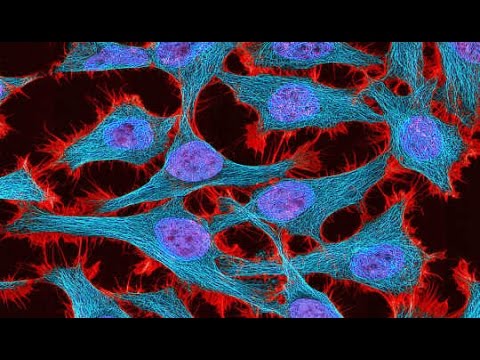
  • Photo: Washington University in St. Louis/Shutterstock: Sugar metabolism is surprisingly conventional in cancer.
  • Video: WashU Arts & Sciences: Driving Discovery Faculty Spotlight: Gary Patti

For over a century, cancer cell metabolism has been viewed as something of a paradox. New work from researchers at Washington University in St. Louis shows that it might not be such an anomaly after all. The study is published Aug. 15 in Molecular Cell.

Washington University in St. Louis /Shutterstock: Washington University in St. Louis/Shutterstock: Mitochondria — the cell’s powerhouses — play an active role in most cancers. Research from Washington University in St. Louis shows that cancer cells only waste glucose (sugar) because transport into mitochondria is too slow. The study has implications for targeting sugar metabolism in cancer treatment.Washington University in St. Louis /Shutterstock: Washington University in St. Louis/Shutterstock: Mitochondria — the cell’s powerhouses — play an active role in most cancers. Research from Washington University in St. Louis shows that cancer cells only waste glucose (sugar) because transport into mitochondria is too slow. The study has implications for targeting sugar metabolism in cancer treatment.

Glucose, a common sugar in food, is one of the most important nutrients in the body. Cancer cells tend to consume it at an astounding pace. At first glance, that seems to make good sense because cancer cells have a lot of synthesis to do. After all, as tumors grow rapidly, each cell has to replicate its entire contents.

But here’s the catch. Cancer cells don’t use the glucose very efficiently. Instead of sucking all of the energy they can out of glucose, they release most of it as a waste material.

“To extract the maximum amount of energy from glucose, cells must transport its transformation products into mitochondria,” said Gary Patti, the Michael and Tana Powell Professor of Chemistry in Arts & Sciences and of genetics and of medicine at the School of Medicine. Patti, a member of Siteman Cancer Center at Barnes-Jewish Hospital and the School of Medicine, is senior author of the new study.

“There are certain biochemical rules that metabolism is supposed to follow. It’s been interesting to think about why tumors might be allowed to break them,” Patti said. “However, the findings we report here demonstrate that cancer cells do follow conventional principles.”

Washington University in St. Louis: Patti.Washington University in St. Louis: Patti.

Overflowing

Mitochondria are tiny compartments inside cells, often referred to as the cell’s power plants or powerhouses. What goes in and out of them is tightly controlled.

As a bit of backstory, a famous biochemist named Otto Warburg first discovered the wasteful nature of tumors in the 1920s. To explain why more energy isn’t harvested from glucose, he postulated that mitochondria are damaged in cancer cells.

“We now know that this is not true. Mitochondria are functional and, in fact, active in most cancers,” Patti said. But that leaves a persistent and vexing question unanswered: Why do cancer cells metabolize so little of the glucose they consume in mitochondria?

“I think what has been confounding is that there has been this notion that cancer cells prefer not to oxidize glucose in their mitochondria,” Patti said. “Perhaps as a legacy of Warburg’s original thinking or maybe because it happens so extensively, the assumption has often been that cancer cells want to use glucose wastefully.”

Washington University in St. Louis/ShutterstockWashington University in St. Louis/Shutterstock

“When we restrict the amount of glucose taken up by cancer cells, almost all of it makes its way into mitochondria,” Patti said. “But as glucose consumption is increased, the speed of moving glucose-derived molecules into mitochondria can’t keep up.”

In other words, cancer cells only waste glucose away because transport into mitochondria is too slow.

Imagine a bathtub faucet that is spitting out water faster than the drain can remove it. Eventually, the water overflows onto the floor.

“This is not a radically new metabolic paradigm. Most cells do prefer to oxidize glucose in mitochondria rather than excrete it as waste,” Patti said. “Our data suggest that cancer cells are not an exception. They appear to follow the same biochemical patterns as other cells.”

All sorts of explanations have been offered as to why cancer cells might want to be wasteful with their glucose. However, Patti and his team contend that these rationalizations may be unnecessary. In the end, cancer metabolism may not be as unusual as scientists thought.

Cancer cells really do want to metabolize glucose in their mitochondria, and they do so. Until they can’t.

Saturated

The Patti team’s discovery was made possible by a powerful technology called metabolomics.

“During the past decade, advances in the field of metabolomics and mass spectrometry have been extraordinary,” Patti noted. “We have now reached a point where measuring molecules in single cells is even possible.”

In this study, the researchers combined metabolomics with stable isotope tracers. This allowed them to tag different parts of glucose so that they could track it inside of cells, watching the speed at which things entered mitochondria or were excreted from cells. That is how the scientists discovered that the normal pathways for transporting fuel were getting outpaced, or saturated, in cancer cells.

The rate at which tumors consume glucose has been exploited by doctors in the clinic for decades as a way to diagnose cancer and identify its stage. It also has led some to believe that limiting glucose uptake with drugs or by eating a sugar-free diet might “starve” the cancer cells to death.

This study’s findings raise questions about such a strategy.

“We may need to rethink how best to target glucose metabolism in cancer,” Patti said. “If cancer cells take up more glucose than they need, and using it wastefully is not a driver of disease, then glucose metabolism may not be as attractive of a therapeutic target as we had hoped.”

Funding: Financial support was received for this work from NIH awards R35ES028365 and R24OD024624, as well as the Edward Mallinckrodt Jr. Foundation and the Pew Charitable Trusts.
Washington University in St. Louis
LinkedIn Logo
 

Related content

Overcoming Strong Solvent Effects in the Analysis of Vepdegestrant

Applications
| 2026 | Agilent Technologies
Instrumentation
HPLC
Manufacturer
Agilent Technologies
Industries
Pharma & Biopharma

Identification of Double Bond Positions and Relative Acyl Chain Positions in Egg Yolk Phosphatidylcholines Using OAD-TOF System

Applications
| 2026 | Shimadzu
Instrumentation
LC/MS, LC/MS/MS, LC/TOF, LC/HRMS
Manufacturer
Shimadzu
Industries
Food & Agriculture

High Molecular-Weight Polysaccharide Characterization by SEC-MALS Using GTxResolve™ 1000 and 2000 Å SEC Columns

Applications
| 2026 | Waters
Instrumentation
GPC/SEC, Consumables, LC columns
Manufacturer
Waters
Industries
Pharma & Biopharma, Food & Agriculture

Development and Optimization for a Comprehensive LC/MS/MS Method for the Detection of 74 PFAS Compounds

Applications
| 2026 | Agilent Technologies
Instrumentation
LC/MS, LC/MS/MS, LC/QQQ
Manufacturer
Agilent Technologies
Industries
Food & Agriculture

PFAS in Biota: Risk Context & Robust Analytical Solutions

Others
| 2026 | ALS Europe
Instrumentation
Laboratory analysis, LC/MS, LC/MS/MS
Manufacturer
Industries
Environmental
 

Related articles

ISC 2026 Short Course 3 - Interpretation of Mass Spectra: Basic Introduction for Chromatographers
Article | Events

ISC 2026 Short Course 3 - Interpretation of Mass Spectra: Basic Introduction for Chromatographers

Short Course 3 at ISC 2026 offers a practical introduction to LC–MS spectral interpretation for chromatographers, covering ESI, APCI, APPI, adducts, isotope patterns, and MS/MS fundamentals.
International Symposium on Chromatography - (ISC)
tag
share
more
New Study Reveals How Agricultural Plastics Impact Soil Health In Real Conditions
Article | Environment

New Study Reveals How Agricultural Plastics Impact Soil Health In Real Conditions

Agricultural mulching films degrade into microplastics that affect soil properties, microbial life, and nitrogen cycling. A new European field study reveals real risks to soil health.
RECETOX - Centrum pro výzkum toxických látek v prostředí
tag
share
more
Oligos Made Easy - Part 2: AEX
Article | Science and research

Oligos Made Easy - Part 2: AEX

Anion exchange chromatography (AEX) is a powerful tool for oligonucleotide analysis. Learn how charge-based separation reveals purity, length variants, and structural insights in modern LC workflows.
KNAUER
tag
share
more
News from LabRulezLCMS Library - Week 07, 2026
Article | Application

News from LabRulezLCMS Library - Week 07, 2026

This week we bring you application notes by Agilent Technologies, KNAUER, Shimadzu and Waters Corporation and poster by Thermo Fisher Scientific / MSACL!
LabRulez
tag
share
more
 

Related content

Overcoming Strong Solvent Effects in the Analysis of Vepdegestrant

Applications
| 2026 | Agilent Technologies
Instrumentation
HPLC
Manufacturer
Agilent Technologies
Industries
Pharma & Biopharma

Identification of Double Bond Positions and Relative Acyl Chain Positions in Egg Yolk Phosphatidylcholines Using OAD-TOF System

Applications
| 2026 | Shimadzu
Instrumentation
LC/MS, LC/MS/MS, LC/TOF, LC/HRMS
Manufacturer
Shimadzu
Industries
Food & Agriculture

High Molecular-Weight Polysaccharide Characterization by SEC-MALS Using GTxResolve™ 1000 and 2000 Å SEC Columns

Applications
| 2026 | Waters
Instrumentation
GPC/SEC, Consumables, LC columns
Manufacturer
Waters
Industries
Pharma & Biopharma, Food & Agriculture

Development and Optimization for a Comprehensive LC/MS/MS Method for the Detection of 74 PFAS Compounds

Applications
| 2026 | Agilent Technologies
Instrumentation
LC/MS, LC/MS/MS, LC/QQQ
Manufacturer
Agilent Technologies
Industries
Food & Agriculture

PFAS in Biota: Risk Context & Robust Analytical Solutions

Others
| 2026 | ALS Europe
Instrumentation
Laboratory analysis, LC/MS, LC/MS/MS
Manufacturer
Industries
Environmental
 

Related articles

ISC 2026 Short Course 3 - Interpretation of Mass Spectra: Basic Introduction for Chromatographers
Article | Events

ISC 2026 Short Course 3 - Interpretation of Mass Spectra: Basic Introduction for Chromatographers

Short Course 3 at ISC 2026 offers a practical introduction to LC–MS spectral interpretation for chromatographers, covering ESI, APCI, APPI, adducts, isotope patterns, and MS/MS fundamentals.
International Symposium on Chromatography - (ISC)
tag
share
more
New Study Reveals How Agricultural Plastics Impact Soil Health In Real Conditions
Article | Environment

New Study Reveals How Agricultural Plastics Impact Soil Health In Real Conditions

Agricultural mulching films degrade into microplastics that affect soil properties, microbial life, and nitrogen cycling. A new European field study reveals real risks to soil health.
RECETOX - Centrum pro výzkum toxických látek v prostředí
tag
share
more
Oligos Made Easy - Part 2: AEX
Article | Science and research

Oligos Made Easy - Part 2: AEX

Anion exchange chromatography (AEX) is a powerful tool for oligonucleotide analysis. Learn how charge-based separation reveals purity, length variants, and structural insights in modern LC workflows.
KNAUER
tag
share
more
News from LabRulezLCMS Library - Week 07, 2026
Article | Application

News from LabRulezLCMS Library - Week 07, 2026

This week we bring you application notes by Agilent Technologies, KNAUER, Shimadzu and Waters Corporation and poster by Thermo Fisher Scientific / MSACL!
LabRulez
tag
share
more
 

Related content

Overcoming Strong Solvent Effects in the Analysis of Vepdegestrant

Applications
| 2026 | Agilent Technologies
Instrumentation
HPLC
Manufacturer
Agilent Technologies
Industries
Pharma & Biopharma

Identification of Double Bond Positions and Relative Acyl Chain Positions in Egg Yolk Phosphatidylcholines Using OAD-TOF System

Applications
| 2026 | Shimadzu
Instrumentation
LC/MS, LC/MS/MS, LC/TOF, LC/HRMS
Manufacturer
Shimadzu
Industries
Food & Agriculture

High Molecular-Weight Polysaccharide Characterization by SEC-MALS Using GTxResolve™ 1000 and 2000 Å SEC Columns

Applications
| 2026 | Waters
Instrumentation
GPC/SEC, Consumables, LC columns
Manufacturer
Waters
Industries
Pharma & Biopharma, Food & Agriculture

Development and Optimization for a Comprehensive LC/MS/MS Method for the Detection of 74 PFAS Compounds

Applications
| 2026 | Agilent Technologies
Instrumentation
LC/MS, LC/MS/MS, LC/QQQ
Manufacturer
Agilent Technologies
Industries
Food & Agriculture

PFAS in Biota: Risk Context & Robust Analytical Solutions

Others
| 2026 | ALS Europe
Instrumentation
Laboratory analysis, LC/MS, LC/MS/MS
Manufacturer
Industries
Environmental
 

Related articles

ISC 2026 Short Course 3 - Interpretation of Mass Spectra: Basic Introduction for Chromatographers
Article | Events

ISC 2026 Short Course 3 - Interpretation of Mass Spectra: Basic Introduction for Chromatographers

Short Course 3 at ISC 2026 offers a practical introduction to LC–MS spectral interpretation for chromatographers, covering ESI, APCI, APPI, adducts, isotope patterns, and MS/MS fundamentals.
International Symposium on Chromatography - (ISC)
tag
share
more
New Study Reveals How Agricultural Plastics Impact Soil Health In Real Conditions
Article | Environment

New Study Reveals How Agricultural Plastics Impact Soil Health In Real Conditions

Agricultural mulching films degrade into microplastics that affect soil properties, microbial life, and nitrogen cycling. A new European field study reveals real risks to soil health.
RECETOX - Centrum pro výzkum toxických látek v prostředí
tag
share
more
Oligos Made Easy - Part 2: AEX
Article | Science and research

Oligos Made Easy - Part 2: AEX

Anion exchange chromatography (AEX) is a powerful tool for oligonucleotide analysis. Learn how charge-based separation reveals purity, length variants, and structural insights in modern LC workflows.
KNAUER
tag
share
more
News from LabRulezLCMS Library - Week 07, 2026
Article | Application

News from LabRulezLCMS Library - Week 07, 2026

This week we bring you application notes by Agilent Technologies, KNAUER, Shimadzu and Waters Corporation and poster by Thermo Fisher Scientific / MSACL!
LabRulez
tag
share
more
 

Related content

Overcoming Strong Solvent Effects in the Analysis of Vepdegestrant

Applications
| 2026 | Agilent Technologies
Instrumentation
HPLC
Manufacturer
Agilent Technologies
Industries
Pharma & Biopharma

Identification of Double Bond Positions and Relative Acyl Chain Positions in Egg Yolk Phosphatidylcholines Using OAD-TOF System

Applications
| 2026 | Shimadzu
Instrumentation
LC/MS, LC/MS/MS, LC/TOF, LC/HRMS
Manufacturer
Shimadzu
Industries
Food & Agriculture

High Molecular-Weight Polysaccharide Characterization by SEC-MALS Using GTxResolve™ 1000 and 2000 Å SEC Columns

Applications
| 2026 | Waters
Instrumentation
GPC/SEC, Consumables, LC columns
Manufacturer
Waters
Industries
Pharma & Biopharma, Food & Agriculture

Development and Optimization for a Comprehensive LC/MS/MS Method for the Detection of 74 PFAS Compounds

Applications
| 2026 | Agilent Technologies
Instrumentation
LC/MS, LC/MS/MS, LC/QQQ
Manufacturer
Agilent Technologies
Industries
Food & Agriculture

PFAS in Biota: Risk Context & Robust Analytical Solutions

Others
| 2026 | ALS Europe
Instrumentation
Laboratory analysis, LC/MS, LC/MS/MS
Manufacturer
Industries
Environmental
 

Related articles

ISC 2026 Short Course 3 - Interpretation of Mass Spectra: Basic Introduction for Chromatographers
Article | Events

ISC 2026 Short Course 3 - Interpretation of Mass Spectra: Basic Introduction for Chromatographers

Short Course 3 at ISC 2026 offers a practical introduction to LC–MS spectral interpretation for chromatographers, covering ESI, APCI, APPI, adducts, isotope patterns, and MS/MS fundamentals.
International Symposium on Chromatography - (ISC)
tag
share
more
New Study Reveals How Agricultural Plastics Impact Soil Health In Real Conditions
Article | Environment

New Study Reveals How Agricultural Plastics Impact Soil Health In Real Conditions

Agricultural mulching films degrade into microplastics that affect soil properties, microbial life, and nitrogen cycling. A new European field study reveals real risks to soil health.
RECETOX - Centrum pro výzkum toxických látek v prostředí
tag
share
more
Oligos Made Easy - Part 2: AEX
Article | Science and research

Oligos Made Easy - Part 2: AEX

Anion exchange chromatography (AEX) is a powerful tool for oligonucleotide analysis. Learn how charge-based separation reveals purity, length variants, and structural insights in modern LC workflows.
KNAUER
tag
share
more
News from LabRulezLCMS Library - Week 07, 2026
Article | Application

News from LabRulezLCMS Library - Week 07, 2026

This week we bring you application notes by Agilent Technologies, KNAUER, Shimadzu and Waters Corporation and poster by Thermo Fisher Scientific / MSACL!
LabRulez
tag
share
more
Other projects
GCMS
ICPMS
Follow us
More information
WebinarsAbout usContact usTerms of use
LabRulez s.r.o. All rights reserved. Content available under a CC BY-SA 4.0 Attribution-ShareAlike