LCMS
More information
WebinarsAbout usContact usTerms of use
LabRulez s.r.o. All rights reserved. Content available under a CC BY-SA 4.0 Attribution-ShareAlike
Author
Washington University in St. Louis
Washington University in St. Louis is a place where people matter and serious work is done. Our mission is to discover and disseminate knowledge, and to protect the freedom of inquiry through research, teaching and learning. We are a community where you can be an individual and achieve exceptional things. We are committed to learning and exploration, to discovery and impact.
Tags
Article
Video
Science and research
Water
LinkedIn Logo

Water quality monitor, locust-inspired electronic nose under development
Th, 22.8.2024
| Original article from: Washington University in St. Louis / Beth Miller
Teams led by Barani Raman, Dan Giammar awarded $650,000 National Science Foundation Convergence Accelerator grants.
Video placeholder
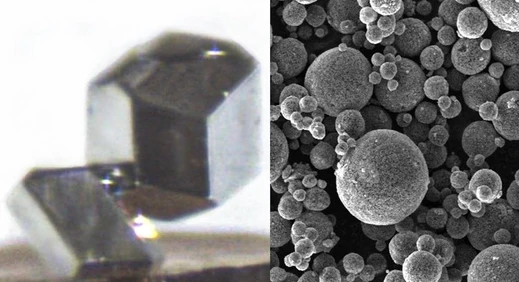
  • Photo: Washington University in St. Louis: Water quality monitor, locust-inspired electronic nose under development
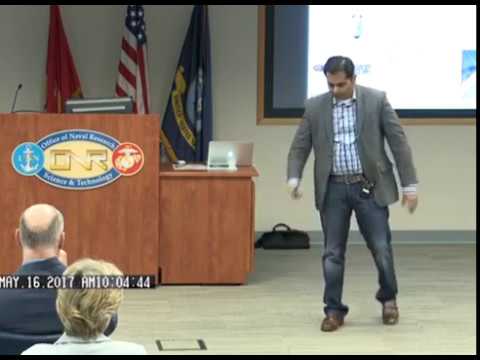
  • Video: US Navy Research: Understanding and Hijacking the Insect's Sense of Smell

Two teams of engineers led by faculty in the McKelvey School of Engineering at Washington University in St. Louis will work toward developing products to monitor drinking water quality and to detect explosives with an electronic nose with one-year, $650,000 Convergence Accelerator Phase 1 grants from the National Science Foundation (NSF).

Barani Raman, professor of biomedical engineering, and Daniel Giammar, the Walter E. Browne Professor of Environmental Engineering, will lead teams of researchers from Washington University and other institutions and entities funded under the NSF’s Convergence Accelerator program, designed to address national-scale societal challenges through convergence research and to transition basic research and discovery into practice to solve these challenges aligned with specific research themes. Among the themes are real-world chemical sensing applications, bio-inspired design innovations and equitable water solutions.

Raman and his collaborators have been working for nearly two decades to harness insects’ keen sense of smell into a sensor that could be used to detect explosives and in other applications. Now, they will take it a step further by incorporating artificial intelligence (AI) and nanotechnology to create a sensor, or electronic nose, to detect explosive volatile organic compounds.

Raman, professor of biomedical engineering, will work with longtime McKelvey Engineering collaborators Shantanu Chakrabartty, the Clifford W. Murphy Professor in the Preston M. Green Department of Electrical & Systems Engineering; Srikanth Singamaneni, the Lilyan & E. Lisle Hughes Professor in the Department of Mechanical Engineering & Materials Science; and Braden Giordano, associate superintendent of the Chemistry Division at the U.S. Naval Research Laboratory.

Washington University in St. Louis: Clockwise from top left: Raman, Chakrabartty, Singamaneni, Giordano, Steensma, Parker, Ling, Giammar.Washington University in St. Louis: Clockwise from top left: Raman, Chakrabartty, Singamaneni, Giordano, Steensma, Parker, Ling, Giammar.

Using the information gathered from their research in developing bio-inspired sensors, the team plans to create an AI-enabled, nanoparticle-based electronic nose device that can be used to gather and validate data. This portable proof-of-concept device would merge two ideas: a large, nanostructured chemical sensor array with diverse functions and the sensing and AI principles it has identified in the olfactory system of locusts. With the data, they plan to develop a library of known signatures for various explosive vapors at various concentration ranges.

In addition to detecting volatile organic compounds, the electronic nose could also be used in biomedicine, homeland security, environmental monitoring, climate change technologies and the flavor and food industry. The team plans to work with industry partners to tailor the design for various uses.

“A decade ago, we did not yet have the technology to develop a field-deployable and robust electronic nose,” Raman said. “The recent advances in biological olfaction, combined with developments in materials science and electronics for remote and long-term monitoring, helped us to understand the computing principles in biological olfaction. In addition, the vast improvements in AI, machine learning and data science provided a new opportunity to develop a robust artificial chemical sensing system.”

Raman acknowledges that a device equal in capabilities as a biological olfactory system such as the locust’s is a Holy Grail. However, this new work and design plan will consider the key requirements in various applications and develop priorities of capabilities needed in the electronic nose technology.

In the second McKelvey Engineering-led Convergence Accelerator project, Giammar, also the director of the university’s Center for the Environment, will lead a team in developing a drinking water-quality monitoring tool based on point-of-use water filters. The research will focus on residents of disadvantaged communities served by small public water systems and those in urban locations served by large water systems with an aging infrastructure as well as those who source water from private wells with lower monitoring requirements.

The team will evaluate the ability of commercially available point-of-use filters, such as faucet-mounted filters, to monitor copper, zinc, manganese, hexavalent chromium, arsenic, microorganisms, and per- and polyfluorinated alkyl substances, or PFAS, the widely used “forever chemicals” linked with harm to the environment and to human health.

“In urban settings, recent crises with lead found in drinking water in Flint, Michigan, and Newark, New Jersey, highlight the threats to public health posed by aging water supply infrastructure,” Giammar said. “The existing monitoring framework is often not enough to identify degraded water quality for those populations most affected, making this an environmental justice issue as much as a water quality issue.”

Giammar’s team includes co-principal investigators from WashU, including Fangqiong Ling and Kimberly Parker, both assistant professors of energy, environmental & chemical engineering in McKelvey Engineering, and Joe Steensma, professor of practice at the Brown School; as well as researchers from the University of Illinois at Urbana-Champaign, including Steven Wilson, groundwater hydrologist and principal scientist for the Illinois State Water Survey, Thanh Huong Nguyen, the Ivan Racheff Professor of Environmental Engineering in Civil & Environmental Engineering, and John Scott, senior analytical chemist in the Illinois Sustainable Technology Center.

Giammar’s project also has external partners, including the Midwest Assistance Program, the Rural Community Assistance Partnership, the Water Quality Association, and the U.S. Environmental Protection Agency.

Washington University in St. Louis
LinkedIn Logo
 

Related content

Overcoming Strong Solvent Effects in the Analysis of Vepdegestrant

Applications
| 2026 | Agilent Technologies
Instrumentation
HPLC
Manufacturer
Agilent Technologies
Industries
Pharma & Biopharma

Identification of Double Bond Positions and Relative Acyl Chain Positions in Egg Yolk Phosphatidylcholines Using OAD-TOF System

Applications
| 2026 | Shimadzu
Instrumentation
LC/MS, LC/MS/MS, LC/TOF, LC/HRMS
Manufacturer
Shimadzu
Industries
Food & Agriculture

High Molecular-Weight Polysaccharide Characterization by SEC-MALS Using GTxResolve™ 1000 and 2000 Å SEC Columns

Applications
| 2026 | Waters
Instrumentation
GPC/SEC, Consumables, LC columns
Manufacturer
Waters
Industries
Pharma & Biopharma, Food & Agriculture

Development and Optimization for a Comprehensive LC/MS/MS Method for the Detection of 74 PFAS Compounds

Applications
| 2026 | Agilent Technologies
Instrumentation
LC/MS, LC/MS/MS, LC/QQQ
Manufacturer
Agilent Technologies
Industries
Food & Agriculture

PFAS in Biota: Risk Context & Robust Analytical Solutions

Others
| 2026 | ALS Europe
Instrumentation
Laboratory analysis, LC/MS, LC/MS/MS
Manufacturer
Industries
Environmental
 

Related articles

ISC 2026 Short Course 3 - Interpretation of Mass Spectra: Basic Introduction for Chromatographers
Article | Events

ISC 2026 Short Course 3 - Interpretation of Mass Spectra: Basic Introduction for Chromatographers

Short Course 3 at ISC 2026 offers a practical introduction to LC–MS spectral interpretation for chromatographers, covering ESI, APCI, APPI, adducts, isotope patterns, and MS/MS fundamentals.
International Symposium on Chromatography - (ISC)
tag
share
more
New Study Reveals How Agricultural Plastics Impact Soil Health In Real Conditions
Article | Environment

New Study Reveals How Agricultural Plastics Impact Soil Health In Real Conditions

Agricultural mulching films degrade into microplastics that affect soil properties, microbial life, and nitrogen cycling. A new European field study reveals real risks to soil health.
RECETOX - Centrum pro výzkum toxických látek v prostředí
tag
share
more
Oligos Made Easy - Part 2: AEX
Article | Science and research

Oligos Made Easy - Part 2: AEX

Anion exchange chromatography (AEX) is a powerful tool for oligonucleotide analysis. Learn how charge-based separation reveals purity, length variants, and structural insights in modern LC workflows.
KNAUER
tag
share
more
News from LabRulezLCMS Library - Week 07, 2026
Article | Application

News from LabRulezLCMS Library - Week 07, 2026

This week we bring you application notes by Agilent Technologies, KNAUER, Shimadzu and Waters Corporation and poster by Thermo Fisher Scientific / MSACL!
LabRulez
tag
share
more
 

Related content

Overcoming Strong Solvent Effects in the Analysis of Vepdegestrant

Applications
| 2026 | Agilent Technologies
Instrumentation
HPLC
Manufacturer
Agilent Technologies
Industries
Pharma & Biopharma

Identification of Double Bond Positions and Relative Acyl Chain Positions in Egg Yolk Phosphatidylcholines Using OAD-TOF System

Applications
| 2026 | Shimadzu
Instrumentation
LC/MS, LC/MS/MS, LC/TOF, LC/HRMS
Manufacturer
Shimadzu
Industries
Food & Agriculture

High Molecular-Weight Polysaccharide Characterization by SEC-MALS Using GTxResolve™ 1000 and 2000 Å SEC Columns

Applications
| 2026 | Waters
Instrumentation
GPC/SEC, Consumables, LC columns
Manufacturer
Waters
Industries
Pharma & Biopharma, Food & Agriculture

Development and Optimization for a Comprehensive LC/MS/MS Method for the Detection of 74 PFAS Compounds

Applications
| 2026 | Agilent Technologies
Instrumentation
LC/MS, LC/MS/MS, LC/QQQ
Manufacturer
Agilent Technologies
Industries
Food & Agriculture

PFAS in Biota: Risk Context & Robust Analytical Solutions

Others
| 2026 | ALS Europe
Instrumentation
Laboratory analysis, LC/MS, LC/MS/MS
Manufacturer
Industries
Environmental
 

Related articles

ISC 2026 Short Course 3 - Interpretation of Mass Spectra: Basic Introduction for Chromatographers
Article | Events

ISC 2026 Short Course 3 - Interpretation of Mass Spectra: Basic Introduction for Chromatographers

Short Course 3 at ISC 2026 offers a practical introduction to LC–MS spectral interpretation for chromatographers, covering ESI, APCI, APPI, adducts, isotope patterns, and MS/MS fundamentals.
International Symposium on Chromatography - (ISC)
tag
share
more
New Study Reveals How Agricultural Plastics Impact Soil Health In Real Conditions
Article | Environment

New Study Reveals How Agricultural Plastics Impact Soil Health In Real Conditions

Agricultural mulching films degrade into microplastics that affect soil properties, microbial life, and nitrogen cycling. A new European field study reveals real risks to soil health.
RECETOX - Centrum pro výzkum toxických látek v prostředí
tag
share
more
Oligos Made Easy - Part 2: AEX
Article | Science and research

Oligos Made Easy - Part 2: AEX

Anion exchange chromatography (AEX) is a powerful tool for oligonucleotide analysis. Learn how charge-based separation reveals purity, length variants, and structural insights in modern LC workflows.
KNAUER
tag
share
more
News from LabRulezLCMS Library - Week 07, 2026
Article | Application

News from LabRulezLCMS Library - Week 07, 2026

This week we bring you application notes by Agilent Technologies, KNAUER, Shimadzu and Waters Corporation and poster by Thermo Fisher Scientific / MSACL!
LabRulez
tag
share
more
 

Related content

Overcoming Strong Solvent Effects in the Analysis of Vepdegestrant

Applications
| 2026 | Agilent Technologies
Instrumentation
HPLC
Manufacturer
Agilent Technologies
Industries
Pharma & Biopharma

Identification of Double Bond Positions and Relative Acyl Chain Positions in Egg Yolk Phosphatidylcholines Using OAD-TOF System

Applications
| 2026 | Shimadzu
Instrumentation
LC/MS, LC/MS/MS, LC/TOF, LC/HRMS
Manufacturer
Shimadzu
Industries
Food & Agriculture

High Molecular-Weight Polysaccharide Characterization by SEC-MALS Using GTxResolve™ 1000 and 2000 Å SEC Columns

Applications
| 2026 | Waters
Instrumentation
GPC/SEC, Consumables, LC columns
Manufacturer
Waters
Industries
Pharma & Biopharma, Food & Agriculture

Development and Optimization for a Comprehensive LC/MS/MS Method for the Detection of 74 PFAS Compounds

Applications
| 2026 | Agilent Technologies
Instrumentation
LC/MS, LC/MS/MS, LC/QQQ
Manufacturer
Agilent Technologies
Industries
Food & Agriculture

PFAS in Biota: Risk Context & Robust Analytical Solutions

Others
| 2026 | ALS Europe
Instrumentation
Laboratory analysis, LC/MS, LC/MS/MS
Manufacturer
Industries
Environmental
 

Related articles

ISC 2026 Short Course 3 - Interpretation of Mass Spectra: Basic Introduction for Chromatographers
Article | Events

ISC 2026 Short Course 3 - Interpretation of Mass Spectra: Basic Introduction for Chromatographers

Short Course 3 at ISC 2026 offers a practical introduction to LC–MS spectral interpretation for chromatographers, covering ESI, APCI, APPI, adducts, isotope patterns, and MS/MS fundamentals.
International Symposium on Chromatography - (ISC)
tag
share
more
New Study Reveals How Agricultural Plastics Impact Soil Health In Real Conditions
Article | Environment

New Study Reveals How Agricultural Plastics Impact Soil Health In Real Conditions

Agricultural mulching films degrade into microplastics that affect soil properties, microbial life, and nitrogen cycling. A new European field study reveals real risks to soil health.
RECETOX - Centrum pro výzkum toxických látek v prostředí
tag
share
more
Oligos Made Easy - Part 2: AEX
Article | Science and research

Oligos Made Easy - Part 2: AEX

Anion exchange chromatography (AEX) is a powerful tool for oligonucleotide analysis. Learn how charge-based separation reveals purity, length variants, and structural insights in modern LC workflows.
KNAUER
tag
share
more
News from LabRulezLCMS Library - Week 07, 2026
Article | Application

News from LabRulezLCMS Library - Week 07, 2026

This week we bring you application notes by Agilent Technologies, KNAUER, Shimadzu and Waters Corporation and poster by Thermo Fisher Scientific / MSACL!
LabRulez
tag
share
more
 

Related content

Overcoming Strong Solvent Effects in the Analysis of Vepdegestrant

Applications
| 2026 | Agilent Technologies
Instrumentation
HPLC
Manufacturer
Agilent Technologies
Industries
Pharma & Biopharma

Identification of Double Bond Positions and Relative Acyl Chain Positions in Egg Yolk Phosphatidylcholines Using OAD-TOF System

Applications
| 2026 | Shimadzu
Instrumentation
LC/MS, LC/MS/MS, LC/TOF, LC/HRMS
Manufacturer
Shimadzu
Industries
Food & Agriculture

High Molecular-Weight Polysaccharide Characterization by SEC-MALS Using GTxResolve™ 1000 and 2000 Å SEC Columns

Applications
| 2026 | Waters
Instrumentation
GPC/SEC, Consumables, LC columns
Manufacturer
Waters
Industries
Pharma & Biopharma, Food & Agriculture

Development and Optimization for a Comprehensive LC/MS/MS Method for the Detection of 74 PFAS Compounds

Applications
| 2026 | Agilent Technologies
Instrumentation
LC/MS, LC/MS/MS, LC/QQQ
Manufacturer
Agilent Technologies
Industries
Food & Agriculture

PFAS in Biota: Risk Context & Robust Analytical Solutions

Others
| 2026 | ALS Europe
Instrumentation
Laboratory analysis, LC/MS, LC/MS/MS
Manufacturer
Industries
Environmental
 

Related articles

ISC 2026 Short Course 3 - Interpretation of Mass Spectra: Basic Introduction for Chromatographers
Article | Events

ISC 2026 Short Course 3 - Interpretation of Mass Spectra: Basic Introduction for Chromatographers

Short Course 3 at ISC 2026 offers a practical introduction to LC–MS spectral interpretation for chromatographers, covering ESI, APCI, APPI, adducts, isotope patterns, and MS/MS fundamentals.
International Symposium on Chromatography - (ISC)
tag
share
more
New Study Reveals How Agricultural Plastics Impact Soil Health In Real Conditions
Article | Environment

New Study Reveals How Agricultural Plastics Impact Soil Health In Real Conditions

Agricultural mulching films degrade into microplastics that affect soil properties, microbial life, and nitrogen cycling. A new European field study reveals real risks to soil health.
RECETOX - Centrum pro výzkum toxických látek v prostředí
tag
share
more
Oligos Made Easy - Part 2: AEX
Article | Science and research

Oligos Made Easy - Part 2: AEX

Anion exchange chromatography (AEX) is a powerful tool for oligonucleotide analysis. Learn how charge-based separation reveals purity, length variants, and structural insights in modern LC workflows.
KNAUER
tag
share
more
News from LabRulezLCMS Library - Week 07, 2026
Article | Application

News from LabRulezLCMS Library - Week 07, 2026

This week we bring you application notes by Agilent Technologies, KNAUER, Shimadzu and Waters Corporation and poster by Thermo Fisher Scientific / MSACL!
LabRulez
tag
share
more
Other projects
GCMS
ICPMS
Follow us
More information
WebinarsAbout usContact usTerms of use
LabRulez s.r.o. All rights reserved. Content available under a CC BY-SA 4.0 Attribution-ShareAlike