LCMS
More information
WebinarsAbout usContact usTerms of use
LabRulez s.r.o. All rights reserved. Content available under a CC BY-SA 4.0 Attribution-ShareAlike
Author
TU Wien
TU Wien
The TU Wien is Austria's largest research and educational institution in the field of technology and natural sciences. More than 4,000 scientists are researching "technology for people" in five main research areas at eight faculties. The content of the studies offered is derived from the excellent research. More than 26,000 students in 62 degree programmes benefit from this. As a driver of innovation, TU Wien strengthens the business location, facilitates cooperation and contributes to the prosperity of society.
Tags
Article
Scientific article
Science and research
LinkedIn Logo

New method unravels the mystery of slow electrons

Th, 19.12.2024
| Original article from: TU Wien
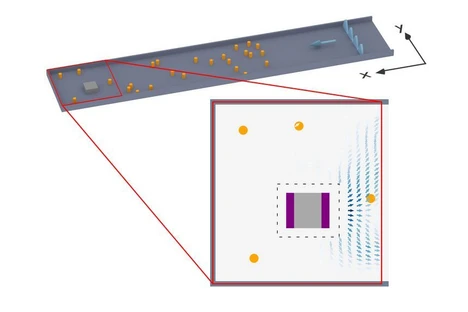
Slow electrons are used in cancer therapy as well as in microelectronics. It is very hard to observe how they behave in solids. But scientists at TU Wien have made this possible.
<ul><li><strong>Photo:</strong> TU Wien: Felix Blödorn, Julian Brunner, Alessandra Bellissimo, Florian Simperl, Wolfgang Werner</li></ul>
  • Photo: TU Wien: Felix Blödorn, Julian Brunner, Alessandra Bellissimo, Florian Simperl, Wolfgang Werner

Electrons can behave very differently depending on how much energy they have. Whether you shoot an electron with high or low energy into a solid body determines which effects can be triggered. Electrons with low energy can be responsible for the development of cancer, for example, but conversely they can also be used to destroy tumors. They are also important in technology, for example for the production of tiny structures in microelectronics.

These slow electrons, however, are extremely difficult to measure. Knowledge about their behaviour in solid materials is limited, and often scientists can only rely on trial and error. However, TU Wien has now succeeded in obtaining valuable new information about the behaviour of these electrons: Fast electrons are used to generate slow electrons directly in the material. This allows details to be deciphered that were previously inaccessible experimentally. The method has now been presented in the journal ‘Physical Review Letters’.

Two types of electrons at the same time

We are interested in what the slow electrons do inside a material, for example inside a crystal or inside a living cell,” says Prof Wolfgang Werner from the Institute of Applied Physics at TU Wien. “To find out, you would actually have to build a mini-laboratory directly in the material to be able to measure directly on site. But that's not possible, of course."

You can only measure electrons that come out of the material, but that doesn't tell you where in the material they were released and what has happened to them since then. The team at TU Wien solved this problem with the help of fast electrons that penetrate the material and stimulate various processes there. For example, these fast electrons can disturb the balance between the positive and negative electrical charges of the material, which can then lead to another electron detaching itself from its place, travelling at a relatively low speed and in some cases escaping from the material.

The crucial step now is to measure these different electrons simultaneously: “On the one hand, we shoot an electron into the material and measure its energy when it leaves again. On the other hand, we also measure which slow electrons come out of the material at the same time.” And by combining this data, it is possible to obtain information that was previously inaccessible.

Not a wild cascade, but a series of collisions

The amount of energy that the fast electron has lost on its journey through the material provides information on how deeply it has penetrated the material. This in turn provides information about the depth at which the slower electrons were released from their place.

This data can now be used to calculate to what extent and in what way the slow electrons in the material release their energy. Numerical theories on this can be reliably validated for the first time using the data.

This led to a surprise: it was previously thought that the release of electrons in the material took place in a cascade: A fast electron enters the material and hits another electron, which is then ripped away from its place, causing two electrons to move. These two electrons would then remove two more electrons from their place, and so on. The new data show that this is not true: instead, the fast electron undergoes a series of collisions, but always retains a large part of its energy and only one comparatively slow electron is detached from its place in each of these interactions.

Our new method offers opportunities in very different areas,” says Wolfgang Werner. “We can now finally investigate how the electrons release energy in their interaction with the material. It is precisely this energy that determines whether tumor cells can be destroyed in cancer therapy, for example, or whether the finest details of a semiconductor structure can be correctly formed in electron beam lithography.

TU Wien
LinkedIn Logo
 

Related content

Overcoming Strong Solvent Effects in the Analysis of Vepdegestrant

Applications
| 2026 | Agilent Technologies
Instrumentation
HPLC
Manufacturer
Agilent Technologies
Industries
Pharma & Biopharma

Identification of Double Bond Positions and Relative Acyl Chain Positions in Egg Yolk Phosphatidylcholines Using OAD-TOF System

Applications
| 2026 | Shimadzu
Instrumentation
LC/MS, LC/MS/MS, LC/TOF, LC/HRMS
Manufacturer
Shimadzu
Industries
Food & Agriculture

High Molecular-Weight Polysaccharide Characterization by SEC-MALS Using GTxResolve™ 1000 and 2000 Å SEC Columns

Applications
| 2026 | Waters
Instrumentation
GPC/SEC, Consumables, LC columns
Manufacturer
Waters
Industries
Pharma & Biopharma, Food & Agriculture

Development and Optimization for a Comprehensive LC/MS/MS Method for the Detection of 74 PFAS Compounds

Applications
| 2026 | Agilent Technologies
Instrumentation
LC/MS, LC/MS/MS, LC/QQQ
Manufacturer
Agilent Technologies
Industries
Food & Agriculture

PFAS in Biota: Risk Context & Robust Analytical Solutions

Others
| 2026 | ALS Europe
Instrumentation
Laboratory analysis, LC/MS, LC/MS/MS
Manufacturer
Industries
Environmental
 

Related articles

JUNIOR STAR Grants at UCT Prague: Two talented women from abroad driving innovation in science
Article | Scientists

JUNIOR STAR Grants at UCT Prague: Two talented women from abroad driving innovation in science

Two outstanding early-career researchers at UCT Prague, Filipa Oliveira and Stella Gonsales, received prestigious GAČR JUNIOR STAR grants for innovative research in materials science and sustainable chemistry.
UCT Prague
tag
share
more
Research from IOCB Prague reveals a previously unknown mechanism of genetic transcription
Article | Science and research

Research from IOCB Prague reveals a previously unknown mechanism of genetic transcription

Scientists at IOCB Prague reveal a previously unknown mechanism that initiates gene transcription. Using cryo-EM, they uncover how alarmone molecules enable RNA synthesis under stress.
Institute of Organic Chemistry and Biochemistry of the Czech Academy of Sciences
tag
share
more
Food Adulteration and How It Is Revealed by Analytical Chemistry
Article | Food

Food Adulteration and How It Is Revealed by Analytical Chemistry

Food adulteration threatens quality and consumer trust. Discover how HPLC and modern chromatographic systems from Watrex Praha help identify oil, honey, and wine adulteration with high confidence.
Watrex Praha
tag
share
more
Affinity, Gel Filtration, Size Exclusion Chromatography: Repurposing Kinase Inhibitors for Malaria
Interview | Video

Affinity, Gel Filtration, Size Exclusion Chromatography: Repurposing Kinase Inhibitors for Malaria

This podcast explores how chromatography (FPLC/SEC) and mass spectrometry support malaria drug discovery, from protein purification and QC to interaction studies and complex sample preparation.
Organomation
tag
share
more
 

Related content

Overcoming Strong Solvent Effects in the Analysis of Vepdegestrant

Applications
| 2026 | Agilent Technologies
Instrumentation
HPLC
Manufacturer
Agilent Technologies
Industries
Pharma & Biopharma

Identification of Double Bond Positions and Relative Acyl Chain Positions in Egg Yolk Phosphatidylcholines Using OAD-TOF System

Applications
| 2026 | Shimadzu
Instrumentation
LC/MS, LC/MS/MS, LC/TOF, LC/HRMS
Manufacturer
Shimadzu
Industries
Food & Agriculture

High Molecular-Weight Polysaccharide Characterization by SEC-MALS Using GTxResolve™ 1000 and 2000 Å SEC Columns

Applications
| 2026 | Waters
Instrumentation
GPC/SEC, Consumables, LC columns
Manufacturer
Waters
Industries
Pharma & Biopharma, Food & Agriculture

Development and Optimization for a Comprehensive LC/MS/MS Method for the Detection of 74 PFAS Compounds

Applications
| 2026 | Agilent Technologies
Instrumentation
LC/MS, LC/MS/MS, LC/QQQ
Manufacturer
Agilent Technologies
Industries
Food & Agriculture

PFAS in Biota: Risk Context & Robust Analytical Solutions

Others
| 2026 | ALS Europe
Instrumentation
Laboratory analysis, LC/MS, LC/MS/MS
Manufacturer
Industries
Environmental
 

Related articles

JUNIOR STAR Grants at UCT Prague: Two talented women from abroad driving innovation in science
Article | Scientists

JUNIOR STAR Grants at UCT Prague: Two talented women from abroad driving innovation in science

Two outstanding early-career researchers at UCT Prague, Filipa Oliveira and Stella Gonsales, received prestigious GAČR JUNIOR STAR grants for innovative research in materials science and sustainable chemistry.
UCT Prague
tag
share
more
Research from IOCB Prague reveals a previously unknown mechanism of genetic transcription
Article | Science and research

Research from IOCB Prague reveals a previously unknown mechanism of genetic transcription

Scientists at IOCB Prague reveal a previously unknown mechanism that initiates gene transcription. Using cryo-EM, they uncover how alarmone molecules enable RNA synthesis under stress.
Institute of Organic Chemistry and Biochemistry of the Czech Academy of Sciences
tag
share
more
Food Adulteration and How It Is Revealed by Analytical Chemistry
Article | Food

Food Adulteration and How It Is Revealed by Analytical Chemistry

Food adulteration threatens quality and consumer trust. Discover how HPLC and modern chromatographic systems from Watrex Praha help identify oil, honey, and wine adulteration with high confidence.
Watrex Praha
tag
share
more
Affinity, Gel Filtration, Size Exclusion Chromatography: Repurposing Kinase Inhibitors for Malaria
Interview | Video

Affinity, Gel Filtration, Size Exclusion Chromatography: Repurposing Kinase Inhibitors for Malaria

This podcast explores how chromatography (FPLC/SEC) and mass spectrometry support malaria drug discovery, from protein purification and QC to interaction studies and complex sample preparation.
Organomation
tag
share
more
 

Related content

Overcoming Strong Solvent Effects in the Analysis of Vepdegestrant

Applications
| 2026 | Agilent Technologies
Instrumentation
HPLC
Manufacturer
Agilent Technologies
Industries
Pharma & Biopharma

Identification of Double Bond Positions and Relative Acyl Chain Positions in Egg Yolk Phosphatidylcholines Using OAD-TOF System

Applications
| 2026 | Shimadzu
Instrumentation
LC/MS, LC/MS/MS, LC/TOF, LC/HRMS
Manufacturer
Shimadzu
Industries
Food & Agriculture

High Molecular-Weight Polysaccharide Characterization by SEC-MALS Using GTxResolve™ 1000 and 2000 Å SEC Columns

Applications
| 2026 | Waters
Instrumentation
GPC/SEC, Consumables, LC columns
Manufacturer
Waters
Industries
Pharma & Biopharma, Food & Agriculture

Development and Optimization for a Comprehensive LC/MS/MS Method for the Detection of 74 PFAS Compounds

Applications
| 2026 | Agilent Technologies
Instrumentation
LC/MS, LC/MS/MS, LC/QQQ
Manufacturer
Agilent Technologies
Industries
Food & Agriculture

PFAS in Biota: Risk Context & Robust Analytical Solutions

Others
| 2026 | ALS Europe
Instrumentation
Laboratory analysis, LC/MS, LC/MS/MS
Manufacturer
Industries
Environmental
 

Related articles

JUNIOR STAR Grants at UCT Prague: Two talented women from abroad driving innovation in science
Article | Scientists

JUNIOR STAR Grants at UCT Prague: Two talented women from abroad driving innovation in science

Two outstanding early-career researchers at UCT Prague, Filipa Oliveira and Stella Gonsales, received prestigious GAČR JUNIOR STAR grants for innovative research in materials science and sustainable chemistry.
UCT Prague
tag
share
more
Research from IOCB Prague reveals a previously unknown mechanism of genetic transcription
Article | Science and research

Research from IOCB Prague reveals a previously unknown mechanism of genetic transcription

Scientists at IOCB Prague reveal a previously unknown mechanism that initiates gene transcription. Using cryo-EM, they uncover how alarmone molecules enable RNA synthesis under stress.
Institute of Organic Chemistry and Biochemistry of the Czech Academy of Sciences
tag
share
more
Food Adulteration and How It Is Revealed by Analytical Chemistry
Article | Food

Food Adulteration and How It Is Revealed by Analytical Chemistry

Food adulteration threatens quality and consumer trust. Discover how HPLC and modern chromatographic systems from Watrex Praha help identify oil, honey, and wine adulteration with high confidence.
Watrex Praha
tag
share
more
Affinity, Gel Filtration, Size Exclusion Chromatography: Repurposing Kinase Inhibitors for Malaria
Interview | Video

Affinity, Gel Filtration, Size Exclusion Chromatography: Repurposing Kinase Inhibitors for Malaria

This podcast explores how chromatography (FPLC/SEC) and mass spectrometry support malaria drug discovery, from protein purification and QC to interaction studies and complex sample preparation.
Organomation
tag
share
more
 

Related content

Overcoming Strong Solvent Effects in the Analysis of Vepdegestrant

Applications
| 2026 | Agilent Technologies
Instrumentation
HPLC
Manufacturer
Agilent Technologies
Industries
Pharma & Biopharma

Identification of Double Bond Positions and Relative Acyl Chain Positions in Egg Yolk Phosphatidylcholines Using OAD-TOF System

Applications
| 2026 | Shimadzu
Instrumentation
LC/MS, LC/MS/MS, LC/TOF, LC/HRMS
Manufacturer
Shimadzu
Industries
Food & Agriculture

High Molecular-Weight Polysaccharide Characterization by SEC-MALS Using GTxResolve™ 1000 and 2000 Å SEC Columns

Applications
| 2026 | Waters
Instrumentation
GPC/SEC, Consumables, LC columns
Manufacturer
Waters
Industries
Pharma & Biopharma, Food & Agriculture

Development and Optimization for a Comprehensive LC/MS/MS Method for the Detection of 74 PFAS Compounds

Applications
| 2026 | Agilent Technologies
Instrumentation
LC/MS, LC/MS/MS, LC/QQQ
Manufacturer
Agilent Technologies
Industries
Food & Agriculture

PFAS in Biota: Risk Context & Robust Analytical Solutions

Others
| 2026 | ALS Europe
Instrumentation
Laboratory analysis, LC/MS, LC/MS/MS
Manufacturer
Industries
Environmental
 

Related articles

JUNIOR STAR Grants at UCT Prague: Two talented women from abroad driving innovation in science
Article | Scientists

JUNIOR STAR Grants at UCT Prague: Two talented women from abroad driving innovation in science

Two outstanding early-career researchers at UCT Prague, Filipa Oliveira and Stella Gonsales, received prestigious GAČR JUNIOR STAR grants for innovative research in materials science and sustainable chemistry.
UCT Prague
tag
share
more
Research from IOCB Prague reveals a previously unknown mechanism of genetic transcription
Article | Science and research

Research from IOCB Prague reveals a previously unknown mechanism of genetic transcription

Scientists at IOCB Prague reveal a previously unknown mechanism that initiates gene transcription. Using cryo-EM, they uncover how alarmone molecules enable RNA synthesis under stress.
Institute of Organic Chemistry and Biochemistry of the Czech Academy of Sciences
tag
share
more
Food Adulteration and How It Is Revealed by Analytical Chemistry
Article | Food

Food Adulteration and How It Is Revealed by Analytical Chemistry

Food adulteration threatens quality and consumer trust. Discover how HPLC and modern chromatographic systems from Watrex Praha help identify oil, honey, and wine adulteration with high confidence.
Watrex Praha
tag
share
more
Affinity, Gel Filtration, Size Exclusion Chromatography: Repurposing Kinase Inhibitors for Malaria
Interview | Video

Affinity, Gel Filtration, Size Exclusion Chromatography: Repurposing Kinase Inhibitors for Malaria

This podcast explores how chromatography (FPLC/SEC) and mass spectrometry support malaria drug discovery, from protein purification and QC to interaction studies and complex sample preparation.
Organomation
tag
share
more
Other projects
GCMS
ICPMS
Follow us
More information
WebinarsAbout usContact usTerms of use
LabRulez s.r.o. All rights reserved. Content available under a CC BY-SA 4.0 Attribution-ShareAlike