

Profiling phenolic compounds in shea by 2D-LC hyphenated to IM-HRMS (Nikoline J. Nielsen, MDCW 2025)
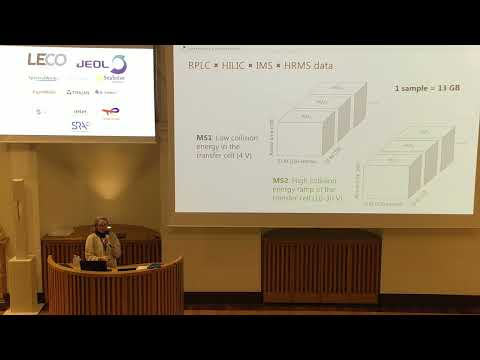
- Photo: MDCW: Profiling phenolic compounds in shea by 2D-LC hyphenated to IM-HRMS (Nikoline J. Nielsen, MDCW 2025)
- Video: LabRulez: Nikoline J. Nielsen: Profiling phenolic compounds in shea by 2D-LC hyphenated to IM-HRMS (MDCW 2025)
🎤 Presenter: Nikoline J. Nielsen (Dept. Plant and Environmental Sciences, University of Copenhagen, 1871 Frederiksberg C, Denmark.)
💡 Book in your calendar: 17th Multidimensional Chromatography Workshop (MDCW) 13 - 15. January 2026
Abstract
The shea tree (Vitellaria paradoxa) is native to sub-Saharan Africa, and distributed over 5000 km from Senegal to Ethiopia. Shea fruits play an important role in the local diet, being a source of carbohydrates, vitamins, and minerals. The shea kernel contains up to 60% triglycerides. This fraction is extracted by local women to produce shea butter, which is used for food and skincare. Industrially, shea butter is commercialized as a cocoa butter replacement and as an ingredient in personal care products. Being a commodity obtained from wild-growing trees, shea represents a sustainable alternative to palm oil, and global demand for shea kernels far exceeds supply. Shea trade contributes to the livelihood of local West-African shea collectors and processors.
More recently, focus has been directed towards producing high-quality kernels, which usually refers to kernels with high triglyceride and low free fatty acids content. However, shea also contains secondary metabolites that may convey beneficial properties and, in that way, further valorize shea products in the future.
Phenolic compounds are secondary metabolites known to exhibit a range of desirable biological activities. Until now, only four studies of phenolic compounds in shea have been published. Recently, we profiled 32 phenolic compounds, 16 of which were reported in shea for the first time, by RPLC-HRMS. In this presentation, we will discuss the outcome of applying RPLC × HILIC hyphenated to UV, IMS and HRMS, to support the compound identification, and to enhance separation to further characterize phenolic compounds previously unknown to shea.
-Workshop-LOGO_s.webp)


