Author
Thermo Fisher Scientific
A unique company dedicated to serving science helping our customers drive productivity and accelerate results. Through our premier brands – Thermo Scientific, Applied Biosystems, Invitrogen, Fisher Scientific and Unity Lab Services.
Tags
Article
Application
Product
Video
LinkedIn Logo

Deciphering Selenium Nutrition Using Speciation Analysis with ICP-MS

Tu, 19.8.2025
| Original article from: Thermo Fisher Scientific / Daniel Kutscher
Speciation analysis with ICP-MS reveals selenium compounds in foods like mushrooms, aiding nutrition research and highlighting risks of deficiency.
Video placeholder
  • Photo: Thermo Fisher Scientific: Deciphering Selenium Nutrition Using Speciation Analysis with ICP-MS
  • Video: Chromatography & Mass Spectrometry Solutions: Analytica 2018: Thermo Scientific™ Dionex™ ICS-6000

Many elements, such as chromium, zinc or selenium are considered essential micronutrients for humans and are subject to ongoing research. Their concentration in foods can be accurately determined using inductively coupled plasma mass spectrometry (ICP-MS).

Thermo Fisher Scientific: Deciphering Selenium Nutrition Using Speciation Analysis with ICP-MSThermo Fisher Scientific: Deciphering Selenium Nutrition Using Speciation Analysis with ICP-MS

However, beyond the actual levels of an element in a sample, the precise chemical form in which it is present is important. Trace elements may occur in different oxidation states (for example, essential Cr (III) and its carcinogenic counterpart Cr (VI)) or may be found incorporated into organic molecules. This may lead to significantly different results when assessing potential hazards from a sample with respect to toxicity. For example, fruit juices such as apple juice may only contain 10 µg∙L-1 of arsenic, as it is mostly found as inorganic arsenic, whereas fish and seafood can be safely consumed even though they may contain total concentrations 1000-fold higher, as arsenic is commonly found in organic forms. The qualitative and/or quantitative determination of different chemical forms of an analyte in a sample is often referred to as speciation analysis.

Prof. Dr. Marc Birringer, Alexander Maxones and Simon Glas from the University of Applied Science in Fulda, Germany, working at the department for nutritional, food and consumer sciences, explore the importance of selenium (Se) in foods, leveraging speciation analysis to assess different selenium species for their bioavailability. “The journey on selenium species started in the 1990s”, says Prof. Birringer, “when people started to understand why selenium is important for biochemistry and nutrition. When we started with ICP-MS as a new technique in our lab, we learned that this technique can really give us a lot of information in single and multi-element analysis, and we planned to perform speciation analysis, too.”

Selenium is an essential trace element that is low in abundance in Germany. Important sources for this essential trace element are fish, meat or eggs. Because these foods are not part of a vegetarian’s or vegan’s diet, they are particularly susceptible to the potential risk of malnutrition. Mushrooms, in particular porcini mushroom (boletus edulis), could be an alternative source when meat or fish are not part of the diet based on an individual’s choice. One compound that is particularly abundant is selenoneine, a derivative of ergothioneine, where a selenium atom replaces a sulfur atom.

Whereas there are a lot of chromatographic methods established to separate other water-soluble selenium compounds, like inorganic selenium (Se (IV) and Se (VI)), methods allowing separation of organic selenium compounds like selenoneine are more difficult to optimize when ICP-MS is used as an element-specific detection system. Separation based on hydrophilic interaction chromatography (HILIC) typically start with high amounts of organic solvents in the mobile phase, which require the ICP-MS to be equipped accordingly., i.e. oxygen addition to the plasma and platinum tipped cones.

Ion chromatography (IC) is well known for its ability to separate charged ions or polarizable species and is often the technique of choice for speciation analysis of elements such as arsenic or selenium. Typical IC systems, such as the Thermo Scientific Dionex ICS-6000 Ion Chromatography systems, are fully inert and can therefore leverage eluents with very high or low pH values.    

“We have an ICS-6000 HPIC in the laboratory, but that system is usually blocked for other assays. However, the Thermo Scientific Vanquish HPLC was also compatible with the mobile phase we used, which was at pH 2”, says Prof. Birringer. “This system was used for the separation with a Thermo Scientific Dionex IonPac CS12 column.  This allowed good separation for the organic compounds containing selenium, even though the separation of the inorganic and ionic species was not ideal under these conditions.”

During method development, it was very important to also monitor sulfur, as there is no standard available for selenoneine and instead, the sulfur-containing analog ergothioneine was used. For both elements, the use of a triple quadrupole ICP-MS system such as the Thermo Scientific iCAP MTX ICP-MS provides significant advantages. Both elements are potentially biased by polyatomic interferences (especially the most abundant isotopes 32S and 80Se), which can be efficiently reduced using oxygen as a reactive gas.

What we found in the boletus edulis was a lot of compounds that we did not know before or could at least not explain as we have no mass spectra to confirm structures, but we do have the ICP-MS data”. They must be present in low concentrations and would likely be found in the noise in a normal LC-MS run states Prof. Birringer.

Coupling of the two systems is straightforward. When water-based eluents are applied, the outlet of the column can be directly connected to the nebulizer of the ICP-MS system using narrow bore tubing and a zero dead volume connector.  “I´m really comfortable with the system, and I think it gives us a lot of possibilities” says Alexander Maxones. “I would like to explore other column options for future projects, as I think smaller particles would be beneficial for further separation of species”, he adds.

For data evaluation, Thermo Scientific Chromelon CDS software was used, as it provides more options for peak integration and smoothing of raw data, if needed. The original data collected on the ICP-MS can be directly imported into Chromeleon CDS software.

The methodology developed can now be applied to a wider range of samples. We have found at least five unknown compounds in boletus edulis, but it is clear from the literature that other mushrooms, for example shiitake, can also accumulate some selenium. We are sure they have similar but also different compounds to be investigated”, says Prof. Birringer. Next is additional food matrices, but also human samples.

Daniel Kutscher

Dr. Daniel Kutscher manages the Application Development for trace elemental analysis and GC/GC-MS products at the Thermo Fisher Scientific Center of Excellence in Mass Spectrometry in Bremen, Germany. After graduation in Chemistry in 2007, Daniel obtained his PhD from the University of Oviedo in 2011. In the same year, he joined Thermo Fisher Scientific and has had different roles in application development and marketing.

Thermo Fisher Scientific
LinkedIn Logo
 

Related content

Oligonucleotide Analysis Using the Agilent InfinityLab Pro iQ and Altura Oligo HPH-C18 Column

Applications
| 2026 | Agilent Technologies
Instrumentation
LC/MS, LC/SQ, Consumables, LC columns
Manufacturer
Agilent Technologies
Industries
Pharma & Biopharma

Simultaneous Quantitation and Discovery analysis: Combining targeted and untargeted metabolomics on Orbitrap mass spectrometers

Applications
| 2026 | Thermo Fisher Scientific
Instrumentation
LC/MS, LC/MS/MS, LC/Orbitrap, LC/HRMS
Manufacturer
Thermo Fisher Scientific
Industries
Metabolomics

Analysis of Per- and Polyfluoroalkyl Substances (PFAS) in Wastewater

Applications
| 2026 | Agilent Technologies
Instrumentation
LC/MS, LC/MS/MS, LC/QQQ
Manufacturer
Agilent Technologies
Industries
Environmental

Non-Targeted Screening of Biosolids with the Xevo™ MRT Mass Spectrometer Reveals New Isoforms of PFAS

Applications
| 2026 | Waters
Instrumentation
LC/MS, LC/MS/MS, LC/TOF, LC/HRMS
Manufacturer
Waters
Industries
Environmental

High Resolution Characterization of Lipid Nanoparticles Using the Xevo™ Charge Detection Mass Spectrometry (CDMS) Instrument - Single Particle Mass Analysis of Intact LNP-mRNA Formulations

Applications
| 2026 | Waters
Instrumentation
LC/MS, LC/MS/MS, LC/HRMS, Particle characterization, LC/IT
Manufacturer
Waters
Industries
Lipidomics
 

Related articles

Seasonal and spatial variations of arsenic and its species in particulate matter in an urban environment of Brno, Czech Republic
Scientific article | Environment

Seasonal and spatial variations of arsenic and its species in particulate matter in an urban environment of Brno, Czech Republic

In the article published in the Environ Sci Pollut Res, the scientists analyzed total arsenic concentrations and specific arsenic species in airborne particles using ICP-MS/MS and HPLC-ICP-MS/MS.
LabRulez
tag
share
more
High-throughput mercury speciation analysis of breast milk using HPLC-ICP-MS
Scientific article | Health

High-throughput mercury speciation analysis of breast milk using HPLC-ICP-MS

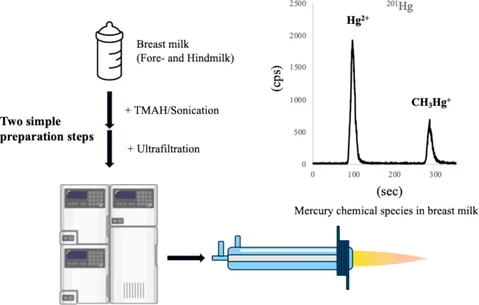
This study developed an HPLC-ICP-MS method to quantify Hg²⁺ and MeHg⁺ in breast milk, evaluating collection methods, total mercury correlation, and elemental associations in samples over a 4-month study.
LabRulez
tag
share
more
Controllable Ion-Repulsion Enables Rapid and Trace-Level Detection of Hydrophobic Sulfonylurea Herbicides with ICPMS/MS without the Organic Mode
Scientific article | Science and research

Controllable Ion-Repulsion Enables Rapid and Trace-Level Detection of Hydrophobic Sulfonylurea Herbicides with ICPMS/MS without the Organic Mode

A novel ion-repulsion strategy allows rapid ICPMS/MS detection of hydrophobic sulfonylureas with minimal organic solvent, achieving high sensitivity and bypassing the need for organic ICPMS mode.
LabRulez
tag
share
more
Unlocking Phytoplankton Metallomes with Comparative Analysis of Metal Quotas, Quantitative Proteomics, and Inferred Metalloproteomes
Scientific article | Science and research

Unlocking Phytoplankton Metallomes with Comparative Analysis of Metal Quotas, Quantitative Proteomics, and Inferred Metalloproteomes

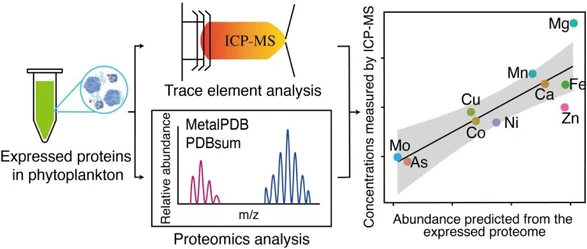
This study integrates metal quotas, quantitative proteomics, and inferred metalloproteomes to reveal trace metal requirements and adaptation strategies in phytoplankton.
LabRulez
tag
share
more
 

Related content

Oligonucleotide Analysis Using the Agilent InfinityLab Pro iQ and Altura Oligo HPH-C18 Column

Applications
| 2026 | Agilent Technologies
Instrumentation
LC/MS, LC/SQ, Consumables, LC columns
Manufacturer
Agilent Technologies
Industries
Pharma & Biopharma

Simultaneous Quantitation and Discovery analysis: Combining targeted and untargeted metabolomics on Orbitrap mass spectrometers

Applications
| 2026 | Thermo Fisher Scientific
Instrumentation
LC/MS, LC/MS/MS, LC/Orbitrap, LC/HRMS
Manufacturer
Thermo Fisher Scientific
Industries
Metabolomics

Analysis of Per- and Polyfluoroalkyl Substances (PFAS) in Wastewater

Applications
| 2026 | Agilent Technologies
Instrumentation
LC/MS, LC/MS/MS, LC/QQQ
Manufacturer
Agilent Technologies
Industries
Environmental

Non-Targeted Screening of Biosolids with the Xevo™ MRT Mass Spectrometer Reveals New Isoforms of PFAS

Applications
| 2026 | Waters
Instrumentation
LC/MS, LC/MS/MS, LC/TOF, LC/HRMS
Manufacturer
Waters
Industries
Environmental

High Resolution Characterization of Lipid Nanoparticles Using the Xevo™ Charge Detection Mass Spectrometry (CDMS) Instrument - Single Particle Mass Analysis of Intact LNP-mRNA Formulations

Applications
| 2026 | Waters
Instrumentation
LC/MS, LC/MS/MS, LC/HRMS, Particle characterization, LC/IT
Manufacturer
Waters
Industries
Lipidomics
 

Related articles

Seasonal and spatial variations of arsenic and its species in particulate matter in an urban environment of Brno, Czech Republic
Scientific article | Environment

Seasonal and spatial variations of arsenic and its species in particulate matter in an urban environment of Brno, Czech Republic

In the article published in the Environ Sci Pollut Res, the scientists analyzed total arsenic concentrations and specific arsenic species in airborne particles using ICP-MS/MS and HPLC-ICP-MS/MS.
LabRulez
tag
share
more
High-throughput mercury speciation analysis of breast milk using HPLC-ICP-MS
Scientific article | Health

High-throughput mercury speciation analysis of breast milk using HPLC-ICP-MS

This study developed an HPLC-ICP-MS method to quantify Hg²⁺ and MeHg⁺ in breast milk, evaluating collection methods, total mercury correlation, and elemental associations in samples over a 4-month study.
LabRulez
tag
share
more
Controllable Ion-Repulsion Enables Rapid and Trace-Level Detection of Hydrophobic Sulfonylurea Herbicides with ICPMS/MS without the Organic Mode
Scientific article | Science and research

Controllable Ion-Repulsion Enables Rapid and Trace-Level Detection of Hydrophobic Sulfonylurea Herbicides with ICPMS/MS without the Organic Mode

A novel ion-repulsion strategy allows rapid ICPMS/MS detection of hydrophobic sulfonylureas with minimal organic solvent, achieving high sensitivity and bypassing the need for organic ICPMS mode.
LabRulez
tag
share
more
Unlocking Phytoplankton Metallomes with Comparative Analysis of Metal Quotas, Quantitative Proteomics, and Inferred Metalloproteomes
Scientific article | Science and research

Unlocking Phytoplankton Metallomes with Comparative Analysis of Metal Quotas, Quantitative Proteomics, and Inferred Metalloproteomes

This study integrates metal quotas, quantitative proteomics, and inferred metalloproteomes to reveal trace metal requirements and adaptation strategies in phytoplankton.
LabRulez
tag
share
more
 

Related content

Oligonucleotide Analysis Using the Agilent InfinityLab Pro iQ and Altura Oligo HPH-C18 Column

Applications
| 2026 | Agilent Technologies
Instrumentation
LC/MS, LC/SQ, Consumables, LC columns
Manufacturer
Agilent Technologies
Industries
Pharma & Biopharma

Simultaneous Quantitation and Discovery analysis: Combining targeted and untargeted metabolomics on Orbitrap mass spectrometers

Applications
| 2026 | Thermo Fisher Scientific
Instrumentation
LC/MS, LC/MS/MS, LC/Orbitrap, LC/HRMS
Manufacturer
Thermo Fisher Scientific
Industries
Metabolomics

Analysis of Per- and Polyfluoroalkyl Substances (PFAS) in Wastewater

Applications
| 2026 | Agilent Technologies
Instrumentation
LC/MS, LC/MS/MS, LC/QQQ
Manufacturer
Agilent Technologies
Industries
Environmental

Non-Targeted Screening of Biosolids with the Xevo™ MRT Mass Spectrometer Reveals New Isoforms of PFAS

Applications
| 2026 | Waters
Instrumentation
LC/MS, LC/MS/MS, LC/TOF, LC/HRMS
Manufacturer
Waters
Industries
Environmental

High Resolution Characterization of Lipid Nanoparticles Using the Xevo™ Charge Detection Mass Spectrometry (CDMS) Instrument - Single Particle Mass Analysis of Intact LNP-mRNA Formulations

Applications
| 2026 | Waters
Instrumentation
LC/MS, LC/MS/MS, LC/HRMS, Particle characterization, LC/IT
Manufacturer
Waters
Industries
Lipidomics
 

Related articles

Seasonal and spatial variations of arsenic and its species in particulate matter in an urban environment of Brno, Czech Republic
Scientific article | Environment

Seasonal and spatial variations of arsenic and its species in particulate matter in an urban environment of Brno, Czech Republic

In the article published in the Environ Sci Pollut Res, the scientists analyzed total arsenic concentrations and specific arsenic species in airborne particles using ICP-MS/MS and HPLC-ICP-MS/MS.
LabRulez
tag
share
more
High-throughput mercury speciation analysis of breast milk using HPLC-ICP-MS
Scientific article | Health

High-throughput mercury speciation analysis of breast milk using HPLC-ICP-MS

This study developed an HPLC-ICP-MS method to quantify Hg²⁺ and MeHg⁺ in breast milk, evaluating collection methods, total mercury correlation, and elemental associations in samples over a 4-month study.
LabRulez
tag
share
more
Controllable Ion-Repulsion Enables Rapid and Trace-Level Detection of Hydrophobic Sulfonylurea Herbicides with ICPMS/MS without the Organic Mode
Scientific article | Science and research

Controllable Ion-Repulsion Enables Rapid and Trace-Level Detection of Hydrophobic Sulfonylurea Herbicides with ICPMS/MS without the Organic Mode

A novel ion-repulsion strategy allows rapid ICPMS/MS detection of hydrophobic sulfonylureas with minimal organic solvent, achieving high sensitivity and bypassing the need for organic ICPMS mode.
LabRulez
tag
share
more
Unlocking Phytoplankton Metallomes with Comparative Analysis of Metal Quotas, Quantitative Proteomics, and Inferred Metalloproteomes
Scientific article | Science and research

Unlocking Phytoplankton Metallomes with Comparative Analysis of Metal Quotas, Quantitative Proteomics, and Inferred Metalloproteomes

This study integrates metal quotas, quantitative proteomics, and inferred metalloproteomes to reveal trace metal requirements and adaptation strategies in phytoplankton.
LabRulez
tag
share
more
 

Related content

Oligonucleotide Analysis Using the Agilent InfinityLab Pro iQ and Altura Oligo HPH-C18 Column

Applications
| 2026 | Agilent Technologies
Instrumentation
LC/MS, LC/SQ, Consumables, LC columns
Manufacturer
Agilent Technologies
Industries
Pharma & Biopharma

Simultaneous Quantitation and Discovery analysis: Combining targeted and untargeted metabolomics on Orbitrap mass spectrometers

Applications
| 2026 | Thermo Fisher Scientific
Instrumentation
LC/MS, LC/MS/MS, LC/Orbitrap, LC/HRMS
Manufacturer
Thermo Fisher Scientific
Industries
Metabolomics

Analysis of Per- and Polyfluoroalkyl Substances (PFAS) in Wastewater

Applications
| 2026 | Agilent Technologies
Instrumentation
LC/MS, LC/MS/MS, LC/QQQ
Manufacturer
Agilent Technologies
Industries
Environmental

Non-Targeted Screening of Biosolids with the Xevo™ MRT Mass Spectrometer Reveals New Isoforms of PFAS

Applications
| 2026 | Waters
Instrumentation
LC/MS, LC/MS/MS, LC/TOF, LC/HRMS
Manufacturer
Waters
Industries
Environmental

High Resolution Characterization of Lipid Nanoparticles Using the Xevo™ Charge Detection Mass Spectrometry (CDMS) Instrument - Single Particle Mass Analysis of Intact LNP-mRNA Formulations

Applications
| 2026 | Waters
Instrumentation
LC/MS, LC/MS/MS, LC/HRMS, Particle characterization, LC/IT
Manufacturer
Waters
Industries
Lipidomics
 

Related articles

Seasonal and spatial variations of arsenic and its species in particulate matter in an urban environment of Brno, Czech Republic
Scientific article | Environment

Seasonal and spatial variations of arsenic and its species in particulate matter in an urban environment of Brno, Czech Republic

In the article published in the Environ Sci Pollut Res, the scientists analyzed total arsenic concentrations and specific arsenic species in airborne particles using ICP-MS/MS and HPLC-ICP-MS/MS.
LabRulez
tag
share
more
High-throughput mercury speciation analysis of breast milk using HPLC-ICP-MS
Scientific article | Health

High-throughput mercury speciation analysis of breast milk using HPLC-ICP-MS

This study developed an HPLC-ICP-MS method to quantify Hg²⁺ and MeHg⁺ in breast milk, evaluating collection methods, total mercury correlation, and elemental associations in samples over a 4-month study.
LabRulez
tag
share
more
Controllable Ion-Repulsion Enables Rapid and Trace-Level Detection of Hydrophobic Sulfonylurea Herbicides with ICPMS/MS without the Organic Mode
Scientific article | Science and research

Controllable Ion-Repulsion Enables Rapid and Trace-Level Detection of Hydrophobic Sulfonylurea Herbicides with ICPMS/MS without the Organic Mode

A novel ion-repulsion strategy allows rapid ICPMS/MS detection of hydrophobic sulfonylureas with minimal organic solvent, achieving high sensitivity and bypassing the need for organic ICPMS mode.
LabRulez
tag
share
more
Unlocking Phytoplankton Metallomes with Comparative Analysis of Metal Quotas, Quantitative Proteomics, and Inferred Metalloproteomes
Scientific article | Science and research

Unlocking Phytoplankton Metallomes with Comparative Analysis of Metal Quotas, Quantitative Proteomics, and Inferred Metalloproteomes

This study integrates metal quotas, quantitative proteomics, and inferred metalloproteomes to reveal trace metal requirements and adaptation strategies in phytoplankton.
LabRulez
tag
share
more
Other projects
GCMS
ICPMS
Follow us
FacebookX (Twitter)LinkedInYouTube
More information
WebinarsAbout usContact usTerms of use
LabRulez s.r.o. All rights reserved. Content available under a CC BY-SA 4.0 Attribution-ShareAlike