LCMS
More information
WebinarsAbout usContact usTerms of use
LabRulez s.r.o. All rights reserved. Content available under a CC BY-SA 4.0 Attribution-ShareAlike
Author
Thermo Fisher Scientific
A unique company dedicated to serving science helping our customers drive productivity and accelerate results. Through our premier brands – Thermo Scientific, Applied Biosystems, Invitrogen, Fisher Scientific and Unity Lab Services.
Tags
Article
Science and research
LinkedIn Logo

Freedom to Fragment: Introduction

Tu, 16.9.2025
| Original article from: Thermo Fisher Scientific / Amanda Lee
Discover why fragmentation is vital in mass spectrometry for peptide sequencing, protein characterization, and advanced proteomics applications.
<p><strong>Thermo Fisher Scientific</strong>: Freedom to Fragment: Introduction</p>

Thermo Fisher Scientific: Freedom to Fragment: Introduction

1. What is fragmentation in the context of mass spectrometry? 

Fragmentation in this sense is the process of breaking a molecule into smaller pieces inside a mass spectrometer. By applying energy to break bonds, we create fragments that provide critical clues about the molecule’s structure, helping scientists piece together the complete picture of an unknown substance.

These fragments form a spectrum, a unique fingerprint of the molecule, which helps identify its components, modifications, and overall structure.

2. Why does fragmentation matter?

Without fragmentation, you would only know the intact mass of a molecule. This can provide some information, but for identifying something as complex as a peptide, it would be challenging to know the exact amino acid sequence. In a standard tryptic peptide search, using a HeLa library, there are up to 20 peptides overlapping within each 10 ppm error bin. (Figure 1) Fragmentation becomes essential for getting the full story since the peptides within a reasonable mass error may elute at the same time, or have less predictable elution, so the matching by MS1 only yields too many results.

This does not even account for the addition of modifications into the search space. Just to give context, there are a huge number of putative peptides with modifications1 (Figure 2), many of which would benefit from the use of alternate fragmentation techniques to help identify and characterize. We will discuss many of these in more detail in other sections. Without fragmentation, there would be no way to distinguish many peptides from one another to make an identification with confidence.

Think of a peptide like a radio. The intact mass is the cover – it tells you it’s a radio, but it doesn’t show you how it works or what’s inside. Without taking the radio apart, you could put the same cover on a cake and think you might have two identical radios! To truly understand it and build a replica, you have to take it apart, piece by piece. That’s exactly what fragmentation does in mass spectrometry.
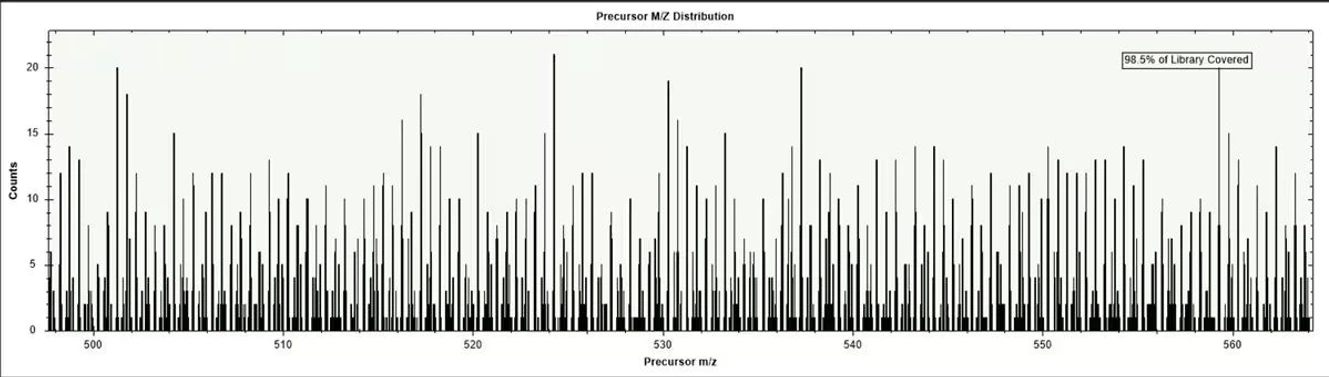
Thermo Fisher Scientific: Freedom to Fragment: Introduction: Figure 1: HeLa library of tryptic digested peptides binned by 10 ppm error, highlighted here is the 500-550 m/z range, showing individual bins with up to 20 potential peptide sequence matches.Thermo Fisher Scientific: Freedom to Fragment: Introduction: Figure 1: HeLa library of tryptic digested peptides binned by 10 ppm error, highlighted here is the 500-550 m/z range, showing individual bins with up to 20 potential peptide sequence matches.
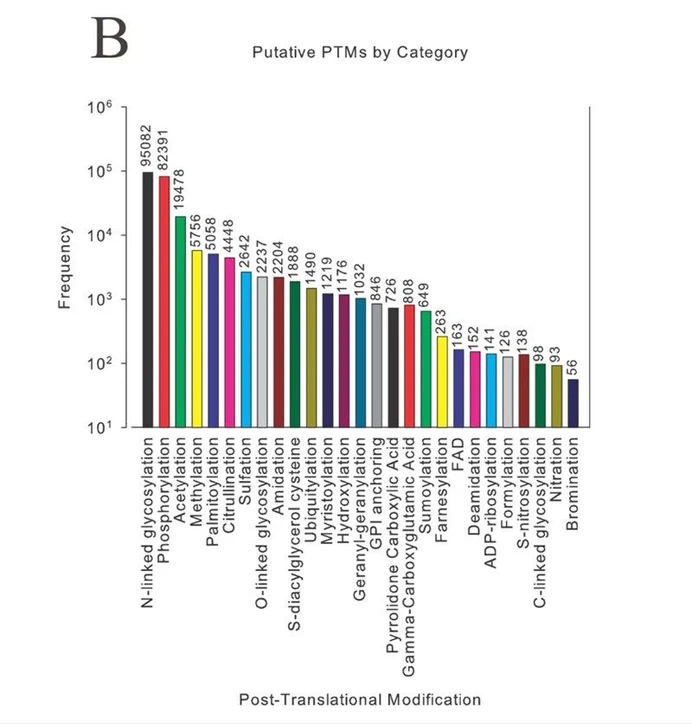
Thermo Fisher Scientific: Freedom to Fragment: Introduction: Figure 2: Putative post-translational modifications (PTMs) from the Swiss-Prot database listed in descending order.1Thermo Fisher Scientific: Freedom to Fragment: Introduction: Figure 2: Putative post-translational modifications (PTMs) from the Swiss-Prot database listed in descending order.1

3. What applications rely on alternative or multiple fragmentation types?

Fragmentation is a well-established aspect of mass spectrometry, but some systems provide many options for fragmentation, while others may only have one or even no options for fragmentation. The need within this space all depends on the application being studied.

Most proteomics experiments get rich, meaningful fragments from quick, efficient, and common collision-based methods. On the other hand, proteomics samples rich in glycosylation will break too easily, destroying the ability to map back the modification, and so more gentle techniques, like electron-based ones, need to be employed.

Generally speaking, when scientists need a better characterization of their analyte, they rely on multiple or alternate fragmentation techniques to do so. Glycomics, glycoproteomics, lipidomics, top-down proteomics, and metabolomics commonly rely on alternate or complementary fragmentation for complete characterization of the molecules.

One of the most common fragmentation applications is on proteins and peptides. They fragment predictably along their backbone to create a, b, c, or x, y, z fragment ions. [Figure 3]. A, b, and c type fragments are those that include from the n-terminus of the peptide to the amino acid residue number, reading from left to right. X, y, and z type fragments are those that include the c-terminus of the peptide to the amino acid residue number, reading from right to left.

Thermo Fisher Scientific: Freedom to Fragment: Introduction: Figure 3: Location of peptide/protein backbone cleavage and its nomenclature. Representative here is a 4-amino acid peptide with side chains labeled R1-4.Thermo Fisher Scientific: Freedom to Fragment: Introduction: Figure 3: Location of peptide/protein backbone cleavage and its nomenclature. Representative here is a 4-amino acid peptide with side chains labeled R1-4.

In this series, we will cover the basics, principles, applications, and considerations for the alternate fragmentation and ion-manipulation techniques available on Thermo Scientific mass spectrometers. Up next, collision-based fragmentation.

Learn more about Freedom to Fragment

Visit us on LinkedIn: #Fragmentation #ETD

Amanda Lee

Amanda Lee PhD, Product Marketing Manager

Thermo Fisher Scientific
LinkedIn Logo
 

Related content

Overcoming Strong Solvent Effects in the Analysis of Vepdegestrant

Applications
| 2026 | Agilent Technologies
Instrumentation
HPLC
Manufacturer
Agilent Technologies
Industries
Pharma & Biopharma

Identification of Double Bond Positions and Relative Acyl Chain Positions in Egg Yolk Phosphatidylcholines Using OAD-TOF System

Applications
| 2026 | Shimadzu
Instrumentation
LC/MS, LC/MS/MS, LC/TOF, LC/HRMS
Manufacturer
Shimadzu
Industries
Food & Agriculture

High Molecular-Weight Polysaccharide Characterization by SEC-MALS Using GTxResolve™ 1000 and 2000 Å SEC Columns

Applications
| 2026 | Waters
Instrumentation
GPC/SEC, Consumables, LC columns
Manufacturer
Waters
Industries
Pharma & Biopharma, Food & Agriculture

Development and Optimization for a Comprehensive LC/MS/MS Method for the Detection of 74 PFAS Compounds

Applications
| 2026 | Agilent Technologies
Instrumentation
LC/MS, LC/MS/MS, LC/QQQ
Manufacturer
Agilent Technologies
Industries
Food & Agriculture

PFAS in Biota: Risk Context & Robust Analytical Solutions

Others
| 2026 | ALS Europe
Instrumentation
Laboratory analysis, LC/MS, LC/MS/MS
Manufacturer
Industries
Environmental
 

Related articles

Research from IOCB Prague reveals a previously unknown mechanism of genetic transcription
Article | Science and research

Research from IOCB Prague reveals a previously unknown mechanism of genetic transcription

Scientists at IOCB Prague reveal a previously unknown mechanism that initiates gene transcription. Using cryo-EM, they uncover how alarmone molecules enable RNA synthesis under stress.
Institute of Organic Chemistry and Biochemistry of the Czech Academy of Sciences
tag
share
more
Affinity, Gel Filtration, Size Exclusion Chromatography: Repurposing Kinase Inhibitors for Malaria
Interview | Video

Affinity, Gel Filtration, Size Exclusion Chromatography: Repurposing Kinase Inhibitors for Malaria

This podcast explores how chromatography (FPLC/SEC) and mass spectrometry support malaria drug discovery, from protein purification and QC to interaction studies and complex sample preparation.
Organomation
tag
share
more
Webinars LabRulezLCMS Week 07/2026
Article | Webinars

Webinars LabRulezLCMS Week 07/2026

11 webinars: accurate mass, antibody stability, autosampler QC, bioprocess PAT, fermentation analytics, GLP-1, LC method transfer, Orbitrap, PFAS food testing, preparative HPLC
LabRulez
tag
share
more
Dissecting Heterogeneous Populations of Protein-Complex Samples Using Direct Mass Technology
Scientific article | Science and research

Dissecting Heterogeneous Populations of Protein-Complex Samples Using Direct Mass Technology

This study demonstrates Orbitrap-based CDMS/Direct Mass Technology as a quantitative tool for resolving and analyzing heterogeneous protein complexes below 100 kDa.
LabRulez
tag
share
more
 

Related content

Overcoming Strong Solvent Effects in the Analysis of Vepdegestrant

Applications
| 2026 | Agilent Technologies
Instrumentation
HPLC
Manufacturer
Agilent Technologies
Industries
Pharma & Biopharma

Identification of Double Bond Positions and Relative Acyl Chain Positions in Egg Yolk Phosphatidylcholines Using OAD-TOF System

Applications
| 2026 | Shimadzu
Instrumentation
LC/MS, LC/MS/MS, LC/TOF, LC/HRMS
Manufacturer
Shimadzu
Industries
Food & Agriculture

High Molecular-Weight Polysaccharide Characterization by SEC-MALS Using GTxResolve™ 1000 and 2000 Å SEC Columns

Applications
| 2026 | Waters
Instrumentation
GPC/SEC, Consumables, LC columns
Manufacturer
Waters
Industries
Pharma & Biopharma, Food & Agriculture

Development and Optimization for a Comprehensive LC/MS/MS Method for the Detection of 74 PFAS Compounds

Applications
| 2026 | Agilent Technologies
Instrumentation
LC/MS, LC/MS/MS, LC/QQQ
Manufacturer
Agilent Technologies
Industries
Food & Agriculture

PFAS in Biota: Risk Context & Robust Analytical Solutions

Others
| 2026 | ALS Europe
Instrumentation
Laboratory analysis, LC/MS, LC/MS/MS
Manufacturer
Industries
Environmental
 

Related articles

Research from IOCB Prague reveals a previously unknown mechanism of genetic transcription
Article | Science and research

Research from IOCB Prague reveals a previously unknown mechanism of genetic transcription

Scientists at IOCB Prague reveal a previously unknown mechanism that initiates gene transcription. Using cryo-EM, they uncover how alarmone molecules enable RNA synthesis under stress.
Institute of Organic Chemistry and Biochemistry of the Czech Academy of Sciences
tag
share
more
Affinity, Gel Filtration, Size Exclusion Chromatography: Repurposing Kinase Inhibitors for Malaria
Interview | Video

Affinity, Gel Filtration, Size Exclusion Chromatography: Repurposing Kinase Inhibitors for Malaria

This podcast explores how chromatography (FPLC/SEC) and mass spectrometry support malaria drug discovery, from protein purification and QC to interaction studies and complex sample preparation.
Organomation
tag
share
more
Webinars LabRulezLCMS Week 07/2026
Article | Webinars

Webinars LabRulezLCMS Week 07/2026

11 webinars: accurate mass, antibody stability, autosampler QC, bioprocess PAT, fermentation analytics, GLP-1, LC method transfer, Orbitrap, PFAS food testing, preparative HPLC
LabRulez
tag
share
more
Dissecting Heterogeneous Populations of Protein-Complex Samples Using Direct Mass Technology
Scientific article | Science and research

Dissecting Heterogeneous Populations of Protein-Complex Samples Using Direct Mass Technology

This study demonstrates Orbitrap-based CDMS/Direct Mass Technology as a quantitative tool for resolving and analyzing heterogeneous protein complexes below 100 kDa.
LabRulez
tag
share
more
 

Related content

Overcoming Strong Solvent Effects in the Analysis of Vepdegestrant

Applications
| 2026 | Agilent Technologies
Instrumentation
HPLC
Manufacturer
Agilent Technologies
Industries
Pharma & Biopharma

Identification of Double Bond Positions and Relative Acyl Chain Positions in Egg Yolk Phosphatidylcholines Using OAD-TOF System

Applications
| 2026 | Shimadzu
Instrumentation
LC/MS, LC/MS/MS, LC/TOF, LC/HRMS
Manufacturer
Shimadzu
Industries
Food & Agriculture

High Molecular-Weight Polysaccharide Characterization by SEC-MALS Using GTxResolve™ 1000 and 2000 Å SEC Columns

Applications
| 2026 | Waters
Instrumentation
GPC/SEC, Consumables, LC columns
Manufacturer
Waters
Industries
Pharma & Biopharma, Food & Agriculture

Development and Optimization for a Comprehensive LC/MS/MS Method for the Detection of 74 PFAS Compounds

Applications
| 2026 | Agilent Technologies
Instrumentation
LC/MS, LC/MS/MS, LC/QQQ
Manufacturer
Agilent Technologies
Industries
Food & Agriculture

PFAS in Biota: Risk Context & Robust Analytical Solutions

Others
| 2026 | ALS Europe
Instrumentation
Laboratory analysis, LC/MS, LC/MS/MS
Manufacturer
Industries
Environmental
 

Related articles

Research from IOCB Prague reveals a previously unknown mechanism of genetic transcription
Article | Science and research

Research from IOCB Prague reveals a previously unknown mechanism of genetic transcription

Scientists at IOCB Prague reveal a previously unknown mechanism that initiates gene transcription. Using cryo-EM, they uncover how alarmone molecules enable RNA synthesis under stress.
Institute of Organic Chemistry and Biochemistry of the Czech Academy of Sciences
tag
share
more
Affinity, Gel Filtration, Size Exclusion Chromatography: Repurposing Kinase Inhibitors for Malaria
Interview | Video

Affinity, Gel Filtration, Size Exclusion Chromatography: Repurposing Kinase Inhibitors for Malaria

This podcast explores how chromatography (FPLC/SEC) and mass spectrometry support malaria drug discovery, from protein purification and QC to interaction studies and complex sample preparation.
Organomation
tag
share
more
Webinars LabRulezLCMS Week 07/2026
Article | Webinars

Webinars LabRulezLCMS Week 07/2026

11 webinars: accurate mass, antibody stability, autosampler QC, bioprocess PAT, fermentation analytics, GLP-1, LC method transfer, Orbitrap, PFAS food testing, preparative HPLC
LabRulez
tag
share
more
Dissecting Heterogeneous Populations of Protein-Complex Samples Using Direct Mass Technology
Scientific article | Science and research

Dissecting Heterogeneous Populations of Protein-Complex Samples Using Direct Mass Technology

This study demonstrates Orbitrap-based CDMS/Direct Mass Technology as a quantitative tool for resolving and analyzing heterogeneous protein complexes below 100 kDa.
LabRulez
tag
share
more
 

Related content

Overcoming Strong Solvent Effects in the Analysis of Vepdegestrant

Applications
| 2026 | Agilent Technologies
Instrumentation
HPLC
Manufacturer
Agilent Technologies
Industries
Pharma & Biopharma

Identification of Double Bond Positions and Relative Acyl Chain Positions in Egg Yolk Phosphatidylcholines Using OAD-TOF System

Applications
| 2026 | Shimadzu
Instrumentation
LC/MS, LC/MS/MS, LC/TOF, LC/HRMS
Manufacturer
Shimadzu
Industries
Food & Agriculture

High Molecular-Weight Polysaccharide Characterization by SEC-MALS Using GTxResolve™ 1000 and 2000 Å SEC Columns

Applications
| 2026 | Waters
Instrumentation
GPC/SEC, Consumables, LC columns
Manufacturer
Waters
Industries
Pharma & Biopharma, Food & Agriculture

Development and Optimization for a Comprehensive LC/MS/MS Method for the Detection of 74 PFAS Compounds

Applications
| 2026 | Agilent Technologies
Instrumentation
LC/MS, LC/MS/MS, LC/QQQ
Manufacturer
Agilent Technologies
Industries
Food & Agriculture

PFAS in Biota: Risk Context & Robust Analytical Solutions

Others
| 2026 | ALS Europe
Instrumentation
Laboratory analysis, LC/MS, LC/MS/MS
Manufacturer
Industries
Environmental
 

Related articles

Research from IOCB Prague reveals a previously unknown mechanism of genetic transcription
Article | Science and research

Research from IOCB Prague reveals a previously unknown mechanism of genetic transcription

Scientists at IOCB Prague reveal a previously unknown mechanism that initiates gene transcription. Using cryo-EM, they uncover how alarmone molecules enable RNA synthesis under stress.
Institute of Organic Chemistry and Biochemistry of the Czech Academy of Sciences
tag
share
more
Affinity, Gel Filtration, Size Exclusion Chromatography: Repurposing Kinase Inhibitors for Malaria
Interview | Video

Affinity, Gel Filtration, Size Exclusion Chromatography: Repurposing Kinase Inhibitors for Malaria

This podcast explores how chromatography (FPLC/SEC) and mass spectrometry support malaria drug discovery, from protein purification and QC to interaction studies and complex sample preparation.
Organomation
tag
share
more
Webinars LabRulezLCMS Week 07/2026
Article | Webinars

Webinars LabRulezLCMS Week 07/2026

11 webinars: accurate mass, antibody stability, autosampler QC, bioprocess PAT, fermentation analytics, GLP-1, LC method transfer, Orbitrap, PFAS food testing, preparative HPLC
LabRulez
tag
share
more
Dissecting Heterogeneous Populations of Protein-Complex Samples Using Direct Mass Technology
Scientific article | Science and research

Dissecting Heterogeneous Populations of Protein-Complex Samples Using Direct Mass Technology

This study demonstrates Orbitrap-based CDMS/Direct Mass Technology as a quantitative tool for resolving and analyzing heterogeneous protein complexes below 100 kDa.
LabRulez
tag
share
more
Other projects
GCMS
ICPMS
Follow us
More information
WebinarsAbout usContact usTerms of use
LabRulez s.r.o. All rights reserved. Content available under a CC BY-SA 4.0 Attribution-ShareAlike