Scientists from the University of Pardubice featured again in Nature Communications

- Photo: UPCE: Scientists from the University of Pardubice have another publication in the prestigious journal Nature Communications
- Video: LIPID MAPS: Michal Holčapek- May 17th 2022
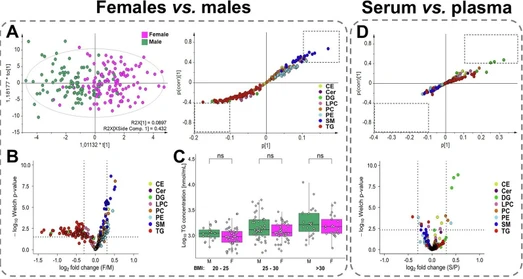
Scientists from the University of Pardubice (UPCE) are part of a research consortium that has proposed best practices for the statistical processing and visualization of lipid analysis data. The publication, co-authored by analytical chemists from the team of Prof. Michal Holčapek at the Faculty of Chemical Technology, UPCE, highlights the most effective methods and tools in the programming languages R and Python for statistical data analysis and visualization. This article was published this week in the prestigious journal Nature Communications.
 UPCE: Scientists from the University of Pardubice have another publication in the prestigious journal Nature Communications
A multidisciplinary team of experts in lipidomics, metabolomics, programming, and statistics prepared a comprehensive review summarizing methods and tools in R and Python. Lipidomics and metabolomics based on mass spectrometry are among the fastest-growing “omics” technologies today. Their application provides critical biological insights and generates extensive datasets. However, this requires appropriate statistical analysis and visualization. A shortage of specialists able to efficiently process such data remains a major barrier to fully leveraging these methods.
“Originally, I just wanted my PhD student, Jakub Idkowiak, to summarize the R scripts he used for data visualization so that other members of my group could benefit. Step by step, thanks to Jakub’s initiative, the scope expanded considerably, ultimately resulting in this comprehensive article co-authored by 20 researchers from 19 institutions across five countries,” said Prof. Michal Holčapek from the Faculty of Chemical Technology, University of Pardubice.
Drawing on numerous discussions at conferences and experience from peer review, the authors identified the need for a coherent and accessible overview of available tools. Their proposal provides scientists at all levels of expertise with verified, robust, and user-friendly solutions that had previously been scattered across different platforms.
An important outcome of the project is a GitBook library containing an extensive database of codes for data visualization and statistical processing, along with usage instructions. The resource, titled Omics Data Visualization in R and Python., responds to strong demand from the scientific community. At international lipidomics and metabolomics conferences, workshops and lectures on using R for statistical analysis and visualization are among the most attended sessions, generating strong interest and active interaction on social media.
For Prof. Holčapek’s research team, which has studied lipid analysis for more than 20 years, this is already the fifth publication in Nature Communications within the past five years. The group of analytical chemists from UPCE first gained international attention with a commentary addressing issues in lipidomics data reporting. Their second publication described the discovery of a method for detecting pancreatic cancer from a simple blood sample using lipid analysis. This breakthrough, published in 2022, is ranked among the top one percent most cited papers in biology and biochemistry according to the Web of Science database. The university has obtained a European patent for the method, and the spin-off company Lipidica is currently conducting clinical trials.