LCMS
More information
WebinarsAbout usContact usTerms of use
LabRulez s.r.o. All rights reserved. Content available under a CC BY-SA 4.0 Attribution-ShareAlike
Author
CATRIN
CATRIN
The Czech Advanced Technology and Research Institute (CATRIN) at Palacký University is a cutting-edge scientific hub dedicated to advancing research in the fields of nanotechnology, biotechnology, and biomedicine. At its core, CATRIN boasts outstanding scientific teams, featuring international researchers. We emphasize interdisciplinarity, foster global collaborations, and work to translate our research findings into practical applications.
Tags
Article
Science and research
Scientific article
LinkedIn Logo

Revolutionary sensor can measure pH inside living cells with unprecedented accuracy
Th, 30.10.2025
| Original article from: CATRIN / Martina Šaradínová
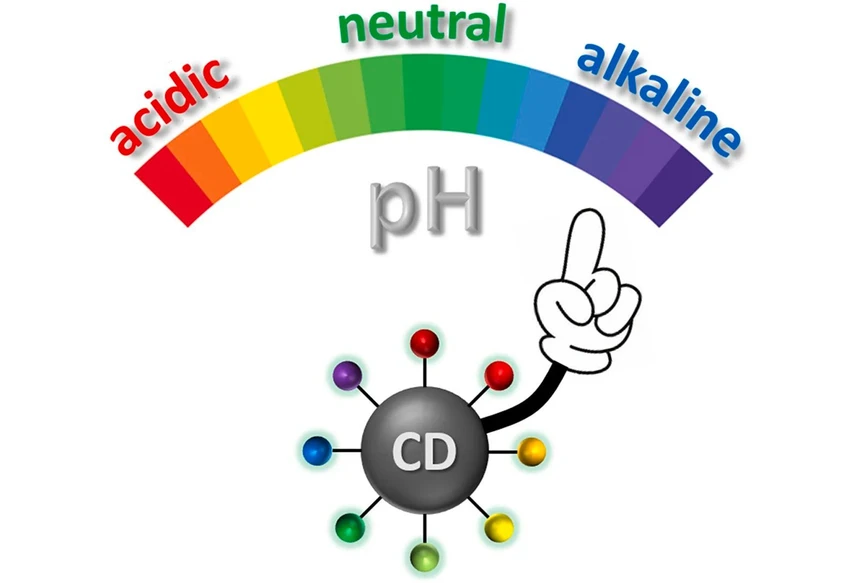
Czech researchers developed carbon-dot nanosensors that precisely measure pH inside living cells. The technology offers stable, calibration-free fluorescence detection for biomedical use.
<p>CATRIN: Revolutionary sensor can measure pH inside living cells with unprecedented accuracy</p>

CATRIN: Revolutionary sensor can measure pH inside living cells with unprecedented accuracy

A new generation of nanosensors capable of detecting pH inside living cells with previously unseen sensitivity and stability has been developed by a team of scientists from CATRIN, Palacký University Olomouc, and VSB – Technical University of Ostrava, in cooperation with colleagues from Brno University of Technology. The Czech researchers presented the carbon-dot-based sensors, which offer great potential for medical diagnostics, in the journal Biosensors and Bioelectronics.

The pH value is one of the most frequently measured chemical parameters, but the development of nanometric sensors capable of accurately mapping the distribution and dynamics of pH with high spatial and temporal resolution remains a significant challenge. Such sensors are important for our understanding of numerous physiological and pathological processes. The pH value, among other things, has a fundamental effect on enzyme function and influences metabolic and signalling pathways as well as the transport of substances across membranes.

We were looking for a way to monitor processes inside cells with much higher precision than current probes allow. We have developed a sensor that is small, brightly luminescent, highly stable, and capable of tracking pH changes over an exceptionally wide range. The sensor not only glows under the microscope but also detects pH changes based on fluorescence lifetime, which is a more accurate and reliable parameter than ordinary light intensity,” explained Sergii Kalytchuk, the first author of the study, from CATRIN and the Materials-Environmental Laboratory (MEL) at VSB–TUO.

CATRIN: Revolutionary sensor can measure pH inside living cells with unprecedented accuracyCATRIN: Revolutionary sensor can measure pH inside living cells with unprecedented accuracy

In contrast to other fluorescent pH sensors, which suffer from gradual photobleaching, chemical degradation, and often require calibration, the new nanosensors maintain excellent performance even under demanding conditions. Their fluorescence lifetime predictably increases with rising pH, which enables direct measurement of cellular acidity – a key parameter closely related to pathological processes such as cancer and neurodegeneration.

In an experiment with human skin cells, and using advanced microscopy based on fluorescence lifetime imaging (FLIM), the sensors enabled precise mapping of pH inside lysosomes, which are, simply put, the cell’s recycling and cleaning units. Moreover, it was possible to detect pH changes after the application of chemical inhibitors, which opens possibilities for drug testing and for monitoring cellular stress in real time,” said Tomáš Malina, another author of the study.

The development of the sensor took place at the interface of synthetic chemistry and physics, but its application in biomedicine gives the entire work practical significance.

The study shows how basic materials chemistry can be linked with real biomedical challenges. Thanks to their exceptional photostability, biocompatibility, and extremely wide pH range, these sensors have great potential to become an effective tool for medical diagnostics, including clinical applications,” concluded Radek Zbořil, the corresponding author of the paper.

The original article

pH sensing and imaging in living cells based on fluorescence lifetime of carbon dot nanosensors

Sergii Kalytchuk, Tomaš Malina, Filip Mravec, Kateřina Poláková, Lukáš Zdražil, Štěpan Kment, Andrey L. Rogach, Michal Otyepka, Radek Zbořil

Biosensors and Bioelectronics, Volume 291, 1 January 2026, 118022

https://doi.org/10.1016/j.bios.2025.118022

licensed under CC-BY 4.0

Selected sections from the article follow. Formats and hyperlinks were adapted from the original.

Abstract

The pH value is one of the most frequently measured chemical parameters, yet developing nanometric sensors capable of accurately mapping pH distribution and dynamics with high spatial and temporal resolution remains a significant challenge. Such sensors are vital for advancing our understanding of numerous physiological and pathological processes. Nanoparticle-based sensors, commonly referred to as nanosensors, represent a promising class of optical sensors, with fluorescence lifetime-based probes offering superior sensitivity and quantitative reliability. However, existing pH nanosensors relying on fluorescence lifetime are challenging to synthesize and often suffer from poor biocompatibility, narrow pH response ranges, low stability, and calibration-dependent performance. Here, we overcome these limitations by introducing a water-dispersible pH nanosensor based on fluorescence lifetime of colloidal carbon dots (CDs) derived via a one-step reaction from a single precursor Rhodamine B. These CDs are biocompatible, non-toxic, and stable in highly acidic/basic conditions, which makes them well-suited for intracellular applications. The intrinsic fluorescence lifetime of these CDs exhibits a pseudo-linear, self-referencing response across exceptionally broad pH range (1–11), driven by pH-induced transformations of their electronic structure occurring during protonation and deprotonation of CD surface. By applying micrometer-resolution, quantitative pH imaging via fluorescence lifetime imaging microscopy, we demonstrate how CDs are preferentially sequestered in lysosomes of human skin fibroblasts, enabling precise quantification of inhibitor-induced pH changes within these organelles. Our findings highlight a significant potential of the CD nanosensors for precise monitoring of lysosomal pH in living cells, offering broad utility in biomedical research and potential studies of pH-associated cellular dysfunction.

CATRIN
LinkedIn Logo
 

Related content

Overcoming Strong Solvent Effects in the Analysis of Vepdegestrant

Applications
| 2026 | Agilent Technologies
Instrumentation
HPLC
Manufacturer
Agilent Technologies
Industries
Pharma & Biopharma

Identification of Double Bond Positions and Relative Acyl Chain Positions in Egg Yolk Phosphatidylcholines Using OAD-TOF System

Applications
| 2026 | Shimadzu
Instrumentation
LC/MS, LC/MS/MS, LC/TOF, LC/HRMS
Manufacturer
Shimadzu
Industries
Food & Agriculture

High Molecular-Weight Polysaccharide Characterization by SEC-MALS Using GTxResolve™ 1000 and 2000 Å SEC Columns

Applications
| 2026 | Waters
Instrumentation
GPC/SEC, Consumables, LC columns
Manufacturer
Waters
Industries
Pharma & Biopharma, Food & Agriculture

Development and Optimization for a Comprehensive LC/MS/MS Method for the Detection of 74 PFAS Compounds

Applications
| 2026 | Agilent Technologies
Instrumentation
LC/MS, LC/MS/MS, LC/QQQ
Manufacturer
Agilent Technologies
Industries
Food & Agriculture

PFAS in Biota: Risk Context & Robust Analytical Solutions

Others
| 2026 | ALS Europe
Instrumentation
Laboratory analysis, LC/MS, LC/MS/MS
Manufacturer
Industries
Environmental
 

Related articles

ISC 2026 Short Course 3 - Interpretation of Mass Spectra: Basic Introduction for Chromatographers
Article | Events

ISC 2026 Short Course 3 - Interpretation of Mass Spectra: Basic Introduction for Chromatographers

Short Course 3 at ISC 2026 offers a practical introduction to LC–MS spectral interpretation for chromatographers, covering ESI, APCI, APPI, adducts, isotope patterns, and MS/MS fundamentals.
International Symposium on Chromatography - (ISC)
tag
share
more
New Study Reveals How Agricultural Plastics Impact Soil Health In Real Conditions
Article | Environment

New Study Reveals How Agricultural Plastics Impact Soil Health In Real Conditions

Agricultural mulching films degrade into microplastics that affect soil properties, microbial life, and nitrogen cycling. A new European field study reveals real risks to soil health.
RECETOX - Centrum pro výzkum toxických látek v prostředí
tag
share
more
Oligos Made Easy - Part 2: AEX
Article | Science and research

Oligos Made Easy - Part 2: AEX

Anion exchange chromatography (AEX) is a powerful tool for oligonucleotide analysis. Learn how charge-based separation reveals purity, length variants, and structural insights in modern LC workflows.
KNAUER
tag
share
more
News from LabRulezLCMS Library - Week 07, 2026
Article | Application

News from LabRulezLCMS Library - Week 07, 2026

This week we bring you application notes by Agilent Technologies, KNAUER, Shimadzu and Waters Corporation and poster by Thermo Fisher Scientific / MSACL!
LabRulez
tag
share
more
 

Related content

Overcoming Strong Solvent Effects in the Analysis of Vepdegestrant

Applications
| 2026 | Agilent Technologies
Instrumentation
HPLC
Manufacturer
Agilent Technologies
Industries
Pharma & Biopharma

Identification of Double Bond Positions and Relative Acyl Chain Positions in Egg Yolk Phosphatidylcholines Using OAD-TOF System

Applications
| 2026 | Shimadzu
Instrumentation
LC/MS, LC/MS/MS, LC/TOF, LC/HRMS
Manufacturer
Shimadzu
Industries
Food & Agriculture

High Molecular-Weight Polysaccharide Characterization by SEC-MALS Using GTxResolve™ 1000 and 2000 Å SEC Columns

Applications
| 2026 | Waters
Instrumentation
GPC/SEC, Consumables, LC columns
Manufacturer
Waters
Industries
Pharma & Biopharma, Food & Agriculture

Development and Optimization for a Comprehensive LC/MS/MS Method for the Detection of 74 PFAS Compounds

Applications
| 2026 | Agilent Technologies
Instrumentation
LC/MS, LC/MS/MS, LC/QQQ
Manufacturer
Agilent Technologies
Industries
Food & Agriculture

PFAS in Biota: Risk Context & Robust Analytical Solutions

Others
| 2026 | ALS Europe
Instrumentation
Laboratory analysis, LC/MS, LC/MS/MS
Manufacturer
Industries
Environmental
 

Related articles

ISC 2026 Short Course 3 - Interpretation of Mass Spectra: Basic Introduction for Chromatographers
Article | Events

ISC 2026 Short Course 3 - Interpretation of Mass Spectra: Basic Introduction for Chromatographers

Short Course 3 at ISC 2026 offers a practical introduction to LC–MS spectral interpretation for chromatographers, covering ESI, APCI, APPI, adducts, isotope patterns, and MS/MS fundamentals.
International Symposium on Chromatography - (ISC)
tag
share
more
New Study Reveals How Agricultural Plastics Impact Soil Health In Real Conditions
Article | Environment

New Study Reveals How Agricultural Plastics Impact Soil Health In Real Conditions

Agricultural mulching films degrade into microplastics that affect soil properties, microbial life, and nitrogen cycling. A new European field study reveals real risks to soil health.
RECETOX - Centrum pro výzkum toxických látek v prostředí
tag
share
more
Oligos Made Easy - Part 2: AEX
Article | Science and research

Oligos Made Easy - Part 2: AEX

Anion exchange chromatography (AEX) is a powerful tool for oligonucleotide analysis. Learn how charge-based separation reveals purity, length variants, and structural insights in modern LC workflows.
KNAUER
tag
share
more
News from LabRulezLCMS Library - Week 07, 2026
Article | Application

News from LabRulezLCMS Library - Week 07, 2026

This week we bring you application notes by Agilent Technologies, KNAUER, Shimadzu and Waters Corporation and poster by Thermo Fisher Scientific / MSACL!
LabRulez
tag
share
more
 

Related content

Overcoming Strong Solvent Effects in the Analysis of Vepdegestrant

Applications
| 2026 | Agilent Technologies
Instrumentation
HPLC
Manufacturer
Agilent Technologies
Industries
Pharma & Biopharma

Identification of Double Bond Positions and Relative Acyl Chain Positions in Egg Yolk Phosphatidylcholines Using OAD-TOF System

Applications
| 2026 | Shimadzu
Instrumentation
LC/MS, LC/MS/MS, LC/TOF, LC/HRMS
Manufacturer
Shimadzu
Industries
Food & Agriculture

High Molecular-Weight Polysaccharide Characterization by SEC-MALS Using GTxResolve™ 1000 and 2000 Å SEC Columns

Applications
| 2026 | Waters
Instrumentation
GPC/SEC, Consumables, LC columns
Manufacturer
Waters
Industries
Pharma & Biopharma, Food & Agriculture

Development and Optimization for a Comprehensive LC/MS/MS Method for the Detection of 74 PFAS Compounds

Applications
| 2026 | Agilent Technologies
Instrumentation
LC/MS, LC/MS/MS, LC/QQQ
Manufacturer
Agilent Technologies
Industries
Food & Agriculture

PFAS in Biota: Risk Context & Robust Analytical Solutions

Others
| 2026 | ALS Europe
Instrumentation
Laboratory analysis, LC/MS, LC/MS/MS
Manufacturer
Industries
Environmental
 

Related articles

ISC 2026 Short Course 3 - Interpretation of Mass Spectra: Basic Introduction for Chromatographers
Article | Events

ISC 2026 Short Course 3 - Interpretation of Mass Spectra: Basic Introduction for Chromatographers

Short Course 3 at ISC 2026 offers a practical introduction to LC–MS spectral interpretation for chromatographers, covering ESI, APCI, APPI, adducts, isotope patterns, and MS/MS fundamentals.
International Symposium on Chromatography - (ISC)
tag
share
more
New Study Reveals How Agricultural Plastics Impact Soil Health In Real Conditions
Article | Environment

New Study Reveals How Agricultural Plastics Impact Soil Health In Real Conditions

Agricultural mulching films degrade into microplastics that affect soil properties, microbial life, and nitrogen cycling. A new European field study reveals real risks to soil health.
RECETOX - Centrum pro výzkum toxických látek v prostředí
tag
share
more
Oligos Made Easy - Part 2: AEX
Article | Science and research

Oligos Made Easy - Part 2: AEX

Anion exchange chromatography (AEX) is a powerful tool for oligonucleotide analysis. Learn how charge-based separation reveals purity, length variants, and structural insights in modern LC workflows.
KNAUER
tag
share
more
News from LabRulezLCMS Library - Week 07, 2026
Article | Application

News from LabRulezLCMS Library - Week 07, 2026

This week we bring you application notes by Agilent Technologies, KNAUER, Shimadzu and Waters Corporation and poster by Thermo Fisher Scientific / MSACL!
LabRulez
tag
share
more
 

Related content

Overcoming Strong Solvent Effects in the Analysis of Vepdegestrant

Applications
| 2026 | Agilent Technologies
Instrumentation
HPLC
Manufacturer
Agilent Technologies
Industries
Pharma & Biopharma

Identification of Double Bond Positions and Relative Acyl Chain Positions in Egg Yolk Phosphatidylcholines Using OAD-TOF System

Applications
| 2026 | Shimadzu
Instrumentation
LC/MS, LC/MS/MS, LC/TOF, LC/HRMS
Manufacturer
Shimadzu
Industries
Food & Agriculture

High Molecular-Weight Polysaccharide Characterization by SEC-MALS Using GTxResolve™ 1000 and 2000 Å SEC Columns

Applications
| 2026 | Waters
Instrumentation
GPC/SEC, Consumables, LC columns
Manufacturer
Waters
Industries
Pharma & Biopharma, Food & Agriculture

Development and Optimization for a Comprehensive LC/MS/MS Method for the Detection of 74 PFAS Compounds

Applications
| 2026 | Agilent Technologies
Instrumentation
LC/MS, LC/MS/MS, LC/QQQ
Manufacturer
Agilent Technologies
Industries
Food & Agriculture

PFAS in Biota: Risk Context & Robust Analytical Solutions

Others
| 2026 | ALS Europe
Instrumentation
Laboratory analysis, LC/MS, LC/MS/MS
Manufacturer
Industries
Environmental
 

Related articles

ISC 2026 Short Course 3 - Interpretation of Mass Spectra: Basic Introduction for Chromatographers
Article | Events

ISC 2026 Short Course 3 - Interpretation of Mass Spectra: Basic Introduction for Chromatographers

Short Course 3 at ISC 2026 offers a practical introduction to LC–MS spectral interpretation for chromatographers, covering ESI, APCI, APPI, adducts, isotope patterns, and MS/MS fundamentals.
International Symposium on Chromatography - (ISC)
tag
share
more
New Study Reveals How Agricultural Plastics Impact Soil Health In Real Conditions
Article | Environment

New Study Reveals How Agricultural Plastics Impact Soil Health In Real Conditions

Agricultural mulching films degrade into microplastics that affect soil properties, microbial life, and nitrogen cycling. A new European field study reveals real risks to soil health.
RECETOX - Centrum pro výzkum toxických látek v prostředí
tag
share
more
Oligos Made Easy - Part 2: AEX
Article | Science and research

Oligos Made Easy - Part 2: AEX

Anion exchange chromatography (AEX) is a powerful tool for oligonucleotide analysis. Learn how charge-based separation reveals purity, length variants, and structural insights in modern LC workflows.
KNAUER
tag
share
more
News from LabRulezLCMS Library - Week 07, 2026
Article | Application

News from LabRulezLCMS Library - Week 07, 2026

This week we bring you application notes by Agilent Technologies, KNAUER, Shimadzu and Waters Corporation and poster by Thermo Fisher Scientific / MSACL!
LabRulez
tag
share
more
Other projects
GCMS
ICPMS
Follow us
More information
WebinarsAbout usContact usTerms of use
LabRulez s.r.o. All rights reserved. Content available under a CC BY-SA 4.0 Attribution-ShareAlike