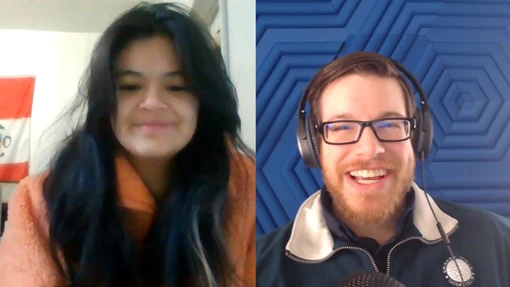
Exploring MitoNEET: Unraveling Its Role in Type 2 Diabetes, Parkinson's, and Cancer with Taylor Bias
- Photo: Concentrating on Chromatography: Exploring MitoNEET: Unraveling Its Role in Type 2 Diabetes, Parkinson's, and Cancer with Taylor Bias
- Video: Concentrating on Chromatography: Exploring MitoNEET: Unraveling Its Role in Type 2 Diabetes, Parkinson's, and Cancer with Taylor Bias
Join us for an interesting interview with Taylor Bias, a leading researcher in the field of mitochondrial proteins, as she discusses her groundbreaking work on mitoNEET and its implications for diseases like Type 2 Diabetes, Parkinson's Disease, and Cancer. In this engaging conversation with Organomation General Manager David Oliva, Taylor shares the challenges she faced in developing analytical methods to study mitoNEET's enzymatic activities and the pivotal role of chromatography techniques like GC-MS and HPLC in her research.
Discover how chromatography is evolving in the study of complex proteins and hear about some unexpected findings that have emerged from Taylor's research. For young researchers eager to dive into interdisciplinary studies, Taylor offers valuable advice on navigating this exciting field. Additionally, she addresses common misconceptions about mitoNEET and clarifies its significant role in disease mechanisms.
Don't miss this opportunity to learn from an expert about the fascinating intersection of biochemistry, disease research, and advanced analytical techniques!
Video Transcription
Taylor Bias:
I'm a senior at Ball State. I have a chemistry major with a biochemistry concentration and a biology minor. I've been in my current biochemistry group for about three years now, and I study the protein MitoNEET.
It's a pretty novel protein, discovered in 2004 as part of a screening for diabetes drugs. Its increased regulation and decreased levels have also been linked to Parkinson's disease and different types of cancer.
I study the protein as an enzyme. I first studied it in an oxidation reaction with cysteine to cystine, and then as a transaminase enzyme with the cofactor PLP, where we switch functional groups on cysteine and 2-oxoglutarate to make the new amino acid glutamate and the new alpha-keto acid thiocaptoproprionate. I look at both of those reactions on the GC-MS or the HPLC.
Interviewer: Very cool. What initially sparked your interest in studying MitoNEET, and how has that research focus evolved over time?
Taylor Bias:
Originally, I kind of just joined the lab for its supportive environment and the people I knew, but I've come to really like this research. I think it's very exciting to be the only person who knows something about a protein that's about the same age as me.
Anytime I run a new reaction, I get to know something about this protein before anyone else does, and I think that's really cool. Every protein is unique in the way that you need to work with it and analyze its reactions.
Our research has changed quite a bit in the three years I've been here. Originally we were just trying to see: Can it act as an enzyme at all? Then, Can it act as specific types of enzymes?—which led to uncovering that transaminase activity.
Now we've shifted toward: How can we change and affect the activity?
Can we make it faster? Can we make it slower? What will it react with? What won’t it react with? It's been really cool to see.
Interviewer: What challenges did you face in developing analytical methods to study MitoNEET’s enzymatic activities? Why was it useful to utilize both GC-MS and HPLC?
Taylor Bias:
GC-MS and HPLC were both necessary because thiocaptoproprionate in the transaminase reaction can only be seen in certain ways. On the GC-MS, you can only see things that will derivatize with TBDMS and that will fly through the instrument as a gas. Thiocaptoproprionate has a really hard time doing that—it's very hard to quantify.
So we developed an HPLC method, which had its own set of challenges: figuring out what would work, what we had to change compared to GC-MS.
At one point, we encountered a major challenge where our samples were just losing material like crazy. They were super inconsistent between me and our Master's student, Joey Maran, who's now getting his PhD at Notre Dame.
We had to go through every step of the method to figure out where something could go wrong. There are a lot of moving parts, and in research things don’t always work perfectly.
Eventually, we found that our reaction wasn’t stopping completely when we heated it to denature the enzyme. We had to add a certain amount of acid to completely stop the reaction so our counts would be consistent again. We implemented that into both the GC-MS and HPLC methods, and it helped—our results are way more consistent now.
Interviewer: How do you see the role of chromatography evolving in the study of proteins like MitoNEET?
Taylor Bias:
The unique thing about MitoNEET—and similar proteins—is that their enzymatic activity invites a lot of analytical methods like GC-MS or HPLC. With those instruments, you can look at what's in the material, what's in our sample.
Letting the enzyme react with substrates to make products, it's nice to use these instruments to see: What are we making? In what amounts?
For MitoNEET specifically, we're developing new LC-MS/MS methods to get mass-spec data for the compounds harder to quantify on GC-MS, like thiocaptoproprionate.
For other enzymatic proteins, it's also easier to quantify results when you use analytical tools like GC-MS or HPLC.
Interviewer: Could you discuss any unexpected findings or surprises you encountered during your research?
Taylor Bias:
Using these instruments, there are lots of surprises. Things don’t always go as planned. During my first summer of research, we ran into issues with our GC-MS. It would run the reaction and look like it was doing everything it was supposed to do, but then during analysis all of our graphs—the fragmentations, the TIC—just weren't there. No data.
It took effort to figure out what was wrong. I ended up babysitting the instrument for a couple of runs, watching what was and wasn’t happening. It turned out our ion source was out. We needed to replace it.
That was really cool for me because my research is mostly biochemistry and analytical work—not so much mechanical instrument work. So getting to open the instrument, take out parts, replace them, and see our data return was very exciting.
Interviewer: What advice would you give to young researchers interested in interdisciplinary studies?
Taylor Bias:
Go for it. Get involved. Try everything you possibly can.
Interdisciplinary work is great because you can explore lots of things and see what you like and don’t like. Undergrad is the perfect time to try things, succeed at them, fail at them—there’s never going to be a better point in your career to explore.
Be curious. Ask questions. Get involved in everything you can. Learn what you can while you can.
Interviewer: Are there any misconceptions about MitoNEET or its role in disease that you’d like to address?
Taylor Bias:
MitoNEET is pretty novel—discovered only in 2004—so there’s not a lot of information out there yet. I wouldn’t say there are many misconceptions.
It’s a crucial part of reactive oxygen species control, being part of the mitochondria. It’s involved in pathways with both pros and cons. When MitoNEET is missing or upregulated, we get diseases like diabetes, cancer, and Parkinson’s. But it’s also needed for our bodies to function.
It’s a complicated protein with positives and negatives, but I’m personally a big fan.
This text has been automatically transcribed from a video presentation using AI technology. It may contain inaccuracies and is not guaranteed to be 100% correct.
Concentrating on Chromatography Podcast
Dive into the frontiers of chromatography, mass spectrometry, and sample preparation with host David Oliva. Each episode features candid conversations with leading researchers, industry innovators, and passionate scientists who are shaping the future of analytical chemistry. From decoding PFAS detection challenges to exploring the latest in AI-assisted liquid chromatography, this show uncovers practical workflows, sustainability breakthroughs, and the real-world impact of separation science. Whether you’re a chromatographer, lab professional, or researcher you'll discover inspiring content!
You can find Concentrating on Chromatography Podcast in podcast apps:
and on YouTube channel