Scientists from the University of Pardubice Publish Another Study on Cancer Detection

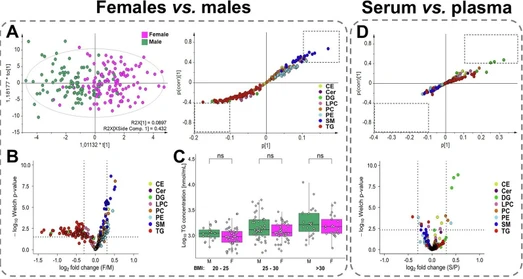
- Photo: Peterka, O., Jirásko, R., Dolečková, Z. et al. Pilot study of screening method for pancreatic cancer using lipidomic profiling of plasma or serum. Commun Med 6, 127 (2026): Fig. 2: Comparison of lipid profiles obtained by UHPSFC/MS for following group pairs: females vs. males (plasma model), serum vs. plasma (female models)
- Video: Bruker Daltonics: Michal Holcapek | omg OMx Podcast | Ep. 12
Scientists from the University of Pardubice (UPCE) are further refining their method capable of detecting pancreatic cancer from a simple blood sample. Their latest findings have been published in Communications Medicine. The key work was carried out by a team of analytical chemists led by Prof. Michal Holčapek from the Faculty of Chemical Technology.
The researchers have long focused on lipid analysis and its application in detecting various types of cancer. The sample series was measured in collaboration with Lipidica, a spinoff company of the University of Pardubice and the FONS JK Group holding.
The new findings were published in Communications Medicine, which is part of the prestigious Nature publishing portfolio: "Pilot study of screening method for pancreatic cancer using lipidomic profiling of plasma or serum"
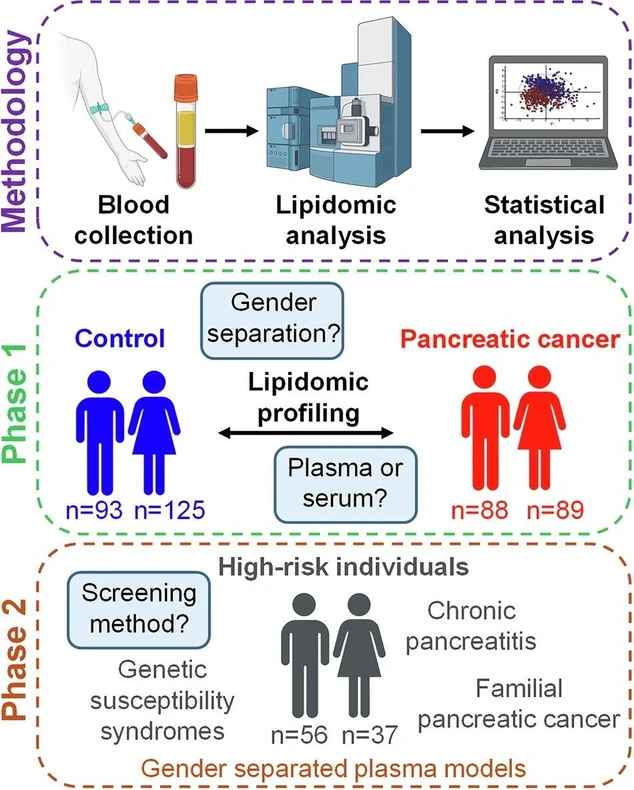 Communications Medicine, 6, 127 (2026): Fig. 1 Overview of the study design. The figure illustrates the overall study workflow, including the methodology, primary research questions, and cohort structure across individual phases. A prospective sample collection involves 488 subjects, comprising 218 healthy controls, 177 PDAC patients, and 93 high-risk individuals.
The scientific team was the first in the world to demonstrate that pancreatic cancer can be detected using lipid analysis through a simple blood test. The test can distinguish patients from healthy individuals with high accuracy. The researchers have now tested and published evidence that their method also performs reliably in individuals who are at increased risk of developing the disease.
“This is a crucial finding. Our screening method can accurately distinguish between patients and individuals at high risk of developing pancreatic carcinoma. This means that the method can also be applied to high-risk populations,” said Prof. Michal Holčapek from the Faculty of Chemical Technology, University of Pardubice.
Individuals at high risk of pancreatic cancer are the primary target group for screening. While the lifetime risk of developing pancreatic cancer in the general population is approximately 1.5 percent, it exceeds 5 percent in high-risk individuals. Major risk factors include genetic predisposition and a family history of the disease. The blood test developed at the University of Pardubice could be launched following successful completion of clinical validation. Clinical validation is currently underway, with Lipidica collaborating with 16 hospitals and specialized centers across the Czech Republic.
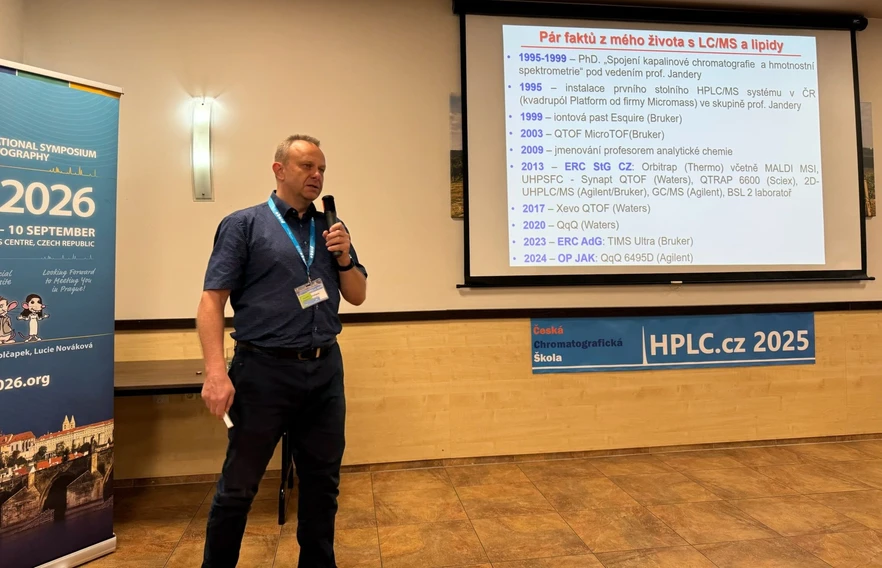 HPLCcz Day 2: Plenary lecture – What is the contribution of chromatography in lipidomic analysis? (Michal Holčapek)
Pancreatic cancer is one of the most aggressive types of carcinoma. Statistics show that only 13 percent of patients survive five years after diagnosis. The poor prognosis is largely due to the lack of reliable tools for early detection. A non-invasive blood test with high sensitivity and specificity could significantly improve treatment outcomes in the future.
Prof. Holčapek’s research team has been engaged in lipid analysis for more than twenty-five years. In recent years, the team’s work has appeared multiple times in prestigious scientific journals, such as Nature Metabolism and Nature Communications. According to the Web of Science database, their 2022 publication describing the first lipidomic test enabling early detection of pancreatic cancer ranks among the most highly cited articles in the field of biology and biochemistry.