
LCMS
More information
WebinarsAbout usContact usTerms of use
LabRulez s.r.o. All rights reserved. Content available under a CC BY-SA 4.0 Attribution-ShareAlike
Author
Watrex Praha
Watrex Praha
WATREX Prague is the distributor and producer of HPLC techniques in the Czech Republic and Slovakia. Main Chromatografic and Related Techniques Supported: LC, GPC, IC, IEC, Automated SPE, LC Columns and special column packings, LC method development, Software development, Laboratory Robots.
Tags
Article
Health
LinkedIn Logo

Classic Candles Under the Chemical Microscope: What We Breathe During Christmas and How to Ensure a Safe Home Environment

Th, 27.11.2025
| Original article from: Watrex Prague
What do burning Christmas candles really release into your home? This article explains the chemistry of paraffin candles, the pollutants they emit, and safer natural alternatives.
<p>Watrex Prague: Classic Candles Under the Chemical Microscope: What We Breathe During Christmas and How to Ensure a Safe Home Environment</p>

Watrex Prague: Classic Candles Under the Chemical Microscope: What We Breathe During Christmas and How to Ensure a Safe Home Environment

For many of us, the Christmas season is associated with a cozy atmosphere, the warmth of home, and the scent of candles. However, the flicker of a classic paraffin candle is far more than just an aesthetic element from a chemical perspective, it is a source of numerous substances that can affect indoor air quality, human health, and the environment. 

In this article, we will examine the composition of common candles, the chemical reactions that occur during burning, and what we are actually inhaling. We will also provide an overview of safer, natural alternatives.

Watrex: Classic Candles Under the Chemical Microscope: What We Breathe During Christmas and How to Ensure a Safe Home EnvironmentWatrex: Classic Candles Under the Chemical Microscope: What We Breathe During Christmas and How to Ensure a Safe Home Environment

What is a common candle made of? 

Most commercial candles are made from paraffin, a mixture of saturated hydrocarbons (mostly alkanes C20–C40) produced during petroleum distillation. These candles often contain synthetic fragrances, dyes, and metal-core wicks. When a candle is lit, the hydrocarbons undergo pyrolysis, breaking the long paraffin chains into shorter hydrocarbons, which then oxidize. This process is never perfectly efficient and depends on the flame temperature, wax composition, wick type, and the presence of aromatic additives. Synthetic fragrances, often containing terpenes, aldehydes, and esters, decompose during burning into reactive products that can further interact with the surrounding air. 

What enters the air when a candle burns? 

Candle burning produces a wide range of chemical substances. The most significant from a health perspective include benzene, toluene, formaldehyde, and acrolein. Benzene and formaldehyde are classified by the IARC as carcinogenic to humans (Group 1). Long-term exposure to benzene is associated with an increased risk of leukemia, while formaldehyde irritates the eyes, nose, and upper respiratory tract. Acrolein, which is especially produced when burning oil-based waxes, is not classified as a carcinogen but is highly irritating to the respiratory system and can worsen asthma. 

Additionally, polycyclic aromatic hydrocarbons (PAHs) such as naphthalene and benzo[a]pyrene are formed. These are carcinogenic and mutagenic and attach to fine soot particles. These ultrafine particles (PM2.5 and PM1) penetrate deep into the lungs, impair cardiovascular health, and trigger inflammation. Aromatic components of scented candles, such as limonene or pinene, oxidize during burning and can react with indoor ozone, forming secondary organic aerosols that also irritate the respiratory tract. These substances can be analytically monitored using GC/MS for VOCs, HPLC for aldehydes, and optical methods for ultrafine particles

Why is this particularly risky at home? 

During winter, indoor spaces are often less ventilated, allowing concentrations of released chemicals to rise and accumulate quickly. Candles burn for long periods, especially during the Christmas season, increasing the total exposure to carcinogenic and irritating substances. The accumulation of VOCs, PAHs, and ultrafine particles, combined with other emission sources such as baking or cooking, creates a chemically complex environment that can be particularly burdensome for sensitive individuals — children, seniors, or asthma sufferers. 

How to minimize risks while keeping the Christmas atmosphere 

Choosing natural waxes, such as beeswax, soy, coconut, or rapeseed, is chemically advantageous. These waxes produce fewer VOCs and soot when burned, resulting in lower amounts of carcinogenic substances. For a fragrant effect, it is better to use natural essential oils, which are less reactive than synthetic fragrances, though thermal degradation should still be considered. Wicks should be made of cotton or wood, without metal cores, to minimize the release of metal traces. Short, intensive ventilation after burning candles significantly reduces VOCs, PAHs, and secondary aerosols. 
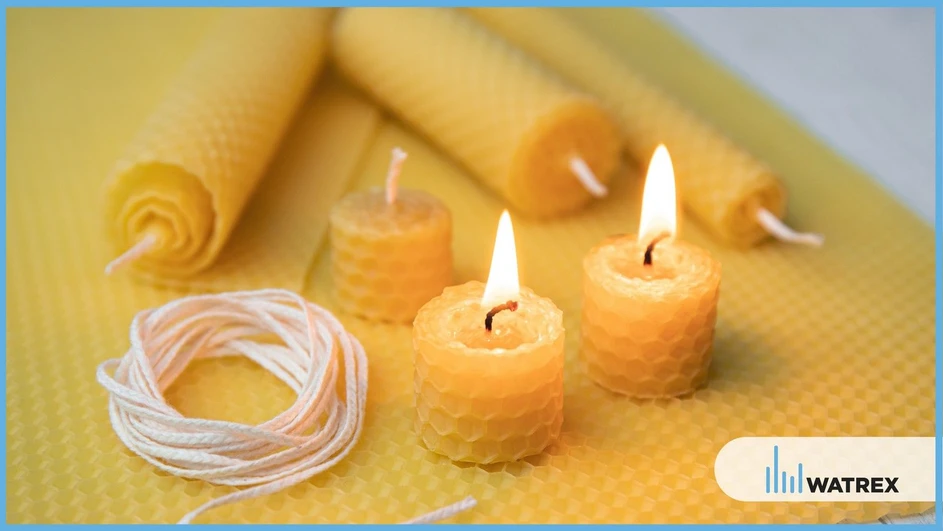
Watrex Fig.2: Beeswax candles with cotton wickWatrex Fig.2: Beeswax candles with cotton wick

Conclusion 

The Christmas season should be a time of calm, family, and comfort. Yet even a small oversight using candles meant to create a warm atmosphere can contribute to indoor pollution. Understanding the chemical processes during burning and choosing safer, natural alternatives allows you to enjoy candlelight without unnecessary health risks. 

Don't miss more interesting things from the chemical world and visit our website www.watrex.com or follow our social networks.

Watrex Praha
LinkedIn Logo
 

Related content

Overcoming Strong Solvent Effects in the Analysis of Vepdegestrant

Applications
| 2026 | Agilent Technologies
Instrumentation
HPLC
Manufacturer
Agilent Technologies
Industries
Pharma & Biopharma

Identification of Double Bond Positions and Relative Acyl Chain Positions in Egg Yolk Phosphatidylcholines Using OAD-TOF System

Applications
| 2026 | Shimadzu
Instrumentation
LC/MS, LC/MS/MS, LC/TOF, LC/HRMS
Manufacturer
Shimadzu
Industries
Food & Agriculture

High Molecular-Weight Polysaccharide Characterization by SEC-MALS Using GTxResolve™ 1000 and 2000 Å SEC Columns

Applications
| 2026 | Waters
Instrumentation
GPC/SEC, Consumables, LC columns
Manufacturer
Waters
Industries
Pharma & Biopharma, Food & Agriculture

Development and Optimization for a Comprehensive LC/MS/MS Method for the Detection of 74 PFAS Compounds

Applications
| 2026 | Agilent Technologies
Instrumentation
LC/MS, LC/MS/MS, LC/QQQ
Manufacturer
Agilent Technologies
Industries
Food & Agriculture

PFAS in Biota: Risk Context & Robust Analytical Solutions

Others
| 2026 | ALS Europe
Instrumentation
Laboratory analysis, LC/MS, LC/MS/MS
Manufacturer
Industries
Environmental
 

Related articles

Unlocking Hemoglobin Variant Detection: LC-HR-MS Breakthrough with Ainslie Chen
Interview | Science and research

Unlocking Hemoglobin Variant Detection: LC-HR-MS Breakthrough with Ainslie Chen

Interview with Ainslie Chen on using LC-HRMS and C4 reversed-phase chromatography for precise hemoglobin variant detection and future clinical proteomics applications.
Organomation
tag
share
more
Webinars LabRulezLCMS Week 08/2026
Article | Webinars

Webinars LabRulezLCMS Week 08/2026

11 webinars: AAV genome analysis, amino acid panel, capillary LC, data integrity, InfinityLab Assist, LC-MS proteomics, Orbitrap Astral, PFAS testing, peptide mapping, USP <621>
LabRulez
tag
share
more
Imaging of Protein Assemblies up to 231 kDa in Tissues with Nano-DESI Mass Spectrometry
Scientific article | Science and research

Imaging of Protein Assemblies up to 231 kDa in Tissues with Nano-DESI Mass Spectrometry

This study extends nano-DESI mass spectrometry imaging to intact protein assemblies up to 231 kDa, enabling direct identification of large complexes in tissue.
LabRulez
tag
share
more
Unlocking Phytoplankton Metallomes with Comparative Analysis of Metal Quotas, Quantitative Proteomics, and Inferred Metalloproteomes
Scientific article | Science and research

Unlocking Phytoplankton Metallomes with Comparative Analysis of Metal Quotas, Quantitative Proteomics, and Inferred Metalloproteomes

This study integrates metal quotas, quantitative proteomics, and inferred metalloproteomes to reveal trace metal requirements and adaptation strategies in phytoplankton.
LabRulez
tag
share
more
 

Related content

Overcoming Strong Solvent Effects in the Analysis of Vepdegestrant

Applications
| 2026 | Agilent Technologies
Instrumentation
HPLC
Manufacturer
Agilent Technologies
Industries
Pharma & Biopharma

Identification of Double Bond Positions and Relative Acyl Chain Positions in Egg Yolk Phosphatidylcholines Using OAD-TOF System

Applications
| 2026 | Shimadzu
Instrumentation
LC/MS, LC/MS/MS, LC/TOF, LC/HRMS
Manufacturer
Shimadzu
Industries
Food & Agriculture

High Molecular-Weight Polysaccharide Characterization by SEC-MALS Using GTxResolve™ 1000 and 2000 Å SEC Columns

Applications
| 2026 | Waters
Instrumentation
GPC/SEC, Consumables, LC columns
Manufacturer
Waters
Industries
Pharma & Biopharma, Food & Agriculture

Development and Optimization for a Comprehensive LC/MS/MS Method for the Detection of 74 PFAS Compounds

Applications
| 2026 | Agilent Technologies
Instrumentation
LC/MS, LC/MS/MS, LC/QQQ
Manufacturer
Agilent Technologies
Industries
Food & Agriculture

PFAS in Biota: Risk Context & Robust Analytical Solutions

Others
| 2026 | ALS Europe
Instrumentation
Laboratory analysis, LC/MS, LC/MS/MS
Manufacturer
Industries
Environmental
 

Related articles

Unlocking Hemoglobin Variant Detection: LC-HR-MS Breakthrough with Ainslie Chen
Interview | Science and research

Unlocking Hemoglobin Variant Detection: LC-HR-MS Breakthrough with Ainslie Chen

Interview with Ainslie Chen on using LC-HRMS and C4 reversed-phase chromatography for precise hemoglobin variant detection and future clinical proteomics applications.
Organomation
tag
share
more
Webinars LabRulezLCMS Week 08/2026
Article | Webinars

Webinars LabRulezLCMS Week 08/2026

11 webinars: AAV genome analysis, amino acid panel, capillary LC, data integrity, InfinityLab Assist, LC-MS proteomics, Orbitrap Astral, PFAS testing, peptide mapping, USP <621>
LabRulez
tag
share
more
Imaging of Protein Assemblies up to 231 kDa in Tissues with Nano-DESI Mass Spectrometry
Scientific article | Science and research

Imaging of Protein Assemblies up to 231 kDa in Tissues with Nano-DESI Mass Spectrometry

This study extends nano-DESI mass spectrometry imaging to intact protein assemblies up to 231 kDa, enabling direct identification of large complexes in tissue.
LabRulez
tag
share
more
Unlocking Phytoplankton Metallomes with Comparative Analysis of Metal Quotas, Quantitative Proteomics, and Inferred Metalloproteomes
Scientific article | Science and research

Unlocking Phytoplankton Metallomes with Comparative Analysis of Metal Quotas, Quantitative Proteomics, and Inferred Metalloproteomes

This study integrates metal quotas, quantitative proteomics, and inferred metalloproteomes to reveal trace metal requirements and adaptation strategies in phytoplankton.
LabRulez
tag
share
more
 

Related content

Overcoming Strong Solvent Effects in the Analysis of Vepdegestrant

Applications
| 2026 | Agilent Technologies
Instrumentation
HPLC
Manufacturer
Agilent Technologies
Industries
Pharma & Biopharma

Identification of Double Bond Positions and Relative Acyl Chain Positions in Egg Yolk Phosphatidylcholines Using OAD-TOF System

Applications
| 2026 | Shimadzu
Instrumentation
LC/MS, LC/MS/MS, LC/TOF, LC/HRMS
Manufacturer
Shimadzu
Industries
Food & Agriculture

High Molecular-Weight Polysaccharide Characterization by SEC-MALS Using GTxResolve™ 1000 and 2000 Å SEC Columns

Applications
| 2026 | Waters
Instrumentation
GPC/SEC, Consumables, LC columns
Manufacturer
Waters
Industries
Pharma & Biopharma, Food & Agriculture

Development and Optimization for a Comprehensive LC/MS/MS Method for the Detection of 74 PFAS Compounds

Applications
| 2026 | Agilent Technologies
Instrumentation
LC/MS, LC/MS/MS, LC/QQQ
Manufacturer
Agilent Technologies
Industries
Food & Agriculture

PFAS in Biota: Risk Context & Robust Analytical Solutions

Others
| 2026 | ALS Europe
Instrumentation
Laboratory analysis, LC/MS, LC/MS/MS
Manufacturer
Industries
Environmental
 

Related articles

Unlocking Hemoglobin Variant Detection: LC-HR-MS Breakthrough with Ainslie Chen
Interview | Science and research

Unlocking Hemoglobin Variant Detection: LC-HR-MS Breakthrough with Ainslie Chen

Interview with Ainslie Chen on using LC-HRMS and C4 reversed-phase chromatography for precise hemoglobin variant detection and future clinical proteomics applications.
Organomation
tag
share
more
Webinars LabRulezLCMS Week 08/2026
Article | Webinars

Webinars LabRulezLCMS Week 08/2026

11 webinars: AAV genome analysis, amino acid panel, capillary LC, data integrity, InfinityLab Assist, LC-MS proteomics, Orbitrap Astral, PFAS testing, peptide mapping, USP <621>
LabRulez
tag
share
more
Imaging of Protein Assemblies up to 231 kDa in Tissues with Nano-DESI Mass Spectrometry
Scientific article | Science and research

Imaging of Protein Assemblies up to 231 kDa in Tissues with Nano-DESI Mass Spectrometry

This study extends nano-DESI mass spectrometry imaging to intact protein assemblies up to 231 kDa, enabling direct identification of large complexes in tissue.
LabRulez
tag
share
more
Unlocking Phytoplankton Metallomes with Comparative Analysis of Metal Quotas, Quantitative Proteomics, and Inferred Metalloproteomes
Scientific article | Science and research

Unlocking Phytoplankton Metallomes with Comparative Analysis of Metal Quotas, Quantitative Proteomics, and Inferred Metalloproteomes

This study integrates metal quotas, quantitative proteomics, and inferred metalloproteomes to reveal trace metal requirements and adaptation strategies in phytoplankton.
LabRulez
tag
share
more
 

Related content

Overcoming Strong Solvent Effects in the Analysis of Vepdegestrant

Applications
| 2026 | Agilent Technologies
Instrumentation
HPLC
Manufacturer
Agilent Technologies
Industries
Pharma & Biopharma

Identification of Double Bond Positions and Relative Acyl Chain Positions in Egg Yolk Phosphatidylcholines Using OAD-TOF System

Applications
| 2026 | Shimadzu
Instrumentation
LC/MS, LC/MS/MS, LC/TOF, LC/HRMS
Manufacturer
Shimadzu
Industries
Food & Agriculture

High Molecular-Weight Polysaccharide Characterization by SEC-MALS Using GTxResolve™ 1000 and 2000 Å SEC Columns

Applications
| 2026 | Waters
Instrumentation
GPC/SEC, Consumables, LC columns
Manufacturer
Waters
Industries
Pharma & Biopharma, Food & Agriculture

Development and Optimization for a Comprehensive LC/MS/MS Method for the Detection of 74 PFAS Compounds

Applications
| 2026 | Agilent Technologies
Instrumentation
LC/MS, LC/MS/MS, LC/QQQ
Manufacturer
Agilent Technologies
Industries
Food & Agriculture

PFAS in Biota: Risk Context & Robust Analytical Solutions

Others
| 2026 | ALS Europe
Instrumentation
Laboratory analysis, LC/MS, LC/MS/MS
Manufacturer
Industries
Environmental
 

Related articles

Unlocking Hemoglobin Variant Detection: LC-HR-MS Breakthrough with Ainslie Chen
Interview | Science and research

Unlocking Hemoglobin Variant Detection: LC-HR-MS Breakthrough with Ainslie Chen

Interview with Ainslie Chen on using LC-HRMS and C4 reversed-phase chromatography for precise hemoglobin variant detection and future clinical proteomics applications.
Organomation
tag
share
more
Webinars LabRulezLCMS Week 08/2026
Article | Webinars

Webinars LabRulezLCMS Week 08/2026

11 webinars: AAV genome analysis, amino acid panel, capillary LC, data integrity, InfinityLab Assist, LC-MS proteomics, Orbitrap Astral, PFAS testing, peptide mapping, USP <621>
LabRulez
tag
share
more
Imaging of Protein Assemblies up to 231 kDa in Tissues with Nano-DESI Mass Spectrometry
Scientific article | Science and research

Imaging of Protein Assemblies up to 231 kDa in Tissues with Nano-DESI Mass Spectrometry

This study extends nano-DESI mass spectrometry imaging to intact protein assemblies up to 231 kDa, enabling direct identification of large complexes in tissue.
LabRulez
tag
share
more
Unlocking Phytoplankton Metallomes with Comparative Analysis of Metal Quotas, Quantitative Proteomics, and Inferred Metalloproteomes
Scientific article | Science and research

Unlocking Phytoplankton Metallomes with Comparative Analysis of Metal Quotas, Quantitative Proteomics, and Inferred Metalloproteomes

This study integrates metal quotas, quantitative proteomics, and inferred metalloproteomes to reveal trace metal requirements and adaptation strategies in phytoplankton.
LabRulez
tag
share
more
Other projects
GCMS
ICPMS
Follow us
More information
WebinarsAbout usContact usTerms of use
LabRulez s.r.o. All rights reserved. Content available under a CC BY-SA 4.0 Attribution-ShareAlike