Natural Product Discovery through Liquid Extraction Based Ambient ionization Mass Spectrometry
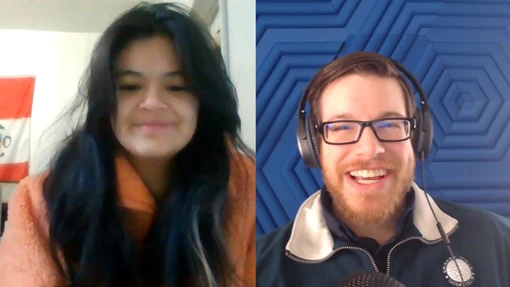
- Photo: Concentrating on Chromatography: Natural Product Discovery through Liquid Extraction Based Ambient ionization Mass Spectrometry
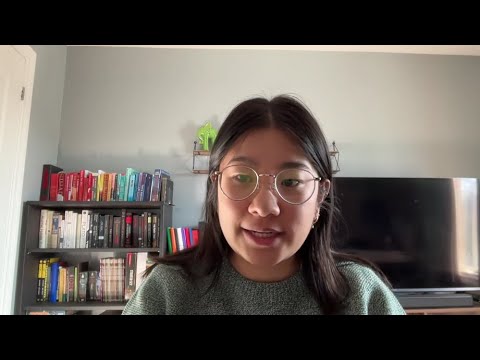
- Video: Concentrating on Chromatography: Natural Product Discovery through Liquid Extraction Based Ambient ionization Mass Spectrometry
🎤 Jess Deng
Dive into the cutting-edge world of natural product discovery with Jess Deng, a fourth-year PhD candidate at Queen's University. In this engaging interview, Jess discusses her groundbreaking research using ambient ionization mass spectrometry to streamline the discovery of novel fungal metabolites.
Key highlights:
- Learn about the liquid microjunction surface sampling probe (LMJ SSP) and its advantages
- Discover how Jess is tackling the time and resource challenges in natural product research
- Explore the effects of light conditions and environmental factors on fungal metabolism
- Hear about Jess's exciting work at the Smithsonian Museum of Conservation
From rapid screening techniques to machine learning algorithms, Jess shares insights that could reshape the future of pharmaceutical research and biofuel production. Don't miss this fascinating look into the intersection of mass spectrometry, fungal biology, and drug discovery!
Video Transcription
Interviewer: Hi Jess, how are you? Could you introduce yourself and give an overview of your work?
Jess: I’m doing well—my name is Jess, and I’m a fourth-year PhD candidate at Queen’s University in Canada. I’ve had the unique chance to work across several areas, from forensics to clinical applications, and more recently at the Smithsonian Museum of Conservation. Broadly, my thesis is tentatively titled “Application-driven advances using ambient ionization mass spectrometry.” I’ve been fortunate to gain experience with three different ambient ionization techniques. Many people come into this field and mainly work with one, but I’ve had the chance to “dabble” across multiple approaches.
In my lab, we use the liquid microjunction surface sampling probe, which is a liquid-extraction-based ambient ionization method. For my PhD, I’m working to introduce a new step into the natural product discovery pipeline—a step that helps prioritize and screen for potentially novel secondary metabolites, especially those that aren’t essential for basic health but may be biologically interesting. To do this, I’ve been stressing the fungi I work with—and I’ve also worked with some bacteria—by changing environmental conditions (with help from a collaborator who handles the cultivation) and then screening how the metabolic profiles shift and what new metabolites appear.
Interviewer: Full disclosure—I’m not very familiar with this type of mass spectrometry. Why is this approach a good fit for your research, and why is it better than conventional MS approaches?
Jess: That’s a great question—and my honest answer is: it’s not universally “better.” It’s very situational. To explain why it matters in my case, it helps to understand how slow natural product discovery can be.
One common approach is to grow microorganisms in bulk—for example, liters of culture—then process that material through rotary evaporation, purification, and UPLC fractionation. Because the starting volume is so large, you end up doing a lot of fractionation and repeated purification just to isolate a small number of unfamiliar compounds. Eventually, you take candidates to NMR for structure confirmation. That whole workflow can take a year, sometimes two, and at the end you may discover the compound was already known. That’s a lot of time, solvent, personnel effort, and instrument cost.
What I’m trying to do is introduce an earlier step—before the heavy chromatography work—so we can detect and prioritize signals we actually care about, lowering the chance of investing months into something already discovered. So I don’t claim ambient ionization is “better,” but I do think it’s a valuable supporting technique to reduce time and cost before moving to “the big guns,” meaning chromatography and full isolation workflows.
Interviewer: You mentioned rotary evaporation—any other notes on sample prep? What’s the most challenging or frustrating part of the process?
Jess: We often run our approach side-by-side with conventional workflows as proof-of-concept comparisons. One nice thing about ambient ionization is that sample prep can be minimal, although I do run into clogging in the probe we use. On the microbiology side, the biggest time sinks are still extraction and chromatography. I recently read that extraction can account for 80% of processing time and 99% of solvent use in natural product discovery—so having better information before that step is extremely useful.
The interviewer also mentioned their company’s focus on nitrogen blowdown evaporation for concentrating samples (e.g., reducing tens of milliliters down to a small vial volume or to dryness), and noted how extraction has long been a “hot topic,” especially around reducing solvent consumption.
Interviewer: What are the challenges in identifying and confirming metabolite structures?
Jess: At this stage, many of our identifications are putative—we haven’t fully separated and confirmed everything by NMR. If we get a strong database hit, we’re generally not interested, because our goal is novelty. One of the trickiest parts for me has been the data-processing side: I’m often using LC- and chromatography-based software algorithms, but my data aren’t true LC chromatograms—so a lot of my thesis work involves finding clever ways of getting those tools to work with ambient-ionization-style outputs.
Interviewer: How do you see this research contributing to streamlining natural product discovery in pharma?
Jess: My hope is that it improves prioritization. Instead of going in blind with only a list of unknown mass-to-charge values after long processing, I want to help researchers allocate solvent, time, and effort toward the metabolites that are most promising.
To give a sense of throughput: I ran 24-well plates under 13 different conditions in about six hours, using roughly 150 mL of solvent total. It’s not bulk growth, but it’s enough information to see what an altered environment can produce. Longer-term, I hope this enables researchers to test more conditions at once, reduce solvent and personnel costs, and—if automated—make screening even faster.
Interviewer: Based on your findings about light affecting metabolite production, how could future work explore other environmental factors that influence fungal secondary metabolism?
Jess: Fungi are really interesting—they can behave in ways that feel almost “intentional.” And when I say fungi, I’m often talking about molds, not mushrooms. One direction we haven’t presented publicly yet is co-culture experiments—essentially putting fungi into “competition” with other organisms to see what they produce when stressed or cornered.
I’ve also explored changes in carbon sources, some nitrogen conditions (like ammonium-related changes), pH, and temperature. I’m also interested in testing phosphate-based additives and even some transition metals in growth media. There’s a huge chemical space left—by some estimates, less than 10% of natural product metabolites have been discovered—so there are many avenues for stressing organisms to trigger new, potentially clinically relevant metabolite production.
Interviewer: We met at ASMS. One topic you mentioned before recording was the debate about validation through chromatography—could you explain?
Jess: I think it’s very situation-dependent. For quantitation, at least for my work, I’m not convinced the technology is fully there yet. With the liquid microjunction probe, we often describe results as semi-quantitative, and there are still questions around matrix suppression and dilution effects because it’s an extraction-based approach.
For a screening application like mine, chromatography is helpful for validation, but my priority isn’t necessarily separation—it’s identifying what’s present. If I find a compound and it matches a database hit, I set it aside and move on, because I’m focusing on novelty rather than confirming known compounds.
Interviewer: Would you share your Smithsonian museum experience? That sounds really interesting.
Jess: Sure. I was a pre-doctoral fellow at the Smithsonian Museum of Conservation in Washington, DC. It was my first time living in the U.S., and it was a unique environment—somewhere between academia and industry, more in the government space.
My project focused on detecting formaldehyde traces in fluid-preserved specimens—think jars of specimens fixed with formalin. The Smithsonian has an enormous collection, possibly the world’s largest. One challenge is that formalin crosslinks DNA, which makes DNA sequencing difficult. The museum has archival logs about how specimens were treated, and they wanted a way to confirm whether formalin was present—because sequencing is expensive, and it’s frustrating to invest heavily only to discover you can’t retrieve useful genetic information.
I developed an assay using a substrate-based ambient ionization approach called coated blade spray (from Restek). It was a derivatization-based method, and what I found was that many specimens had been stored in the same jars for extremely long periods. Even if their original treatments differed, long-term shared storage meant formalin signals showed up broadly. In practice, I found formalin in everything I tested—which made sense given the storage realities and the fact that specimens have essentially been in the same “broth” for a very long time.
It was a fascinating experience, and I’d encourage graduate students to look into Smithsonian opportunities—there are internships and projects people often don’t realize are accessible. I worked with an excellent supervisor who also worked in ambient ionization, and the Smithsonian has a wide range of analytical work, including microscopy-based approaches and other advanced methods.
This text has been automatically transcribed from a video presentation using AI technology. It may contain inaccuracies and is not guaranteed to be 100% correct.
Concentrating on Chromatography Podcast
Dive into the frontiers of chromatography, mass spectrometry, and sample preparation with host David Oliva. Each episode features candid conversations with leading researchers, industry innovators, and passionate scientists who are shaping the future of analytical chemistry. From decoding PFAS detection challenges to exploring the latest in AI-assisted liquid chromatography, this show uncovers practical workflows, sustainability breakthroughs, and the real-world impact of separation science. Whether you’re a chromatographer, lab professional, or researcher you'll discover inspiring content!
You can find Concentrating on Chromatography Podcast in podcast apps:
and on YouTube channel