LCMS
More information
WebinarsAbout usContact usTerms of use
LabRulez s.r.o. All rights reserved. Content available under a CC BY-SA 4.0 Attribution-ShareAlike
Author
Thermo Fisher Scientific
A unique company dedicated to serving science helping our customers drive productivity and accelerate results. Through our premier brands – Thermo Scientific, Applied Biosystems, Invitrogen, Fisher Scientific and Unity Lab Services.
Tags
Article
Product
Video
LinkedIn Logo

How to Get More Accurate HPLC Quantitation of Semi-Volatiles
Tu, 13.1.2026
| Original article from: Thermo Fisher Scientific / Dr. Kimberly M. Lincoln
Stricter temperature control with HPLC-CAD can significantly improve the accuracy of semi-volatile analyte quantitation. Learn how Temperature Coupling Mode enhances sensitivity and predictability.
Video placeholder
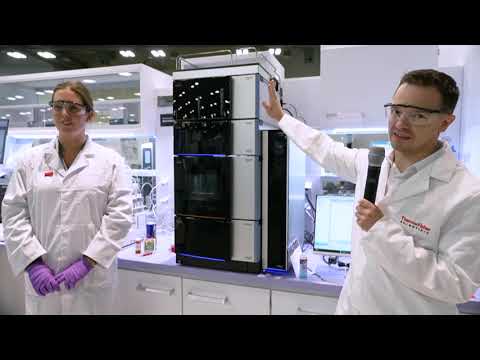
  • Photo: Thermo Fisher Scientific: How to Get More Accurate HPLC Quantitation of Semi-Volatiles
  • Video: Chromatography & Mass Spectrometry Solutions: Analytica Live Lab: Polysorbate 80 analysis using the Thermo Scientific Vanquish HPLC-CAD P series

Struggling to accurately measure semi-volatile analytes? Stricter temperature control with HPLC-CAD analysis just might be the solution you need.

Thermo Fisher Scientific How to Get More Accurate HPLC Quantitation of Semi-VolatilesThermo Fisher Scientific How to Get More Accurate HPLC Quantitation of Semi-Volatiles

The charged aerosol detector (CAD) is cited as one of the most capable near-universal HPLC detectors available because the response is solely based on particle charge and fully independent of chemical structure.

One caveat to know is your mobile phase components must be less volatile than the analytes in solution for detection by the CAD. And while all non-volatiles give a similar uniform response, the response of semi-volatiles depends on volatility and consequently is less predictable.

So, the question then becomes is there a way to address this performance difference and make semi-volatile detection more predictable? One approach for charged semi-volatile analytes is to add a volatile ion-pairing agent of the opposite charge in the mobile phase to force non-volatile behavior.

However, this method is analyte specific and may also react with impurities in your mobile phase, leading to higher noise and poorer signal-to-noise (S/N) ratio. What’s really needed is a more global approach to improve the accuracy for measuring semi-volatiles.

This approach is now achievable with Temperature Coupling Mode (TCM) in the Thermo Scientific Vanquish CAD P Series.

Why stricter temperature control matters for measuring semi-volatiles

Before we get into the specifics, you need to understand why temperature control in the CAD is critical to quantitative accuracy, especially for semi-volatiles (Figure 1).

Thermo Fisher Scientific: How to Get More Accurate HPLC Quantitation of Semi-Volatiles: Figure 1. Illustration showing how the CAD works.Thermo Fisher Scientific: How to Get More Accurate HPLC Quantitation of Semi-Volatiles: Figure 1. Illustration showing how the CAD works.

The two most important functional components in the CAD that guide sensitivity are the evaporation tube temperature (EvapT) and the charging detection module (CDM).

  • EvapT plays a crucial role in determining the performance of the detector, and changing this temperature may alter analyte “selectivity”
  • The CDM is where particle charge and measurement happen

In previous CAD models, the EvapT is adjustable, but the temperature of the CDM is permanently set at 40 °C. This fixed temperature difference between the EvapT and CDM could negatively impact the measurement of semi-volatile compounds that require a lower EvapT.

Adding TCM resolves this issue, by linking the EvapT and CDM temperatures, thereby improving the quantitation of semi-volatile species.

Using TCM to help improve quantification of semi-volatiles, like fatty acids

To demonstrate the effectiveness of this new temperature coupling feature, we anlazyed a working solution of four individual fatty acids (FAs) and compared the CAD repsonse with TCM turned on and turned off (Figure 2).

Thermo Fisher Scientific: How to Get More Accurate HPLC Quantitation of Semi-Volatiles: Figure 2. The mean S/N ratio of the FAs analyzed with TCM turned on and off.Thermo Fisher Scientific: How to Get More Accurate HPLC Quantitation of Semi-Volatiles: Figure 2. The mean S/N ratio of the FAs analyzed with TCM turned on and off.

Notably, we observed 46.8% increase in the S/N at the optimal EvapT of 25 °C and with the TCM switched on for lauric acid, the most semi-volatile compound!

Interestingly, the observed S/N improvement matches the respective analyte volatility—lauric acid (lowest MW) shows the greatest improvement, and stearic acid (highest MW) the least.

Taken together, these findings show how stricter temperature control in the CAD can allow you to extend the range and improve quantification of semi-volatiles.

Extending this application to impurity analysis of polysorbates

Now that we’ve seen TCM is useful for analyzing fatty acids, let’s consider more complex solutions, like polysorbates.

Given the CAD is well-established for determining polysorbate impurities, and fatty acid impurities are quite abundant in polysorbates, and a logical next step is to use this technique for analyzing these solutions.

Afterall, free acids in polysorbates may form insoluble particles that can seriously compromise product quality, efficacy, and patient safety. Thus, your ability to accurately measure these acids in raw materials and finished goods is of the upmost importance.

Download our paper to see how the Vanquish CAD P Series can help your lab measure fatty acids with greater confidence today.

Thermo Fisher Scientific: How to Get More Accurate HPLC Quantitation of Semi-Volatiles: Figure 3. Thermo Scientific Vanquish CAD P SeriesThermo Fisher Scientific: How to Get More Accurate HPLC Quantitation of Semi-Volatiles: Figure 3. Thermo Scientific Vanquish CAD P Series

FAQs

  1. What are the advantages of using a charged aerosol detector for HPLC analysis?

The charged aerosol detector (CAD) is now recognized as the most capable “universal” detector available and offers several advantages over other UHPLC-based detectors including:

  • Uniform response for all non-volatile analytes (ideal for quantitation when certified standards are unavailable)
  • Universal response independent of chemical structure (analyte does not have to form gas phase ions or possess a chromophore)
  • High sensitivity at high pg to low ng on column (ideal for drug impurity analysis)
  • Wide linear and dynamic range (measure API and impurities in one run)
  • Simple calibration curves (no need to deal with complex, unpredictable sigmoidal calibration curves)
  • Gradient compatible (inverse gradient available to ensure consistent response throughout the gradient)
  1. Why should I use CAD for measuring fatty acid impurities in polysorbates?

Fatty acids don’t contain strong chromophores, so HPLC-CAD analysis is the ideal choice since the detector response depends on particle charge and is independent of analyte structure.

  1. How does changing the evaporation tube temperature affect the CAD response for semi-volatiles?

A high EvapT can improve sensitivity for non-volatiles by reducing noise but may negatively impact measurement of semi-volatile species. Conversely, a lower EvapT can improve the detection of semi-volatile species, but sensitivity for all analytes may be adversely impacted due to increased noise.

Visit us on LinkedIn: #HPLC #CAD #biopharma

Dr. Kimberly M. Lincoln

Dr. Kimberly M. Lincoln is a marketing specialist in the HPLC division at Thermo Fisher Scientific. She holds a Ph.D. in bioinorganic chemistry and a B.S. in chemistry, with professional experience in digital marketing, medical device manufacturing, and chemical synthesis. Kimberly enjoys writing educational chemical content as a guide to help customers solve analytical problems. She is passionate about living a clean lifestyle and keeping the planet healthy for future generations. In her spare time, Kimberly loves to cook, cycle, attend rock concerts, and spend time with her pit bulls.

Thermo Fisher Scientific
LinkedIn Logo
 

Related content

Overcoming Strong Solvent Effects in the Analysis of Vepdegestrant

Applications
| 2026 | Agilent Technologies
Instrumentation
HPLC
Manufacturer
Agilent Technologies
Industries
Pharma & Biopharma

Identification of Double Bond Positions and Relative Acyl Chain Positions in Egg Yolk Phosphatidylcholines Using OAD-TOF System

Applications
| 2026 | Shimadzu
Instrumentation
LC/MS, LC/MS/MS, LC/TOF, LC/HRMS
Manufacturer
Shimadzu
Industries
Food & Agriculture

High Molecular-Weight Polysaccharide Characterization by SEC-MALS Using GTxResolve™ 1000 and 2000 Å SEC Columns

Applications
| 2026 | Waters
Instrumentation
GPC/SEC, Consumables, LC columns
Manufacturer
Waters
Industries
Pharma & Biopharma, Food & Agriculture

Development and Optimization for a Comprehensive LC/MS/MS Method for the Detection of 74 PFAS Compounds

Applications
| 2026 | Agilent Technologies
Instrumentation
LC/MS, LC/MS/MS, LC/QQQ
Manufacturer
Agilent Technologies
Industries
Food & Agriculture

PFAS in Biota: Risk Context & Robust Analytical Solutions

Others
| 2026 | ALS Europe
Instrumentation
Laboratory analysis, LC/MS, LC/MS/MS
Manufacturer
Industries
Environmental
 

Related articles

JUNIOR STAR Grants at UCT Prague: Two talented women from abroad driving innovation in science
Article | Scientists

JUNIOR STAR Grants at UCT Prague: Two talented women from abroad driving innovation in science

Two outstanding early-career researchers at UCT Prague, Filipa Oliveira and Stella Gonsales, received prestigious GAČR JUNIOR STAR grants for innovative research in materials science and sustainable chemistry.
UCT Prague
tag
share
more
Research from IOCB Prague reveals a previously unknown mechanism of genetic transcription
Article | Science and research

Research from IOCB Prague reveals a previously unknown mechanism of genetic transcription

Scientists at IOCB Prague reveal a previously unknown mechanism that initiates gene transcription. Using cryo-EM, they uncover how alarmone molecules enable RNA synthesis under stress.
Institute of Organic Chemistry and Biochemistry of the Czech Academy of Sciences
tag
share
more
Food Adulteration and How It Is Revealed by Analytical Chemistry
Article | Food

Food Adulteration and How It Is Revealed by Analytical Chemistry

Food adulteration threatens quality and consumer trust. Discover how HPLC and modern chromatographic systems from Watrex Praha help identify oil, honey, and wine adulteration with high confidence.
Watrex Praha
tag
share
more
Affinity, Gel Filtration, Size Exclusion Chromatography: Repurposing Kinase Inhibitors for Malaria
Interview | Video

Affinity, Gel Filtration, Size Exclusion Chromatography: Repurposing Kinase Inhibitors for Malaria

This podcast explores how chromatography (FPLC/SEC) and mass spectrometry support malaria drug discovery, from protein purification and QC to interaction studies and complex sample preparation.
Organomation
tag
share
more
 

Related content

Overcoming Strong Solvent Effects in the Analysis of Vepdegestrant

Applications
| 2026 | Agilent Technologies
Instrumentation
HPLC
Manufacturer
Agilent Technologies
Industries
Pharma & Biopharma

Identification of Double Bond Positions and Relative Acyl Chain Positions in Egg Yolk Phosphatidylcholines Using OAD-TOF System

Applications
| 2026 | Shimadzu
Instrumentation
LC/MS, LC/MS/MS, LC/TOF, LC/HRMS
Manufacturer
Shimadzu
Industries
Food & Agriculture

High Molecular-Weight Polysaccharide Characterization by SEC-MALS Using GTxResolve™ 1000 and 2000 Å SEC Columns

Applications
| 2026 | Waters
Instrumentation
GPC/SEC, Consumables, LC columns
Manufacturer
Waters
Industries
Pharma & Biopharma, Food & Agriculture

Development and Optimization for a Comprehensive LC/MS/MS Method for the Detection of 74 PFAS Compounds

Applications
| 2026 | Agilent Technologies
Instrumentation
LC/MS, LC/MS/MS, LC/QQQ
Manufacturer
Agilent Technologies
Industries
Food & Agriculture

PFAS in Biota: Risk Context & Robust Analytical Solutions

Others
| 2026 | ALS Europe
Instrumentation
Laboratory analysis, LC/MS, LC/MS/MS
Manufacturer
Industries
Environmental
 

Related articles

JUNIOR STAR Grants at UCT Prague: Two talented women from abroad driving innovation in science
Article | Scientists

JUNIOR STAR Grants at UCT Prague: Two talented women from abroad driving innovation in science

Two outstanding early-career researchers at UCT Prague, Filipa Oliveira and Stella Gonsales, received prestigious GAČR JUNIOR STAR grants for innovative research in materials science and sustainable chemistry.
UCT Prague
tag
share
more
Research from IOCB Prague reveals a previously unknown mechanism of genetic transcription
Article | Science and research

Research from IOCB Prague reveals a previously unknown mechanism of genetic transcription

Scientists at IOCB Prague reveal a previously unknown mechanism that initiates gene transcription. Using cryo-EM, they uncover how alarmone molecules enable RNA synthesis under stress.
Institute of Organic Chemistry and Biochemistry of the Czech Academy of Sciences
tag
share
more
Food Adulteration and How It Is Revealed by Analytical Chemistry
Article | Food

Food Adulteration and How It Is Revealed by Analytical Chemistry

Food adulteration threatens quality and consumer trust. Discover how HPLC and modern chromatographic systems from Watrex Praha help identify oil, honey, and wine adulteration with high confidence.
Watrex Praha
tag
share
more
Affinity, Gel Filtration, Size Exclusion Chromatography: Repurposing Kinase Inhibitors for Malaria
Interview | Video

Affinity, Gel Filtration, Size Exclusion Chromatography: Repurposing Kinase Inhibitors for Malaria

This podcast explores how chromatography (FPLC/SEC) and mass spectrometry support malaria drug discovery, from protein purification and QC to interaction studies and complex sample preparation.
Organomation
tag
share
more
 

Related content

Overcoming Strong Solvent Effects in the Analysis of Vepdegestrant

Applications
| 2026 | Agilent Technologies
Instrumentation
HPLC
Manufacturer
Agilent Technologies
Industries
Pharma & Biopharma

Identification of Double Bond Positions and Relative Acyl Chain Positions in Egg Yolk Phosphatidylcholines Using OAD-TOF System

Applications
| 2026 | Shimadzu
Instrumentation
LC/MS, LC/MS/MS, LC/TOF, LC/HRMS
Manufacturer
Shimadzu
Industries
Food & Agriculture

High Molecular-Weight Polysaccharide Characterization by SEC-MALS Using GTxResolve™ 1000 and 2000 Å SEC Columns

Applications
| 2026 | Waters
Instrumentation
GPC/SEC, Consumables, LC columns
Manufacturer
Waters
Industries
Pharma & Biopharma, Food & Agriculture

Development and Optimization for a Comprehensive LC/MS/MS Method for the Detection of 74 PFAS Compounds

Applications
| 2026 | Agilent Technologies
Instrumentation
LC/MS, LC/MS/MS, LC/QQQ
Manufacturer
Agilent Technologies
Industries
Food & Agriculture

PFAS in Biota: Risk Context & Robust Analytical Solutions

Others
| 2026 | ALS Europe
Instrumentation
Laboratory analysis, LC/MS, LC/MS/MS
Manufacturer
Industries
Environmental
 

Related articles

JUNIOR STAR Grants at UCT Prague: Two talented women from abroad driving innovation in science
Article | Scientists

JUNIOR STAR Grants at UCT Prague: Two talented women from abroad driving innovation in science

Two outstanding early-career researchers at UCT Prague, Filipa Oliveira and Stella Gonsales, received prestigious GAČR JUNIOR STAR grants for innovative research in materials science and sustainable chemistry.
UCT Prague
tag
share
more
Research from IOCB Prague reveals a previously unknown mechanism of genetic transcription
Article | Science and research

Research from IOCB Prague reveals a previously unknown mechanism of genetic transcription

Scientists at IOCB Prague reveal a previously unknown mechanism that initiates gene transcription. Using cryo-EM, they uncover how alarmone molecules enable RNA synthesis under stress.
Institute of Organic Chemistry and Biochemistry of the Czech Academy of Sciences
tag
share
more
Food Adulteration and How It Is Revealed by Analytical Chemistry
Article | Food

Food Adulteration and How It Is Revealed by Analytical Chemistry

Food adulteration threatens quality and consumer trust. Discover how HPLC and modern chromatographic systems from Watrex Praha help identify oil, honey, and wine adulteration with high confidence.
Watrex Praha
tag
share
more
Affinity, Gel Filtration, Size Exclusion Chromatography: Repurposing Kinase Inhibitors for Malaria
Interview | Video

Affinity, Gel Filtration, Size Exclusion Chromatography: Repurposing Kinase Inhibitors for Malaria

This podcast explores how chromatography (FPLC/SEC) and mass spectrometry support malaria drug discovery, from protein purification and QC to interaction studies and complex sample preparation.
Organomation
tag
share
more
 

Related content

Overcoming Strong Solvent Effects in the Analysis of Vepdegestrant

Applications
| 2026 | Agilent Technologies
Instrumentation
HPLC
Manufacturer
Agilent Technologies
Industries
Pharma & Biopharma

Identification of Double Bond Positions and Relative Acyl Chain Positions in Egg Yolk Phosphatidylcholines Using OAD-TOF System

Applications
| 2026 | Shimadzu
Instrumentation
LC/MS, LC/MS/MS, LC/TOF, LC/HRMS
Manufacturer
Shimadzu
Industries
Food & Agriculture

High Molecular-Weight Polysaccharide Characterization by SEC-MALS Using GTxResolve™ 1000 and 2000 Å SEC Columns

Applications
| 2026 | Waters
Instrumentation
GPC/SEC, Consumables, LC columns
Manufacturer
Waters
Industries
Pharma & Biopharma, Food & Agriculture

Development and Optimization for a Comprehensive LC/MS/MS Method for the Detection of 74 PFAS Compounds

Applications
| 2026 | Agilent Technologies
Instrumentation
LC/MS, LC/MS/MS, LC/QQQ
Manufacturer
Agilent Technologies
Industries
Food & Agriculture

PFAS in Biota: Risk Context & Robust Analytical Solutions

Others
| 2026 | ALS Europe
Instrumentation
Laboratory analysis, LC/MS, LC/MS/MS
Manufacturer
Industries
Environmental
 

Related articles

JUNIOR STAR Grants at UCT Prague: Two talented women from abroad driving innovation in science
Article | Scientists

JUNIOR STAR Grants at UCT Prague: Two talented women from abroad driving innovation in science

Two outstanding early-career researchers at UCT Prague, Filipa Oliveira and Stella Gonsales, received prestigious GAČR JUNIOR STAR grants for innovative research in materials science and sustainable chemistry.
UCT Prague
tag
share
more
Research from IOCB Prague reveals a previously unknown mechanism of genetic transcription
Article | Science and research

Research from IOCB Prague reveals a previously unknown mechanism of genetic transcription

Scientists at IOCB Prague reveal a previously unknown mechanism that initiates gene transcription. Using cryo-EM, they uncover how alarmone molecules enable RNA synthesis under stress.
Institute of Organic Chemistry and Biochemistry of the Czech Academy of Sciences
tag
share
more
Food Adulteration and How It Is Revealed by Analytical Chemistry
Article | Food

Food Adulteration and How It Is Revealed by Analytical Chemistry

Food adulteration threatens quality and consumer trust. Discover how HPLC and modern chromatographic systems from Watrex Praha help identify oil, honey, and wine adulteration with high confidence.
Watrex Praha
tag
share
more
Affinity, Gel Filtration, Size Exclusion Chromatography: Repurposing Kinase Inhibitors for Malaria
Interview | Video

Affinity, Gel Filtration, Size Exclusion Chromatography: Repurposing Kinase Inhibitors for Malaria

This podcast explores how chromatography (FPLC/SEC) and mass spectrometry support malaria drug discovery, from protein purification and QC to interaction studies and complex sample preparation.
Organomation
tag
share
more
Other projects
GCMS
ICPMS
Follow us
More information
WebinarsAbout usContact usTerms of use
LabRulez s.r.o. All rights reserved. Content available under a CC BY-SA 4.0 Attribution-ShareAlike