LCMS
More information
WebinarsAbout usContact usTerms of use
LabRulez s.r.o. All rights reserved. Content available under a CC BY-SA 4.0 Attribution-ShareAlike
Author
The Multidimensional Chromatography Workshop
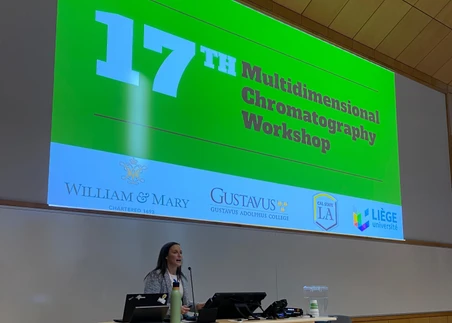
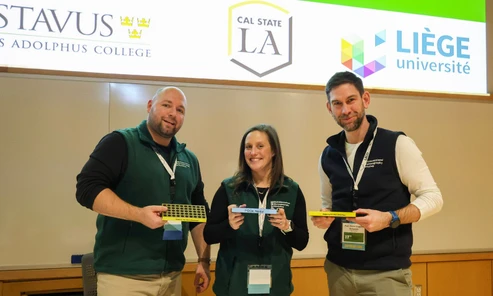
The Multidimensional Chromatography (MDC) Workshop draws experts in this exciting field to share and discuss their research.
Tags
Article
Events
LinkedIn Logo

17th MDCW 2026 (Day 3)
Fr, 16.1.2026
| Original article from: The Multidimensional Chromatography Workshop (MDCW)
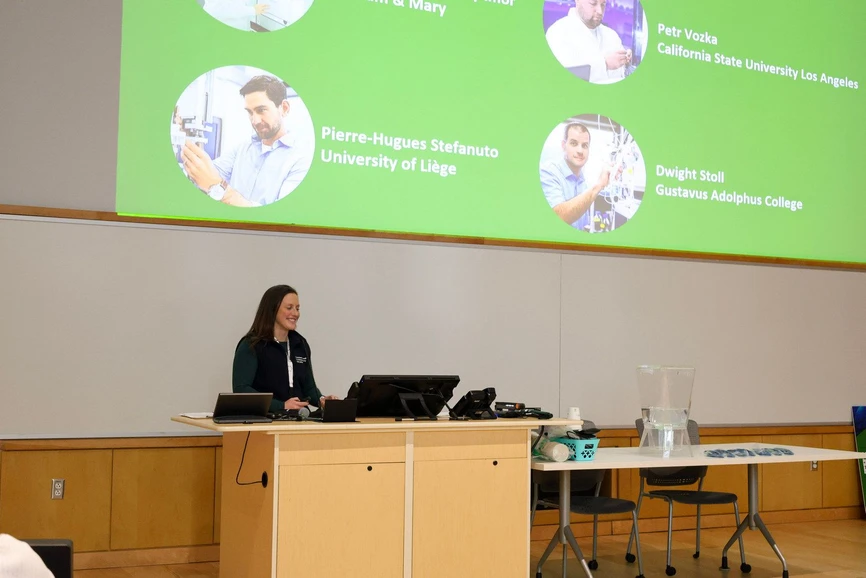
Day 3 of MDCW 2026 focused on advanced GC×GC and 2D-LC innovations, from flow-modulated GC×GC-QMS and tensor decomposition to plastic pyrolysis, forensics, bioanalysis, and polymer separations.
<p>MDCW: 17th MDCW 2026 (Day 3): Closing Remarks</p>

MDCW: 17th MDCW 2026 (Day 3): Closing Remarks

Program

Thursday January 15, 2026

8:30 – 8:45 AM Registration
8:45 – 9:00 AM Opening Remarks
9:00 – 9:20 AM O-16 No more split ends? Flow-modulated GC×GC-QMS analysis without splitting off the GC flow
  • Kirk Jensen (JEOL USA, Inc.)

Flow-modulated two-dimensional gas chromatography (GCxGC) is an excellent solution for low-boiling point compounds that are difficult to separate by thermal modulation without cryogens. Pairing a quadrupole mass spectrometer (QMS) with GCxGC can offer better dynamic range, increased sensitivity, and lower cost to GCxGC applications, however, many MS instruments can not accept the high flow rate coming from flow-modulated GCxGC. In this study, a flow modulator was installed in a QMS system designed to accept high GC flow rates, and tested using perfume and pesticide applications. Results detailing the sensitivity and effectiveness of the QMS system with high GCxGC flow input will be discussed, as well as a comparison to thermal modulation results from the same system.
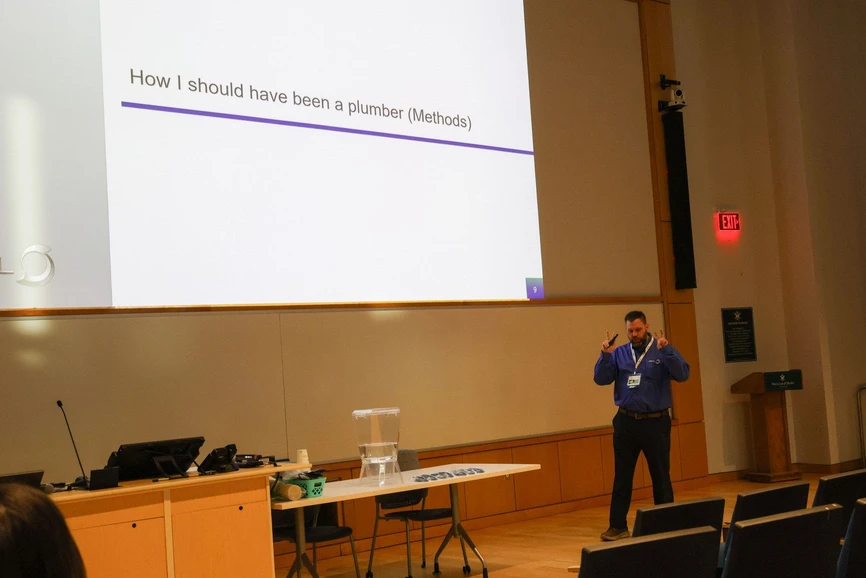
MDCW: 17th MDCW 2026 (Day 3): O-16 No more split ends? Flow-modulated GC×GC-QMS analysis without splitting off the GC flow (Kirk Jensen, JEOL USA, Inc.)MDCW: 17th MDCW 2026 (Day 3): O-16 No more split ends? Flow-modulated GC×GC-QMS analysis without splitting off the GC flow (Kirk Jensen, JEOL USA, Inc.)

9:20 – 9:40 AM O-17 One-shot tensor decomposition of full-scale GC×GC datasets for resolving petrochemical groups
  • Paul-Albert Schneide (University of Copenhagen)

Tensor decomposition methods such as PARAFAC and PARAFAC2 have been proposed for resolving co-elutions, and extracting purified spectra in two-dimensional chromatography datasets. However, the application of these methods is usually restricted to local regions-ofinterest (ROIs). Therefore, additional pre-processing steps, are required and processing multiple samples at once can be difficult due to retention time shifts (e.g., it is difficult to define a ROI that captures the same analyse signal in multiple samples). 

This work presents an application of fast, shift-invariant tensor decomposition, which was used for the decomposition of full-scale GCxGC-VUV datasets. The results show that chemical groups can be resolved, which are non-separable with conventional, templatebased approaches, such as aliphates and olefines, Furthermore, the extracted peak areas are in good agreement with the quantitative results of the reference methods (e.g., bromine number for olefines).

MDCW: 17th MDCW 2026 (Day 3): O-17 One-shot tensor decomposition of full-scale GC×GC datasets for resolving petrochemical groups  (Paul-Albert Schneide, University of Copenhagen)MDCW: 17th MDCW 2026 (Day 3): O-17 One-shot tensor decomposition of full-scale GC×GC datasets for resolving petrochemical groups (Paul-Albert Schneide, University of Copenhagen)

9:40 – 10:00 AM O-26 Counting Double Bonds: GC×GC–FID for Plastic Pyrolysis Oils
  • Petr Vozka (California State University LA)

Plastic pyrolysis oils (PPOs) are unresolved complex mixtures in which the level and speciation of unsaturation govern storage stability, upgrading severity, and the quality of fuel‑range cuts. Yet routine, transferable olefin quantitation is hampered by extensive coelution and isomer diversity. This talk presents a GC×GC–FID workflow that “counts double bonds” by selectively derivatizing olefins to reposition them within the two‑dimensional separation space, cleanly separating them from paraffins, naphthenes, and aromatics. The method produces carbon-number- and class-resolved olefin distributions (wt.%) for whole oils and distillates in the gasoline, jet, and diesel distillation range.

MDCW: 17th MDCW 2026 (Day 3): O-26 Counting Double Bonds: GC×GC–FID for Plastic Pyrolysis Oils (Petr Vozka, California State University LA)MDCW: 17th MDCW 2026 (Day 3): O-26 Counting Double Bonds: GC×GC–FID for Plastic Pyrolysis Oils (Petr Vozka, California State University LA)

10:20 – 10:50 AM Coffee Break
11:10 – 11:30 AM O-25 Unexpected solvent selectivity effects in 2D-LC separations of non-ionic copolymer surfactants
  • Ella Sontowski (Gustavus Adolphus College)

Analysis of non-ionic copolymer surfactants is challenging due to complexities of the mixture of molecules that results from industrial-scale synthesis involving heterogeneous starting materials. Two-dimensional liquid chromatography (2D-LC) involving hydrophilic interaction (HILIC) and reversed-phase (RP) separation modes has been shown to be particularly effective for this purpose. The HILIC mode is highly selective for the separation of oligomers that vary in the number of hydrophilic (e.g., ethylene oxide [EO]) repeating units, and the RP mode is highly selective for the number of hydrophophic repeating units, such as polypropylene oxide (PO). In our work on separation of EO/PO copolymer mixtures by 2D-LC we have discovered that certain mobile phase compositions used for the HILIC separation yield unexpected selectivities for isomers of these copolymers that can result from differences in the way the EO/PO oligomers are assembled during the synthesis reaction. In this presentation we will share results of a systematic study of mobile phase constituents that exhibit these selectivity effects, and demonstrate the utility of these new-found effects in ultra-high resolution 2D-LC separations of EO/PO copolymers showing that they provide insights into the species-level composition of these complex mixtures that was not possible previously.

11:30 – 11:50 PM O-24 USING SCANNING ELECTRON MICROSCOPY WITH ENERGY DISPERSIVE X-RAY SPECTROSCOPY AND COMPREHENSIVE TWO-DIMENSIONAL GAS CHROMATOGRAPHY TO DEVELOP A COMBINED APPROACH TO GREEN GUNSHOT RESIDUE ANALYSIS IN THE FORENSIC LABORATORY 
  • Grace Saunders (William & Mary)

Gunshot residue (GSR) is expelled as a "plume" of vaporized material during a firearm discharge event. As it disperses, condenses, and settles on surfaces in vicinity of the discharge, it creates chemical depositions that provide essential information for forensic casework involving criminal firearm usage. GSR contains organic (OGSR) and inorganic (IGSR) components, both of which may carry evidentiary value. Traditional analyses involve the targeted point analysis of IGSR via scanning electron microscopy - energy dispersive x-ray spectroscopy (SEM-EDS), and conclusions are drawn based on a well-established elemental and morphological profile "characteristic" to IGSR. This method has lost impact as a standard for forensic analysis due to increased use of "green" - heavy metal-free - ammunition, which omits the lead, barium, and antimony that are traditionally seen as the "characteristic" markers of GSR. This study aimed to develop a holistic approach to the analysis of GSR using both SEM-EDS as a targeted approach to IGSR analysis and comprehensive two-dimensional gas chromatography – time-of-flight mass spectrometry (GC×GC-TOFMS) as a nontargeted approach to OGSR analysis. GSR samples were collected from the hands of shooters at a police firearms recertification training using the tape lift method. SEM-EDS was used to identify IGSR and develop new morphological and elemental profiles for heavy metal-free residues. OGSR components have been positively identified through sample analysis via liquid extraction, chromatographic separation via GC×GC-TOFMS, and data processing. Future work on this project will include the optimization of data processing methods and the development of SPME as an alternative sample extraction method.
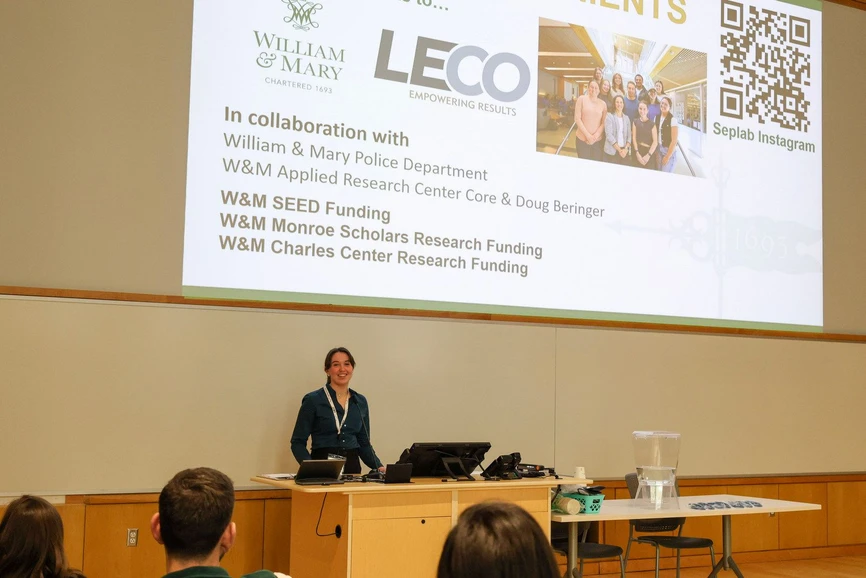
MDCW: 17th MDCW 2026 (Day 3): O-24 USING SCANNING ELECTRON MICROSCOPY WITH ENERGY DISPERSIVE X-RAY SPECTROSCOPY AND COMPREHENSIVE TWO-DIMENSIONAL GAS CHROMATOGRAPHY TO DEVELOP A COMBINED APPROACH TO GREEN GUNSHOT RESIDUE ANALYSIS IN THE FORENSIC LABORATORY  (Grace Saunders, William & Mary)MDCW: 17th MDCW 2026 (Day 3): O-24 USING SCANNING ELECTRON MICROSCOPY WITH ENERGY DISPERSIVE X-RAY SPECTROSCOPY AND COMPREHENSIVE TWO-DIMENSIONAL GAS CHROMATOGRAPHY TO DEVELOP A COMBINED APPROACH TO GREEN GUNSHOT RESIDUE ANALYSIS IN THE FORENSIC LABORATORY (Grace Saunders, William & Mary)

11:50 – 12:10 PM O-23 Identifying the transition from ante-mortem to post-mortem odor in cadavers in an outdoor environment
  • Darshil Patel (University of North Dakota)

This study investigates the transition from ante-mortem to post-mortem odor in human remains during the early post-mortem period in an outdoor environment. Three cadavers (donors) were placed at an outdoor human decomposition facility, and volatile organic compounds (VOCs) were collected and analyzed using thermal desorption coupled with comprehensive two-dimensional gas chromatography-time-of-flight mass spectrometry (TDGC × GC-TOFMS). The key findings revealed that nitrogen-containing compounds were predominant in early post-mortem VOC profiles, driven by enzymatic and bacterial activity. Esters, alcohols, and halogenated compounds were also identified, with esters linked to microbial transformation and alcohols possibly formed by lipid peroxidation. Ante-mortem VOCs were persistent across samples, influenced by skin microbiota and environmental factors like UV radiation, complicating the detection of decomposition odor. Post-mortem VOCs became more prominent after ADD 73.4(experimental day 3), signaling the transition to the bloat stage of decomposition. Variations in sample collection methods and external factors such as temperature were found to affect VOC abundances. This study provides critical insights into odor transition and has implications for the use of search and rescue (SAR) and human remains detection (HRD) dogs. Further research is needed to standardize methods and assess odor transitions across diverse environments and seasons.

MDCW: 17th MDCW 2026 (Day 3): O-23 Identifying the transition from ante-mortem to post-mortem odor in cadavers in an outdoor environment (Darshil Patel, University of North Dakota)MDCW: 17th MDCW 2026 (Day 3): O-23 Identifying the transition from ante-mortem to post-mortem odor in cadavers in an outdoor environment (Darshil Patel, University of North Dakota)

12:10 – 12:30 PM Poster Awards (Sponsored by SCSC) and Closing Remarks

MDCW: 17th MDCW 2026 (Day 3): GC Poster Prize - Madison L. Williams (The State University at Buffalo New York), Comparison of solid phase microextraction coatings for headspace extraction of volatile perfluoroalkyl substances using one- and two-dimensional gas chromatographyMDCW: 17th MDCW 2026 (Day 3): GC Poster Prize - Madison L. Williams (The State University at Buffalo New York), Comparison of solid phase microextraction coatings for headspace extraction of volatile perfluoroalkyl substances using one- and two-dimensional gas chromatography

MDCW: 17th MDCW 2026 (Day 3): GC Poster Prize - Madison L. Williams (The State University at Buffalo New York), Comparison of solid phase microextraction coatings for headspace extraction of volatile perfluoroalkyl substances using one- and two-dimensional gas chromatographyMDCW: 17th MDCW 2026 (Day 3): GC Poster Prize - Madison L. Williams (The State University at Buffalo New York), Comparison of solid phase microextraction coatings for headspace extraction of volatile perfluoroalkyl substances using one- and two-dimensional gas chromatography

The Multidimensional Chromatography Workshop
LinkedIn Logo
 

Related content

Overcoming Strong Solvent Effects in the Analysis of Vepdegestrant

Applications
| 2026 | Agilent Technologies
Instrumentation
HPLC
Manufacturer
Agilent Technologies
Industries
Pharma & Biopharma

Identification of Double Bond Positions and Relative Acyl Chain Positions in Egg Yolk Phosphatidylcholines Using OAD-TOF System

Applications
| 2026 | Shimadzu
Instrumentation
LC/MS, LC/MS/MS, LC/TOF, LC/HRMS
Manufacturer
Shimadzu
Industries
Food & Agriculture

High Molecular-Weight Polysaccharide Characterization by SEC-MALS Using GTxResolve™ 1000 and 2000 Å SEC Columns

Applications
| 2026 | Waters
Instrumentation
GPC/SEC, Consumables, LC columns
Manufacturer
Waters
Industries
Pharma & Biopharma, Food & Agriculture

Development and Optimization for a Comprehensive LC/MS/MS Method for the Detection of 74 PFAS Compounds

Applications
| 2026 | Agilent Technologies
Instrumentation
LC/MS, LC/MS/MS, LC/QQQ
Manufacturer
Agilent Technologies
Industries
Food & Agriculture

PFAS in Biota: Risk Context & Robust Analytical Solutions

Others
| 2026 | ALS Europe
Instrumentation
Laboratory analysis, LC/MS, LC/MS/MS
Manufacturer
Industries
Environmental
 

Related articles

JUNIOR STAR Grants at UCT Prague: Two talented women from abroad driving innovation in science
Article | Scientists

JUNIOR STAR Grants at UCT Prague: Two talented women from abroad driving innovation in science

Two outstanding early-career researchers at UCT Prague, Filipa Oliveira and Stella Gonsales, received prestigious GAČR JUNIOR STAR grants for innovative research in materials science and sustainable chemistry.
UCT Prague
tag
share
more
Research from IOCB Prague reveals a previously unknown mechanism of genetic transcription
Article | Science and research

Research from IOCB Prague reveals a previously unknown mechanism of genetic transcription

Scientists at IOCB Prague reveal a previously unknown mechanism that initiates gene transcription. Using cryo-EM, they uncover how alarmone molecules enable RNA synthesis under stress.
Institute of Organic Chemistry and Biochemistry of the Czech Academy of Sciences
tag
share
more
Food Adulteration and How It Is Revealed by Analytical Chemistry
Article | Food

Food Adulteration and How It Is Revealed by Analytical Chemistry

Food adulteration threatens quality and consumer trust. Discover how HPLC and modern chromatographic systems from Watrex Praha help identify oil, honey, and wine adulteration with high confidence.
Watrex Praha
tag
share
more
Affinity, Gel Filtration, Size Exclusion Chromatography: Repurposing Kinase Inhibitors for Malaria
Interview | Video

Affinity, Gel Filtration, Size Exclusion Chromatography: Repurposing Kinase Inhibitors for Malaria

This podcast explores how chromatography (FPLC/SEC) and mass spectrometry support malaria drug discovery, from protein purification and QC to interaction studies and complex sample preparation.
Organomation
tag
share
more
 

Related content

Overcoming Strong Solvent Effects in the Analysis of Vepdegestrant

Applications
| 2026 | Agilent Technologies
Instrumentation
HPLC
Manufacturer
Agilent Technologies
Industries
Pharma & Biopharma

Identification of Double Bond Positions and Relative Acyl Chain Positions in Egg Yolk Phosphatidylcholines Using OAD-TOF System

Applications
| 2026 | Shimadzu
Instrumentation
LC/MS, LC/MS/MS, LC/TOF, LC/HRMS
Manufacturer
Shimadzu
Industries
Food & Agriculture

High Molecular-Weight Polysaccharide Characterization by SEC-MALS Using GTxResolve™ 1000 and 2000 Å SEC Columns

Applications
| 2026 | Waters
Instrumentation
GPC/SEC, Consumables, LC columns
Manufacturer
Waters
Industries
Pharma & Biopharma, Food & Agriculture

Development and Optimization for a Comprehensive LC/MS/MS Method for the Detection of 74 PFAS Compounds

Applications
| 2026 | Agilent Technologies
Instrumentation
LC/MS, LC/MS/MS, LC/QQQ
Manufacturer
Agilent Technologies
Industries
Food & Agriculture

PFAS in Biota: Risk Context & Robust Analytical Solutions

Others
| 2026 | ALS Europe
Instrumentation
Laboratory analysis, LC/MS, LC/MS/MS
Manufacturer
Industries
Environmental
 

Related articles

JUNIOR STAR Grants at UCT Prague: Two talented women from abroad driving innovation in science
Article | Scientists

JUNIOR STAR Grants at UCT Prague: Two talented women from abroad driving innovation in science

Two outstanding early-career researchers at UCT Prague, Filipa Oliveira and Stella Gonsales, received prestigious GAČR JUNIOR STAR grants for innovative research in materials science and sustainable chemistry.
UCT Prague
tag
share
more
Research from IOCB Prague reveals a previously unknown mechanism of genetic transcription
Article | Science and research

Research from IOCB Prague reveals a previously unknown mechanism of genetic transcription

Scientists at IOCB Prague reveal a previously unknown mechanism that initiates gene transcription. Using cryo-EM, they uncover how alarmone molecules enable RNA synthesis under stress.
Institute of Organic Chemistry and Biochemistry of the Czech Academy of Sciences
tag
share
more
Food Adulteration and How It Is Revealed by Analytical Chemistry
Article | Food

Food Adulteration and How It Is Revealed by Analytical Chemistry

Food adulteration threatens quality and consumer trust. Discover how HPLC and modern chromatographic systems from Watrex Praha help identify oil, honey, and wine adulteration with high confidence.
Watrex Praha
tag
share
more
Affinity, Gel Filtration, Size Exclusion Chromatography: Repurposing Kinase Inhibitors for Malaria
Interview | Video

Affinity, Gel Filtration, Size Exclusion Chromatography: Repurposing Kinase Inhibitors for Malaria

This podcast explores how chromatography (FPLC/SEC) and mass spectrometry support malaria drug discovery, from protein purification and QC to interaction studies and complex sample preparation.
Organomation
tag
share
more
 

Related content

Overcoming Strong Solvent Effects in the Analysis of Vepdegestrant

Applications
| 2026 | Agilent Technologies
Instrumentation
HPLC
Manufacturer
Agilent Technologies
Industries
Pharma & Biopharma

Identification of Double Bond Positions and Relative Acyl Chain Positions in Egg Yolk Phosphatidylcholines Using OAD-TOF System

Applications
| 2026 | Shimadzu
Instrumentation
LC/MS, LC/MS/MS, LC/TOF, LC/HRMS
Manufacturer
Shimadzu
Industries
Food & Agriculture

High Molecular-Weight Polysaccharide Characterization by SEC-MALS Using GTxResolve™ 1000 and 2000 Å SEC Columns

Applications
| 2026 | Waters
Instrumentation
GPC/SEC, Consumables, LC columns
Manufacturer
Waters
Industries
Pharma & Biopharma, Food & Agriculture

Development and Optimization for a Comprehensive LC/MS/MS Method for the Detection of 74 PFAS Compounds

Applications
| 2026 | Agilent Technologies
Instrumentation
LC/MS, LC/MS/MS, LC/QQQ
Manufacturer
Agilent Technologies
Industries
Food & Agriculture

PFAS in Biota: Risk Context & Robust Analytical Solutions

Others
| 2026 | ALS Europe
Instrumentation
Laboratory analysis, LC/MS, LC/MS/MS
Manufacturer
Industries
Environmental
 

Related articles

JUNIOR STAR Grants at UCT Prague: Two talented women from abroad driving innovation in science
Article | Scientists

JUNIOR STAR Grants at UCT Prague: Two talented women from abroad driving innovation in science

Two outstanding early-career researchers at UCT Prague, Filipa Oliveira and Stella Gonsales, received prestigious GAČR JUNIOR STAR grants for innovative research in materials science and sustainable chemistry.
UCT Prague
tag
share
more
Research from IOCB Prague reveals a previously unknown mechanism of genetic transcription
Article | Science and research

Research from IOCB Prague reveals a previously unknown mechanism of genetic transcription

Scientists at IOCB Prague reveal a previously unknown mechanism that initiates gene transcription. Using cryo-EM, they uncover how alarmone molecules enable RNA synthesis under stress.
Institute of Organic Chemistry and Biochemistry of the Czech Academy of Sciences
tag
share
more
Food Adulteration and How It Is Revealed by Analytical Chemistry
Article | Food

Food Adulteration and How It Is Revealed by Analytical Chemistry

Food adulteration threatens quality and consumer trust. Discover how HPLC and modern chromatographic systems from Watrex Praha help identify oil, honey, and wine adulteration with high confidence.
Watrex Praha
tag
share
more
Affinity, Gel Filtration, Size Exclusion Chromatography: Repurposing Kinase Inhibitors for Malaria
Interview | Video

Affinity, Gel Filtration, Size Exclusion Chromatography: Repurposing Kinase Inhibitors for Malaria

This podcast explores how chromatography (FPLC/SEC) and mass spectrometry support malaria drug discovery, from protein purification and QC to interaction studies and complex sample preparation.
Organomation
tag
share
more
 

Related content

Overcoming Strong Solvent Effects in the Analysis of Vepdegestrant

Applications
| 2026 | Agilent Technologies
Instrumentation
HPLC
Manufacturer
Agilent Technologies
Industries
Pharma & Biopharma

Identification of Double Bond Positions and Relative Acyl Chain Positions in Egg Yolk Phosphatidylcholines Using OAD-TOF System

Applications
| 2026 | Shimadzu
Instrumentation
LC/MS, LC/MS/MS, LC/TOF, LC/HRMS
Manufacturer
Shimadzu
Industries
Food & Agriculture

High Molecular-Weight Polysaccharide Characterization by SEC-MALS Using GTxResolve™ 1000 and 2000 Å SEC Columns

Applications
| 2026 | Waters
Instrumentation
GPC/SEC, Consumables, LC columns
Manufacturer
Waters
Industries
Pharma & Biopharma, Food & Agriculture

Development and Optimization for a Comprehensive LC/MS/MS Method for the Detection of 74 PFAS Compounds

Applications
| 2026 | Agilent Technologies
Instrumentation
LC/MS, LC/MS/MS, LC/QQQ
Manufacturer
Agilent Technologies
Industries
Food & Agriculture

PFAS in Biota: Risk Context & Robust Analytical Solutions

Others
| 2026 | ALS Europe
Instrumentation
Laboratory analysis, LC/MS, LC/MS/MS
Manufacturer
Industries
Environmental
 

Related articles

JUNIOR STAR Grants at UCT Prague: Two talented women from abroad driving innovation in science
Article | Scientists

JUNIOR STAR Grants at UCT Prague: Two talented women from abroad driving innovation in science

Two outstanding early-career researchers at UCT Prague, Filipa Oliveira and Stella Gonsales, received prestigious GAČR JUNIOR STAR grants for innovative research in materials science and sustainable chemistry.
UCT Prague
tag
share
more
Research from IOCB Prague reveals a previously unknown mechanism of genetic transcription
Article | Science and research

Research from IOCB Prague reveals a previously unknown mechanism of genetic transcription

Scientists at IOCB Prague reveal a previously unknown mechanism that initiates gene transcription. Using cryo-EM, they uncover how alarmone molecules enable RNA synthesis under stress.
Institute of Organic Chemistry and Biochemistry of the Czech Academy of Sciences
tag
share
more
Food Adulteration and How It Is Revealed by Analytical Chemistry
Article | Food

Food Adulteration and How It Is Revealed by Analytical Chemistry

Food adulteration threatens quality and consumer trust. Discover how HPLC and modern chromatographic systems from Watrex Praha help identify oil, honey, and wine adulteration with high confidence.
Watrex Praha
tag
share
more
Affinity, Gel Filtration, Size Exclusion Chromatography: Repurposing Kinase Inhibitors for Malaria
Interview | Video

Affinity, Gel Filtration, Size Exclusion Chromatography: Repurposing Kinase Inhibitors for Malaria

This podcast explores how chromatography (FPLC/SEC) and mass spectrometry support malaria drug discovery, from protein purification and QC to interaction studies and complex sample preparation.
Organomation
tag
share
more
Other projects
GCMS
ICPMS
Follow us
More information
WebinarsAbout usContact usTerms of use
LabRulez s.r.o. All rights reserved. Content available under a CC BY-SA 4.0 Attribution-ShareAlike