New Study Reveals How Agricultural Plastics Impact Soil Health In Real Conditions
RECETOX: New Study Reveals How Agricultural Plastics Impact Soil Health In Real Conditions
Mulching films used in agriculture gradually break down and can become a significant source of microplastics in soils. A new study shows that these particles affect not only soil structure but also microbial life and nitrogen cycling.
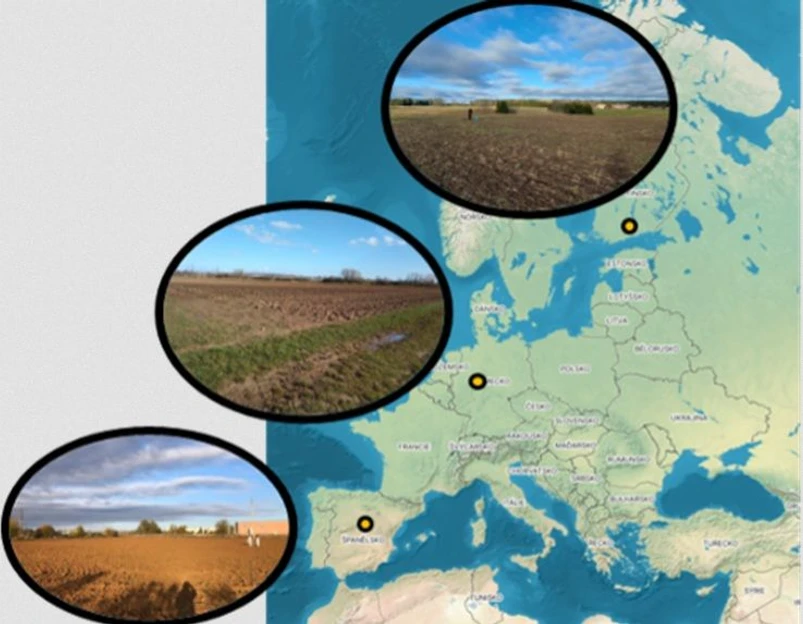
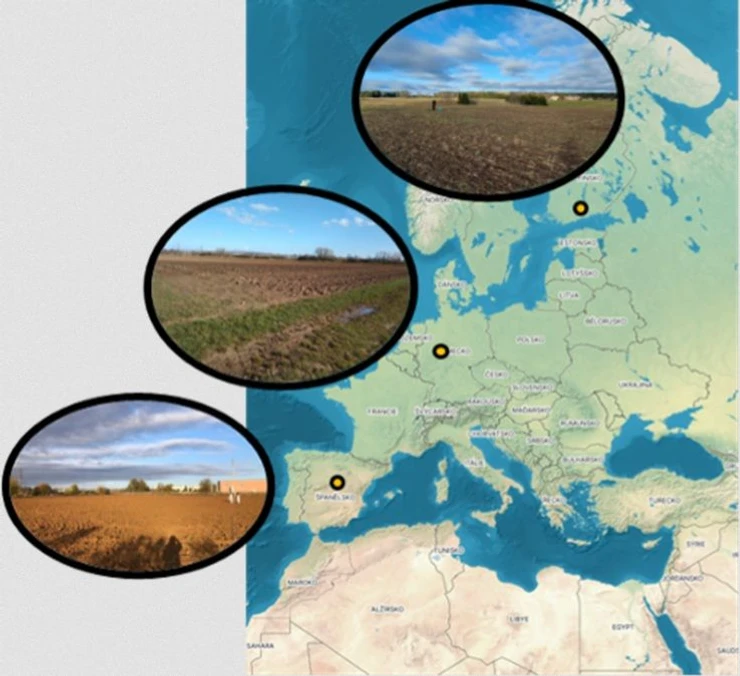
“We wanted to understand how microplastics from both conventional and biodegradable mulching films influence soil properties, microbial diversity and functions in real conditions,” explains Klára Šmídová, the study’s co-author . “That’s why we added realistic amounts of microplastics to soils in experimental plots in Finland, Germany, and Spain, monitored them over two growing seasons, and compared them with the control plots.”
The results revealed that microplastics alter soil characteristics and microbial communities, although not always in the same way. “ However, a consistent finding was the decline in microbial activity associated with key processes, including nitrogen cycling, with negative effects increasing at higher microplastic concentrations and becoming more pronounced in the second year,” Šmídová adds. Because the microplastic levels used in the study reflect amounts already found in European soils, the findings highlight real risks to soil health. “We also found that the effects were stronger in southern than in northern Europe, likely due to differences in climate and soil conditions. This means that protecting soils from plastic pollution will require region-specific risk assessments,” she says.
Over 60% of European soils are estimated to be unhealthy, with ongoing degradation driven by unsustainable land use, contamination, climate change, and extreme weather events. In response, the EU Parliament adopted the Soil Monitoring Law in October 2025, aiming to achieve healthy soils across Europe by 2050. “The law highlights the role of soil health in food security, water quality, and climate objectives, and establishes consistent soil monitoring across Member States. It includes measures to support farmers and foresters, while also creating a public list of potentially contaminated sites and an indicative watch list of emerging soil contaminants,” explains Klára Šmídová.
The project brought together 19 research groups across Europe. “After each season, hundreds of samples were colle cted and sent to partners for analysis. This paper focuses on soil properties, microbial diversity, and greenhouse gas emissions. Two more manuscripts—on plastic additives and microplastic fate, and on soil invertebrates—are in preparation. Together, they will give us a complete picture of how agricultural microplastics affect soil ecosystems,” concludes Klára Šmídová.
 RECETOX: New Study Reveals How Agricultural Plastics Impact Soil Health In Real Conditions
The Original article
Conventional and biodegradable agricultural microplastics: effects on soil properties and microbial functions across a European pedoclimatic gradient
Šmídová K., Soinne H., Kim S. W., Tirronniemi J., Meffe R., Redondo-Hasselerharm P. E., Braun M., Rillig M. C., Fritze H., Adamczyk B., Nikama J., Kaseva J., Saartama V., Amelung W., Hurley R., Hofman J., Nizzetto L., Selonen S., Velmala S.
Environ. Pollut. 386 (2025) 127212
licensed under CC-BY 4.0
Abstract
Agricultural plastics like mulching films may become a major source of microplastic (MP) soil contamination during their degradation and fragmentation. This study investigates the effects of agricultural MPs from conventional (linear low-density polyethylene, PE) and biodegradable (starch-blended polybutylene adipate co-terephthalate, PBAT-BD) mulching films on soil physicochemical properties, aggregation, microbial diversity and functions, litter decomposition, and greenhouse gases emissions (GHG). For this purpose, MPs were mixed into soils at realistic MP concentrations of 0.005 % and 0.05 % (w/w) in 2022 on experimental plots in three EU countries representing different pedoclimatic conditions (Finland, Germany and Spain), followed by monitoring of the above-mentioned variables in the subsequent growing seasons 2022 and 2023. We found several significant MP-induced effects for soil properties, aggregation, microbial diversity, litter decomposition, and GHG, but the effect endpoints were less pronounced or varied considerably. Contrarily, microbial activity, contributing to soil functions such as nitrogen cycling, was consistently reduced by both conventional and biodegradable MPs. The reductions were more pronounced after the second season and for the higher MP treatment. As the higher MP concentration (i.e., 0.05 % w/w) is environmentally relevant in Europe, our findings emphasize the potential effects of environmentally relevant MP concentrations on soil health. Furthermore, the effects increased from north to south, probably modulated by varying pedoclimatic conditions, inducing reflection of a need for regionally tailored risk