Unlocking Hemoglobin Variant Detection: LC-HR-MS Breakthrough with Ainslie Chen

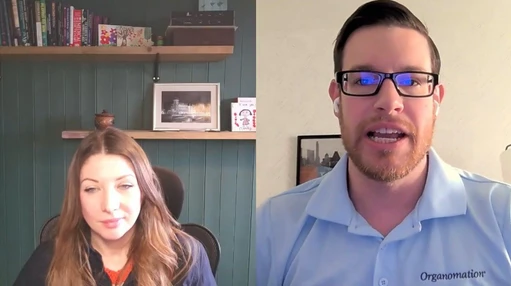
- Photo: Concentrating on Chromatography: Unlocking Hemoglobin Variant Detection: LC-HR-MS Breakthrough with Ainslie Chen
- Video: Concentrating on Chromatography: Unlocking Hemoglobin Variant Detection: LC-HR-MS Breakthrough with Ainslie Chen
In this episode of the Concentrating on Chromatography podcast, host David Oliva interviews Ainslie Chen about her cutting-edge research on hemoglobin variant testing using liquid chromatography-high resolution mass spectrometry (LC-HR-MS). Ainslie discusses her novel method for separating and identifying hemoglobin subunits with mass shifts less than 1 Da, overcoming critical limitations in conventional clinical assays.
Hear firsthand how her team developed an LC-HR-MS workflow using a C4 reversed-phase column, tackled technical challenges (including why C18 columns fell short), and achieved unprecedented sensitivity for variant detection in both adult and neonatal samples. The conversation touches on the potential of mass spectrometry to revolutionize clinical diagnostics, the importance of reproducibility, barriers to adoption in routine labs, and how teamwork drives scientific innovation.
Perfect for analytical chemists, clinical laboratorians, and anyone interested in the future of protein variant analysis, this episode also features Ainslie’s advice for early-career scientists and insights from her first ACS poster presentation.
Key Highlights:
- Motivation behind improving hemoglobinopathy testing
- Technical advantages of LC-HR-MS over gene sequencing and CE
- The crucial role of the C4 column in resolving challenging samples
- Critical parameters for reproducible LC-HR-MS workflows
- Barriers and outlook for clinical adoption of advanced mass spectrometry
- The value of teamwork and mentorship in scientific research
- Direct insights from recent ACS conference experiences
Video transcription
In this interview, Ainslie Chen discusses her research on improving the detection and identification of hemoglobin variants using liquid chromatography coupled with high-resolution mass spectrometry (LC-HRMS). The work addresses limitations of conventional hemoglobinopathy testing, which often struggles to resolve very small mass differences between closely related hemoglobin subunits. Because even a single amino-acid substitution can significantly alter hemoglobin structure and function, high analytical resolution is essential for accurate diagnosis of conditions such as anemia and sickle cell disease.
Chen explains why her team selected LC-HRMS over established clinical techniques like capillary electrophoresis and gene sequencing. While sequencing offers excellent accuracy, it is time-consuming, costly, and requires extensive sample preparation, making it impractical for routine clinical workflows. Capillary electrophoresis enables subunit separation but lacks the resolving power needed to distinguish variants differing by less than one Dalton. In contrast, high-resolution mass spectrometry provides both structural specificity and sensitivity, enabling confident identification of subtle hemoglobin variants with minimal sample preparation.
A key methodological insight from the project was the use of a C4 reversed-phase LC column instead of the more common C18 column. Chen describes how the shorter carbon chain and larger pore size of C4 columns improved protein elution and reduced denaturation, leading to more reproducible separations. Critical parameters for reproducibility included consistent mobile-phase composition (0.1% formic acid in water and acetonitrile), controlled temperature (60 °C for LC, ~320 °C capillary temperature), and stable chromatographic conditions.
Beyond hemoglobin analysis, Chen highlights the broader potential of high-resolution mass spectrometry in proteoform analysis and clinical diagnostics, including emerging applications in cancer detection. She acknowledges current barriers to clinical adoption—such as energy demands and instrument infrastructure—but points to advances like miniaturized mass spectrometers as promising steps toward wider use. The interview concludes with advice for young scientists: don’t hesitate to reach out to mentors, embrace collaboration, and view analytical chemistry as a versatile tool that bridges medicine, biology, environmental science, and beyond.
This text has been automatically transcribed from a video presentation using AI technology. It may contain inaccuracies and is not guaranteed to be 100% correct.
Concentrating on Chromatography Podcast
Dive into the frontiers of chromatography, mass spectrometry, and sample preparation with host David Oliva. Each episode features candid conversations with leading researchers, industry innovators, and passionate scientists who are shaping the future of analytical chemistry. From decoding PFAS detection challenges to exploring the latest in AI-assisted liquid chromatography, this show uncovers practical workflows, sustainability breakthroughs, and the real-world impact of separation science. Whether you’re a chromatographer, lab professional, or researcher you'll discover inspiring content!
You can find Concentrating on Chromatography Podcast in podcast apps:
and on YouTube channel