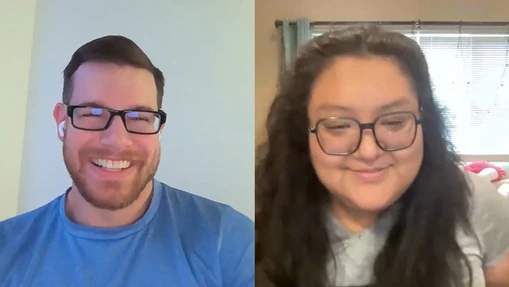
Teaching Separation Science in High School
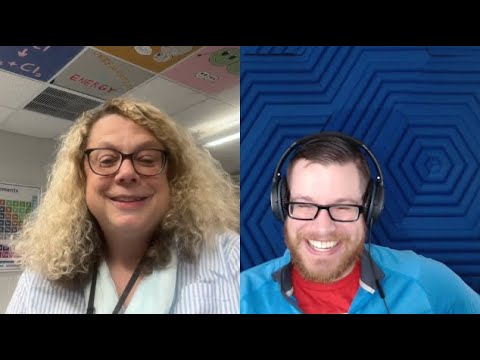
- Photo: Concentrating on Chromatography: Teaching Separation Science in High School | Chemistry Teacher Dr. Vanderveen
- Video: Concentrating on Chromatography: Teaching Separation Science in High School | Chemistry Teacher Dr. Vanderveen
🎤Dr. Kristen Vanderveen (Dr. Vanderveen's chemistry education content on YouTube: @drvchemistry)
Dr. Kristen Vanderveen is a chemistry teacher at The Bromfield School with over 20 years of experience teaching high school chemistry, including AP Chemistry. Her background includes working as a protein chemist before transitioning to education.
In this episode of Concentrating on Chromatography, David interviews his former high school chemistry teacher, Dr. Kristen Vanderveen from The Bromfield School, about teaching separation science at the high school level.
Dr. Vanderveen shares her approach to introducing chromatography, filtration, and gravimetric analysis to both first-year chemistry students and AP Chemistry students. She discusses the hands-on experiments that work best in a high school setting, including paper chromatography with food dyes, TLC separations, and the challenges of balancing lab time with curriculum requirements.
Topics discussed:
- Separation methods taught in high school chemistry (filtration, paper chromatography, TLC)
- Gravimetric analysis and precipitation experiments for AP Chemistry
- Student engagement strategies and memorable lab activities
- Balancing theoretical concepts with hands-on experimentation
- Common student misconceptions about separation techniques
- Preparing students for college-level chemistry courses
Video Transcription
How Separation Science Is Introduced in High School Chemistry
Separation science may seem like an advanced topic associated mainly with research laboratories and analytical instrumentation, but its foundations are introduced much earlier. In this interview, chemistry teacher Kristen reflects on how separation methods are taught at the high school level, especially in AP Chemistry, and how these early experiences help prepare students for future studies in chemistry and related fields.
Filtration and chromatography as core teaching tools
According to Kristen, one of the most important separation techniques taught in high school chemistry is filtration, particularly through gravimetric analysis. In AP Chemistry, students are expected to understand how to form, isolate, dry, and weigh a precipitate, making filtration one of the most frequently practiced laboratory skills. These exercises help students connect separation techniques with stoichiometry, quantitative analysis, and proper laboratory handling.
Another key topic is chromatography. Although AP Chemistry does not cover chromatography in great technical depth, students are introduced to important principles such as the stationary phase, mobile phase, solvent front, and Rf values. Kristen explains that these ideas are most effectively learned through hands-on experiments, which is why she regularly includes paper chromatography and, in some cases, thin-layer chromatography (TLC) in her classes.
Hands-on experiments make the concepts real
Among the most engaging classroom activities are chromatography labs based on food dyes and marker inks. Students may begin with a guided exercise to learn how to spot samples, prepare chromatography chambers, and compare separations under different solvent conditions. In more advanced versions of the experiment, they are asked to design their own solvent systems to optimize the separation of selected dyes and then present their findings in a small poster format.
Kristen notes that these activities help students understand not only the scientific principle but also the practical challenges of separations. They quickly learn that details matter — for example, how sample spotting affects band shape, or how easy it is to make errors by placing the paper incorrectly in the solvent. These moments often become valuable “aha” experiences, showing students that experimental science requires patience, repetition, and careful observation.
Balancing theory, time, and skill development
One of the biggest challenges in teaching separation science at the high school level is limited classroom time. Modern school schedules, AP curriculum demands, and the need to teach many other foundational laboratory skills mean that only a few separation methods can be explored in depth. While students are introduced to concepts such as distillation, evaporation, and decanting, chromatography and filtration are the main techniques they actively practice.
Kristen emphasizes that the goal is not to make students experts, but to ensure they leave high school with enough familiarity to succeed in college-level chemistry. If they have filtered a precipitate, seen chromatography in action, and understand that mixtures can be separated based on physical and chemical properties, then they are better prepared for more advanced topics such as separatory funnels, column chromatography, GC-MS, or LC-MS later in their education.
Building the bridge to future chemistry careers
The interview also highlights a broader point: high school chemistry is often the first point of contact students have with analytical thinking and laboratory separation methods. While they may not yet know about the full range of chromatographic and mass spectrometric techniques used in research and industry, these early lab experiences build the conceptual framework needed for future growth.
Kristen also points out that students are often unaware of the many careers connected to analytical chemistry beyond academia. From teaching and research to applications science, instrument support, and industrial laboratories, separation science opens doors to a wide range of scientific paths. High school exposure may be basic, but it plays an important role in making those future possibilities accessible.
This text has been automatically transcribed from a video presentation using AI technology. It may contain inaccuracies and is not guaranteed to be 100% correct.
Concentrating on Chromatography Podcast
Dive into the frontiers of chromatography, mass spectrometry, and sample preparation with host David Oliva. Each episode features candid conversations with leading researchers, industry innovators, and passionate scientists who are shaping the future of analytical chemistry. From decoding PFAS detection challenges to exploring the latest in AI-assisted liquid chromatography, this show uncovers practical workflows, sustainability breakthroughs, and the real-world impact of separation science. Whether you’re a chromatographer, lab professional, or researcher you'll discover inspiring content!
You can find Concentrating on Chromatography Podcast in podcast apps:
and on YouTube channel