HPLC Peak Shapes Explained: Why Your Chromatography Peaks Are Not Perfect & How to Fix Them
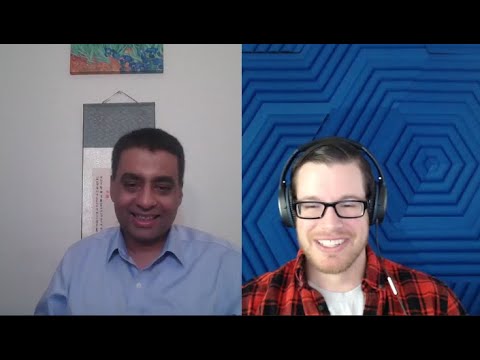
- Photo: Concentrating on Chromatography: HPLC Peak Shapes Explained: Why Your Chromatography Peaks Are Not Perfect & How to Fix Them
- Video: Concentrating on Chromatography: HPLC Peak Shapes Explained: Why Your Chromatography Peaks Are Not Perfect & How to Fix Them
Join analytical chemist Dr. M. Farooq Wahab from the University of Texas at Arlington as he breaks down the science behind chromatographic peak shapes in this episode of the Concentrating on Chromatography podcast. Perfect for undergraduate chemists and researchers alike, this conversation covers:
- What makes an ideal chromatographic peak shape and why it matters
- Common reasons your HPLC peaks might show tailing, fronting, or distortion
- Practical tips for diagnosing and troubleshooting peak shape problems
- How to use visual and digital tools (like Excel) to analyze your chromatogram data beyond basic numbers
- The importance of baseline correction, denoising, and signal processing in chromatography
- Advice for students and early researchers aiming to excel in analytical chemistry
Dr. Wahab shares lively insights from his research and decades of experience, revealing the underlying physics, chemistry, and engineering behind the peaks you see—and why peaks tell the story of your chromatography.
Whether new to HPLC or looking to deepen your understanding, this episode demystifies a critical topic that impacts every chromatographer.
Video Transcription
The interview with Dr. M. Farooq Wahab focuses on why chromatographic peak shape matters and how it can be used as a practical diagnostic tool. He explains that the ideal peak is a narrow, symmetric Gaussian shape because it’s easier to detect and integrate reliably, but real peaks often show tailing, fronting, broadening, or splitting, which can compromise quantitation and interpretation.
Dr. Wahab groups the main causes of distorted peaks into three buckets: thermodynamic effects (overloading the column’s capacity), kinetic effects (multiple interaction sites causing slow desorption and tailing), and fluid-dynamic/packing effects (non-uniform packed beds leading to fronting, tailing, or split peaks). He also highlights chemical interactions with metal surfaces in LC hardware—especially strong binding of phosphate-containing compounds to iron/steel—that can cause severe tailing or even complete loss of the analyte, sometimes requiring cleaning with chelators like EDTA.
He cautions that single-number metrics such as tailing factor or asymmetry are convenient but can hide important details, so analysts should assess the full peak profile, using more advanced evaluations (e.g., Gaussian/derivative-style tests) when needed. For troubleshooting, he recommends “back to basics” benchmarking: run the manufacturer’s QC method on a new column to separate instrument issues from method/column/operator errors.
Finally, the discussion broadens to data handling and career advice. Dr. Wahab argues for reproducible, transparent data analysis (sharing code/supporting files) and encourages students to use accessible tools like Excel (and carefully verified AI help) to explore peak diagnostics, denoising, and baseline correction—often best understood via frequency-domain thinking. He closes by advising young scientists to build skills across the “four pillars” of analytical chemistry: chemistry, physics, mathematics, and scientific computation, and to pursue science with passion and realistic expectations.
This text has been automatically transcribed from a video presentation using AI technology. It may contain inaccuracies and is not guaranteed to be 100% correct.
Concentrating on Chromatography Podcast
Dive into the frontiers of chromatography, mass spectrometry, and sample preparation with host David Oliva. Each episode features candid conversations with leading researchers, industry innovators, and passionate scientists who are shaping the future of analytical chemistry. From decoding PFAS detection challenges to exploring the latest in AI-assisted liquid chromatography, this show uncovers practical workflows, sustainability breakthroughs, and the real-world impact of separation science. Whether you’re a chromatographer, lab professional, or researcher you'll discover inspiring content!
You can find Concentrating on Chromatography Podcast in podcast apps:
and on YouTube channel