New material helps break down antibiotics in wastewater
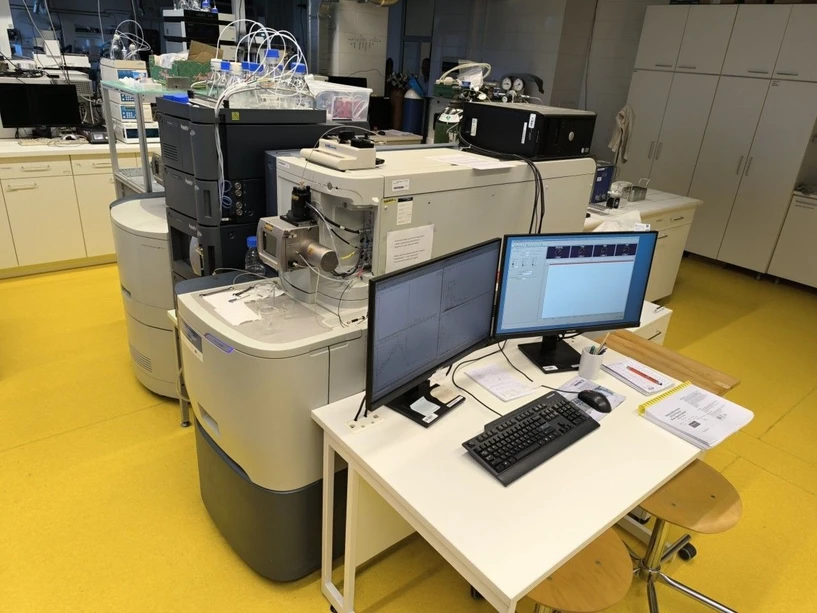
UPOL/Petr Bednář: New material helps break down antibiotics in wastewater
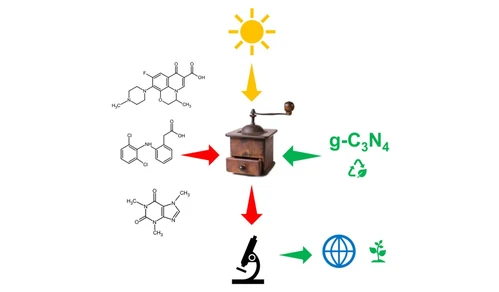
A special photocatalytic material based on graphitic carbon nitride, developed at the University of Ostrava and VŠB - Technical University of Ostrava can effectively break down antibiotics and other pharmaceutical substances that commonly used wastewater treatment technologies are generally unable to remove, meaning drug residues end up in waterways via the sewer system. This is the conclusion of research conducted in collaboration with experts from the Department of Analytical Chemistry at the Faculty of Science, Palacký University.
The study’s results were published in the international journal iScience. The scientists will continue to test the potential use of the photocatalytic material in wastewater treatment.
“Analytical chemistry plays a crucial role in the development of new environmental technologies.” Petr Bednář
The research team focused on the efficiency of photocatalysis, a process in which a special light-activated material triggers chemical reactions that break down organic pollutants in water. The graphitic carbon nitride used contains no metals, is chemically stable, and works not only under ultraviolet radiation but also under ordinary visible light.
“Laboratory experiments showed that within two hours, the material was able to remove more than 95 percent of the antibiotic ofloxacin and the drug diclofenac. In the case of caffeine, the efficiency reached approximately 80 percent,” said Petr Bednář from the Department of Analytical Chemistry at the Faculty of Science.
The experts also described the degradation mechanisms and, using liquid chromatography coupled with high-resolution mass spectrometry, identified the intermediates formed during the ongoing reactions. The results suggest that most of these substances pose a lower environmental burden than the original drugs. “Without modern analytical methods, we would not be able to determine whether harmful substances actually degrade safely and what chemical processes occur during water treatment. Analytical chemistry therefore plays a crucial role in the development of new environmental technologies,” noted Petr Bednář.
UPOL/Petr Bednář: New material helps break down antibiotics in wastewater: A combination of liquid chromatography and mass spectrometry used to measure antibiotic degradation products.
Original article
Photocatalytic degradation and transformation of pharmaceuticals using exfoliated metal-free g-C3N4
Petr Praus, Anna Gavlová, Jan Hrbáč, Kristina Schmidtová, Petr Bednář
Praus et al., 2025, iScience 28, 113899
https://doi.org/10.1016/j.isci.2025.113899
licensed under CC-BY 4.0
Abstract
Pharmaceuticals are micropollutants of global concern that contribute to environmental contamination alongside other anthropogenic and natural chemical compounds. This study addresses the photocatalytic degradation of model pharmaceutical compounds ofloxacin, diclofenac, and caffeine using bulk and thermally exfoliated graphitic carbon nitride (g-C3N4). Bulk g-C3N4 was synthesized from dicyandiamide at 550°C and exfoliated at 500 °C for 1-3 h in an ambient atmosphere. The structural, textural, and electronic properties of the prepared materials were evaluated.
Graphitic carbon nitride exfoliated for 2 h provided the best photocatalytic degradation efficiencies (>95%) for both ofloxacin and diclofenac and approximately 80% for caffeine, determined for 120 min under irradiation at 420 nm. The pharmaceuticals were degraded, and their intermediate degradation products were investigated using liquid chromatography combined with high-resolution tandem mass spectrometry. The successful identification of the main degradation products allowed us to propose transformation pathways for the studied pharmaceuticals.