AQbD Explained: How Design of Experiments is Transforming Chromatography
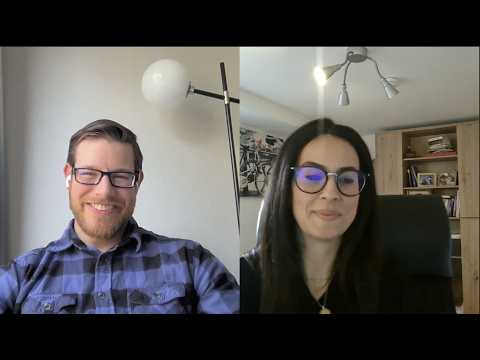
- Photo: Concentrating on Chromatography: AQbD Explained: How Design of Experiments is Transforming Chromatography (LC-MS, Pharma & Biopharma)
- Video: Concentrating on Chromatography: AQbD Explained: How Design of Experiments is Transforming Chromatography (LC-MS, Pharma & Biopharma)
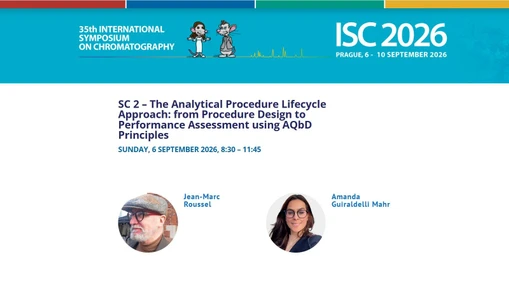
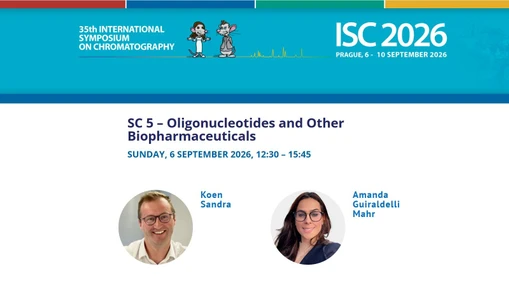
🎤Amanda Guiraldelli Mahr
Amanda shares insights from her work across small molecules, peptides, proteins, and biopharmaceuticals, including her experience with LC-MS, metabolomics, impurity analysis, and oligonucleotide therapeutics.
What You’ll Learn in This Episode:
- What AQbD actually means (in simple terms)
- How DOE differs from traditional one-factor-at-a-time experiments
- Why modern labs are shifting toward predictive, data-driven method development
- The biggest benefits of DOE: more insight with fewer experiments*
- Real-world example: optimizing oligonucleotide impurity separations using AQbD
- Key LC parameters that impact performance (pH, gradient, column, temperature)
- Challenges of working with large molecules vs. small molecules
- Tools and software for DOE and chromatographic modeling
- How AI and modeling are shaping the future of chromatography
Key Takeaway: “Shift your mindset from testing to understanding.”
Who This Episode Is For:
- Undergraduate and graduate chemistry students
- Analytical scientists and method developers
- Pharma & biopharma professionals
- Anyone working with LC, LC-MS, or chromatography method development
Video Transcription
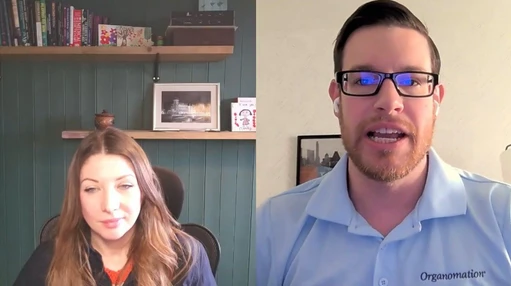
In this episode of Concentrating on Chromatography, David interviews Amanda Guiraldelli Mahr, an analytical chemist whose career has spanned pharmaceuticals, metabolomics, regulatory science, mass spectrometry, and biopharmaceutical analysis. Amanda discusses her journey from pharmacy and biochemistry studies to working with chromatography and mass spectrometry in academic, regulatory, and industrial environments.
The conversation focuses on the growing role of Analytical Quality by Design (AQbD), Design of Experiments (DOE), predictive modeling, and the future integration of artificial intelligence into chromatographic method development. Amanda also shares practical insights into method development for small molecules, peptides, proteins, oligonucleotides, and emerging therapeutics.
Early Career and Introduction to Chromatography
Amanda's interest in analytical chemistry began during her studies in pharmacy and biochemistry. An internship focused on chromatography for botanical medicine analysis introduced her to separation science and inspired her to pursue a PhD in analytical chemistry.
During her doctoral research, she worked extensively with LC-MS-based metabolomics, which led her to explore experimental design approaches and method development strategies. Her passion for chromatography and mass spectrometry deepened further while working at the United States Pharmacopeia (USP), where she routinely applied chromatographic and mass spectrometric techniques to characterize:
- Small-molecule drug substances
- Pharmaceutical ingredients
- Dietary supplements
- Botanical products
- Peptides
- Proteins
Her work increasingly involved understanding chromatographic separation mechanisms through experimental design and modeling approaches.
Expanding into Proteomics, Nitrosamines, and Biopharmaceuticals
Amanda's scientific curiosity led her beyond traditional small-molecule analysis.
Throughout her career she gained experience in:
- High-resolution mass spectrometry
- Structural elucidation
- Proteomics
- Bioanalysis
- Trace impurity analysis
- Nitrosamine monitoring
- Oligonucleotide therapeutics
- Large proteins and peptides
She worked with advanced fragmentation techniques including:
- CID (Collision-Induced Dissociation)
- HCD (Higher-Energy Collisional Dissociation)
- UV Photodissociation
Later, she became involved in developing highly sensitive LC-MS and GC-MS methods for monitoring nitrosamines, a major regulatory concern due to their genotoxic potential. She also trained regulatory agencies in mass spectrometry applications and method validation before moving into biopharmaceutical research and contract research activities focused on proteins, peptides, oligonucleotides, and RNA therapeutics.
What Does a Chromatographer Do Every Day?
When asked to summarize the day-to-day work of a chromatographer, Amanda highlighted three core activities:
- Designing experiments
- Troubleshooting analytical methods
- Interpreting unexpected results
She emphasized that a large portion of her work involves data analysis and learning from experimental outcomes in order to optimize methods and better understand chromatographic behavior.
Understanding Analytical Quality by Design (AQbD)
One of the central topics of the discussion was Analytical Quality by Design (AQbD).
Amanda describes AQbD as a systematic approach for understanding how analytical methods perform and identifying factors that influence method variability.
Key objectives of AQbD include:
- Identifying critical method parameters
- Understanding sources of variability
- Building robustness into methods from the beginning
- Improving method reliability throughout its lifecycle
Rather than correcting problems after implementation, AQbD focuses on proactively designing analytical procedures that consistently deliver high-quality results.
Amanda noted that AQbD principles are strongly linked to pharmaceutical quality frameworks established through ICH guidelines such as:
- ICH Q8 (Pharmaceutical Development)
- ICH Q14 (Analytical Procedure Development)
These guidelines have significantly influenced modern pharmaceutical method development practices.
AQbD vs. Traditional Trial-and-Error Development
Amanda contrasted AQbD with the traditional one-factor-at-a-time (OFAT) approach.
Traditional Approach
- Changes one parameter at a time
- Provides limited understanding of interactions
- Often misses important relationships between variables
AQbD Approach
- Uses multivariate experimental designs
- Studies multiple variables simultaneously
- Reveals interactions between parameters
- Enables predictive modeling
- Defines robust operating ranges
According to Amanda, AQbD provides significantly more knowledge about method behavior while reducing unnecessary experimentation.
Design of Experiments (DOE): A Core AQbD Tool
Amanda clarified an important misconception:
DOE is not the same as AQbD.
Instead:
- AQbD is a broader philosophy and lifecycle approach.
- DOE is one of the most powerful tools used within AQbD.
DOE helps scientists:
- Identify critical factors
- Evaluate interactions
- Map regions of good and poor performance
- Support risk assessment
- Build predictive models
However, AQbD also includes risk management, control strategies, and lifecycle monitoring beyond experimental design itself.
Practical Advice for Scientists New to DOE
For scientists interested in implementing DOE, Amanda recommends starting with simple screening studies.
Examples include evaluating:
- LC column chemistry
- Mobile-phase pH
- Organic modifiers
- Temperature
Important responses to monitor may include:
- Resolution
- Peak tailing
- Selectivity
- Efficiency
She encourages scientists to focus not only on collecting data but on understanding the patterns revealed by experimental results. As experience grows, more advanced optimization studies and predictive models can be developed.
Which LC Parameters Matter Most?
Amanda emphasized that critical parameters depend on:
- Sample type
- Separation mode
- Intended method purpose
- Development stage
For reversed-phase LC, common screening parameters include:
- Column chemistry
- Mobile-phase pH
- Organic solvent composition
- Temperature
For ion-pair chromatography, additional factors such as:
- Ion-pairing reagent type
- Ion-pairing reagent concentration
can strongly influence selectivity and retention behavior.
She stresses that proper risk assessment should always guide parameter selection.
Case Study: Oligonucleotide Impurity Profiling
Amanda shared an example involving impurity analysis of oligonucleotide therapeutics.
One major challenge is that impurities are often structurally very similar to the active pharmaceutical ingredient (API), making chromatographic separation difficult.
Using AQbD and DOE, her team systematically evaluated:
- LC column chemistries
- Ion-pairing reagents
- Temperature
- Gradient conditions
A desirability-function approach allowed simultaneous optimization of multiple critical resolutions rather than focusing on a single impurity pair.
This strategy enabled the development of an LC-UV method capable of separating impurities that might otherwise require LC-MS for quantification.
The Challenges of Large Molecules
Amanda identifies large biomolecules as some of the most challenging analytes in chromatography.
Compared with small molecules, proteins and oligonucleotides exhibit:
- Slower mass transfer kinetics
- Peak broadening
- Reduced sensitivity
- Greater sensitivity to system-related factors
Even seemingly minor differences can affect performance, including:
- Dwell volume
- Tubing dimensions
- System dispersion
She also highlighted non-specific adsorption as a major challenge.
Examples include:
Oligonucleotides
Negatively charged phosphate backbones can interact strongly with metal surfaces, reducing recovery and reproducibility.
Peptides
Basic amino acid residues may interact with residual silanol groups on silica-based stationary phases, affecting chromatographic performance.
These challenges have driven innovation in:
- Low-adsorption LC systems
- Surface-modified columns
- Hybrid particle technologies
- Improved consumables and hardware design
Software and Modeling Tools
Amanda discussed several software platforms commonly used for DOE and method optimization:
DOE Software
- Design-Expert
- JMP
- Minitab
- MODDE
Chromatographic Modeling Software
- DryLab
- ACD/AutoChrom
- ChromSword
She also noted that modern software increasingly integrates directly with chromatographic data systems, enabling automated experiment execution and data analysis.
Essential Skills Beyond Instrument Operation
According to Amanda, successful chromatographers need more than technical instrument expertise.
Key skills include:
- Chromatographic fundamentals
- Statistics
- Chemometrics
- Data interpretation
- Predictive modeling
- Risk assessment
She emphasized that statistical literacy is particularly important for implementing AQbD principles and validating predictive models.
The Future of Chromatography
Looking ahead, Amanda is particularly excited about the integration of:
- Artificial intelligence
- Predictive modeling
- Knowledge-driven method development
She believes these technologies will help scientists better understand separation mechanisms and accelerate development of methods for increasingly complex therapeutics.
Ultimately, she expects analytical science to play an even more central role in pharmaceutical development, manufacturing, and quality assurance.
Conclusion
Amanda's career illustrates how chromatography has evolved from traditional small-molecule analysis into a highly interdisciplinary field spanning proteomics, biopharmaceuticals, oligonucleotide therapeutics, and advanced regulatory science. Her experience demonstrates the value of combining chromatographic expertise with AQbD principles, DOE, risk assessment, and predictive modeling.
As analytical challenges continue to grow in complexity, approaches that emphasize understanding, prediction, and quality by design are becoming increasingly important. The future of chromatography is likely to be shaped by data-driven decision making, advanced modeling, and artificial intelligence—tools that will enable scientists to develop more robust, efficient, and reliable analytical methods.
This text has been automatically transcribed from a video presentation using AI technology. It may contain inaccuracies and is not guaranteed to be 100% correct.
Concentrating on Chromatography Podcast
Dive into the frontiers of chromatography, mass spectrometry, and sample preparation with host David Oliva. Each episode features candid conversations with leading researchers, industry innovators, and passionate scientists who are shaping the future of analytical chemistry. From decoding PFAS detection challenges to exploring the latest in AI-assisted liquid chromatography, this show uncovers practical workflows, sustainability breakthroughs, and the real-world impact of separation science. Whether you’re a chromatographer, lab professional, or researcher you'll discover inspiring content!
You can find Concentrating on Chromatography Podcast in podcast apps:
and on YouTube channel