Author
Organomation
Organomation
Organomation, founded in 1959, designs and manufactures high-quality nitrogen evaporators and extraction systems. Known for innovation and durability, their lab instruments are used globally for efficient sample preparation with strong customer support.
Tags
Interview
Video
Scientists
LinkedIn Logo

Fighting Antibiotic Resistance with LC-MS: Targeting Bacterial Cell Walls

Fr, 3.7.2026
| Original article from: Concentrating on Chromatography / David Oliva
Discover how LC-MS is helping researchers identify new antibiotic targets by studying bacterial cell wall remodeling and developing chemical probes to combat antimicrobial resistance.
Video placeholder
  • Photo: Concentrating on Chromatography: Fighting Antibiotic Resistance with LC-MS: Targeting Bacterial Cell Walls
  • Video: Concentrating on Chromatography: Fighting Antibiotic Resistance with LC-MS: Targeting Bacterial Cell Walls

🎤Dr. Christopher Reid (Professor of Chemistry and Biochemistry at Bryant University in Rhode Island)

In this episode of Concentrating on Chromatography, host Dave Oliva sits down with Chris Reid to explore how chemical biology and LC-MS are being used to tackle one of the most urgent global challenges: antimicrobial resistance.

As antibiotic resistance continues to rise—and new drug development struggles to keep pace—researchers are looking beyond traditional approaches. Instead of targeting how bacteria build their cell walls, Chris’s work focuses on how they break them down, opening the door to entirely new antimicrobial strategies.

What You’ll Learn in This Episode:

  • Why antimicrobial resistance is accelerating globally
  • What peptidoglycan is and why it’s essential to bacterial survival
  • How targeting cell wall degradation differs from traditional antibiotics
  • The strategy behind designing small molecule probes and inhibitors
  • How LC-MS is used to analyze peptidoglycan fragments and enzyme activity
  • Key analytical challenges: complex mixtures, low-abundance species, and structural similarity
  • The importance of sample preparation and reproducibility in LC-MS workflows
  • How this research could lead to new antibiotic targets

Video Transcription

The Growing Challenge of Antibiotic Resistance

According to Reid, antibiotic resistance is increasing across a broad spectrum of bacterial pathogens that were once readily treated with existing therapies. In some cases, clinicians must now rely on only a handful of last-line antibiotics, while resistance is also rising in diseases such as tuberculosis.

One of the major obstacles is the limited commercial incentive to develop entirely new antibiotics. Because bacterial resistance can emerge relatively quickly after a drug reaches the market, pharmaceutical companies often favor modifying existing antibiotics or combining them with resistance-modifying agents rather than investing in completely new drug classes. As a result, genuinely novel antibacterial targets remain urgently needed.

Why the Bacterial Cell Wall Remains an Attractive Target

The bacterial cell wall consists primarily of peptidoglycan, a highly cross-linked polymer that provides structural integrity, maintains cell shape, and enables bacterial growth and division.

Many widely used antibiotics—including the β-lactam antibiotics such as penicillins—target enzymes responsible for synthesizing or cross-linking peptidoglycan. These pathways have proven highly successful therapeutic targets because peptidoglycan is unique to bacteria and absent from human cells, minimizing unwanted effects on the host.

However, most existing antibiotics target only specific stages of peptidoglycan biosynthesis. Reid's research explores another part of this complex pathway: enzymes responsible for degrading the carbohydrate backbone of peptidoglycan during normal bacterial growth and remodeling. These enzymes may represent an underexplored class of antimicrobial targets capable of overcoming existing resistance mechanisms.

Targeting the Glycan Backbone

A key advantage of focusing on the carbohydrate backbone is its remarkable conservation across both Gram-positive and Gram-negative bacteria.

Whereas the peptide components of peptidoglycan vary considerably between bacterial species—and frequently acquire mutations associated with antibiotic resistance—the glycan backbone remains highly conserved and tolerates relatively few structural modifications.

This biological constraint makes enzymes acting on the glycan backbone particularly attractive targets. Reid's group developed a series of small-molecule probes and inhibitors designed to recognize enzymes known as N-acetylglucosaminidases, which cleave glycosidic bonds within peptidoglycan and generate soluble degradation products.

Rather than beginning with purified enzymes, the researchers adopted a top-down phenotypic screening strategy. Candidate compounds were first evaluated for their ability to inhibit bacterial growth before progressively narrowing the list of potential molecular targets through genetic studies, microscopy, enzyme assays, and biochemical characterization. This iterative workflow ultimately identified compounds capable of inhibiting the desired enzyme class while simultaneously providing valuable chemical probes for studying bacterial cell wall biology.

LC-MS as a Central Analytical Tool

Liquid chromatography coupled with mass spectrometry plays a central role throughout the project by enabling detailed characterization of structural changes occurring within peptidoglycan after bacterial cells are treated with candidate inhibitors.

Because intact peptidoglycan is an insoluble polymer, sample preparation begins with isolation of the bacterial cell wall through detergent extraction and differential centrifugation. Additional purification steps remove proteins, nucleic acids, and teichoic acids before enzymatic digestion converts the insoluble material into soluble fragments suitable for chromatographic analysis.

The resulting digest is analyzed by LC-MS to examine changes in the distribution of peptidoglycan fragments. Chromatographic retention times provide an immediate indication of changes in cross-linking, with larger oligomers such as trimers and tetramers generally eluting later than monomeric fragments. Mass spectrometry then confirms the identity of these fragments by measuring their intact molecular masses, while tandem MS experiments can provide further structural information when required.

Sample Preparation Determines Data Quality

Reid emphasized that sample preparation represents one of the most critical—and challenging—stages of the entire workflow.

Because peptidoglycan analysis involves multiple purification, digestion, and reduction steps, even minor procedural differences between samples can introduce analytical artifacts that complicate biological interpretation.

Maintaining strict consistency throughout sample preparation is therefore essential. Appropriate controls must accompany every experiment, ensuring that observed chromatographic and mass spectrometric differences truly reflect biological responses rather than experimental variability. The complexity of bacterial cell wall composition further increases the analytical challenge, as subtle differences in amino acid substitutions and low-abundance cross-linked species can complicate LC-MS data interpretation.

Chemical Biology for Future Antibiotic Discovery

Although the identified compounds may eventually serve as starting points for antibiotic development, Reid views them primarily as chemical biology tools.

By selectively inhibiting individual enzymes, these probes allow researchers to investigate previously unexplored aspects of bacterial cell wall remodeling that cannot easily be studied using classical genetic approaches alone.

The research team is now expanding this strategy by combining their probes with proximity-labeling proteomics and mass spectrometry, aiming to map protein interaction networks associated with bacterial cell wall degradation. Such studies may reveal entirely new antibacterial targets and provide deeper insight into the biological processes governing bacterial growth and division.

Ultimately, the work illustrates how integrating synthetic chemistry, microbiology, molecular biology, and advanced LC-MS can accelerate the search for innovative therapeutic strategies against antimicrobial resistance. As existing antibiotics become progressively less effective, multidisciplinary approaches such as these may play an increasingly important role in identifying the next generation of antibacterial targets.

This text has been automatically transcribed from a video presentation using AI technology. It may contain inaccuracies and is not guaranteed to be 100% correct.

Concentrating on Chromatography Podcast

Dive into the frontiers of chromatography, mass spectrometry, and sample preparation with host David Oliva. Each episode features candid conversations with leading researchers, industry innovators, and passionate scientists who are shaping the future of analytical chemistry. From decoding PFAS detection challenges to exploring the latest in AI-assisted liquid chromatography, this show uncovers practical workflows, sustainability breakthroughs, and the real-world impact of separation science. Whether you’re a chromatographer, lab professional, or researcher you'll discover inspiring content!

You can find Concentrating on Chromatography Podcast in podcast apps:

and on YouTube channel

Organomation
LinkedIn Logo
 

Related content

Two-Step Matrix Deposition for Improved MS Imaging Resolution

Posters
| 2026 | Shimadzu (ASMS)
Instrumentation
LC/MS, LC/MS/MS, LC/TOF, LC/HRMS, MALDI, MS Imaging
Manufacturer
Shimadzu
Industries
Pharma & Biopharma

Smart Monitoring & Optimization Solutions for SMB Processes: In-Line and Off-Line Tools for SMB Systems

Technical notes
| 2026 | KNAUER
Instrumentation
HPLC
Manufacturer
KNAUER
Industries
Pharma & Biopharma

Xevo MRT P10 Mass Spectrometer

Brochures and specifications
| 2026 | Waters
Instrumentation
LC/MS, LC/MS/MS, LC/TOF, LC/HRMS
Manufacturer
Waters
Industries
Metabolomics, Proteomics , Lipidomics

Large-Volume Dilute-and-Shoot Analysis of PFAS in Drinking Water Using the Altura PFAS Column

Applications
| 2026 | Agilent Technologies
Instrumentation
Consumables, LC columns, LC/MS, LC/MS/MS, LC/QQQ
Manufacturer
Agilent Technologies
Industries
Environmental

Hey, ho, oliGO – Comparison of ion-pairing systems for oligonucleotide analysis with HPLC-UV

Applications
| 2026 | KNAUER
Instrumentation
Consumables, LC columns, HPLC
Manufacturer
KNAUER
Industries
Pharma & Biopharma
 

Related articles

Atomic Antibiotics Developed by Czech Scientists Counter Bacterial Resistance
Article | Video

Atomic Antibiotics Developed by Czech Scientists Counter Bacterial Resistance

Scientists from Palacký University Olomouc and the Technical University of Ostrava, in collaboration with colleagues from China, have discovered a method for developing a new generation of antibiotics.
Palacký University Olomouc
tag
share
more
Synthesis and Evaluation of Pyridine-Based Antibacterial Agents that Inhibit ATP Synthase in Acinetobacter baumannii
Scientific article | Science and research

Synthesis and Evaluation of Pyridine-Based Antibacterial Agents that Inhibit ATP Synthase in Acinetobacter baumannii

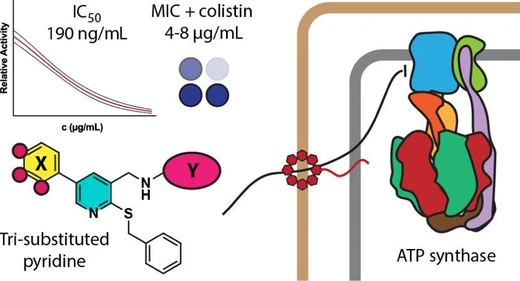
A new class of trisubstituted pyridines targets ATP synthase in Acinetobacter baumannii. Four lead compounds showed potent antibacterial effects and synergized with colistin against multidrug-resistant strains.
LabRulez
tag
share
more
Antibiotic Drug Discovery: UPLC Analysis and Challenges in Medicinal Chemistry
Interview | Video

Antibiotic Drug Discovery: UPLC Analysis and Challenges in Medicinal Chemistry

Graduate researcher Schyler Odum discusses UPLC-MS workflows, challenges in antibiotic discovery, and why stronger support for developing new antimicrobials is urgently needed.
Organomation
tag
share
more
Affinity, Gel Filtration, Size Exclusion Chromatography: Repurposing Kinase Inhibitors for Malaria
Interview | Video

Affinity, Gel Filtration, Size Exclusion Chromatography: Repurposing Kinase Inhibitors for Malaria

This podcast explores how chromatography (FPLC/SEC) and mass spectrometry support malaria drug discovery, from protein purification and QC to interaction studies and complex sample preparation.
Organomation
tag
share
more
 

Related content

Two-Step Matrix Deposition for Improved MS Imaging Resolution

Posters
| 2026 | Shimadzu (ASMS)
Instrumentation
LC/MS, LC/MS/MS, LC/TOF, LC/HRMS, MALDI, MS Imaging
Manufacturer
Shimadzu
Industries
Pharma & Biopharma

Smart Monitoring & Optimization Solutions for SMB Processes: In-Line and Off-Line Tools for SMB Systems

Technical notes
| 2026 | KNAUER
Instrumentation
HPLC
Manufacturer
KNAUER
Industries
Pharma & Biopharma

Xevo MRT P10 Mass Spectrometer

Brochures and specifications
| 2026 | Waters
Instrumentation
LC/MS, LC/MS/MS, LC/TOF, LC/HRMS
Manufacturer
Waters
Industries
Metabolomics, Proteomics , Lipidomics

Large-Volume Dilute-and-Shoot Analysis of PFAS in Drinking Water Using the Altura PFAS Column

Applications
| 2026 | Agilent Technologies
Instrumentation
Consumables, LC columns, LC/MS, LC/MS/MS, LC/QQQ
Manufacturer
Agilent Technologies
Industries
Environmental

Hey, ho, oliGO – Comparison of ion-pairing systems for oligonucleotide analysis with HPLC-UV

Applications
| 2026 | KNAUER
Instrumentation
Consumables, LC columns, HPLC
Manufacturer
KNAUER
Industries
Pharma & Biopharma
 

Related articles

Atomic Antibiotics Developed by Czech Scientists Counter Bacterial Resistance
Article | Video

Atomic Antibiotics Developed by Czech Scientists Counter Bacterial Resistance

Scientists from Palacký University Olomouc and the Technical University of Ostrava, in collaboration with colleagues from China, have discovered a method for developing a new generation of antibiotics.
Palacký University Olomouc
tag
share
more
Synthesis and Evaluation of Pyridine-Based Antibacterial Agents that Inhibit ATP Synthase in Acinetobacter baumannii
Scientific article | Science and research

Synthesis and Evaluation of Pyridine-Based Antibacterial Agents that Inhibit ATP Synthase in Acinetobacter baumannii

A new class of trisubstituted pyridines targets ATP synthase in Acinetobacter baumannii. Four lead compounds showed potent antibacterial effects and synergized with colistin against multidrug-resistant strains.
LabRulez
tag
share
more
Antibiotic Drug Discovery: UPLC Analysis and Challenges in Medicinal Chemistry
Interview | Video

Antibiotic Drug Discovery: UPLC Analysis and Challenges in Medicinal Chemistry

Graduate researcher Schyler Odum discusses UPLC-MS workflows, challenges in antibiotic discovery, and why stronger support for developing new antimicrobials is urgently needed.
Organomation
tag
share
more
Affinity, Gel Filtration, Size Exclusion Chromatography: Repurposing Kinase Inhibitors for Malaria
Interview | Video

Affinity, Gel Filtration, Size Exclusion Chromatography: Repurposing Kinase Inhibitors for Malaria

This podcast explores how chromatography (FPLC/SEC) and mass spectrometry support malaria drug discovery, from protein purification and QC to interaction studies and complex sample preparation.
Organomation
tag
share
more
 

Related content

Two-Step Matrix Deposition for Improved MS Imaging Resolution

Posters
| 2026 | Shimadzu (ASMS)
Instrumentation
LC/MS, LC/MS/MS, LC/TOF, LC/HRMS, MALDI, MS Imaging
Manufacturer
Shimadzu
Industries
Pharma & Biopharma

Smart Monitoring & Optimization Solutions for SMB Processes: In-Line and Off-Line Tools for SMB Systems

Technical notes
| 2026 | KNAUER
Instrumentation
HPLC
Manufacturer
KNAUER
Industries
Pharma & Biopharma

Xevo MRT P10 Mass Spectrometer

Brochures and specifications
| 2026 | Waters
Instrumentation
LC/MS, LC/MS/MS, LC/TOF, LC/HRMS
Manufacturer
Waters
Industries
Metabolomics, Proteomics , Lipidomics

Large-Volume Dilute-and-Shoot Analysis of PFAS in Drinking Water Using the Altura PFAS Column

Applications
| 2026 | Agilent Technologies
Instrumentation
Consumables, LC columns, LC/MS, LC/MS/MS, LC/QQQ
Manufacturer
Agilent Technologies
Industries
Environmental

Hey, ho, oliGO – Comparison of ion-pairing systems for oligonucleotide analysis with HPLC-UV

Applications
| 2026 | KNAUER
Instrumentation
Consumables, LC columns, HPLC
Manufacturer
KNAUER
Industries
Pharma & Biopharma
 

Related articles

Atomic Antibiotics Developed by Czech Scientists Counter Bacterial Resistance
Article | Video

Atomic Antibiotics Developed by Czech Scientists Counter Bacterial Resistance

Scientists from Palacký University Olomouc and the Technical University of Ostrava, in collaboration with colleagues from China, have discovered a method for developing a new generation of antibiotics.
Palacký University Olomouc
tag
share
more
Synthesis and Evaluation of Pyridine-Based Antibacterial Agents that Inhibit ATP Synthase in Acinetobacter baumannii
Scientific article | Science and research

Synthesis and Evaluation of Pyridine-Based Antibacterial Agents that Inhibit ATP Synthase in Acinetobacter baumannii

A new class of trisubstituted pyridines targets ATP synthase in Acinetobacter baumannii. Four lead compounds showed potent antibacterial effects and synergized with colistin against multidrug-resistant strains.
LabRulez
tag
share
more
Antibiotic Drug Discovery: UPLC Analysis and Challenges in Medicinal Chemistry
Interview | Video

Antibiotic Drug Discovery: UPLC Analysis and Challenges in Medicinal Chemistry

Graduate researcher Schyler Odum discusses UPLC-MS workflows, challenges in antibiotic discovery, and why stronger support for developing new antimicrobials is urgently needed.
Organomation
tag
share
more
Affinity, Gel Filtration, Size Exclusion Chromatography: Repurposing Kinase Inhibitors for Malaria
Interview | Video

Affinity, Gel Filtration, Size Exclusion Chromatography: Repurposing Kinase Inhibitors for Malaria

This podcast explores how chromatography (FPLC/SEC) and mass spectrometry support malaria drug discovery, from protein purification and QC to interaction studies and complex sample preparation.
Organomation
tag
share
more
 

Related content

Two-Step Matrix Deposition for Improved MS Imaging Resolution

Posters
| 2026 | Shimadzu (ASMS)
Instrumentation
LC/MS, LC/MS/MS, LC/TOF, LC/HRMS, MALDI, MS Imaging
Manufacturer
Shimadzu
Industries
Pharma & Biopharma

Smart Monitoring & Optimization Solutions for SMB Processes: In-Line and Off-Line Tools for SMB Systems

Technical notes
| 2026 | KNAUER
Instrumentation
HPLC
Manufacturer
KNAUER
Industries
Pharma & Biopharma

Xevo MRT P10 Mass Spectrometer

Brochures and specifications
| 2026 | Waters
Instrumentation
LC/MS, LC/MS/MS, LC/TOF, LC/HRMS
Manufacturer
Waters
Industries
Metabolomics, Proteomics , Lipidomics

Large-Volume Dilute-and-Shoot Analysis of PFAS in Drinking Water Using the Altura PFAS Column

Applications
| 2026 | Agilent Technologies
Instrumentation
Consumables, LC columns, LC/MS, LC/MS/MS, LC/QQQ
Manufacturer
Agilent Technologies
Industries
Environmental

Hey, ho, oliGO – Comparison of ion-pairing systems for oligonucleotide analysis with HPLC-UV

Applications
| 2026 | KNAUER
Instrumentation
Consumables, LC columns, HPLC
Manufacturer
KNAUER
Industries
Pharma & Biopharma
 

Related articles

Atomic Antibiotics Developed by Czech Scientists Counter Bacterial Resistance
Article | Video

Atomic Antibiotics Developed by Czech Scientists Counter Bacterial Resistance

Scientists from Palacký University Olomouc and the Technical University of Ostrava, in collaboration with colleagues from China, have discovered a method for developing a new generation of antibiotics.
Palacký University Olomouc
tag
share
more
Synthesis and Evaluation of Pyridine-Based Antibacterial Agents that Inhibit ATP Synthase in Acinetobacter baumannii
Scientific article | Science and research

Synthesis and Evaluation of Pyridine-Based Antibacterial Agents that Inhibit ATP Synthase in Acinetobacter baumannii

A new class of trisubstituted pyridines targets ATP synthase in Acinetobacter baumannii. Four lead compounds showed potent antibacterial effects and synergized with colistin against multidrug-resistant strains.
LabRulez
tag
share
more
Antibiotic Drug Discovery: UPLC Analysis and Challenges in Medicinal Chemistry
Interview | Video

Antibiotic Drug Discovery: UPLC Analysis and Challenges in Medicinal Chemistry

Graduate researcher Schyler Odum discusses UPLC-MS workflows, challenges in antibiotic discovery, and why stronger support for developing new antimicrobials is urgently needed.
Organomation
tag
share
more
Affinity, Gel Filtration, Size Exclusion Chromatography: Repurposing Kinase Inhibitors for Malaria
Interview | Video

Affinity, Gel Filtration, Size Exclusion Chromatography: Repurposing Kinase Inhibitors for Malaria

This podcast explores how chromatography (FPLC/SEC) and mass spectrometry support malaria drug discovery, from protein purification and QC to interaction studies and complex sample preparation.
Organomation
tag
share
more
Other projects
GCMS
ICPMS
Follow us
FacebookX (Twitter)LinkedInYouTube
More information
WebinarsAbout usContact usTerms of use
LabRulez s.r.o. All rights reserved. Content available under a CC BY-SA 4.0 Attribution-ShareAlike