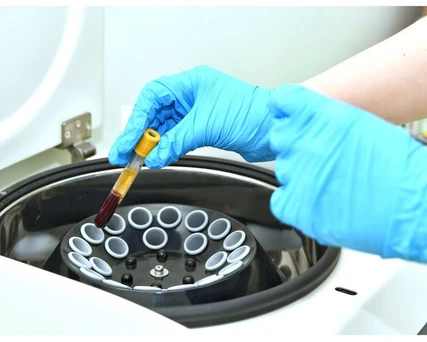
Everything to know about osmolality

- Photo: KNAUER: Everything to know about osmolality
- Video: KnauerHPLC: Unboxing Video: Knauer Freezing Point Osmometer K-7400S
Measuring Osmolality in Science and Industry: Applications, Methods, and the KNAUER Osmometer K-7400S
Osmolality is one of the most important yet often overlooked parameters in analytical chemistry, life sciences, and industrial quality control. Defined as the concentration of osmotically active particles dissolved in a solution, it determines how water moves across semipermeable membranes through the process of osmosis. Whether developing pharmaceutical formulations, monitoring biological samples, or designing functional beverages, accurate knowledge of osmolality is essential for ensuring product performance, safety, and consistency.
Typically expressed in milliosmoles per kilogram (mOsm/kg), osmolality provides information about the total concentration of dissolved particles rather than simply the amount of dissolved material. This distinction makes it particularly valuable whenever interactions between solutions and biological systems are involved. For example, measuring osmolality helps ensure that intravenous infusions do not damage blood cells, ophthalmic formulations remain comfortable to the eye, and isotonic sports drinks provide effective hydration.
Today, osmolality measurement has become an indispensable analytical tool across a wide range of industries, including pharmaceuticals, biotechnology, food and beverage production, environmental monitoring, and clinical laboratories. This article explains the scientific principles behind osmolality, explores its practical applications, describes how freezing point depression osmometry works, and introduces the KNAUER Osmometer K-7400S, a modern solution for fast and reliable osmolality determination.
Understanding Osmolality and Why It Matters
In chemistry, osmolality—closely related to the term osmolarity—describes the total number of dissolved particles present in a solution. Unlike molar concentration, which counts the number of dissolved molecules, osmolality accounts for every osmotically active particle, including ions generated when compounds dissociate in solution. As a result, it provides a more meaningful representation of a solution's osmotic behavior.
The concentration of dissolved particles influences several fundamental physical properties known as colligative properties. These include:
- Osmotic pressure
- Freezing point depression
- Boiling point elevation
As solute concentration increases, the freezing point of the solvent decreases while its boiling point increases in a predictable manner. Because these changes are directly related to the number of dissolved particles, measuring one of these properties allows scientists to accurately determine osmolality.
This relationship has practical implications far beyond theoretical chemistry. In biological systems, differences in osmolality drive the movement of water into and out of cells. If surrounding solutions are too concentrated (hypertonic) or too dilute (hypotonic), cells may shrink, swell, or even rupture. Maintaining appropriate osmotic conditions is therefore essential whenever biological samples, tissues, or living cells are involved.
A Critical Parameter Across Scientific Disciplines
The importance of osmolality extends into nearly every area of modern laboratory science.
In cell biology, culture media must closely mimic the osmotic conditions found inside living organisms to maintain healthy cell growth and reproducible experimental results. Even relatively small deviations can alter cellular metabolism, influence gene expression, or reduce cell viability.
Similarly, many biochemical assays require carefully controlled osmotic conditions to ensure that enzymes, proteins, and other biomolecules retain their native structure and activity throughout an experiment. Researchers routinely optimize solution osmolality during method development to improve both sensitivity and reproducibility.
Clinical laboratories also rely heavily on osmolality measurements. The osmolality of biological fluids—including blood serum, plasma, urine, and cerebrospinal fluid—provides valuable diagnostic information about hydration status, electrolyte balance, kidney function, and certain metabolic disorders. Consequently, osmometry has become a standard analytical technique in clinical chemistry and medical research.
Beyond biological applications, osmolality is equally important in industrial product development. Manufacturers formulate products with carefully controlled osmotic properties to ensure they perform as intended under real-world conditions. A deviation of only a few milliosmoles may affect product stability, consumer comfort, or therapeutic performance, making accurate measurement an essential part of quality assurance.
Osmometry as a Tool for Quality Assurance
Osmometry—the analytical determination of osmolality—has evolved into a routine quality control technique used throughout research laboratories and manufacturing facilities.
Its primary purpose is straightforward: verify that formulated solutions contain the correct concentration of dissolved particles. However, the consequences of inaccurate osmolality can be significant.
For example:
- An intravenous infusion with incorrect osmolality may damage blood cells or disturb electrolyte balance.
- Eye drops that deviate substantially from the natural osmolality of tears may cause irritation or discomfort.
- A beverage marketed as isotonic may fail to deliver efficient hydration if its osmotic concentration falls outside the recommended range.
- Variations in laboratory reagents may compromise experimental reproducibility and analytical accuracy.
Because of these considerations, osmolality measurements play a central role throughout both product development and routine quality control. They allow manufacturers to verify batch-to-batch consistency, support regulatory compliance, and ensure that products meet both technical specifications and customer expectations.
The significance of osmolality therefore reaches far beyond laboratory measurements alone. It directly influences product safety, therapeutic effectiveness, manufacturing consistency, and the reliability of scientific research.
Applications Across Science and Industry
As analytical technologies continue to advance, osmolality measurement has become increasingly important across diverse scientific and industrial sectors.
Among its most important applications are:
- Pharmaceutical formulation and quality control
- Lipid nanoparticle (LNP) vaccine development
- Biotechnology and cell culture
- Food and beverage manufacturing
- Environmental monitoring
- Clinical diagnostics
- Academic and industrial research
Each of these fields places unique demands on osmometry, yet all share the same objective: obtaining rapid, precise, and reproducible measurements of osmotic concentration.
In the following sections, we will examine how different industries apply osmolality measurements in practice, beginning with one of the most demanding environments for analytical quality control—the pharmaceutical industry.
Osmolality in the Pharmaceutical Industry
Few industries place greater emphasis on accurate osmolality control than pharmaceutical manufacturing. Whether developing injectable drugs, infusion solutions, ophthalmic formulations, or nasal sprays, pharmaceutical scientists must ensure that products possess the appropriate osmotic properties to guarantee both patient safety and therapeutic performance.
Many pharmaceutical formulations are designed to be isotonic, meaning their osmolality closely matches that of human body fluids. Blood plasma, for example, has an osmolality of approximately 290 mOsm/kg, and formulations intended for intravenous administration are typically developed within this physiological range. Solutions that deviate significantly from these values may trigger undesirable biological responses ranging from patient discomfort to serious cellular damage.
 Fotolia: Glass ampoulles as used for anesthetics, anti-inflammatory drugs and painkillers.
Why Isotonicity Matters
When a solution comes into direct contact with living tissues, differences in osmotic pressure immediately influence the movement of water across cell membranes.
If a solution is hypertonic (higher osmolality than body fluids), water leaves the cells, causing them to shrink. Conversely, hypotonic solutions drive water into cells, potentially causing swelling or even cell rupture. Maintaining isotonic conditions is therefore essential whenever pharmaceutical products are administered intravenously or applied directly to sensitive tissues.
Intravenous infusion solutions illustrate this principle particularly well. A saline infusion that is too concentrated may draw water out of red blood cells, while an overly dilute formulation can cause excessive water uptake and hemolysis. Similar concerns apply to dialysis fluids, injectable biologics, and numerous other sterile pharmaceutical products, all of which require rigorous osmolality control before release.
Because of these physiological considerations, pharmacopoeias and regulatory agencies around the world include osmolality or osmolarity testing among the critical quality attributes for many pharmaceutical formulations. Routine osmometry has therefore become an integral part of pharmaceutical quality control laboratories.
Ensuring Consistency During Pharmaceutical Manufacturing
Beyond patient safety, osmolality measurements play a key role in maintaining formulation consistency throughout pharmaceutical production.
Modern manufacturing processes involve numerous variables—including raw material quality, formulation composition, and production conditions—that can influence the final concentration of dissolved substances. Even small variations may alter product performance or reduce manufacturing reproducibility.
To minimize these risks, pharmaceutical quality control laboratories routinely verify osmolality throughout both development and production. Freezing point depression osmometers are widely employed because they provide accurate, reproducible measurements while requiring only small sample volumes and minimal preparation.
These measurements enable manufacturers to confirm that every production batch meets predefined specifications before products are released. Whether testing intravenous saline, dialysis solutions, injectable biologics, or ophthalmic formulations, osmometry provides an efficient means of verifying that each formulation remains within its intended osmotic range.
Maintaining this level of consistency not only supports patient safety but also helps manufacturers comply with increasingly stringent regulatory expectations regarding product quality and reproducibility.
Ophthalmic Products: A Clear Example of Osmolality Control
Eye care products provide another excellent illustration of why osmolality matters.
The human tear film has a carefully regulated osmotic balance. Eye drops, artificial tears, contact lens solutions, and other ophthalmic formulations are therefore developed to closely resemble the natural osmolality of tears.
If these products are significantly hypertonic or hypotonic, users may experience:
- Burning sensations
- Eye irritation
- Excessive tearing
- Dry eye symptoms
- Reduced patient comfort
Consequently, pharmaceutical developers routinely measure osmolality during formulation optimization to achieve the desired balance between efficacy, comfort, and product stability.
Depending on the intended therapeutic application, formulations may intentionally be designed as isotonic, hypotonic, or hypertonic. Accurate osmometry allows scientists to fine-tune these formulations and verify that the final product consistently meets its target specifications.
The Growing Importance of Osmolality in Lipid Nanoparticle Vaccines
The rapid development of lipid nanoparticle (LNP) technologies has transformed modern vaccine research, particularly through the successful introduction of mRNA-based vaccines. Alongside advances in molecular biology and nanotechnology, precise analytical quality control has become increasingly important for ensuring the safety and effectiveness of these sophisticated pharmaceutical products.
Among the many quality attributes monitored during vaccine development, osmolality has emerged as one of the key formulation parameters.
Lipid nanoparticles are carefully engineered delivery systems that encapsulate fragile nucleic acids such as messenger RNA. Their structural integrity depends on maintaining an optimized formulation environment throughout manufacturing, storage, transportation, and administration. Even relatively small changes in osmotic conditions may influence nanoparticle stability and overall product performance.
Why Osmolality Is Critical for LNP Formulations
For vaccines based on lipid nanoparticles, osmolality affects several important characteristics simultaneously.
Maintaining physiological osmotic conditions helps preserve:
- Structural stability of lipid nanoparticles
- Encapsulated nucleic acid integrity
- Vaccine bioavailability
- Patient tolerability after administration
Conversely, formulations with inappropriate osmolality may compromise nanoparticle stability, reduce vaccine potency, or increase cellular stress following injection.
Because these products often involve highly complex formulations containing lipids, buffers, salts, cryoprotectants, and nucleic acids, careful monitoring of osmolality forms an essential part of overall quality assurance throughout the manufacturing process.
Freezing Point Osmometry in Vaccine Quality Control
Freezing point depression osmometry has become one of the preferred analytical techniques for monitoring osmolality during LNP vaccine production.
Instruments such as the KNAUER K-7400S Semi-Micro Osmometer provide rapid, highly reproducible measurements that support both formulation development and routine batch release testing.
Reliable osmolality determination allows manufacturers to:
- Verify formulation consistency between production batches.
- Monitor manufacturing stability throughout process development.
- Demonstrate compliance with pharmaceutical quality requirements.
- Ensure that finished vaccine products remain within their predefined osmotic specifications.
As advanced biologics continue to expand beyond vaccines into gene therapy, RNA therapeutics, and other nanoparticle-based medicines, the importance of accurate osmolality measurements will only continue to grow.
Osmolality as a Critical Quality Attribute
Today, osmolality is far more than a routine analytical parameter. Within pharmaceutical development, it is recognized as a critical quality attribute (CQA) that directly influences product safety, stability, efficacy, and regulatory acceptance.
Whether formulating a simple intravenous saline solution or a next-generation mRNA vaccine, precise osmolality control helps ensure that products perform exactly as intended while maintaining the highest standards of pharmaceutical quality.
Osmolality in the Food & Beverage Industry
Osmolality measurements have become an increasingly valuable analytical tool in the food and beverage industry, where they support product development, quality assurance, and regulatory compliance. From sports drinks and oral rehydration solutions to juices, dairy products, and brewing applications, controlling the concentration of dissolved substances is essential for achieving both product consistency and the intended physiological effect.
One of the best-known applications is the formulation of isotonic beverages. Products marketed for hydration are specifically designed to replenish fluids and electrolytes efficiently after physical activity, making their osmotic concentration a critical quality parameter. Accurate osmolality measurements allow manufacturers to verify that these beverages perform as intended rather than relying solely on theoretical formulation calculations.
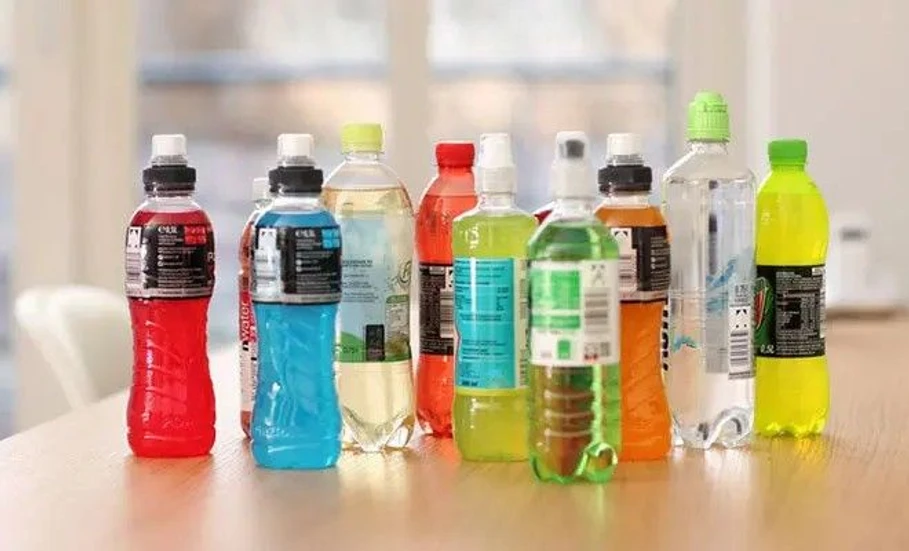 Pexels.com: Selection of sport drinks
Developing Truly Isotonic Beverages
Sports drinks are frequently advertised as isotonic, indicating that their osmolality closely matches that of human blood plasma.
This balance is important because beverages with an appropriate osmotic concentration promote efficient absorption of both water and electrolytes within the gastrointestinal tract. Products that are either significantly more concentrated or more dilute may not provide optimal hydration.
Regulatory organizations have established clear guidance regarding these formulations. For example, the European Food Safety Authority (EFSA) defines isotonic beverages as products with an osmolality ranging from approximately 270 to 330 mOsm/kg.
To demonstrate compliance with these requirements, manufacturers routinely perform osmolality testing during both product development and routine quality control. Freezing point depression osmometry provides a direct and reliable method for verifying that finished products fall within the required specification.
Without accurate osmometry, validating isotonic claims would be considerably more difficult, particularly when production variables or ingredient changes influence the final formulation.
Supporting Product Development and Quality Control
While sports drinks represent the most visible application, osmolality measurements extend far beyond hydration beverages.
Food manufacturers evaluate osmotic concentration throughout the development and production of numerous products, including:
- Fruit juices
- Soft drinks
- Dairy beverages
- Nutritional supplements
- Oral rehydration products
- Brewing products
- Fermentation media
Monitoring osmolality helps formulators understand how dissolved sugars, salts, proteins, and other ingredients contribute to the overall properties of the product.
Because solute concentration influences sweetness, mouthfeel, viscosity, and stability, maintaining consistent osmolality also contributes to sensory quality. Manufacturers therefore use osmometry as part of routine batch verification to ensure that consumers receive products with the same characteristics every time.
Driving Innovation in Functional Beverages
As consumer demand shifts toward healthier and more functional beverages, osmolality measurements have become increasingly valuable during product innovation.
Recent research has shown, for example, that certain alcohol-free beers possess osmolality values remarkably close to those of traditional isotonic sports drinks. Such findings have opened new opportunities for positioning these beverages as effective hydration products under appropriate conditions.
Similarly, developers of electrolyte drinks, recovery beverages, and specialized nutritional products rely on osmometry to optimize formulations before products reach the market.
During process development, osmolality measurements also help manufacturers monitor syrup concentrations, fermentation processes, dilution steps, and ingredient adjustments. These data support more efficient process control while ensuring that every production batch meets predefined quality targets.
By combining accurate analytical measurements with formulation expertise, beverage manufacturers can substantiate health-related claims, improve product performance, and maintain compliance with regulatory expectations.
Osmolality in Environmental Analysis
Although pharmaceutical and food laboratories are among the largest users of osmometry, environmental scientists also benefit from accurate osmolality measurements.
In environmental applications, osmolality provides an overall measure of the concentration of dissolved substances present in natural water samples. Salts, minerals, fertilizers, industrial pollutants, and other soluble compounds all contribute to the osmotic concentration of rivers, lakes, groundwater, and wastewater.
As a result, osmolality serves as a useful indicator of changing environmental conditions and can complement more traditional analytical measurements such as conductivity, salinity, or individual ion analysis.
Monitoring Water Quality
Freshwater systems naturally exhibit relatively low osmolality, whereas contaminated or saline waters contain significantly higher concentrations of dissolved particles.
Regular monitoring of osmolality enables researchers to detect changes associated with:
- Agricultural runoff
- Road salt contamination
- Industrial discharges
- Wastewater release
- Natural salinity fluctuations
An increase in osmotic concentration may indicate elevated levels of dissolved contaminants before more detailed chemical analyses are performed.
Because excessive salinity places osmotic stress on aquatic organisms, monitoring dissolved particle concentrations also contributes to ecological assessments and long-term environmental protection. Fish, amphibians, and many aquatic invertebrates are particularly sensitive to changes in osmotic conditions, making this parameter relevant for habitat management as well as pollution monitoring.
Applications in Agriculture and Soil Science
Osmolality measurements are equally useful in agricultural research.
The osmotic potential of soil water strongly influences the ability of plants to absorb moisture from their surroundings. When soil solutions become highly concentrated due to drought, fertilization, or salinity, water uptake becomes increasingly difficult, potentially reducing crop productivity.
Environmental laboratories therefore analyze the osmolality of soil extracts to better understand:
- Plant water availability
- Salt stress
- Irrigation efficiency
- Soil quality
- Agricultural sustainability
These measurements provide valuable information for both crop management and long-term soil conservation strategies.
Climate and Marine Research
Another important application lies in marine and polar research.
Scientists studying sea ice formation, ocean salinity, and polar ecosystems frequently measure the osmotic concentration of seawater, brines, and ice samples. These measurements improve understanding of freezing processes, seasonal environmental changes, and the physical conditions influencing marine organisms.
Although osmometry represents only one of many analytical tools used in environmental science, it offers rapid insight into the overall concentration of dissolved substances without requiring extensive chemical characterization of every individual component.
Supporting Environmental Compliance
Environmental monitoring programs increasingly require accurate documentation of water quality parameters.
Wastewater treatment facilities, industrial plants, and environmental agencies all seek to ensure that discharged water does not adversely affect receiving ecosystems.
Osmolality measurements contribute to these efforts by helping verify that dissolved solute concentrations remain within acceptable limits. When combined with conductivity measurements and targeted chemical analyses, osmometry provides another valuable indicator of treatment efficiency and environmental compliance.
As environmental regulations continue to evolve and concerns over water quality grow, reliable osmolality measurements are likely to become an increasingly important component of comprehensive environmental assessment programs.
Measuring Osmolality by Freezing Point Depression
Among the various techniques available for determining osmolality, freezing point depression osmometry has become the method of choice for most scientific, clinical, and industrial laboratories. Its popularity stems from a combination of excellent accuracy, broad applicability, and a well-established physical principle that directly links freezing temperature to the concentration of dissolved particles.
The method is based on one of the fundamental colligative properties of solutions: when a solute dissolves in a solvent, the solvent's freezing point decreases in proportion to the total number of dissolved particles. The more osmotically active particles present, the lower the freezing temperature.
For dilute aqueous solutions, dissolving one osmole of solute in one kilogram of water lowers the freezing point by approximately 1.86 °C. Since this relationship is both predictable and linear over a wide concentration range, measuring freezing point depression provides a direct and reliable means of determining osmolality.
Rather than measuring individual chemical compounds, freezing point osmometry determines the overall concentration of osmotically active particles, regardless of their chemical identity. This makes it particularly useful for complex samples containing mixtures of salts, sugars, proteins, or other dissolved substances.
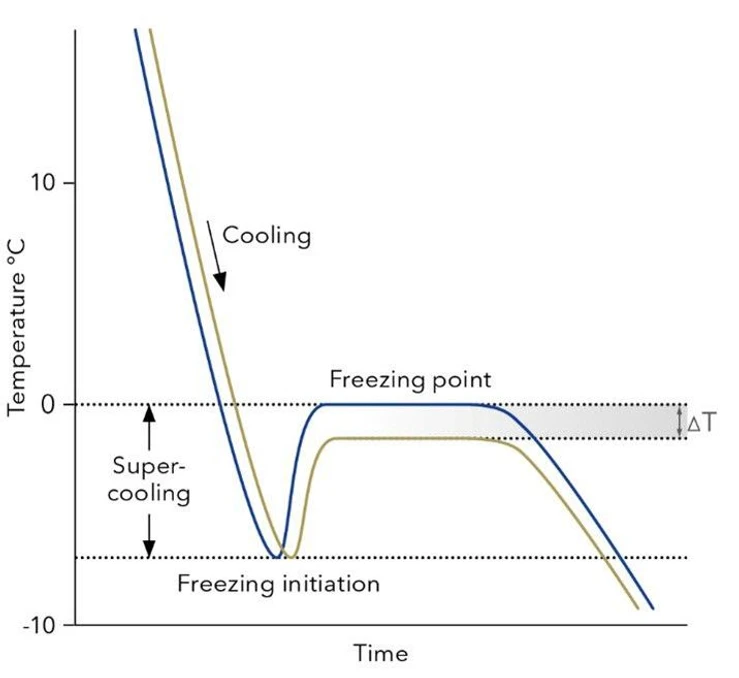 KNAUER: Temperature curves of freezing point measurements. The sample is cooled down below 0 °C but still remains fluid (super cooling). At a predefined temperature the freezing process is initialized and after a short increase the temperature equilibrates at the true freezing point of the sample. While pure water freezes at 0 °C (blue), the presence of any solutes depresses a samples freezing point (yellow), which directly correlates with its osmolality.
The Measurement Process
Although the underlying thermodynamics are sophisticated, the actual measurement process is remarkably straightforward.
A small aliquot of sample—typically between 50 and 150 µL—is transferred into the osmometer's cooling chamber, where it is rapidly cooled to a temperature below its expected freezing point.
Interestingly, the sample initially remains liquid despite being cooled below 0 °C. This phenomenon, known as supercooling, occurs because no ice crystals have yet formed to initiate freezing.
Once the target temperature is reached, the instrument deliberately triggers crystallization, usually by mechanically stirring the sample. Ice formation begins almost instantly, releasing latent heat as the liquid solidifies.
This causes a brief rise in temperature before the system reaches equilibrium at the sample's true freezing point. The osmometer continuously records this temperature profile and identifies the equilibrium plateau, which corresponds to the freezing point required for osmolality calculation.
A highly sensitive thermistor measures these minute temperature changes with a resolution on the order of 0.001 K, allowing even very small differences in osmolality to be detected with excellent precision.
Following calibration with reference standards of known osmolality, the instrument automatically converts the measured freezing point depression into the final result, expressed in mOsm/kg.
Why Freezing Point Osmometry Remains the Preferred Technique
Several analytical techniques can be used to estimate osmotic concentration, but freezing point depression offers significant practical advantages.
Unlike vapor pressure osmometry, for example, freezing point measurements are largely unaffected by volatile components in the sample, making the method suitable for a much wider range of aqueous solutions.
Its principal advantages include:
- High analytical accuracy
- Excellent reproducibility
- Broad measurement range
- Compatibility with diverse aqueous samples
- Minimal sample preparation
- Small sample volume requirements
- Rapid analysis, typically completed within two minutes
These characteristics explain why freezing point depression osmometry has become the standard approach in pharmaceutical laboratories, hospitals, food quality control facilities, biotechnology companies, and research institutions worldwide.
Whether measuring blood serum, infusion solutions, environmental water samples, or sports drinks, the underlying measurement principle remains exactly the same: determine how much the sample's freezing point differs from that of pure water, then calculate the corresponding osmolality.
The KNAUER Osmometer K-7400S
Designed specifically for demanding laboratory environments, the KNAUER K-7400S Semi-Micro Osmometer combines the proven reliability of freezing point depression osmometry with modern automation, intuitive operation, and outstanding analytical performance.
Building on decades of experience in osmometry, KNAUER developed the K-7400S to provide laboratories with a compact instrument capable of delivering fast, reproducible measurements while requiring only minimal sample volumes.
Each determination requires approximately two minutes, making the instrument well suited for both routine quality control and research laboratories processing multiple samples throughout the day.
Temperature regulation is handled automatically by a microprocessor-controlled Peltier cooling system, eliminating the need for external cooling baths or ice. The instrument rapidly supercools the sample, initiates crystallization under controlled conditions, and continuously monitors the complete freezing process without operator intervention.
This high degree of automation reduces variability between measurements while simplifying routine laboratory operation.
High Performance from Minimal Sample Volumes
One of the instrument's defining characteristics is its ability to generate highly accurate results using extremely small sample volumes.
Depending on the application, measurements require only:
- 50 µL
- 150 µL
This semi-micro design is particularly valuable when sample availability is limited, such as:
- Pediatric clinical specimens
- Biological research samples
- Cell culture media
- High-value pharmaceutical formulations
- Experimental laboratory preparations
Despite the small sample requirement, the instrument offers a wide analytical range spanning 0 to 2000 mOsm/kg, allowing it to measure everything from highly dilute aqueous solutions to concentrated pharmaceutical or industrial formulations.
Results are displayed directly on the integrated LCD screen with a resolution of 1 mOsm/kg, providing clear, easy-to-read measurements suitable for routine laboratory documentation.
Accuracy, Calibration, and Reliability
The K-7400S has been designed to deliver the precision expected in regulated analytical laboratories.
Its analytical performance includes:
- Resolution of 1 mOsm/kg
- Standard deviation of ≤4 mOsm/kg within the low-to-mid measurement range
- Relative standard deviation of ≤1% at higher concentrations
Routine calibration is straightforward. The instrument supports standard two-point calibration, typically performed using pure water and a certified reference solution around 300 or 400 mOsm/kg.
For laboratories requiring broader verification across the measurement range, an optional three-point calibration procedure is also available.
These calibration options enable users to maintain excellent analytical accuracy while satisfying internal quality assurance procedures and regulatory documentation requirements.
Intelligent Laboratory Integration
In addition to its analytical capabilities, the K-7400S has been designed to integrate smoothly into modern digital laboratories.
As a compact standalone benchtop instrument, all routine functions can be accessed directly through the integrated keypad and menu system. However, laboratories requiring electronic data management can also control the instrument using the dedicated EuroOsmo 7400 software.
Through the software interface, users can:
- Operate the instrument directly from a computer
- Monitor freezing curves in real time
- Store measurement results automatically
- Export data to Excel or text formats
- Integrate results into laboratory information management systems (LIMS)
The software also supports barcode scanner integration, allowing sample identification to be transferred electronically and reducing the likelihood of transcription errors during high-throughput analyses.
Together, these features simplify documentation, improve traceability, and support compliance with modern data integrity requirements.
A Versatile Solution for Diverse Applications
The flexibility of the K-7400S makes it suitable for laboratories working across numerous scientific disciplines.
Typical applications include:
- Pharmaceutical quality control
- Biopharmaceutical development
- Clinical chemistry
- Food and beverage analysis
- Environmental monitoring
- Academic research
- Biotechnology laboratories
The instrument has proven particularly valuable for quality control of isotonic beverages, where its rapid measurement cycle enables efficient verification of production batches.
Pharmaceutical manufacturers routinely employ the K-7400S to verify the osmolality of infusion solutions, injectable formulations, and other liquid dosage forms. Importantly, the instrument complies with the osmometry requirements of the European Pharmacopoeia (Ph. Eur. 2.2.35), allowing laboratories operating in regulated environments to perform official quality control measurements with confidence.
Environmental researchers likewise benefit from its precision when analyzing water samples, while biomedical scientists appreciate its ability to accurately measure valuable biological samples available only in limited quantities.
By combining high analytical performance, minimal sample requirements, modern automation, and regulatory compliance, the KNAUER K-7400S provides laboratories with a comprehensive solution for reliable osmolality determination across a remarkably broad range of scientific applications.
Supporting Regulatory Compliance Through Accurate Osmolality Measurement
Accurate osmolality determination is not only important for product development and quality control—it also plays a significant role in meeting regulatory requirements across numerous industries. In pharmaceuticals, food production, environmental monitoring, and biotechnology, reliable osmometry helps manufacturers demonstrate that products consistently meet established specifications while supporting documentation required by regulatory authorities.
In pharmaceutical manufacturing, for example, international pharmacopoeias—including the European Pharmacopoeia (Ph. Eur.) and the United States Pharmacopeia (USP)—recommend or require osmolality testing for many formulations, particularly parenteral solutions, dialysis fluids, ophthalmic preparations, and other products intended to interact directly with human tissues. These products must remain within carefully defined osmotic limits to ensure both safety and therapeutic effectiveness.
Using an instrument that complies with recognized pharmacopoeial methods, such as the KNAUER K-7400S, gives laboratories confidence that their analytical results satisfy the expectations of regulatory agencies and quality auditors. Accurate osmolality measurements therefore become an integral part of Good Manufacturing Practice (GMP) and comprehensive pharmaceutical quality systems.
Ensuring Product Safety and Manufacturing Consistency
Maintaining precise osmolality is essential throughout pharmaceutical manufacturing because even relatively small deviations can affect product performance.
Intravenous infusion solutions provide a clear example. Standard 0.9% saline has an osmotic concentration of approximately 308 mOsm/L, closely matching physiological conditions. Continuous quality control ensures that every production batch remains within acceptable limits before reaching patients.
Without routine osmometry, unintended formulation changes could result in products that are either too concentrated or too dilute, increasing the risk of adverse physiological effects following administration.
Regular osmolality measurements therefore contribute to:
- Batch-to-batch consistency
- Product safety
- Therapeutic reliability
- Manufacturing reproducibility
- Regulatory compliance
Rather than serving solely as an analytical parameter, osmolality becomes an essential quality attribute that supports the entire product lifecycle.
Meeting Standards in Food and Beverage Production
Regulatory expectations are equally important in the food and beverage industry.
Manufacturers promoting beverages as isotonic must be able to demonstrate that their products meet the accepted osmolality range established by regulatory authorities such as the European Food Safety Authority (EFSA).
Accurate osmometry provides objective evidence that product formulations comply with these requirements while supporting nutritional claims presented to consumers.
Beyond regulatory compliance, routine osmolality testing enables manufacturers to:
- Verify formulation consistency
- Optimize ingredient composition
- Maintain product quality
- Support product labeling
- Build consumer confidence
Reliable analytical data allow producers to adjust sugar, electrolyte, and mineral concentrations during formulation development while ensuring that every production batch delivers the intended physiological performance.
Environmental Monitoring and Sustainability
Environmental laboratories also benefit from accurate osmolality measurements when monitoring natural waters and wastewater treatment processes.
Changes in dissolved particle concentration may indicate contamination from agricultural runoff, industrial activities, road salts, or wastewater discharge. Monitoring these changes helps scientists evaluate ecosystem health while supporting compliance with environmental regulations governing water quality.
When combined with conductivity measurements and targeted chemical analyses, osmometry provides valuable complementary information regarding the total concentration of dissolved substances present in environmental samples.
As sustainability and water resource management become increasingly important worldwide, reliable osmolality measurements continue to support both scientific research and environmental protection programs.
Digital Documentation and Data Integrity
Modern laboratories require more than accurate analytical measurements—they also demand secure documentation and complete traceability.
The KNAUER K-7400S, together with the EuroOsmo 7400 software, supports these requirements by providing automated data recording, electronic result storage, and straightforward integration with Laboratory Information Management Systems (LIMS).
Digital workflows offer several important advantages:
- Automatic recording of analytical results
- Reduced transcription errors
- Improved sample traceability
- Simplified audit preparation
- Easier long-term data storage
- Enhanced compliance with data integrity requirements
For laboratories operating under regulated quality systems, these capabilities significantly reduce administrative effort while strengthening documentation and quality assurance procedures.
Why Osmolality Measurement Continues to Grow in Importance
As analytical science evolves, osmolality measurement is becoming increasingly relevant across emerging technologies.
Advanced biologics, gene therapies, lipid nanoparticle formulations, personalized medicines, functional foods, and innovative biotechnology products all require precise control of solution properties. In many of these applications, osmolality directly influences product stability, biological compatibility, and overall performance.
At the same time, increasing regulatory expectations place greater emphasis on analytical robustness, method validation, and documented quality control. Laboratories therefore require instrumentation capable of delivering rapid, reproducible, and fully traceable measurements.
Modern freezing point osmometers meet these demands by combining proven scientific principles with automation, digital connectivity, and excellent analytical performance.
Conclusion
Although osmolality is often introduced as a fundamental concept in chemistry and biology, its practical importance extends far beyond the classroom. Today, it represents one of the key analytical parameters supporting scientific research, pharmaceutical development, food production, biotechnology, clinical diagnostics, and environmental monitoring.
Accurate osmolality measurements help ensure that solutions interact with biological systems as intended, that products remain consistent from batch to batch, and that manufacturers comply with increasingly rigorous quality standards. Whether developing intravenous formulations, producing functional beverages, monitoring environmental waters, or advancing next-generation lipid nanoparticle therapeutics, reliable osmometry provides critical information that supports both product quality and patient safety.
Among the available analytical techniques, freezing point depression osmometry continues to be regarded as the reference method for determining osmolality. Its combination of excellent accuracy, broad applicability, minimal sample requirements, and straightforward operation has made it the preferred approach in laboratories around the world.
The KNAUER Osmometer K-7400S builds upon this well-established methodology by combining high analytical performance with rapid analysis, automated operation, modern software integration, and compliance with pharmacopoeial requirements. These capabilities make it a versatile solution for laboratories across multiple scientific disciplines.
As research, manufacturing, and quality assurance continue to demand ever greater precision, osmolality measurement will remain an essential analytical tool. Instruments such as the KNAUER K-7400S enable laboratories to perform these measurements efficiently and confidently, supporting better scientific outcomes, higher product quality, and continued compliance with international standards.
- KNAUER Blog – “Dilute to get more” (Short Bowel Syndrome and Osmometry) – discussion of osmolality in beverages and isotonic solutions.
- GMI Inc. – Osmometry & Isotonic Drink Analysis – explains the use of osmometry in validating isotonic beverages and introduces KNAUER K-7400S features.
- MeasurLabs – Osmolality and Osmolarity Testing – definition of osmolarity/osmolality and their use in pharmaceutical and food industry quality control.
- Wikipedia – Freezing Point Depression Osmometer – principle of freezing point osmometry and its usage in medical and pharmaceutical fields.
- StatPearls (NCBI) – Osmometer – details on osmometry methods and the 1.86 °C per osmole freezing point depression constant.
- KNAUER Product Brochure – Freezing Point Osmometry (K-7400S) – technical details of the K-7400S osmometer (sample volume, range, precision) and compliance information.
- KNAUER Store – K-7400S Semi-Micro Osmometer – product description highlighting instrument design, software, and European Pharmacopoeia compliance.
- GMI Inc. – Product Description: KNAUER K-7400S Osmometer – features of the K-7400S including two-point calibration, Peltier cooling, and data export capabilities.
- KNAUER Blog – “Make Your Favorite Drink Isotonic” (MyFDI project) – real-world application of K-7400S in measuring popular beverages, with an example reading of 299 mOsm/kg.
- Wikipedia – Osmolality in Clinical Chemistry – notes the use of osmometry for urine and plasma analysis and alternative osmometry methods.