LCMS
More information
WebinarsAbout usContact usTerms of use
LabRulez s.r.o. All rights reserved. Content available under a CC BY-SA 4.0 Attribution-ShareAlike
Author
Institute of Organic Chemistry and Biochemistry of the Czech Academy of Sciences
The Institute of Organic Chemistry and Biochemistry of the Czech Academy of Sciences (IOCB Prague) is a leading scientific institution in the Czech Republic, recognized internationally. Its primary mission is basic research in the fields of chemical biology and medicinal chemistry, organic and material oriented chemistry, chemistry of natural compounds, biochemistry and molecular biology, physical chemistry, theoretical chemistry, and analytical chemistry.
Tags
Article
Video
Scientific article
Science and research
LinkedIn Logo

Thanks to his new discovery, Pavel Hobza stands a great chance at rewriting the textbooks of physical chemistry
Th, 20.6.2024
| Original article from: IOCB Prague
Pavel Hobza from the IOCB Prague and his team discovered improper hydrogen bond twenty years ago. Current discovery has the potential to simplify the previously adopted definition of the hydrogen bond.
Video placeholder
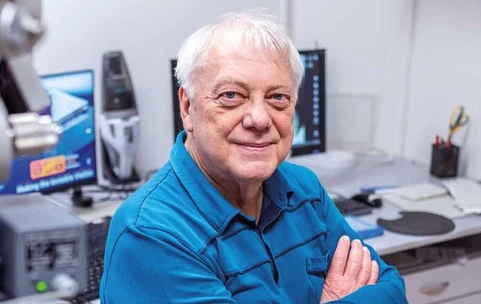
  • Photo: IOCB PragueTomáš Belloň: prof. Pavel Hobza
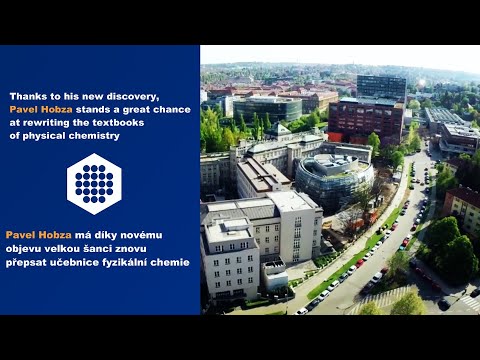
  • Video: IOCB Prague: Pavel Hobza stands a great chance at rewriting the textbooks of physical chemistry (Eng cc available)

Pavel Hobza from the Institute of Organic Chemistry and Biochemistry of the Czech Academy of Sciences and his team first contributed to the rewriting of textbooks twenty years ago. This was when they discovered and described the so-called improper hydrogen bond. Together with colleagues from the Institute of Physical Chemistry of Jaroslav Heyrovský and the VSB – Technical University in Ostrava, he has made yet another discovery. This time it has the potential to simplify the previously adopted definition of the hydrogen bond and to force chemistry students and researchers to rethink their ideas about the substances they study.

In a previous article, Pavel Hobza's team described the improper hydrogen bond X–H…Y. This is not manifested by an expected red shift (towards lower frequencies) in the vibrational frequency of the X–H bond, which is involved in the hydrogen bond, but, on the contrary, by a blue shift (towards higher frequencies). In a recent study published in the Journal of the American Chemical Society, the authors propose a new refinement and simplification of the definition of hydrogen bonding: In addition to the protonic bond, the definition should newly include the hydridic hydrogen bond.

IOCB Prague: Thanks to his new discovery, Pavel Hobza stands a great chance at rewriting the textbooks of physical chemistry.IOCB Prague: Thanks to his new discovery, Pavel Hobza stands a great chance at rewriting the textbooks of physical chemistry.

"The current definition of the hydrogen bond is based on our discovery of the improper hydrogen bond, characterized by a blue rather than the expected red shift in the vibrational frequency of the X–H bond. Our recent studies, however, go even further. They have shown that hydrogen bonds form even in the case of hydridic and not only protonic hydrogen. We therefore propose to modify the current definition of the hydrogen bond to include all types of bonds," explains Professor Pavel Hobza.

Water—with its familiar formula H2O—is a very simple molecule made up of one oxygen atom and two hydrogen atoms, hydrogen being the lightest of all the existing elements. That water flows from the tap as a liquid and that it boils at a temperature of 100°C is all down to the existence of the so-called hydrogen bond. It is formed between one of the hydrogen atoms of one water molecule and the oxygen atom of another. Thanks to such non-covalent interactions, the double helices of DNA hold together, and just as importantly, these interactions also play key roles in the structure and functioning of all proteins, including enzymes. Hydrogen bonding therefore plays an utterly essential and indispensable role in most chemical and virtually all biochemical processes on the planet.

IOCB Prague/Tomáš Belloň: prof. Pavel Hobza.IOCB Prague/Tomáš Belloň: prof. Pavel Hobza.

Most elements in the periodic table have a lower electronegativity—the ability to attract electrons—than hydrogen. Only a few elements (e.g., carbon, nitrogen, oxygen and halogens) have higher electronegativity. In the water molecule, oxygen attracts the electrons of the hydrogen atoms, which then become partially positively charged. If a molecule containing an element with surplus of electrons such as oxygen or nitrogen, is found near a positively charged hydrogen, a protonic hydrogen bond is formed. This weakens and lengthens the bond between the hydrogen and the more electronegative atom. Such a lengthening causes a decrease in the vibration frequency of this bond – a so-called red shift, which can be measured by infrared spectrometry. The chemical bond thus acts like a string: When it is lengthened, the frequency of its vibration decreases and, conversely, the wavelength increases towards the red part of the spectrum. A similar phenomenon is known from playing the guitar, where the pitch of the sound is controlled by changing the length of strings on the fingerboard.

In some cases, however, the bond between hydrogen and a more electronegative element strengthened, which is manifested by an increase in its vibrational frequency – a so-called blue shift. Such bonds are referred to as improper hydrogen bonds, which are the original discovery of Pavel Hobza.

IOCB Prague: Thanks to his new discovery, Pavel Hobza stands a great chance at rewriting the textbooks of physical chemistry.IOCB Prague: Thanks to his new discovery, Pavel Hobza stands a great chance at rewriting the textbooks of physical chemistry.

If, however, a hydrogen atom binds to an element with lower electronegativity, the hydrogen becomes negatively charged. Pavel Hobza and his colleagues recently investigated the organosilicon compound trimethylsilane, (CH3)3SiH, where the hydrogen atom is bound to a less electronegative silicon atom and thus carries a negative charge, in complexes with different electron deficient molecules. The hydrogen bond which thus arises is termed a hydridic hydrogen bond. Using computational methods, they found that under certain circumstances, the covalent bond between silicon and hydrogen weakens and lengthens, while its vibrational frequency decreases. A red shift therefore takes place, like it does with a protonic hydrogen bond. The authors of the study are the first to have experimentally demonstrated this red shift in the hydridic hydrogen bond. To this end, they employed low-temperature infrared spectrometry. They were thus able to prove that the hydridic hydrogen bond manifests itself quite analogously to a protonic hydrogen bond.

With this discovery, the time has come to revise the existing IUPAC definition of hydrogen bonding. However, the question remains whether it is necessary to introduce a completely new definition for this type of bonding, or whether to modify the current one. The authors consider the second option more appropriate and, at the end of their publication in the Journal of the American Chemical Society, propose a new version of the definition which includes both types of hydrogen bond: protonic and hydridic.

Resources
  • Civiš, S.; Lamanec, M.; Špirko, V.; Kubišta, J.; Špeťko, M.; Hobza, P. Hydrogen Bonding with Hydridic Hydrogen–Experimental Low-Temperature IR and Computational Study: Is a Revised Definition of Hydrogen Bonding Appropriate? J. Am. Chem. Soc. 2023, 145, 8550-8559. https://doi.org/10.1021/jacs.3c00802
Institute of Organic Chemistry and Biochemistry of the Czech Academy of Sciences
LinkedIn Logo
 

Related content

Overcoming Strong Solvent Effects in the Analysis of Vepdegestrant

Applications
| 2026 | Agilent Technologies
Instrumentation
HPLC
Manufacturer
Agilent Technologies
Industries
Pharma & Biopharma

Identification of Double Bond Positions and Relative Acyl Chain Positions in Egg Yolk Phosphatidylcholines Using OAD-TOF System

Applications
| 2026 | Shimadzu
Instrumentation
LC/MS, LC/MS/MS, LC/TOF, LC/HRMS
Manufacturer
Shimadzu
Industries
Food & Agriculture

High Molecular-Weight Polysaccharide Characterization by SEC-MALS Using GTxResolve™ 1000 and 2000 Å SEC Columns

Applications
| 2026 | Waters
Instrumentation
GPC/SEC, Consumables, LC columns
Manufacturer
Waters
Industries
Pharma & Biopharma, Food & Agriculture

Development and Optimization for a Comprehensive LC/MS/MS Method for the Detection of 74 PFAS Compounds

Applications
| 2026 | Agilent Technologies
Instrumentation
LC/MS, LC/MS/MS, LC/QQQ
Manufacturer
Agilent Technologies
Industries
Food & Agriculture

PFAS in Biota: Risk Context & Robust Analytical Solutions

Others
| 2026 | ALS Europe
Instrumentation
Laboratory analysis, LC/MS, LC/MS/MS
Manufacturer
Industries
Environmental
 

Related articles

Meeting EU Drinking Water Standards: The Critical Role of Sample Prep in Trace Contaminant Analysis
Article | Environment

Meeting EU Drinking Water Standards: The Critical Role of Sample Prep in Trace Contaminant Analysis

EU Drinking Water Directive 2020/2184 sets ultra-low limits for pesticides, PFAS, metals and endocrine disruptors. Learn how SPE and nitrogen evaporation enable LC-MS/MS compliance at ng/L levels.
Organomation
tag
share
more
Oligos Made Easy - Part 2: AEX
Article | Science and research

Oligos Made Easy - Part 2: AEX

Anion exchange chromatography (AEX) is a powerful tool for oligonucleotide analysis. Learn how charge-based separation reveals purity, length variants, and structural insights in modern LC workflows.
KNAUER
tag
share
more
Current sensors are not good enough. Scientists propose a new way to monitor plant health
Article | Science and research

Current sensors are not good enough. Scientists propose a new way to monitor plant health

Researchers present printable, low-cost sensor technologies using smart materials to enable real-time plant health monitoring and advance smart agriculture solutions.
CATRIN
tag
share
more
Unlocking Hemoglobin Variant Detection: LC-HR-MS Breakthrough with Ainslie Chen
Interview | Science and research

Unlocking Hemoglobin Variant Detection: LC-HR-MS Breakthrough with Ainslie Chen

Interview with Ainslie Chen on using LC-HRMS and C4 reversed-phase chromatography for precise hemoglobin variant detection and future clinical proteomics applications.
Organomation
tag
share
more
 

Related content

Overcoming Strong Solvent Effects in the Analysis of Vepdegestrant

Applications
| 2026 | Agilent Technologies
Instrumentation
HPLC
Manufacturer
Agilent Technologies
Industries
Pharma & Biopharma

Identification of Double Bond Positions and Relative Acyl Chain Positions in Egg Yolk Phosphatidylcholines Using OAD-TOF System

Applications
| 2026 | Shimadzu
Instrumentation
LC/MS, LC/MS/MS, LC/TOF, LC/HRMS
Manufacturer
Shimadzu
Industries
Food & Agriculture

High Molecular-Weight Polysaccharide Characterization by SEC-MALS Using GTxResolve™ 1000 and 2000 Å SEC Columns

Applications
| 2026 | Waters
Instrumentation
GPC/SEC, Consumables, LC columns
Manufacturer
Waters
Industries
Pharma & Biopharma, Food & Agriculture

Development and Optimization for a Comprehensive LC/MS/MS Method for the Detection of 74 PFAS Compounds

Applications
| 2026 | Agilent Technologies
Instrumentation
LC/MS, LC/MS/MS, LC/QQQ
Manufacturer
Agilent Technologies
Industries
Food & Agriculture

PFAS in Biota: Risk Context & Robust Analytical Solutions

Others
| 2026 | ALS Europe
Instrumentation
Laboratory analysis, LC/MS, LC/MS/MS
Manufacturer
Industries
Environmental
 

Related articles

Meeting EU Drinking Water Standards: The Critical Role of Sample Prep in Trace Contaminant Analysis
Article | Environment

Meeting EU Drinking Water Standards: The Critical Role of Sample Prep in Trace Contaminant Analysis

EU Drinking Water Directive 2020/2184 sets ultra-low limits for pesticides, PFAS, metals and endocrine disruptors. Learn how SPE and nitrogen evaporation enable LC-MS/MS compliance at ng/L levels.
Organomation
tag
share
more
Oligos Made Easy - Part 2: AEX
Article | Science and research

Oligos Made Easy - Part 2: AEX

Anion exchange chromatography (AEX) is a powerful tool for oligonucleotide analysis. Learn how charge-based separation reveals purity, length variants, and structural insights in modern LC workflows.
KNAUER
tag
share
more
Current sensors are not good enough. Scientists propose a new way to monitor plant health
Article | Science and research

Current sensors are not good enough. Scientists propose a new way to monitor plant health

Researchers present printable, low-cost sensor technologies using smart materials to enable real-time plant health monitoring and advance smart agriculture solutions.
CATRIN
tag
share
more
Unlocking Hemoglobin Variant Detection: LC-HR-MS Breakthrough with Ainslie Chen
Interview | Science and research

Unlocking Hemoglobin Variant Detection: LC-HR-MS Breakthrough with Ainslie Chen

Interview with Ainslie Chen on using LC-HRMS and C4 reversed-phase chromatography for precise hemoglobin variant detection and future clinical proteomics applications.
Organomation
tag
share
more
 

Related content

Overcoming Strong Solvent Effects in the Analysis of Vepdegestrant

Applications
| 2026 | Agilent Technologies
Instrumentation
HPLC
Manufacturer
Agilent Technologies
Industries
Pharma & Biopharma

Identification of Double Bond Positions and Relative Acyl Chain Positions in Egg Yolk Phosphatidylcholines Using OAD-TOF System

Applications
| 2026 | Shimadzu
Instrumentation
LC/MS, LC/MS/MS, LC/TOF, LC/HRMS
Manufacturer
Shimadzu
Industries
Food & Agriculture

High Molecular-Weight Polysaccharide Characterization by SEC-MALS Using GTxResolve™ 1000 and 2000 Å SEC Columns

Applications
| 2026 | Waters
Instrumentation
GPC/SEC, Consumables, LC columns
Manufacturer
Waters
Industries
Pharma & Biopharma, Food & Agriculture

Development and Optimization for a Comprehensive LC/MS/MS Method for the Detection of 74 PFAS Compounds

Applications
| 2026 | Agilent Technologies
Instrumentation
LC/MS, LC/MS/MS, LC/QQQ
Manufacturer
Agilent Technologies
Industries
Food & Agriculture

PFAS in Biota: Risk Context & Robust Analytical Solutions

Others
| 2026 | ALS Europe
Instrumentation
Laboratory analysis, LC/MS, LC/MS/MS
Manufacturer
Industries
Environmental
 

Related articles

Meeting EU Drinking Water Standards: The Critical Role of Sample Prep in Trace Contaminant Analysis
Article | Environment

Meeting EU Drinking Water Standards: The Critical Role of Sample Prep in Trace Contaminant Analysis

EU Drinking Water Directive 2020/2184 sets ultra-low limits for pesticides, PFAS, metals and endocrine disruptors. Learn how SPE and nitrogen evaporation enable LC-MS/MS compliance at ng/L levels.
Organomation
tag
share
more
Oligos Made Easy - Part 2: AEX
Article | Science and research

Oligos Made Easy - Part 2: AEX

Anion exchange chromatography (AEX) is a powerful tool for oligonucleotide analysis. Learn how charge-based separation reveals purity, length variants, and structural insights in modern LC workflows.
KNAUER
tag
share
more
Current sensors are not good enough. Scientists propose a new way to monitor plant health
Article | Science and research

Current sensors are not good enough. Scientists propose a new way to monitor plant health

Researchers present printable, low-cost sensor technologies using smart materials to enable real-time plant health monitoring and advance smart agriculture solutions.
CATRIN
tag
share
more
Unlocking Hemoglobin Variant Detection: LC-HR-MS Breakthrough with Ainslie Chen
Interview | Science and research

Unlocking Hemoglobin Variant Detection: LC-HR-MS Breakthrough with Ainslie Chen

Interview with Ainslie Chen on using LC-HRMS and C4 reversed-phase chromatography for precise hemoglobin variant detection and future clinical proteomics applications.
Organomation
tag
share
more
 

Related content

Overcoming Strong Solvent Effects in the Analysis of Vepdegestrant

Applications
| 2026 | Agilent Technologies
Instrumentation
HPLC
Manufacturer
Agilent Technologies
Industries
Pharma & Biopharma

Identification of Double Bond Positions and Relative Acyl Chain Positions in Egg Yolk Phosphatidylcholines Using OAD-TOF System

Applications
| 2026 | Shimadzu
Instrumentation
LC/MS, LC/MS/MS, LC/TOF, LC/HRMS
Manufacturer
Shimadzu
Industries
Food & Agriculture

High Molecular-Weight Polysaccharide Characterization by SEC-MALS Using GTxResolve™ 1000 and 2000 Å SEC Columns

Applications
| 2026 | Waters
Instrumentation
GPC/SEC, Consumables, LC columns
Manufacturer
Waters
Industries
Pharma & Biopharma, Food & Agriculture

Development and Optimization for a Comprehensive LC/MS/MS Method for the Detection of 74 PFAS Compounds

Applications
| 2026 | Agilent Technologies
Instrumentation
LC/MS, LC/MS/MS, LC/QQQ
Manufacturer
Agilent Technologies
Industries
Food & Agriculture

PFAS in Biota: Risk Context & Robust Analytical Solutions

Others
| 2026 | ALS Europe
Instrumentation
Laboratory analysis, LC/MS, LC/MS/MS
Manufacturer
Industries
Environmental
 

Related articles

Meeting EU Drinking Water Standards: The Critical Role of Sample Prep in Trace Contaminant Analysis
Article | Environment

Meeting EU Drinking Water Standards: The Critical Role of Sample Prep in Trace Contaminant Analysis

EU Drinking Water Directive 2020/2184 sets ultra-low limits for pesticides, PFAS, metals and endocrine disruptors. Learn how SPE and nitrogen evaporation enable LC-MS/MS compliance at ng/L levels.
Organomation
tag
share
more
Oligos Made Easy - Part 2: AEX
Article | Science and research

Oligos Made Easy - Part 2: AEX

Anion exchange chromatography (AEX) is a powerful tool for oligonucleotide analysis. Learn how charge-based separation reveals purity, length variants, and structural insights in modern LC workflows.
KNAUER
tag
share
more
Current sensors are not good enough. Scientists propose a new way to monitor plant health
Article | Science and research

Current sensors are not good enough. Scientists propose a new way to monitor plant health

Researchers present printable, low-cost sensor technologies using smart materials to enable real-time plant health monitoring and advance smart agriculture solutions.
CATRIN
tag
share
more
Unlocking Hemoglobin Variant Detection: LC-HR-MS Breakthrough with Ainslie Chen
Interview | Science and research

Unlocking Hemoglobin Variant Detection: LC-HR-MS Breakthrough with Ainslie Chen

Interview with Ainslie Chen on using LC-HRMS and C4 reversed-phase chromatography for precise hemoglobin variant detection and future clinical proteomics applications.
Organomation
tag
share
more
Other projects
GCMS
ICPMS
Follow us
More information
WebinarsAbout usContact usTerms of use
LabRulez s.r.o. All rights reserved. Content available under a CC BY-SA 4.0 Attribution-ShareAlike