What is Dead Volume in HPLC?
Watrex: What is Dead Volume in HPLC?
Customers often want to know the amount of “dead volume” in a connection. However, most people who ask about dead volume actually want to know how much internal volume exists within the connection. What exactly is the matter with these terms?
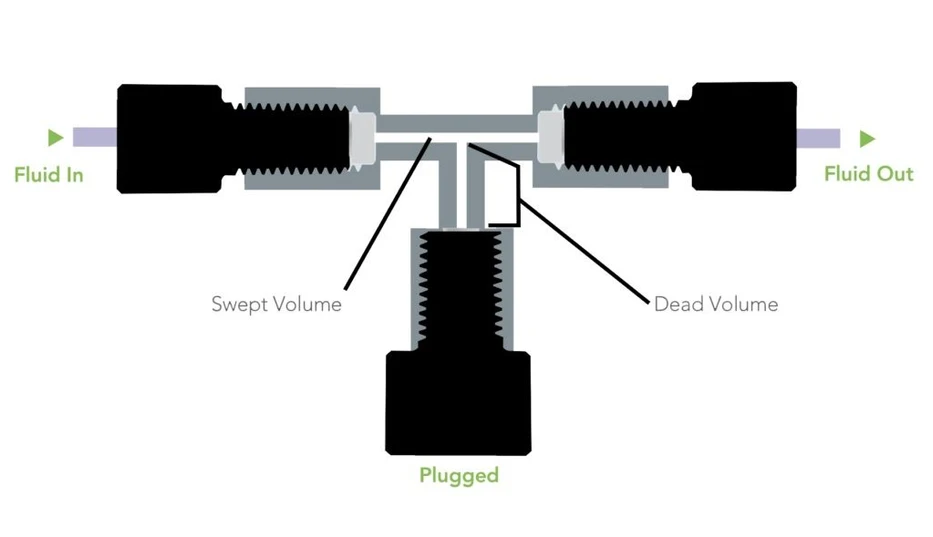
The dead volume is that portion of the void volume that is out of the flow path.
Swept Volume is that portion of the void volume in a connection directly in the fluid pathway.
Void Volume is simply another way of describe the total internal volume. It is defined as any space within connection into which fluid can flow.
So a simple equation applies: Void Volume = Dead Volume + Swept Volume
And why are we so interested in dead volume? Especially in capillary connections, it can cause some very undesirable chromatographic effects, including:
- Analysis Delay
- Broadened Peaks
- Poor Resolution
- Sample Carry-Over
- Split Peaks
- Gas Collection
Therefore, in addition to keeping the volume inside the connection to a minimum, all dead volume should be removed from the connection if possible. Finally, in capillary connections, the preferred relationship could be expressed as follows:
Void Volume = Swept Volume (and should be REALLY small!)
By matching the tube ID as closely as possible to the diameter of the thru-holes in your equipment, you will ensure that most of the void volume will be swept volume. This diameter adjustment also helps to reduce the amount of turbulence that the fluid experiences as it passes through the connection.