LCMS
More information
WebinarsAbout usContact usTerms of use
LabRulez s.r.o. All rights reserved. Content available under a CC BY-SA 4.0 Attribution-ShareAlike
Author
Watrex Praha
Watrex Praha
WATREX Prague is the distributor and producer of HPLC techniques in the Czech Republic and Slovakia. Main Chromatografic and Related Techniques Supported: LC, GPC, IC, IEC, Automated SPE, LC Columns and special column packings, LC method development, Software development, Laboratory Robots.
Tags
Article
Science and research
LinkedIn Logo

Chemistry in the Service of Heritage Preservation
Th, 24.4.2025
| Original article from: Watrex Praha
Every building tells a story. Chemical analysis reveals hidden changes in materials like plaster or brick, helping experts restore historical structures with care and precision.
<p><strong>Watrex: </strong>Chemistry in the Service of Heritage Preservation</p>

Watrex: Chemistry in the Service of Heritage Preservation

Every building tells a story – and in the case of historical monuments, this is doubly true. Time, environment, and human activity leave traces in building materials that may be invisible to the naked eye, yet are crucial for their future preservation. To restore historical structures with quality and sensitivity, we must first understand these changes. This is where chemistry meets construction – in the form of building material analyses that allow us to see beneath the surface of plasters, bricks, and mortars and gather valuable information about their composition, condition, and potential risks. 

Chemical analysis of materials is far from a routine lab task – it is a fundamental tool enabling architects, conservators, and heritage professionals to make informed decisions while preserving the original character of historical buildings.

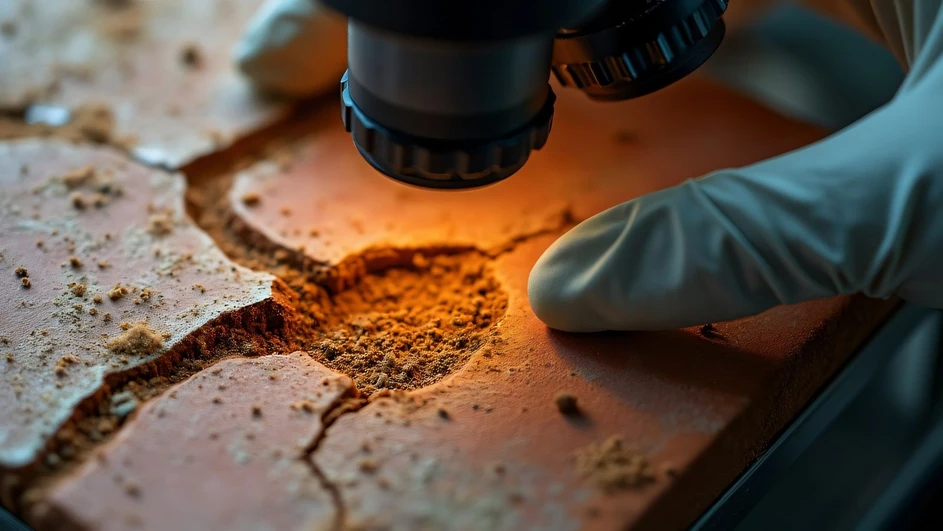
Watrex: Fig. 1 Illustrative photoWatrex: Fig. 1 Illustrative photo

Why Are Chemical Analyses Important for Buildings? 

When restoring buildings – especially protected cultural monuments – understanding the actual condition of the materials is essential. What the eye cannot see can often be key to the structure’s durability. Chemical analyses help to determine: 

  • The presence and concentration of salts (such as sulfates, chlorides, nitrates), which accumulate in building materials due to moisture, environmental exposure, or historical factors. These salts can significantly accelerate the degradation of plasters and masonry. 
  • The composition of binders and aggregates in mortars and plasters – whether lime, gypsum, or hydraulic materials were used, what type of aggregate is present, and whether any organic additives are included. This information is essential for designing compatible restoration materials.
  • Secondary degradation products, such as gypsum or other salts formed by reactions with atmospheric elements. 
  • Porosity and absorbency, which affect moisture movement, ventilation, and the suitability of protective coatings or restorative layers. 
  • The presence of heavy metals and contaminants, which may pose health risks or complicate conservation work. 

Without this information, serious issues can arise – incompatible plasters may fail, new materials may be damaged by aggressive salts from the original structure, or the historic substance might be needlessly harmed by unsuitable treatment methods. 

Why Do We Analyze Salts in Plasters? 

Salts in masonry and plasters are a common cause of their deterioration. Moisture entering the structure from the ground, rainwater, or HVAC systems carries dissolved ions that accumulate in the porous structure of the materials. When humidity and temperature fluctuate, these salts crystallize, causing mechanical stress and eventual breakdown of the material. Some salts also chemically react with binders, weakening their structure and composition. 

Identifying the type and concentration of salts is crucial for planning effective conservation measures – such as selecting appropriate desalination plasters, determining the extent of material replacement, or choosing chemical treatments. 

What Methods Do We Use? 

At Watrex Praha, we use a range of proven laboratory techniques for building analysis. Two of the most common are:  

  • Gravimetric Moisture Determination – Gravimetric analysis is one of the oldest and most reliable methods of quantitative chemical analysis. In building material testing, it is primarily used to determine the content of nitrates, sulfates, and chlorides in samples of plasters, masonry, or sediments. Its strength lies in its robustness and independence from instrument calibration. When combined with careful sample preparation (e.g., drying, pulverizing, and salt extraction into water), it delivers highly accurate results – crucial when assessing the salt load of historic materials.
  • Ion Chromatography (IC) – Ion chromatography is a modern, highly sensitive method for the quantitative determination of inorganic ions, especially nitrates, sulfates, chlorides, phosphates, as well as ammonium and sodium ions. In building analysis, it is used to provide a detailed profile of salt contamination that threatens the structural stability of heritage sites. This method is especially valuable when evaluating interventions in protected buildings, where it’s essential to understand the chemical burden of the structure before and after treatment. IC is also excellent for monitoring salt migration and the effectiveness of remedial actions.
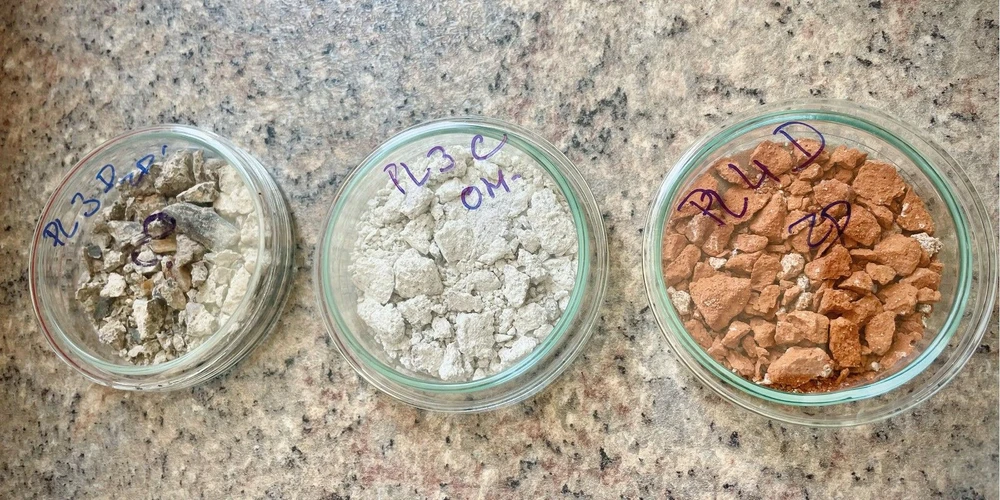
Watrex: Fig. 2 Illustration of a sample during laboratory analysis.Watrex: Fig. 2 Illustration of a sample during laboratory analysis.

Thanks to these methods, we can gain a comprehensive understanding of the material’s condition, its degradation processes, and develop well-founded recommendations for further care. 

From the Beginning to Hradčany 

At Watrex Praha, we’ve been conducting building material analyses since the early 1990s – making it one of our longest-running services in applied analytical chemistry. Over more than three decades, we have analyzed materials from numerous significant historical landmarks across the Czech Republic. 

These include the Morzinský Palace (U Mouřenínů) and the Wallenstein Palace in Prague, St. James' Church in Kutná Hora, Landštejn Castle, Kost Castle, Chlumec nad Cidlinou Chateau, and the Negrelli Viaduct, among many others. We have long-term cooperation with the National Heritage Institute (NPÚ), for whom we’ve provided analyses for a wide range of restoration and conservation projects.

Today, we are proud to contribute our expertise to the restoration of properties belonging to one of our most prominent national landmarks – Prague Castle, particularly the Theresian Institute for Noblewomen. These projects are close to our hearts. We take great pride in using our findings to help preserve our architectural heritage. Being part of the teams that return beauty and dignity to cultural treasures is both a privilege and an honor.

Watrex: Fig. 3 Prague Castle and the Theresian Institute for Noblewomen.Watrex: Fig. 3 Prague Castle and the Theresian Institute for Noblewomen.

Conclusion 

Chemical analysis of building materials is a key component of high-quality, respectful architectural restoration. It allows us to understand materials in terms of composition, degradation, and compatibility with modern conservation technologies. At Watrex Praha, this expertise is built on decades of experience, modern analytical methods, and close cooperation with professionals in the fields of construction and heritage preservation. 

Do you need a building materials analysis for one of your sites? We're here for you. Visit our website at www.watrex.com or contact us at [email protected].
 

Watrex Praha
LinkedIn Logo
 

Related content

Overcoming Strong Solvent Effects in the Analysis of Vepdegestrant

Applications
| 2026 | Agilent Technologies
Instrumentation
HPLC
Manufacturer
Agilent Technologies
Industries
Pharma & Biopharma

Identification of Double Bond Positions and Relative Acyl Chain Positions in Egg Yolk Phosphatidylcholines Using OAD-TOF System

Applications
| 2026 | Shimadzu
Instrumentation
LC/MS, LC/MS/MS, LC/TOF, LC/HRMS
Manufacturer
Shimadzu
Industries
Food & Agriculture

High Molecular-Weight Polysaccharide Characterization by SEC-MALS Using GTxResolve™ 1000 and 2000 Å SEC Columns

Applications
| 2026 | Waters
Instrumentation
GPC/SEC, Consumables, LC columns
Manufacturer
Waters
Industries
Pharma & Biopharma, Food & Agriculture

Development and Optimization for a Comprehensive LC/MS/MS Method for the Detection of 74 PFAS Compounds

Applications
| 2026 | Agilent Technologies
Instrumentation
LC/MS, LC/MS/MS, LC/QQQ
Manufacturer
Agilent Technologies
Industries
Food & Agriculture

PFAS in Biota: Risk Context & Robust Analytical Solutions

Others
| 2026 | ALS Europe
Instrumentation
Laboratory analysis, LC/MS, LC/MS/MS
Manufacturer
Industries
Environmental
 

Related articles

Meeting EU Drinking Water Standards: The Critical Role of Sample Prep in Trace Contaminant Analysis
Article | Environment

Meeting EU Drinking Water Standards: The Critical Role of Sample Prep in Trace Contaminant Analysis

EU Drinking Water Directive 2020/2184 sets ultra-low limits for pesticides, PFAS, metals and endocrine disruptors. Learn how SPE and nitrogen evaporation enable LC-MS/MS compliance at ng/L levels.
Organomation
tag
share
more
Oligos Made Easy - Part 2: AEX
Article | Science and research

Oligos Made Easy - Part 2: AEX

Anion exchange chromatography (AEX) is a powerful tool for oligonucleotide analysis. Learn how charge-based separation reveals purity, length variants, and structural insights in modern LC workflows.
KNAUER
tag
share
more
Current sensors are not good enough. Scientists propose a new way to monitor plant health
Article | Science and research

Current sensors are not good enough. Scientists propose a new way to monitor plant health

Researchers present printable, low-cost sensor technologies using smart materials to enable real-time plant health monitoring and advance smart agriculture solutions.
CATRIN
tag
share
more
Unlocking Hemoglobin Variant Detection: LC-HR-MS Breakthrough with Ainslie Chen
Interview | Science and research

Unlocking Hemoglobin Variant Detection: LC-HR-MS Breakthrough with Ainslie Chen

Interview with Ainslie Chen on using LC-HRMS and C4 reversed-phase chromatography for precise hemoglobin variant detection and future clinical proteomics applications.
Organomation
tag
share
more
 

Related content

Overcoming Strong Solvent Effects in the Analysis of Vepdegestrant

Applications
| 2026 | Agilent Technologies
Instrumentation
HPLC
Manufacturer
Agilent Technologies
Industries
Pharma & Biopharma

Identification of Double Bond Positions and Relative Acyl Chain Positions in Egg Yolk Phosphatidylcholines Using OAD-TOF System

Applications
| 2026 | Shimadzu
Instrumentation
LC/MS, LC/MS/MS, LC/TOF, LC/HRMS
Manufacturer
Shimadzu
Industries
Food & Agriculture

High Molecular-Weight Polysaccharide Characterization by SEC-MALS Using GTxResolve™ 1000 and 2000 Å SEC Columns

Applications
| 2026 | Waters
Instrumentation
GPC/SEC, Consumables, LC columns
Manufacturer
Waters
Industries
Pharma & Biopharma, Food & Agriculture

Development and Optimization for a Comprehensive LC/MS/MS Method for the Detection of 74 PFAS Compounds

Applications
| 2026 | Agilent Technologies
Instrumentation
LC/MS, LC/MS/MS, LC/QQQ
Manufacturer
Agilent Technologies
Industries
Food & Agriculture

PFAS in Biota: Risk Context & Robust Analytical Solutions

Others
| 2026 | ALS Europe
Instrumentation
Laboratory analysis, LC/MS, LC/MS/MS
Manufacturer
Industries
Environmental
 

Related articles

Meeting EU Drinking Water Standards: The Critical Role of Sample Prep in Trace Contaminant Analysis
Article | Environment

Meeting EU Drinking Water Standards: The Critical Role of Sample Prep in Trace Contaminant Analysis

EU Drinking Water Directive 2020/2184 sets ultra-low limits for pesticides, PFAS, metals and endocrine disruptors. Learn how SPE and nitrogen evaporation enable LC-MS/MS compliance at ng/L levels.
Organomation
tag
share
more
Oligos Made Easy - Part 2: AEX
Article | Science and research

Oligos Made Easy - Part 2: AEX

Anion exchange chromatography (AEX) is a powerful tool for oligonucleotide analysis. Learn how charge-based separation reveals purity, length variants, and structural insights in modern LC workflows.
KNAUER
tag
share
more
Current sensors are not good enough. Scientists propose a new way to monitor plant health
Article | Science and research

Current sensors are not good enough. Scientists propose a new way to monitor plant health

Researchers present printable, low-cost sensor technologies using smart materials to enable real-time plant health monitoring and advance smart agriculture solutions.
CATRIN
tag
share
more
Unlocking Hemoglobin Variant Detection: LC-HR-MS Breakthrough with Ainslie Chen
Interview | Science and research

Unlocking Hemoglobin Variant Detection: LC-HR-MS Breakthrough with Ainslie Chen

Interview with Ainslie Chen on using LC-HRMS and C4 reversed-phase chromatography for precise hemoglobin variant detection and future clinical proteomics applications.
Organomation
tag
share
more
 

Related content

Overcoming Strong Solvent Effects in the Analysis of Vepdegestrant

Applications
| 2026 | Agilent Technologies
Instrumentation
HPLC
Manufacturer
Agilent Technologies
Industries
Pharma & Biopharma

Identification of Double Bond Positions and Relative Acyl Chain Positions in Egg Yolk Phosphatidylcholines Using OAD-TOF System

Applications
| 2026 | Shimadzu
Instrumentation
LC/MS, LC/MS/MS, LC/TOF, LC/HRMS
Manufacturer
Shimadzu
Industries
Food & Agriculture

High Molecular-Weight Polysaccharide Characterization by SEC-MALS Using GTxResolve™ 1000 and 2000 Å SEC Columns

Applications
| 2026 | Waters
Instrumentation
GPC/SEC, Consumables, LC columns
Manufacturer
Waters
Industries
Pharma & Biopharma, Food & Agriculture

Development and Optimization for a Comprehensive LC/MS/MS Method for the Detection of 74 PFAS Compounds

Applications
| 2026 | Agilent Technologies
Instrumentation
LC/MS, LC/MS/MS, LC/QQQ
Manufacturer
Agilent Technologies
Industries
Food & Agriculture

PFAS in Biota: Risk Context & Robust Analytical Solutions

Others
| 2026 | ALS Europe
Instrumentation
Laboratory analysis, LC/MS, LC/MS/MS
Manufacturer
Industries
Environmental
 

Related articles

Meeting EU Drinking Water Standards: The Critical Role of Sample Prep in Trace Contaminant Analysis
Article | Environment

Meeting EU Drinking Water Standards: The Critical Role of Sample Prep in Trace Contaminant Analysis

EU Drinking Water Directive 2020/2184 sets ultra-low limits for pesticides, PFAS, metals and endocrine disruptors. Learn how SPE and nitrogen evaporation enable LC-MS/MS compliance at ng/L levels.
Organomation
tag
share
more
Oligos Made Easy - Part 2: AEX
Article | Science and research

Oligos Made Easy - Part 2: AEX

Anion exchange chromatography (AEX) is a powerful tool for oligonucleotide analysis. Learn how charge-based separation reveals purity, length variants, and structural insights in modern LC workflows.
KNAUER
tag
share
more
Current sensors are not good enough. Scientists propose a new way to monitor plant health
Article | Science and research

Current sensors are not good enough. Scientists propose a new way to monitor plant health

Researchers present printable, low-cost sensor technologies using smart materials to enable real-time plant health monitoring and advance smart agriculture solutions.
CATRIN
tag
share
more
Unlocking Hemoglobin Variant Detection: LC-HR-MS Breakthrough with Ainslie Chen
Interview | Science and research

Unlocking Hemoglobin Variant Detection: LC-HR-MS Breakthrough with Ainslie Chen

Interview with Ainslie Chen on using LC-HRMS and C4 reversed-phase chromatography for precise hemoglobin variant detection and future clinical proteomics applications.
Organomation
tag
share
more
 

Related content

Overcoming Strong Solvent Effects in the Analysis of Vepdegestrant

Applications
| 2026 | Agilent Technologies
Instrumentation
HPLC
Manufacturer
Agilent Technologies
Industries
Pharma & Biopharma

Identification of Double Bond Positions and Relative Acyl Chain Positions in Egg Yolk Phosphatidylcholines Using OAD-TOF System

Applications
| 2026 | Shimadzu
Instrumentation
LC/MS, LC/MS/MS, LC/TOF, LC/HRMS
Manufacturer
Shimadzu
Industries
Food & Agriculture

High Molecular-Weight Polysaccharide Characterization by SEC-MALS Using GTxResolve™ 1000 and 2000 Å SEC Columns

Applications
| 2026 | Waters
Instrumentation
GPC/SEC, Consumables, LC columns
Manufacturer
Waters
Industries
Pharma & Biopharma, Food & Agriculture

Development and Optimization for a Comprehensive LC/MS/MS Method for the Detection of 74 PFAS Compounds

Applications
| 2026 | Agilent Technologies
Instrumentation
LC/MS, LC/MS/MS, LC/QQQ
Manufacturer
Agilent Technologies
Industries
Food & Agriculture

PFAS in Biota: Risk Context & Robust Analytical Solutions

Others
| 2026 | ALS Europe
Instrumentation
Laboratory analysis, LC/MS, LC/MS/MS
Manufacturer
Industries
Environmental
 

Related articles

Meeting EU Drinking Water Standards: The Critical Role of Sample Prep in Trace Contaminant Analysis
Article | Environment

Meeting EU Drinking Water Standards: The Critical Role of Sample Prep in Trace Contaminant Analysis

EU Drinking Water Directive 2020/2184 sets ultra-low limits for pesticides, PFAS, metals and endocrine disruptors. Learn how SPE and nitrogen evaporation enable LC-MS/MS compliance at ng/L levels.
Organomation
tag
share
more
Oligos Made Easy - Part 2: AEX
Article | Science and research

Oligos Made Easy - Part 2: AEX

Anion exchange chromatography (AEX) is a powerful tool for oligonucleotide analysis. Learn how charge-based separation reveals purity, length variants, and structural insights in modern LC workflows.
KNAUER
tag
share
more
Current sensors are not good enough. Scientists propose a new way to monitor plant health
Article | Science and research

Current sensors are not good enough. Scientists propose a new way to monitor plant health

Researchers present printable, low-cost sensor technologies using smart materials to enable real-time plant health monitoring and advance smart agriculture solutions.
CATRIN
tag
share
more
Unlocking Hemoglobin Variant Detection: LC-HR-MS Breakthrough with Ainslie Chen
Interview | Science and research

Unlocking Hemoglobin Variant Detection: LC-HR-MS Breakthrough with Ainslie Chen

Interview with Ainslie Chen on using LC-HRMS and C4 reversed-phase chromatography for precise hemoglobin variant detection and future clinical proteomics applications.
Organomation
tag
share
more
Other projects
GCMS
ICPMS
Follow us
More information
WebinarsAbout usContact usTerms of use
LabRulez s.r.o. All rights reserved. Content available under a CC BY-SA 4.0 Attribution-ShareAlike