LCMS
More information
WebinarsAbout usContact usTerms of use
LabRulez s.r.o. All rights reserved. Content available under a CC BY-SA 4.0 Attribution-ShareAlike
Author
Thermo Fisher Scientific
A unique company dedicated to serving science helping our customers drive productivity and accelerate results. Through our premier brands – Thermo Scientific, Applied Biosystems, Invitrogen, Fisher Scientific and Unity Lab Services.
Tags
Article
Product
Video
LinkedIn Logo

Why You Need a Verification-Class Mass Spectrometer: Going Beyond 4d to Improve Analytical Performance for Targeted Quantitative Analysis
Tu, 17.6.2025
| Original article from: Thermo Fisher Scientific / Dr. Scott Peterman
This is the fourth in a multi-part blog series highlighting the key attributes and impressive benefits of the Thermo Scientific Stellar mass spectrometer.
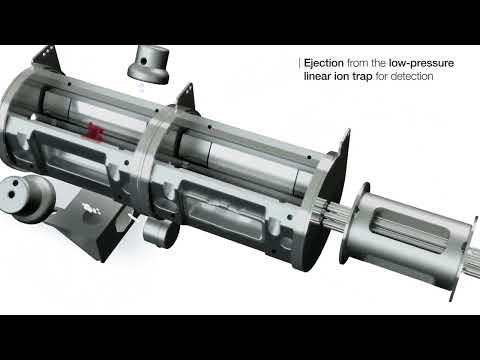
Video placeholder
  • Photo: Thermo Fisher Scientific: Why You Need a Verification-Class Mass Spectrometer: Going Beyond 4d to Improve Analytical Performance for Targeted Quantitative Analysis
  • Video: Sci Spec Co., Ltd.: Stellar Mass Spectrometer Thermo Fisher Scientific TH 

Part 4: Going beyond 4D to improve analytical performance for targeted quantitative analysis

This is the fourth in a multi-part blog series highlighting the key attributes and impressive benefits of the Thermo Scientific Stellar mass spectrometer—the first-of-its-kind instrument designed and optimized for highly multiplexed targeted quantitation, ideally suited for discovery verification. By delivering robust analytical methods and dramatically improved turnaround time, this solution helps labs boost capacity and differentiate themselves to generate more revenue. For additional background, see blog Part 1, Part 2 and Part 3 here and stay tuned for more blogs on our website.

Thermo Fisher Scientific: Why You Need a Verification-Class Mass Spectrometer: Going Beyond 4d to Improve Analytical Performance for Targeted Quantitative Analysis.Thermo Fisher Scientific: Why You Need a Verification-Class Mass Spectrometer: Going Beyond 4d to Improve Analytical Performance for Targeted Quantitative Analysis.

Analytical specificity is one of the most critical requirements for successful targeted quantitative analysis. Assigning measured data to diagnostic product ions from the analyte of interest increases the confidence in resulting measurement determining the analyte expression level, copy number, or absolute amount in each sample, as well as across an entire study. Using empirically determined values for liquid chromatography (LC) and mass spectrometry (MS) provides specific information that collectively increases data processing. This orthogonal information comes in the form of 1) chromatographic retention times and peak shapes; 2) precursor m/z value; 3) MS/MS product ions; and 4) MS/MS product ion distribution profiles, which can be stored to form spectral libraries that are used to not only process LC-MSn data but build confident targeted data acquisition methods.

4D parameter determination: Sufficient or not?

Previous publications touted utilization of four-dimensional (4D) parameter determination to confidently create and process untargeted and targeted data. Using LC coupled to a trapped ion mobility QTOF (timsTOF) mass spectrometer, each analyte is annotated by four empirical measurements across all study samples: 1) measured retention time; 2) ion mobility as measured by its collision cross section (CCS); 3) precursor m/z value; and 4) presence of corresponding product ions. The assumption is that the orthogonal selectivity achieved by UHPLC separation and ion mobility resolution relative to the precursor isolation is sufficient to differentiate a specific analyte from co-eluting isobaric and isomeric ions and that resulting product ions are only attributed to the isolated precursor. Adding CCS values can help accommodate for some variability but requires more work by the researcher to accurately determine the variance associated with ion mobility. At no point are the product ion ratios used as an additional dimension for verification.

A smart addition: product ion ratio determination
Product ion ratio determination, however, has been used as the gold standard for qualitative data analysis for SRM/MRM acquisition for decades. Despite quantitative methods on triple quadrupole mass spectrometers acquiring data for only two or three product ion transitions, the inclusion of the resulting product ion ratio is used to qualitatively verify that the signal measured per SRM transition is attributed to the analyte of interest. This concept has been included in the targeted quantitative studies performed using the Thermo Scientific Stellar mass spectrometer (MS), significantly increasing analytical performance for a wide range of molecules.

To increase the quantitative selectivity and specificity needed for confident data acquisition, the proposed solution combines the chromatographic separation capabilities of the Thermo Scientific Vanquish UHPLC system with the innovative PRM acquisition on the Stellar mass spectrometer to go beyond data processing confidence.  Additionally, the proposed method leverages intelligent data acquisition to perform RT alignment reducing the need to apply additional post-acquisition data processing steps.  This blog covers the differentiation for each of these steps while presenting an important 5th dimension—extending PRM data analysis to the MS3 level.

Dimension #1: Leveraging 1,500 bar UHPLC separation to drive orthogonal selectivity

Using the Thermo Scientific Vanquish Neo and Horizon UHPLC systems, researchers can harness higher backpressure capabilities covering a wide range of flow rates from nanoflow to analytical flow rates—increasing peak capacity while driving higher utilization rates than HPLC systems with only 1,000 bar of backpressure. The Vanquish UHPLC systems also deliver reproducible performance over the course of longer studies such as populational health.

Going beyond the first dimension: Including the Adaptive RT routine enables LC mapping to assign true retention time values to each analyte with narrower retention time windows. The Adaptive RT routine works for small and large molecules, from single-cell to bulk analysis, and bridges method development between longer discovery gradients and faster targeted quantitation gradients without the need for spiked RT standards.  The advantage is that the retention time alignment for the study is reliably performed during data acquisition, not processing.

Dimension #2: Introduction of targeted analytes

Following UHPLC separation and ionization, targeted analytes (precursors) are introduced into the MS and moved through the ion flight path to the detector. The quadrupole mass filter (termed isolating quadrupole or Q1) has an RF/DC offset to transmit a narrow m/z range centered on the target precursor m/z value. The mass range used for precursor ion filtering is ca. 1 to 2 Th depending on the mass spectrometer. Leveraging precursor isolation following chromatographic separation increases the target analyte selectivity relative to co-eluting compounds.

Going beyond the second dimension: The Stellar mass spectrometer’s QR5 Plus quadrupole mass filter uses hyperbolic-surfaced quadrupole rods that improve ion transmission efficiency across a wider precursor m/z range. Unit resolution settings are 0.7 Th at the baseline—significantly better than other quadrupole mass spectrometers using 1.2 to 2 Th (almost 2-3x wider), which can compromise quantitative performance.

Dimension #3: Acquiring PRM data from more product ions

The Stellar mass spectrometer acquires PRM data which is comprised of full scan MS2 spectra per scan event relative to SRM/MRM acquisition. Acquiring data for many more product ions per unit time increases the specificity of the resulting measurement. It also enables post-acquisition data processing methods to determine specific product ions used for quantitation without having to update the experimental method and re-analyze samples.

Going beyond the third dimension:  The Stellar mass spectrometer combines the unique capabilities of dual ion packet management with ion accumulation outside of the ion trap to boost quantitative performance.  Simultaneously managing two different ion packets enables longer accumulation times without significantly compromising the PRM acquisition rates which becomes imperative when performing quantitative measurements at the LOD and LOQ levels.

Dimension #4: Leveraging the full scan MS2 spectrum and multiple product ions to evaluate the product ion ratios compared to a reference spectrum

As mentioned above, ion ratio calculations are used in validated quantitative methods to ensure selectivity relative to the matrix or background interference per product ion.

Going beyond the fourth dimension: What, where and how you perform ion accumulation differentiates the effectiveness of each mass spectrometer. The Stellar MS first filters for the targeted precursor m/z value, then accumulates product ions in an ion-routing multipole (as has been done on Thermo Scientific Orbitrap mass spectrometers for over a decade).  Performing tandem MS in this order maximizes sensitivity for low-level product ions to maintain accurate ion ratio analysis. Finally, incorporating dynamic AGC automates the accumulation time regardless of precursor ion flux. (Reference: Plubell et al. BioRxiv)

Dimension #5: Addressing sensitivity disrupters

Targeted quantitation for specific analytes using MS2 acquisition may have co-eluting isomeric/isobaric ions potentially disrupting quantitative sensitivity (signal-to-noise limitation).  Two options to pursue would be modifying LC gradients or increasing the tandem MS level to MS3. Elongating the LC gradient decreases sample throughput yet still may not remove all background interferences. The Stellar MS, on the other hand, can implement MS3 acquisition with exceptionally fast acquisition speeds (up to 40 Hz) to maintain target capacity and the number of data points per LC peak.

Going beyond the fifth dimension: In addition to the unique MS3 acquisition speed, the Stellar MS implements dynamic AGC to maximize spectral quality across a wider dynamic range, as well as the ability to perform either HCD or CID at each MSn level. Finally, introduction of Adaptive RT to confidently manage scheduled retention time windows ensures tMS3 methods can succeed for increased target capacity using faster LC gradients.

For more information, explore the Stellar mass spectrometer and download our new 2024 year in review ebook.

Visit us on LinkedIn: #StellarMassSpectrometer #Vanquish #UHPLC

Dr. Scott Peterman
Scott Peterman, Ph.D., is Senior Product Marketing Manager for Life Science Mass Spectrometry of the Chromatography and Mass Spectrometry Division of Thermo Fisher Scientific.
Thermo Fisher Scientific
LinkedIn Logo
 

Related content

Overcoming Strong Solvent Effects in the Analysis of Vepdegestrant

Applications
| 2026 | Agilent Technologies
Instrumentation
HPLC
Manufacturer
Agilent Technologies
Industries
Pharma & Biopharma

Identification of Double Bond Positions and Relative Acyl Chain Positions in Egg Yolk Phosphatidylcholines Using OAD-TOF System

Applications
| 2026 | Shimadzu
Instrumentation
LC/MS, LC/MS/MS, LC/TOF, LC/HRMS
Manufacturer
Shimadzu
Industries
Food & Agriculture

High Molecular-Weight Polysaccharide Characterization by SEC-MALS Using GTxResolve™ 1000 and 2000 Å SEC Columns

Applications
| 2026 | Waters
Instrumentation
GPC/SEC, Consumables, LC columns
Manufacturer
Waters
Industries
Pharma & Biopharma, Food & Agriculture

Development and Optimization for a Comprehensive LC/MS/MS Method for the Detection of 74 PFAS Compounds

Applications
| 2026 | Agilent Technologies
Instrumentation
LC/MS, LC/MS/MS, LC/QQQ
Manufacturer
Agilent Technologies
Industries
Food & Agriculture

PFAS in Biota: Risk Context & Robust Analytical Solutions

Others
| 2026 | ALS Europe
Instrumentation
Laboratory analysis, LC/MS, LC/MS/MS
Manufacturer
Industries
Environmental
 

Related articles

JUNIOR STAR Grants at UCT Prague: Two talented women from abroad driving innovation in science
Article | Scientists

JUNIOR STAR Grants at UCT Prague: Two talented women from abroad driving innovation in science

Two outstanding early-career researchers at UCT Prague, Filipa Oliveira and Stella Gonsales, received prestigious GAČR JUNIOR STAR grants for innovative research in materials science and sustainable chemistry.
UCT Prague
tag
share
more
Research from IOCB Prague reveals a previously unknown mechanism of genetic transcription
Article | Science and research

Research from IOCB Prague reveals a previously unknown mechanism of genetic transcription

Scientists at IOCB Prague reveal a previously unknown mechanism that initiates gene transcription. Using cryo-EM, they uncover how alarmone molecules enable RNA synthesis under stress.
Institute of Organic Chemistry and Biochemistry of the Czech Academy of Sciences
tag
share
more
Food Adulteration and How It Is Revealed by Analytical Chemistry
Article | Food

Food Adulteration and How It Is Revealed by Analytical Chemistry

Food adulteration threatens quality and consumer trust. Discover how HPLC and modern chromatographic systems from Watrex Praha help identify oil, honey, and wine adulteration with high confidence.
Watrex Praha
tag
share
more
Affinity, Gel Filtration, Size Exclusion Chromatography: Repurposing Kinase Inhibitors for Malaria
Interview | Video

Affinity, Gel Filtration, Size Exclusion Chromatography: Repurposing Kinase Inhibitors for Malaria

This podcast explores how chromatography (FPLC/SEC) and mass spectrometry support malaria drug discovery, from protein purification and QC to interaction studies and complex sample preparation.
Organomation
tag
share
more
 

Related content

Overcoming Strong Solvent Effects in the Analysis of Vepdegestrant

Applications
| 2026 | Agilent Technologies
Instrumentation
HPLC
Manufacturer
Agilent Technologies
Industries
Pharma & Biopharma

Identification of Double Bond Positions and Relative Acyl Chain Positions in Egg Yolk Phosphatidylcholines Using OAD-TOF System

Applications
| 2026 | Shimadzu
Instrumentation
LC/MS, LC/MS/MS, LC/TOF, LC/HRMS
Manufacturer
Shimadzu
Industries
Food & Agriculture

High Molecular-Weight Polysaccharide Characterization by SEC-MALS Using GTxResolve™ 1000 and 2000 Å SEC Columns

Applications
| 2026 | Waters
Instrumentation
GPC/SEC, Consumables, LC columns
Manufacturer
Waters
Industries
Pharma & Biopharma, Food & Agriculture

Development and Optimization for a Comprehensive LC/MS/MS Method for the Detection of 74 PFAS Compounds

Applications
| 2026 | Agilent Technologies
Instrumentation
LC/MS, LC/MS/MS, LC/QQQ
Manufacturer
Agilent Technologies
Industries
Food & Agriculture

PFAS in Biota: Risk Context & Robust Analytical Solutions

Others
| 2026 | ALS Europe
Instrumentation
Laboratory analysis, LC/MS, LC/MS/MS
Manufacturer
Industries
Environmental
 

Related articles

JUNIOR STAR Grants at UCT Prague: Two talented women from abroad driving innovation in science
Article | Scientists

JUNIOR STAR Grants at UCT Prague: Two talented women from abroad driving innovation in science

Two outstanding early-career researchers at UCT Prague, Filipa Oliveira and Stella Gonsales, received prestigious GAČR JUNIOR STAR grants for innovative research in materials science and sustainable chemistry.
UCT Prague
tag
share
more
Research from IOCB Prague reveals a previously unknown mechanism of genetic transcription
Article | Science and research

Research from IOCB Prague reveals a previously unknown mechanism of genetic transcription

Scientists at IOCB Prague reveal a previously unknown mechanism that initiates gene transcription. Using cryo-EM, they uncover how alarmone molecules enable RNA synthesis under stress.
Institute of Organic Chemistry and Biochemistry of the Czech Academy of Sciences
tag
share
more
Food Adulteration and How It Is Revealed by Analytical Chemistry
Article | Food

Food Adulteration and How It Is Revealed by Analytical Chemistry

Food adulteration threatens quality and consumer trust. Discover how HPLC and modern chromatographic systems from Watrex Praha help identify oil, honey, and wine adulteration with high confidence.
Watrex Praha
tag
share
more
Affinity, Gel Filtration, Size Exclusion Chromatography: Repurposing Kinase Inhibitors for Malaria
Interview | Video

Affinity, Gel Filtration, Size Exclusion Chromatography: Repurposing Kinase Inhibitors for Malaria

This podcast explores how chromatography (FPLC/SEC) and mass spectrometry support malaria drug discovery, from protein purification and QC to interaction studies and complex sample preparation.
Organomation
tag
share
more
 

Related content

Overcoming Strong Solvent Effects in the Analysis of Vepdegestrant

Applications
| 2026 | Agilent Technologies
Instrumentation
HPLC
Manufacturer
Agilent Technologies
Industries
Pharma & Biopharma

Identification of Double Bond Positions and Relative Acyl Chain Positions in Egg Yolk Phosphatidylcholines Using OAD-TOF System

Applications
| 2026 | Shimadzu
Instrumentation
LC/MS, LC/MS/MS, LC/TOF, LC/HRMS
Manufacturer
Shimadzu
Industries
Food & Agriculture

High Molecular-Weight Polysaccharide Characterization by SEC-MALS Using GTxResolve™ 1000 and 2000 Å SEC Columns

Applications
| 2026 | Waters
Instrumentation
GPC/SEC, Consumables, LC columns
Manufacturer
Waters
Industries
Pharma & Biopharma, Food & Agriculture

Development and Optimization for a Comprehensive LC/MS/MS Method for the Detection of 74 PFAS Compounds

Applications
| 2026 | Agilent Technologies
Instrumentation
LC/MS, LC/MS/MS, LC/QQQ
Manufacturer
Agilent Technologies
Industries
Food & Agriculture

PFAS in Biota: Risk Context & Robust Analytical Solutions

Others
| 2026 | ALS Europe
Instrumentation
Laboratory analysis, LC/MS, LC/MS/MS
Manufacturer
Industries
Environmental
 

Related articles

JUNIOR STAR Grants at UCT Prague: Two talented women from abroad driving innovation in science
Article | Scientists

JUNIOR STAR Grants at UCT Prague: Two talented women from abroad driving innovation in science

Two outstanding early-career researchers at UCT Prague, Filipa Oliveira and Stella Gonsales, received prestigious GAČR JUNIOR STAR grants for innovative research in materials science and sustainable chemistry.
UCT Prague
tag
share
more
Research from IOCB Prague reveals a previously unknown mechanism of genetic transcription
Article | Science and research

Research from IOCB Prague reveals a previously unknown mechanism of genetic transcription

Scientists at IOCB Prague reveal a previously unknown mechanism that initiates gene transcription. Using cryo-EM, they uncover how alarmone molecules enable RNA synthesis under stress.
Institute of Organic Chemistry and Biochemistry of the Czech Academy of Sciences
tag
share
more
Food Adulteration and How It Is Revealed by Analytical Chemistry
Article | Food

Food Adulteration and How It Is Revealed by Analytical Chemistry

Food adulteration threatens quality and consumer trust. Discover how HPLC and modern chromatographic systems from Watrex Praha help identify oil, honey, and wine adulteration with high confidence.
Watrex Praha
tag
share
more
Affinity, Gel Filtration, Size Exclusion Chromatography: Repurposing Kinase Inhibitors for Malaria
Interview | Video

Affinity, Gel Filtration, Size Exclusion Chromatography: Repurposing Kinase Inhibitors for Malaria

This podcast explores how chromatography (FPLC/SEC) and mass spectrometry support malaria drug discovery, from protein purification and QC to interaction studies and complex sample preparation.
Organomation
tag
share
more
 

Related content

Overcoming Strong Solvent Effects in the Analysis of Vepdegestrant

Applications
| 2026 | Agilent Technologies
Instrumentation
HPLC
Manufacturer
Agilent Technologies
Industries
Pharma & Biopharma

Identification of Double Bond Positions and Relative Acyl Chain Positions in Egg Yolk Phosphatidylcholines Using OAD-TOF System

Applications
| 2026 | Shimadzu
Instrumentation
LC/MS, LC/MS/MS, LC/TOF, LC/HRMS
Manufacturer
Shimadzu
Industries
Food & Agriculture

High Molecular-Weight Polysaccharide Characterization by SEC-MALS Using GTxResolve™ 1000 and 2000 Å SEC Columns

Applications
| 2026 | Waters
Instrumentation
GPC/SEC, Consumables, LC columns
Manufacturer
Waters
Industries
Pharma & Biopharma, Food & Agriculture

Development and Optimization for a Comprehensive LC/MS/MS Method for the Detection of 74 PFAS Compounds

Applications
| 2026 | Agilent Technologies
Instrumentation
LC/MS, LC/MS/MS, LC/QQQ
Manufacturer
Agilent Technologies
Industries
Food & Agriculture

PFAS in Biota: Risk Context & Robust Analytical Solutions

Others
| 2026 | ALS Europe
Instrumentation
Laboratory analysis, LC/MS, LC/MS/MS
Manufacturer
Industries
Environmental
 

Related articles

JUNIOR STAR Grants at UCT Prague: Two talented women from abroad driving innovation in science
Article | Scientists

JUNIOR STAR Grants at UCT Prague: Two talented women from abroad driving innovation in science

Two outstanding early-career researchers at UCT Prague, Filipa Oliveira and Stella Gonsales, received prestigious GAČR JUNIOR STAR grants for innovative research in materials science and sustainable chemistry.
UCT Prague
tag
share
more
Research from IOCB Prague reveals a previously unknown mechanism of genetic transcription
Article | Science and research

Research from IOCB Prague reveals a previously unknown mechanism of genetic transcription

Scientists at IOCB Prague reveal a previously unknown mechanism that initiates gene transcription. Using cryo-EM, they uncover how alarmone molecules enable RNA synthesis under stress.
Institute of Organic Chemistry and Biochemistry of the Czech Academy of Sciences
tag
share
more
Food Adulteration and How It Is Revealed by Analytical Chemistry
Article | Food

Food Adulteration and How It Is Revealed by Analytical Chemistry

Food adulteration threatens quality and consumer trust. Discover how HPLC and modern chromatographic systems from Watrex Praha help identify oil, honey, and wine adulteration with high confidence.
Watrex Praha
tag
share
more
Affinity, Gel Filtration, Size Exclusion Chromatography: Repurposing Kinase Inhibitors for Malaria
Interview | Video

Affinity, Gel Filtration, Size Exclusion Chromatography: Repurposing Kinase Inhibitors for Malaria

This podcast explores how chromatography (FPLC/SEC) and mass spectrometry support malaria drug discovery, from protein purification and QC to interaction studies and complex sample preparation.
Organomation
tag
share
more
Other projects
GCMS
ICPMS
Follow us
More information
WebinarsAbout usContact usTerms of use
LabRulez s.r.o. All rights reserved. Content available under a CC BY-SA 4.0 Attribution-ShareAlike