LCMS
More information
WebinarsAbout usContact usTerms of use
LabRulez s.r.o. All rights reserved. Content available under a CC BY-SA 4.0 Attribution-ShareAlike
Author
Thermo Fisher Scientific
A unique company dedicated to serving science helping our customers drive productivity and accelerate results. Through our premier brands – Thermo Scientific, Applied Biosystems, Invitrogen, Fisher Scientific and Unity Lab Services.
Tags
Article
Science and research
Health
Video
LinkedIn Logo

Mucinomics: The Next Frontier of Mass Spectrometry

Tu, 24.6.2025
| Original article from: Thermo Fisher Scientific / Julian Saba
Dr. Stacy Malaker shared advances in mucin characterization, enrichment, and their role in disease research during a Nature webinar. Here are the key takeaways.
Video placeholder
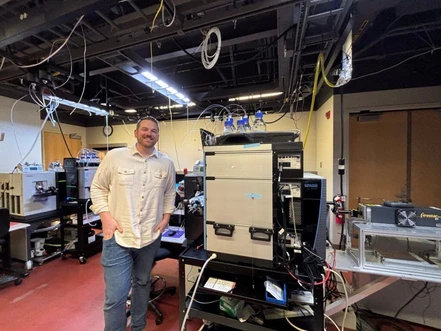
  • Photo: Thermo Fisher Scientific: Mucinomics: The Next Frontier of Mass Spectrometry
  • Video: Chromatography & Mass Spectrometry Solutions: New Thermo Scientific Orbitrap Exploris 120 LC-MS Flying Ions Animation Video 

Mucinomics, the study of mucin domain glycoproteins, is emerging as a transformative field in mass spectrometry. These heavily O-glycosylated extracellular proteins play critical roles in numerous biological functions and diseases, including cancer, cystic fibrosis, and inflammatory bowel disease. However, their intricate glycosylation patterns have historically posed challenges for mass spectrometric analysis.

Thermo Fisher Scientific: Mucinomics: The Next Frontier of Mass SpectrometryThermo Fisher Scientific: Mucinomics: The Next Frontier of Mass Spectrometry

Dr. Stacy Malaker from Yale University recently presented advancements in mucin characterization, enrichment techniques, and their translational relevance in disease research on a Nature hosted webinar. Here, we explore the key insights from her presentation.

The complexity of mucin glycosylation

Glycosylation is one of the most diverse post-translational modifications (PTMs), estimated to modify over 50% of the human proteome. There are three primary types of glycosylation:

  • N-linked glycosylation: Occurs on asparagine residues, influencing protein folding and cell signaling.
  • O-linked glycosylation: Involves serine or threonine residues and is crucial for cell adhesion and matrix interactions.
  • O-linked GlcNAcylation: A dynamic intracellular modification similar to phosphorylation, regulating transcription and cell proliferation.

Mucin proteins, characterized by densely glycosylated proline, serine, threonine (PTS) domains, exhibit bottlebrush-like structures that extend from the cell surface or form gel-like secretions. Dysregulation of mucins, particularly MUC1 and MUC16, is implicated in cancer progression, immune evasion, and metastasis. Despite their importance, mucins have remained difficult to analyze due to their complex glycosylation and resistance to standard proteases.

Overcoming analytical challenges with mucinases

Traditional proteomics workflows struggle with mucins due to:

  • High heterogeneity: A single glycosylation site can accommodate hundreds of glycan structures.
  • Protease resistance: Conventional enzymes like trypsin fail to digest mucin domains.
  • Fragmentation issues: Standard collision-induced dissociation (CID) leads to glycan loss, complicating site localization.

Dr. Malaker’s research introduced StcE (pronounced as Sticky), a mucin-selective protease that selectively cleaves glycosylated mucin domains while sparing unmodified peptides. This enzyme has been pivotal in:

  • Mass spectrometric sequencing of mucins.
  • Cellular assays for mucin function.
  • Immunohistochemical staining and mucin enrichment for glycoproteomics studies.

StcE and other mucinases have enabled the first detailed site-specific glycosylation maps of mucins, revealing their structural dynamics and disease relevance.

Deciphering immune-related mucins: the TIM family

The T-cell immunoglobulin and mucin domain-containing (TIM) proteins regulate immune responses, with TIM-3 being a promising checkpoint inhibitor target in cancer therapy. Using mucinases, Dr. Malaker’s team successfully mapped the glycosylation patterns of TIM-1, TIM-3, and TIM-4, revealing:

  • TIM-4 adopts a rigid, bottlebrush-like structure, extending beyond the glycocalyx for high-affinity ligand binding.
  • TIM-3 exhibits flexible folding, potentially facilitating alternative ligand interactions via galectin-9-mediated clustering.
  • Glycosylation regulates immune checkpoint function by influencing receptor-ligand interactions.

These findings underscore the structural and functional roles of mucins in immune regulation and their potential as therapeutic targets.

Advancing mucinomics with enrichment strategies

To enhance mucin analysis, Dr. Malaker’s lab developed an enrichment method using an inactive Sticky mutant conjugated to beads. This strategy:

  • Selectively captures mucins from complex biological samples (e.g., serum, cancer cell lysates).
  • Enables mass spectrometric analysis of previously undetectable glycoproteins.
  • Identifies a broader mucinoma beyond canonical mucins, expanding the scope of mucin research.

This workflow drastically reduces sample preparation time while increasing the detection of mucin-specific glycopeptides, making it a powerful tool for clinical applications.

Improving glycopeptide identification

Existing search algorithms struggle with the complexity of mucin glycoproteomics. The field-wide Human Glycoproteomics Initiative (HGI) aims to evaluate and improve these tools. Key developments include:

  • Standardized glycoproteomics reporting.
  • Benchmarking of glycopeptide identification software.
  • Integration of electron-based fragmentation for precise site localization.

These efforts are critical for establishing robust, reproducible glycoproteomic workflows for biomedical research.

Spatial distribution of mucins in disease

Mass spectrometry imaging (MSI) offers insights into mucin distribution in tissues, but traditional methods are limited to N-glycans. Dr. Malaker’s team pioneered mucinase-assisted MSI to visualize O-glycopeptides in colorectal cancer specimens. Findings included:

  • Distinct glycopeptide profiles across tumor regions.
  • Localization of tumor-associated carbohydrate antigens (TACAs).
  • High-resolution sequencing of MUC2, achieving 90% coverage of its glycosylated domains.

This approach has potential applications in biomarker discovery, disease stratification, and personalized medicine.

Conclusion: Mucinomics represents a rapidly evolving frontier in mass spectrometry, with profound implications for cancer biology, immunology, and clinical diagnostics. The innovations in mucinase-based proteomics, enrichment techniques, and spatial glycoproteomics are paving the way for deeper insights into mucin function and disease mechanisms.

By overcoming long-standing analytical challenges, these advances position mucins as crucial players in biomedical research, opening doors to novel diagnostics and therapeutic strategies. As the field progresses, integrating mucinomics into routine clinical proteomics could revolutionize our understanding of complex diseases and their molecular underpinnings.

Visit us on LinkedIn: #Glycoprotein, #o-glycosylation, #MucinProteins, #OrbitrapEclipseTribridMassSpectrometer

Julian Saba

Julian Saba PhD, Sr Omics Marketing Manager

Thermo Fisher Scientific
LinkedIn Logo
 

Related content

Overcoming Strong Solvent Effects in the Analysis of Vepdegestrant

Applications
| 2026 | Agilent Technologies
Instrumentation
HPLC
Manufacturer
Agilent Technologies
Industries
Pharma & Biopharma

Identification of Double Bond Positions and Relative Acyl Chain Positions in Egg Yolk Phosphatidylcholines Using OAD-TOF System

Applications
| 2026 | Shimadzu
Instrumentation
LC/MS, LC/MS/MS, LC/TOF, LC/HRMS
Manufacturer
Shimadzu
Industries
Food & Agriculture

High Molecular-Weight Polysaccharide Characterization by SEC-MALS Using GTxResolve™ 1000 and 2000 Å SEC Columns

Applications
| 2026 | Waters
Instrumentation
GPC/SEC, Consumables, LC columns
Manufacturer
Waters
Industries
Pharma & Biopharma, Food & Agriculture

Development and Optimization for a Comprehensive LC/MS/MS Method for the Detection of 74 PFAS Compounds

Applications
| 2026 | Agilent Technologies
Instrumentation
LC/MS, LC/MS/MS, LC/QQQ
Manufacturer
Agilent Technologies
Industries
Food & Agriculture

PFAS in Biota: Risk Context & Robust Analytical Solutions

Others
| 2026 | ALS Europe
Instrumentation
Laboratory analysis, LC/MS, LC/MS/MS
Manufacturer
Industries
Environmental
 

Related articles

JUNIOR STAR Grants at UCT Prague: Two talented women from abroad driving innovation in science
Article | Scientists

JUNIOR STAR Grants at UCT Prague: Two talented women from abroad driving innovation in science

Two outstanding early-career researchers at UCT Prague, Filipa Oliveira and Stella Gonsales, received prestigious GAČR JUNIOR STAR grants for innovative research in materials science and sustainable chemistry.
UCT Prague
tag
share
more
Research from IOCB Prague reveals a previously unknown mechanism of genetic transcription
Article | Science and research

Research from IOCB Prague reveals a previously unknown mechanism of genetic transcription

Scientists at IOCB Prague reveal a previously unknown mechanism that initiates gene transcription. Using cryo-EM, they uncover how alarmone molecules enable RNA synthesis under stress.
Institute of Organic Chemistry and Biochemistry of the Czech Academy of Sciences
tag
share
more
Food Adulteration and How It Is Revealed by Analytical Chemistry
Article | Food

Food Adulteration and How It Is Revealed by Analytical Chemistry

Food adulteration threatens quality and consumer trust. Discover how HPLC and modern chromatographic systems from Watrex Praha help identify oil, honey, and wine adulteration with high confidence.
Watrex Praha
tag
share
more
Affinity, Gel Filtration, Size Exclusion Chromatography: Repurposing Kinase Inhibitors for Malaria
Interview | Video

Affinity, Gel Filtration, Size Exclusion Chromatography: Repurposing Kinase Inhibitors for Malaria

This podcast explores how chromatography (FPLC/SEC) and mass spectrometry support malaria drug discovery, from protein purification and QC to interaction studies and complex sample preparation.
Organomation
tag
share
more
 

Related content

Overcoming Strong Solvent Effects in the Analysis of Vepdegestrant

Applications
| 2026 | Agilent Technologies
Instrumentation
HPLC
Manufacturer
Agilent Technologies
Industries
Pharma & Biopharma

Identification of Double Bond Positions and Relative Acyl Chain Positions in Egg Yolk Phosphatidylcholines Using OAD-TOF System

Applications
| 2026 | Shimadzu
Instrumentation
LC/MS, LC/MS/MS, LC/TOF, LC/HRMS
Manufacturer
Shimadzu
Industries
Food & Agriculture

High Molecular-Weight Polysaccharide Characterization by SEC-MALS Using GTxResolve™ 1000 and 2000 Å SEC Columns

Applications
| 2026 | Waters
Instrumentation
GPC/SEC, Consumables, LC columns
Manufacturer
Waters
Industries
Pharma & Biopharma, Food & Agriculture

Development and Optimization for a Comprehensive LC/MS/MS Method for the Detection of 74 PFAS Compounds

Applications
| 2026 | Agilent Technologies
Instrumentation
LC/MS, LC/MS/MS, LC/QQQ
Manufacturer
Agilent Technologies
Industries
Food & Agriculture

PFAS in Biota: Risk Context & Robust Analytical Solutions

Others
| 2026 | ALS Europe
Instrumentation
Laboratory analysis, LC/MS, LC/MS/MS
Manufacturer
Industries
Environmental
 

Related articles

JUNIOR STAR Grants at UCT Prague: Two talented women from abroad driving innovation in science
Article | Scientists

JUNIOR STAR Grants at UCT Prague: Two talented women from abroad driving innovation in science

Two outstanding early-career researchers at UCT Prague, Filipa Oliveira and Stella Gonsales, received prestigious GAČR JUNIOR STAR grants for innovative research in materials science and sustainable chemistry.
UCT Prague
tag
share
more
Research from IOCB Prague reveals a previously unknown mechanism of genetic transcription
Article | Science and research

Research from IOCB Prague reveals a previously unknown mechanism of genetic transcription

Scientists at IOCB Prague reveal a previously unknown mechanism that initiates gene transcription. Using cryo-EM, they uncover how alarmone molecules enable RNA synthesis under stress.
Institute of Organic Chemistry and Biochemistry of the Czech Academy of Sciences
tag
share
more
Food Adulteration and How It Is Revealed by Analytical Chemistry
Article | Food

Food Adulteration and How It Is Revealed by Analytical Chemistry

Food adulteration threatens quality and consumer trust. Discover how HPLC and modern chromatographic systems from Watrex Praha help identify oil, honey, and wine adulteration with high confidence.
Watrex Praha
tag
share
more
Affinity, Gel Filtration, Size Exclusion Chromatography: Repurposing Kinase Inhibitors for Malaria
Interview | Video

Affinity, Gel Filtration, Size Exclusion Chromatography: Repurposing Kinase Inhibitors for Malaria

This podcast explores how chromatography (FPLC/SEC) and mass spectrometry support malaria drug discovery, from protein purification and QC to interaction studies and complex sample preparation.
Organomation
tag
share
more
 

Related content

Overcoming Strong Solvent Effects in the Analysis of Vepdegestrant

Applications
| 2026 | Agilent Technologies
Instrumentation
HPLC
Manufacturer
Agilent Technologies
Industries
Pharma & Biopharma

Identification of Double Bond Positions and Relative Acyl Chain Positions in Egg Yolk Phosphatidylcholines Using OAD-TOF System

Applications
| 2026 | Shimadzu
Instrumentation
LC/MS, LC/MS/MS, LC/TOF, LC/HRMS
Manufacturer
Shimadzu
Industries
Food & Agriculture

High Molecular-Weight Polysaccharide Characterization by SEC-MALS Using GTxResolve™ 1000 and 2000 Å SEC Columns

Applications
| 2026 | Waters
Instrumentation
GPC/SEC, Consumables, LC columns
Manufacturer
Waters
Industries
Pharma & Biopharma, Food & Agriculture

Development and Optimization for a Comprehensive LC/MS/MS Method for the Detection of 74 PFAS Compounds

Applications
| 2026 | Agilent Technologies
Instrumentation
LC/MS, LC/MS/MS, LC/QQQ
Manufacturer
Agilent Technologies
Industries
Food & Agriculture

PFAS in Biota: Risk Context & Robust Analytical Solutions

Others
| 2026 | ALS Europe
Instrumentation
Laboratory analysis, LC/MS, LC/MS/MS
Manufacturer
Industries
Environmental
 

Related articles

JUNIOR STAR Grants at UCT Prague: Two talented women from abroad driving innovation in science
Article | Scientists

JUNIOR STAR Grants at UCT Prague: Two talented women from abroad driving innovation in science

Two outstanding early-career researchers at UCT Prague, Filipa Oliveira and Stella Gonsales, received prestigious GAČR JUNIOR STAR grants for innovative research in materials science and sustainable chemistry.
UCT Prague
tag
share
more
Research from IOCB Prague reveals a previously unknown mechanism of genetic transcription
Article | Science and research

Research from IOCB Prague reveals a previously unknown mechanism of genetic transcription

Scientists at IOCB Prague reveal a previously unknown mechanism that initiates gene transcription. Using cryo-EM, they uncover how alarmone molecules enable RNA synthesis under stress.
Institute of Organic Chemistry and Biochemistry of the Czech Academy of Sciences
tag
share
more
Food Adulteration and How It Is Revealed by Analytical Chemistry
Article | Food

Food Adulteration and How It Is Revealed by Analytical Chemistry

Food adulteration threatens quality and consumer trust. Discover how HPLC and modern chromatographic systems from Watrex Praha help identify oil, honey, and wine adulteration with high confidence.
Watrex Praha
tag
share
more
Affinity, Gel Filtration, Size Exclusion Chromatography: Repurposing Kinase Inhibitors for Malaria
Interview | Video

Affinity, Gel Filtration, Size Exclusion Chromatography: Repurposing Kinase Inhibitors for Malaria

This podcast explores how chromatography (FPLC/SEC) and mass spectrometry support malaria drug discovery, from protein purification and QC to interaction studies and complex sample preparation.
Organomation
tag
share
more
 

Related content

Overcoming Strong Solvent Effects in the Analysis of Vepdegestrant

Applications
| 2026 | Agilent Technologies
Instrumentation
HPLC
Manufacturer
Agilent Technologies
Industries
Pharma & Biopharma

Identification of Double Bond Positions and Relative Acyl Chain Positions in Egg Yolk Phosphatidylcholines Using OAD-TOF System

Applications
| 2026 | Shimadzu
Instrumentation
LC/MS, LC/MS/MS, LC/TOF, LC/HRMS
Manufacturer
Shimadzu
Industries
Food & Agriculture

High Molecular-Weight Polysaccharide Characterization by SEC-MALS Using GTxResolve™ 1000 and 2000 Å SEC Columns

Applications
| 2026 | Waters
Instrumentation
GPC/SEC, Consumables, LC columns
Manufacturer
Waters
Industries
Pharma & Biopharma, Food & Agriculture

Development and Optimization for a Comprehensive LC/MS/MS Method for the Detection of 74 PFAS Compounds

Applications
| 2026 | Agilent Technologies
Instrumentation
LC/MS, LC/MS/MS, LC/QQQ
Manufacturer
Agilent Technologies
Industries
Food & Agriculture

PFAS in Biota: Risk Context & Robust Analytical Solutions

Others
| 2026 | ALS Europe
Instrumentation
Laboratory analysis, LC/MS, LC/MS/MS
Manufacturer
Industries
Environmental
 

Related articles

JUNIOR STAR Grants at UCT Prague: Two talented women from abroad driving innovation in science
Article | Scientists

JUNIOR STAR Grants at UCT Prague: Two talented women from abroad driving innovation in science

Two outstanding early-career researchers at UCT Prague, Filipa Oliveira and Stella Gonsales, received prestigious GAČR JUNIOR STAR grants for innovative research in materials science and sustainable chemistry.
UCT Prague
tag
share
more
Research from IOCB Prague reveals a previously unknown mechanism of genetic transcription
Article | Science and research

Research from IOCB Prague reveals a previously unknown mechanism of genetic transcription

Scientists at IOCB Prague reveal a previously unknown mechanism that initiates gene transcription. Using cryo-EM, they uncover how alarmone molecules enable RNA synthesis under stress.
Institute of Organic Chemistry and Biochemistry of the Czech Academy of Sciences
tag
share
more
Food Adulteration and How It Is Revealed by Analytical Chemistry
Article | Food

Food Adulteration and How It Is Revealed by Analytical Chemistry

Food adulteration threatens quality and consumer trust. Discover how HPLC and modern chromatographic systems from Watrex Praha help identify oil, honey, and wine adulteration with high confidence.
Watrex Praha
tag
share
more
Affinity, Gel Filtration, Size Exclusion Chromatography: Repurposing Kinase Inhibitors for Malaria
Interview | Video

Affinity, Gel Filtration, Size Exclusion Chromatography: Repurposing Kinase Inhibitors for Malaria

This podcast explores how chromatography (FPLC/SEC) and mass spectrometry support malaria drug discovery, from protein purification and QC to interaction studies and complex sample preparation.
Organomation
tag
share
more
Other projects
GCMS
ICPMS
Follow us
More information
WebinarsAbout usContact usTerms of use
LabRulez s.r.o. All rights reserved. Content available under a CC BY-SA 4.0 Attribution-ShareAlike