Exploring the Environmental Impact of Tire-Derived Materials Using LC-MS/MS

- Photo: Concentrating on Chromatography: Exploring the Environmental Impact of Tire-Derived Materials Using LC-MS/MS
- Video: Concentrating on Chromatography: Exploring the Environmental Impact of Tire-Derived Materials Using LC-MS/MS
In this insightful interview, David Oliva, General Manager of Organomation, sits down with Jonathan Navarro Ramos, a PhD student at the University at Buffalo, to discuss his cutting-edge research on environmental pollutants. Jonathan shares his journey in developing methods to detect tire-derived chemicals like 6PPD and 6PPD-quinone in stormwater runoff and highlights the importance of non-target analysis using high-resolution mass spectrometry (HRMS).
Key Topics Covered:
- Research on 6PPD and its transformation into 6PPD-quinone
- Environmental and public health concerns surrounding tire-derived chemicals
- The use of LC-MS/MS in detecting pollutants in challenging matrices
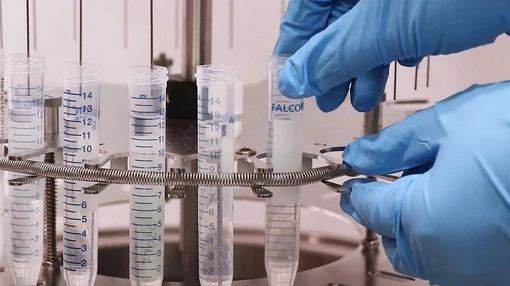
- Sample preparation techniques, including solid-phase extraction and nitrogen blowdown with the Organomation N-EVAP
- Future research directions involving the chlorination of pollutants in wastewater treatment
Learn More: Jonathan also shares surprising findings from his study and emphasizes the global ubiquity of tire-derived pollutants. Don't miss this engaging discussion!
Video Transcription
Overview
- Jonathan’s lab develops methods to detect and quantify environmental pollutants across water, soil, food, and tissues (e.g., fish).
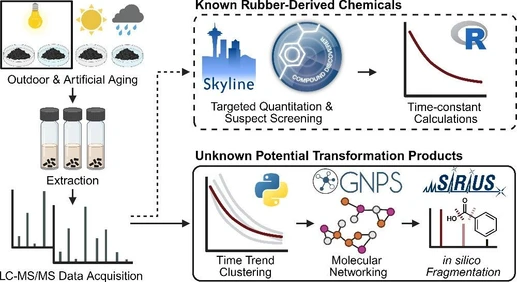
- His current projects center on tire-derived chemicals in stormwater runoff, plus HRMS non-target screening to discover transformation products of tire additives.
Why 6PPD and 6PPD-quinone matter
- 6PPD: an antioxidant widely used in tires and rubber goods to prevent cracking and extend service life.
- Transformation: 6PPD oxidizes to 6PPD-quinone (6PPD-q), now found ubiquitously in the environment (global reports).
- Exposure pathways: Deployment of end-of-life tires in playgrounds, track surfaces, gardening, turf, etc., raises concern about leaching and transport to receiving waters.
- Health & ecology: Interest spans wildlife toxicity and public health; studies have detected 6PPD and 6PPD-q in human urine.
Broader chemical scope
- Beyond 6PPD/6PPD-q, Jonathan’s team evaluates PAHs, phthalates (plasticizers), and metals associated with tire materials—aiming for a comprehensive risk picture.
Why LC–MS/MS?
- Analyte properties: Many TDCs are non-volatile and thermally labile—poor candidates for GC.
- LC separation: Compounds are hydrophilic, well-suited for LC.
- Triple quadrupole (MS/MS): Provides high selectivity and sensitivity (down to low ppb / high ppt), ideal for trace-level environmental measurements.
- Bottom line: LC–MS/MS was the best fit among available techniques on campus.
Sample preparation & main challenges
- Matrices tested included TDA (tire-derived aggregate) and crumb rubber leachates—both highly colored and matrix-rich.
- Workflow (for leachates):
- Filtration to remove particulates.
- Solid-phase extraction (SPE) to isolate targets.
- Nitrogen blowdown to concentrate eluates (then reconstitution in LC mobile phase with internal standards).
- Challenge: Concentration step co-concentrates matrix, elevating background and potentially raising detection limits. This was most pronounced for TDA and crumb rubber extracts.
Nitrogen blowdown equipment
- The lab used Organomation N-EVAP systems for blowdown:
- Adjustable nitrogen flow control (from gentle to higher flow).
- Reported as reliable and durable in long-term, routine operation.
Notable findings
- 6PPD detected > 6PPD-quinone in several leachates—contrary to expectation, since 6PPD-q is a primary oxidation product.
- High 6PPD levels observed particularly in TDA and rubber mulch leachates.
- No 6PPD detected in tire-modified asphalt and RMA (another rubber mulch/asphalt category) in this study.
- Implication: Consider limiting use of TDA and rubber mulch where environmental release is likely, pending further risk assessment.
Where the research is heading
- Wastewater treatment angle: Evidence suggests 6PPD and 6PPD-q reach wastewater treatment plants (WWTPs) and exit in effluents.
- Chlorination at WWTPs may generate disinfection byproducts from these compounds—unknowns with potential toxicity.
- Next steps include identifying chlorinated transformation products and evaluating their toxicity in receiving waters.
Takeaway
Jonathan’s work underscores the value of LC–MS/MS for trace detection of tire-derived chemicals across challenging matrices and reveals unexpected persistence of 6PPD in certain recycled tire materials. Ongoing efforts target WWTP transformation chemistry and ecotoxicological relevance, informing policy and material-use decisions around tire-derived products.
This text has been automatically transcribed from a video presentation using AI technology. It may contain inaccuracies and is not guaranteed to be 100% correct.
Concentrating on Chromatography Podcast
Dive into the frontiers of chromatography, mass spectrometry, and sample preparation with host David Oliva. Each episode features candid conversations with leading researchers, industry innovators, and passionate scientists who are shaping the future of analytical chemistry. From decoding PFAS detection challenges to exploring the latest in AI-assisted liquid chromatography, this show uncovers practical workflows, sustainability breakthroughs, and the real-world impact of separation science. Whether you’re a chromatographer, lab professional, or researcher you'll discover inspiring content!
You can find Concentrating on Chromatography Podcast in podcast apps:
and on YouTube channel