ELISA & Nitrogen Blowdown for Stress Monitoring in Sheep: Morgan Davies’ Research
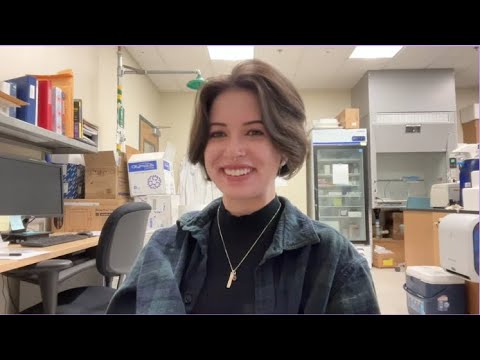
- Photo: Concentrating on Chromatography: ELISA & Nitrogen Blowdown for Stress Monitoring in Sheep: Morgan Davies’ Research
- Video: Concentrating on Chromatography: ELISA & Nitrogen Blowdown for Stress Monitoring in Sheep: Morgan Davies’ Research
In this insightful interview, David Oliva, General Manager of Organomation, speaks with Morgan Davies, a graduate student at the University of Nevada, Reno, about her research on stress monitoring in sheep using enzyme-linked immunosorbent assays (ELISA). Morgan discusses the process of quantifying cortisol levels in high-quality Merino wool samples, highlighting the use of nitrogen blowdown evaporators to speed up sample preparation while preserving cortisol integrity. She also explores the broader implications of her research for improving animal welfare and breeding resilient livestock to cope with environmental stressors.
Video Transcription
Research Overview
“My research focuses on analyzing cortisol levels in wool samples using enzyme-linked immunosorbent assays (ELISA),” Morgan explains. “Cortisol is a hormone associated with stress, so by quantifying it, we can assess how our sheep respond to environmental challenges and identify which animals perform better under stress.”
The project is particularly relevant because UNR’s sheep are extensively reared — living outdoors on rangeland with limited shelter and nutrients while facing extreme desert temperatures. The goal, Morgan says, is to “breed animals better adapted to harsh conditions — almost like developing a ‘super animal’ capable of thriving in a natural climate.”
Why ELISA?
Compared to techniques like GC/MS (gas chromatography–mass spectrometry), ELISA offers an efficient, high-throughput method for hormone analysis.
“Preparing the wool samples is quite lengthy. I first wash the wool — it’s high-quality Merino wool — and then mince and grind it to maximize surface area for cortisol extraction. The samples are soaked in methanol for about 20 hours. After that, I extract the supernatant and use a nitrogen blower — I have one right behind me — to dry it down, leaving just the cortisol for later quantification in our ELISA.”
ELISA has proven to be accurate, cost-effective, and ideal for labs with limited instrumentation.
The Role of Nitrogen Evaporation
Morgan emphasizes how critical the nitrogen evaporator is to her workflow. “Without it, everything would be much slower. The gentle heat speeds up evaporation but, more importantly, it prevents the deterioration of cortisol, which can degrade upon exposure to oxygen or UV light. Using nitrogen ensures we get reliable results and preserves sample integrity.”
Broader Applications
Morgan’s work contributes to a growing field of animal welfare and stress physiology. “These cortisol monitoring techniques can be applied to other livestock — cattle, horses, even primates,” she says. “While there’s less research on sheep specifically, the goal is the same: to help animals cope better with stress. As we demand more production from them, it’s vital to also consider their wellbeing.”
This text has been automatically transcribed from a video presentation using AI technology. It may contain inaccuracies and is not guaranteed to be 100% correct.
Concentrating on Chromatography Podcast
Dive into the frontiers of chromatography, mass spectrometry, and sample preparation with host David Oliva. Each episode features candid conversations with leading researchers, industry innovators, and passionate scientists who are shaping the future of analytical chemistry. From decoding PFAS detection challenges to exploring the latest in AI-assisted liquid chromatography, this show uncovers practical workflows, sustainability breakthroughs, and the real-world impact of separation science. Whether you’re a chromatographer, lab professional, or researcher you'll discover inspiring content!
You can find Concentrating on Chromatography Podcast in podcast apps:
and on YouTube channel