LCMS
More information
WebinarsAbout usContact usTerms of use
LabRulez s.r.o. All rights reserved. Content available under a CC BY-SA 4.0 Attribution-ShareAlike
Author
Institute of Organic Chemistry and Biochemistry of the Czech Academy of Sciences
The Institute of Organic Chemistry and Biochemistry of the Czech Academy of Sciences (IOCB Prague) is a leading scientific institution in the Czech Republic, recognized internationally. Its primary mission is basic research in the fields of chemical biology and medicinal chemistry, organic and material oriented chemistry, chemistry of natural compounds, biochemistry and molecular biology, physical chemistry, theoretical chemistry, and analytical chemistry.
Tags
Article
Science and research
Scientific article
Video
LinkedIn Logo

IOCB researchers take a key step toward fully controllable molecular machines

Fr, 14.11.2025
| Original article from: IOCB Prague
IOCB Prague scientists have developed light-driven molecular motors that remain fully functional even when anchored to metal surfaces, marking a major step toward controllable nanoscale machines.
Video placeholder
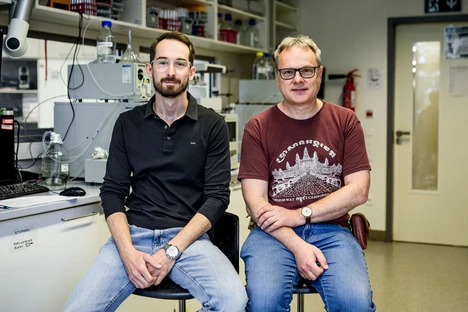
  • Photo: Tomáš Belloň / IOCB Prague: Dr. Jiří Kaleta, head of the Molecular Devices group at IOCB Prague
  • Video: IOCB Prague: Scientists from IOCB have taken an important step towards fully controlled molecular machines

A research team at IOCB Prague led by Jiří Kaleta has described a new concept for light-driven molecular motors that remain fully functional even after being anchored to a metal surface, where they continue to perform controlled rotary motion. The scientists have thus overcome one of the main obstacles on the road to fully controllable molecular machines – a development expected to have a major impact on the creation of intelligent materials, among other applications. The study provides deeper insight into the control of motion at the nanoscale. The paper was published in the journal Angewandte Chemie International Edition.

Tomáš Belloň / IOCB Prague: Dr. Jiří Kaleta, head of the Molecular Devices group at IOCB PragueTomáš Belloň / IOCB Prague: Dr. Jiří Kaleta, head of the Molecular Devices group at IOCB Prague

The study of molecular motors is among the most fascinating areas of contemporary chemistry and nanotechnology. Comprising only a few dozen atoms, these machines can move or rotate in a precisely defined direction when exposed to an external stimulus, such as light. The team at IOCB has developed two types of so-called four-legged motors attached to a rigid triptycene base. Triptycene is a three-dimensional structure that holds the stationary part of the motor slightly above the surface, allowing the rotor to move freely and in a precisely controlled manner. Upon exposure to light, the rotor first makes a partial turn and then completes the rotation through the influence of heat, resulting in a full, controlled 360° rotation. Kateřina Bezděková, the first author of the study and a member of Kaleta’s research group, explains: „Our motors are designed like building blocks, making them easy to adjust for different applications. We show that controlled motion at the molecular level can not only be achieved but also modified.

Jiří Kaleta’s team succeeded in overcoming one of the major technical challenges: molecules attached to solid surfaces often lose their ability to move due to excessively tight contact with the substrate. Thanks to the innovative design, the motors remain mobile under all conditions. “By using a rigid triptycene base, we managed to solve several problems,” explains Jiří Kaleta. “Among other things, we effectively decoupled the photoactive part of the motor from the surface. As a result, it retains its mobility and can be easily controlled by light.

The results from IOCB Prague pave the way for the practical use of molecular machines, for example in the development of intelligent materials, photoactive switches, or surface sensors. “Every step that improves our ability to control motion at the atomic level brings us closer to the time when molecular machines will perform precisely defined tasks – just like the machines we know from the macroscopic world, only a billion times smaller,” adds Jiří Kaleta.
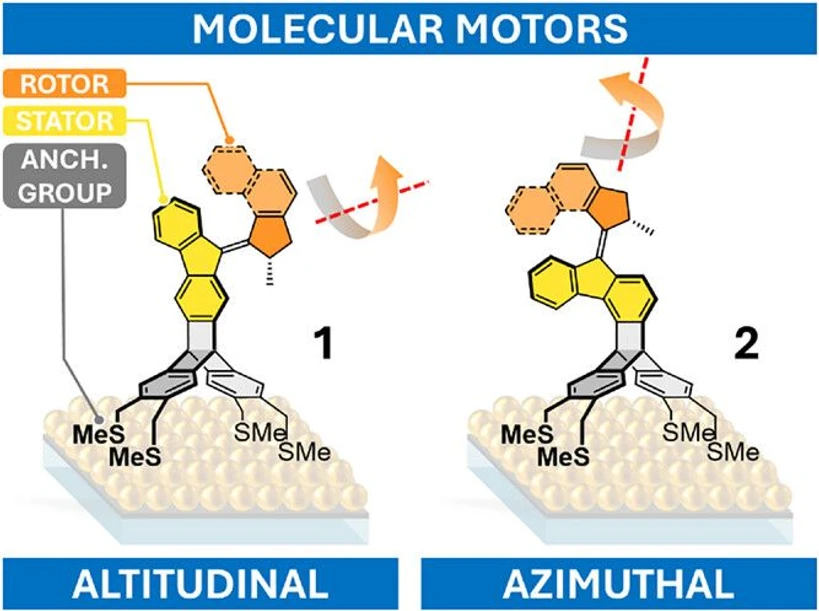
IOCB Prague: Two tetrapodal triptycene-based light-driven molecular motors with precisely oriented rotation axes—parallel or perpendicular to a gold surface—achieve full 360° rotation in both solution and as monolayers. The design minimizes surface quenching, enabling functional integration into surface-mounted nanomachines.IOCB Prague: Two tetrapodal triptycene-based light-driven molecular motors with precisely oriented rotation axes—parallel or perpendicular to a gold surface—achieve full 360° rotation in both solution and as monolayers. The design minimizes surface quenching, enabling functional integration into surface-mounted nanomachines.

The original article

Surface-Decoupled Altitudinal and Azimuthal Triptycene-Fused Tetrapodal Molecular Motors

Kateřina Bezděková, Lukáš Severa, Eva Kaletová, Katarina Majerová Varga, Milan Mašát, Liang-Ting Wu, Jyh-Chiang Jiang, Ivana Císařová, Jiří Kaleta

Angew. Chem., Int. Ed. 2025.

https://doi.org/10.1002/anie.202513922

licensed under CC-BY 4.0

Abstract

Two light-driven molecular motors, fused to a triptycene-based tetrapodal platform, with rotational axes oriented either parallel or perpendicular to the surface, were successfully designed and synthesized. Both systems demonstrated complete 360° rotation cycles, efficient photoswitching at 385 ± 5 nm (reaching ∼90% at the photostationary state), and quantitative thermal helix inversion with half-lives of ∼7 min at 20 °C. When assembled as monolayers on gold surfaces, the motors retained their full rotational functionality, demonstrating the ability of the tetrapodal platform to minimize surface interactions. These findings highlight the potential of these systems for applications in surface-integrated molecular devices and machines.

Institute of Organic Chemistry and Biochemistry of the Czech Academy of Sciences
LinkedIn Logo
 

Related content

Analysis of Anti-Degradant Additive (6PPD) and its Transformation Product 6PPD-Quinone in Tire Rubber Using an Integrated HPLC System

Applications
| 2026 | Shimadzu
Instrumentation
HPLC
Manufacturer
Shimadzu
Industries
Energy & Chemicals

Performance Evaluation of Microbial Identification Using a Benchtop MALDI-TOF MS

Applications
| 2026 | Shimadzu
Instrumentation
MALDI, LC/MS, LC/TOF, Software
Manufacturer
Shimadzu
Industries
Pharma & Biopharma, Food & Agriculture

A Combined Method for Anionic, Cationic, and Zwitterionic PFAS using a Direct Injection UPLC™-MS/MS Method for Environmental Water Samples

Applications
| 2026 | Waters
Instrumentation
LC/MS, LC/MS/MS, LC/QQQ
Manufacturer
Waters
Industries
Environmental

Beyond the box: A ready-to-run workflow for quantitating 80 drugs of abuse in whole blood with the TSQ Certis Triple Quadrupole MS

Applications
| 2026 | Thermo Fisher Scientific
Instrumentation
LC/MS, LC/MS/MS, LC/QQQ
Manufacturer
Thermo Fisher Scientific
Industries
Forensics

Mastering Single Cell Proteomics: Daily Excellence with μPAC Neo Plus Trap-and-Elute Workflow

Presentations
| 2026 | Thermo Fisher Scientific
Instrumentation
HPLC, LC/Orbitrap, LC/MS, LC/MS/MS
Manufacturer
Thermo Fisher Scientific
Industries
Proteomics
 

Related articles

The Effect of Needle Gauge and Flow Rate on Evaporation Rate
Article | Science and research

The Effect of Needle Gauge and Flow Rate on Evaporation Rate

The study evaluates how needle gauge, nitrogen flow rate, and needle design influence solvent evaporation rate during sample concentration and provides practical optimization guidance.
Organomation
tag
share
more
News from LabRulezLCMS Library - Week 11, 2026
Article | Application

News from LabRulezLCMS Library - Week 11, 2026

This week we bring you application notes by Agilent Technologies, KNAUER, Shimadzu and Waters Corporation and technical note by Thermo Fisher Scientific!
LabRulez
tag
share
more
CATRIN researchers offer a “greener” way to make supercapacitors
Article | Science and research

CATRIN researchers offer a “greener” way to make supercapacitors

CATRIN scientists show that green solvents Cyrene and Tamisolve can replace toxic NMP in supercapacitor production while maintaining high electrochemical performance and enabling more sustainable manufacturing.
CATRIN
tag
share
more
Teaching Separation Science in High School
Interview | Scientists

Teaching Separation Science in High School

This interview explores how high school students learn separation science through filtration, gravimetric analysis, and chromatography, building the foundations for future chemistry studies.
Organomation
tag
share
more
 

Related content

Analysis of Anti-Degradant Additive (6PPD) and its Transformation Product 6PPD-Quinone in Tire Rubber Using an Integrated HPLC System

Applications
| 2026 | Shimadzu
Instrumentation
HPLC
Manufacturer
Shimadzu
Industries
Energy & Chemicals

Performance Evaluation of Microbial Identification Using a Benchtop MALDI-TOF MS

Applications
| 2026 | Shimadzu
Instrumentation
MALDI, LC/MS, LC/TOF, Software
Manufacturer
Shimadzu
Industries
Pharma & Biopharma, Food & Agriculture

A Combined Method for Anionic, Cationic, and Zwitterionic PFAS using a Direct Injection UPLC™-MS/MS Method for Environmental Water Samples

Applications
| 2026 | Waters
Instrumentation
LC/MS, LC/MS/MS, LC/QQQ
Manufacturer
Waters
Industries
Environmental

Beyond the box: A ready-to-run workflow for quantitating 80 drugs of abuse in whole blood with the TSQ Certis Triple Quadrupole MS

Applications
| 2026 | Thermo Fisher Scientific
Instrumentation
LC/MS, LC/MS/MS, LC/QQQ
Manufacturer
Thermo Fisher Scientific
Industries
Forensics

Mastering Single Cell Proteomics: Daily Excellence with μPAC Neo Plus Trap-and-Elute Workflow

Presentations
| 2026 | Thermo Fisher Scientific
Instrumentation
HPLC, LC/Orbitrap, LC/MS, LC/MS/MS
Manufacturer
Thermo Fisher Scientific
Industries
Proteomics
 

Related articles

The Effect of Needle Gauge and Flow Rate on Evaporation Rate
Article | Science and research

The Effect of Needle Gauge and Flow Rate on Evaporation Rate

The study evaluates how needle gauge, nitrogen flow rate, and needle design influence solvent evaporation rate during sample concentration and provides practical optimization guidance.
Organomation
tag
share
more
News from LabRulezLCMS Library - Week 11, 2026
Article | Application

News from LabRulezLCMS Library - Week 11, 2026

This week we bring you application notes by Agilent Technologies, KNAUER, Shimadzu and Waters Corporation and technical note by Thermo Fisher Scientific!
LabRulez
tag
share
more
CATRIN researchers offer a “greener” way to make supercapacitors
Article | Science and research

CATRIN researchers offer a “greener” way to make supercapacitors

CATRIN scientists show that green solvents Cyrene and Tamisolve can replace toxic NMP in supercapacitor production while maintaining high electrochemical performance and enabling more sustainable manufacturing.
CATRIN
tag
share
more
Teaching Separation Science in High School
Interview | Scientists

Teaching Separation Science in High School

This interview explores how high school students learn separation science through filtration, gravimetric analysis, and chromatography, building the foundations for future chemistry studies.
Organomation
tag
share
more
 

Related content

Analysis of Anti-Degradant Additive (6PPD) and its Transformation Product 6PPD-Quinone in Tire Rubber Using an Integrated HPLC System

Applications
| 2026 | Shimadzu
Instrumentation
HPLC
Manufacturer
Shimadzu
Industries
Energy & Chemicals

Performance Evaluation of Microbial Identification Using a Benchtop MALDI-TOF MS

Applications
| 2026 | Shimadzu
Instrumentation
MALDI, LC/MS, LC/TOF, Software
Manufacturer
Shimadzu
Industries
Pharma & Biopharma, Food & Agriculture

A Combined Method for Anionic, Cationic, and Zwitterionic PFAS using a Direct Injection UPLC™-MS/MS Method for Environmental Water Samples

Applications
| 2026 | Waters
Instrumentation
LC/MS, LC/MS/MS, LC/QQQ
Manufacturer
Waters
Industries
Environmental

Beyond the box: A ready-to-run workflow for quantitating 80 drugs of abuse in whole blood with the TSQ Certis Triple Quadrupole MS

Applications
| 2026 | Thermo Fisher Scientific
Instrumentation
LC/MS, LC/MS/MS, LC/QQQ
Manufacturer
Thermo Fisher Scientific
Industries
Forensics

Mastering Single Cell Proteomics: Daily Excellence with μPAC Neo Plus Trap-and-Elute Workflow

Presentations
| 2026 | Thermo Fisher Scientific
Instrumentation
HPLC, LC/Orbitrap, LC/MS, LC/MS/MS
Manufacturer
Thermo Fisher Scientific
Industries
Proteomics
 

Related articles

The Effect of Needle Gauge and Flow Rate on Evaporation Rate
Article | Science and research

The Effect of Needle Gauge and Flow Rate on Evaporation Rate

The study evaluates how needle gauge, nitrogen flow rate, and needle design influence solvent evaporation rate during sample concentration and provides practical optimization guidance.
Organomation
tag
share
more
News from LabRulezLCMS Library - Week 11, 2026
Article | Application

News from LabRulezLCMS Library - Week 11, 2026

This week we bring you application notes by Agilent Technologies, KNAUER, Shimadzu and Waters Corporation and technical note by Thermo Fisher Scientific!
LabRulez
tag
share
more
CATRIN researchers offer a “greener” way to make supercapacitors
Article | Science and research

CATRIN researchers offer a “greener” way to make supercapacitors

CATRIN scientists show that green solvents Cyrene and Tamisolve can replace toxic NMP in supercapacitor production while maintaining high electrochemical performance and enabling more sustainable manufacturing.
CATRIN
tag
share
more
Teaching Separation Science in High School
Interview | Scientists

Teaching Separation Science in High School

This interview explores how high school students learn separation science through filtration, gravimetric analysis, and chromatography, building the foundations for future chemistry studies.
Organomation
tag
share
more
 

Related content

Analysis of Anti-Degradant Additive (6PPD) and its Transformation Product 6PPD-Quinone in Tire Rubber Using an Integrated HPLC System

Applications
| 2026 | Shimadzu
Instrumentation
HPLC
Manufacturer
Shimadzu
Industries
Energy & Chemicals

Performance Evaluation of Microbial Identification Using a Benchtop MALDI-TOF MS

Applications
| 2026 | Shimadzu
Instrumentation
MALDI, LC/MS, LC/TOF, Software
Manufacturer
Shimadzu
Industries
Pharma & Biopharma, Food & Agriculture

A Combined Method for Anionic, Cationic, and Zwitterionic PFAS using a Direct Injection UPLC™-MS/MS Method for Environmental Water Samples

Applications
| 2026 | Waters
Instrumentation
LC/MS, LC/MS/MS, LC/QQQ
Manufacturer
Waters
Industries
Environmental

Beyond the box: A ready-to-run workflow for quantitating 80 drugs of abuse in whole blood with the TSQ Certis Triple Quadrupole MS

Applications
| 2026 | Thermo Fisher Scientific
Instrumentation
LC/MS, LC/MS/MS, LC/QQQ
Manufacturer
Thermo Fisher Scientific
Industries
Forensics

Mastering Single Cell Proteomics: Daily Excellence with μPAC Neo Plus Trap-and-Elute Workflow

Presentations
| 2026 | Thermo Fisher Scientific
Instrumentation
HPLC, LC/Orbitrap, LC/MS, LC/MS/MS
Manufacturer
Thermo Fisher Scientific
Industries
Proteomics
 

Related articles

The Effect of Needle Gauge and Flow Rate on Evaporation Rate
Article | Science and research

The Effect of Needle Gauge and Flow Rate on Evaporation Rate

The study evaluates how needle gauge, nitrogen flow rate, and needle design influence solvent evaporation rate during sample concentration and provides practical optimization guidance.
Organomation
tag
share
more
News from LabRulezLCMS Library - Week 11, 2026
Article | Application

News from LabRulezLCMS Library - Week 11, 2026

This week we bring you application notes by Agilent Technologies, KNAUER, Shimadzu and Waters Corporation and technical note by Thermo Fisher Scientific!
LabRulez
tag
share
more
CATRIN researchers offer a “greener” way to make supercapacitors
Article | Science and research

CATRIN researchers offer a “greener” way to make supercapacitors

CATRIN scientists show that green solvents Cyrene and Tamisolve can replace toxic NMP in supercapacitor production while maintaining high electrochemical performance and enabling more sustainable manufacturing.
CATRIN
tag
share
more
Teaching Separation Science in High School
Interview | Scientists

Teaching Separation Science in High School

This interview explores how high school students learn separation science through filtration, gravimetric analysis, and chromatography, building the foundations for future chemistry studies.
Organomation
tag
share
more
Other projects
GCMS
ICPMS
Follow us
FacebookX (Twitter)LinkedInYouTube
More information
WebinarsAbout usContact usTerms of use
LabRulez s.r.o. All rights reserved. Content available under a CC BY-SA 4.0 Attribution-ShareAlike